中国人民抗日战争

Search documents
“不能忘记中国为世界反法西斯战争胜利作出的贡献”(伟大胜利·历史贡献)
Ren Min Ri Bao· 2025-07-21 22:12
图一 信件、照片、旅行箱……展览以具象化的方式呈现战争对个体的摧残。玻璃墙上,张贴着无数张遇难者 的肖像,那些在战争发生前微笑的、严肃的、平静的脸庞,随着战火消失在历史的黑暗之中。"像我们 一样的人们"——一旁的文字上写着照片墙的主题,述说着战争的残酷。 展览强调了世界反法西斯人民的共同战斗,包括中国人民抗日战争的艰辛历程。在"战争之路"展区内, 展览从1931年九一八事变开始,介绍了日本军队对中国的残暴侵略以及野蛮行径。"战争的恐怖"展区揭 露了日本军队给亚洲国家尤其是给中国人民带来的灾难。博物馆还展陈了两份来自侵华日军第七三一部 队罪证陈列馆的馆藏资料复印件,揭露当年日本在中国犯下的罪行。乌努克说:"直到今天,仍有不少 波兰民众对中国人民抗日战争这段历史不甚了解。我们希望来到博物馆的每一个参观者都能了解完整的 历史,了解日本军国主义的战争暴行以及中国人民经历的苦难和抗争。" "二战是全人类的悲剧。因此,博物馆并非仅仅呈现波兰的战争叙事,而是采取更为全球性的视角来呈 现二战历史。我们相信,只有将波兰人的战时经历置于欧洲乃至全世界反法西斯战争的广阔背景中,才 能充分传达呼吁和平的意义。我们要全面、真实叙述历史 ...


中国人民以巨大民族牺牲支撑起世界反法西斯战争的东方主战场
news flash· 2025-06-24 03:29
Core Viewpoint - The Chinese people's significant sacrifices during the War of Resistance against Japan played a crucial role in supporting the global anti-fascist war effort, marking China as the main battlefield in the East [1] Summary by Relevant Sections - **Human and Economic Costs** - Over 35 million Chinese military and civilian casualties were reported during the war [1] - Direct economic losses were estimated at over 100 billion USD, while indirect losses exceeded 500 billion USD when adjusted to 1937 values [1] - **Military Impact** - The Chinese front effectively tied down and resisted the main forces of Japanese militarism, resulting in the annihilation of over 1.5 million Japanese troops [1] - China's resistance was pivotal in the complete defeat of Japanese aggressors [1] - **Strategic Contributions** - China's efforts strategically supported and coordinated with Allied operations, influencing actions in both the European and Asian theaters [1] - The Chinese resistance disrupted the strategic coordination attempts of Japanese fascists with German and Italian fascists, significantly impacting the global anti-fascist victory and the pursuit of world peace [1]
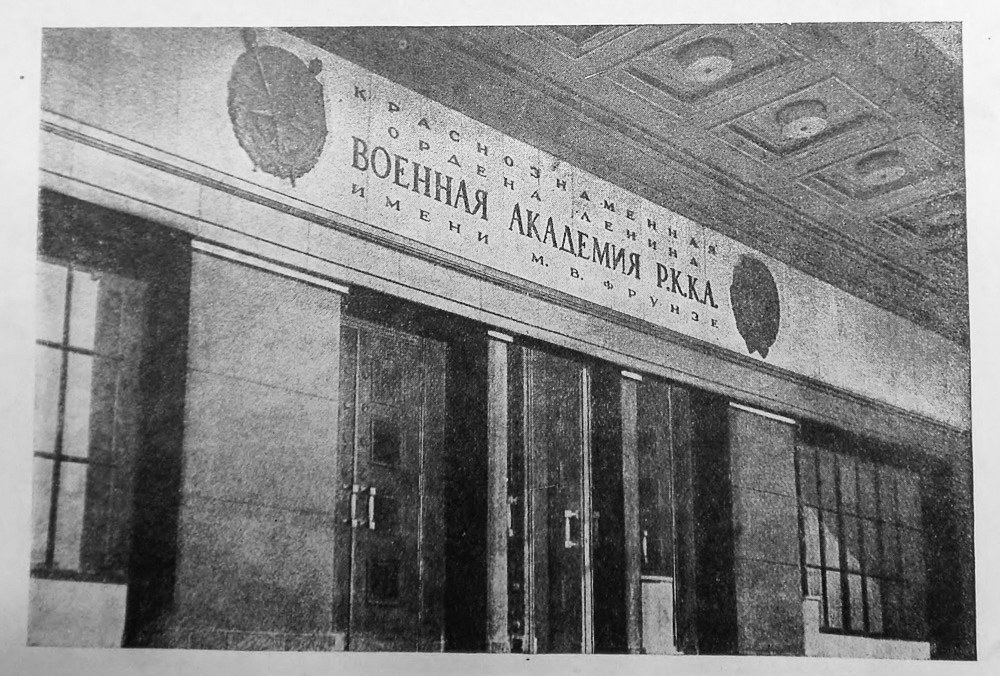
【史海回眸】多位中国抗日将领曾到伏龙芝军事学院深造
Huan Qiu Shi Bao· 2025-05-08 22:38
Core Viewpoint - The article highlights the significant contributions of Chinese military leaders who studied at the Vasilevsky Military Academy in the Soviet Union, emphasizing their roles in modernizing the Chinese military and their impact during the Anti-Japanese War [1][10]. Group 1: Historical Context - The Vasilevsky Military Academy has trained both domestic and international military personnel, including early members of the Chinese Communist Party such as Liu Bocheng and Zuo Quan [3][8]. - Liu Bocheng, who studied at the academy, faced language barriers but overcame them through diligent study of Russian, which enabled him to excel in military theory and practice [4][6]. Group 2: Contributions to Military Strategy - Upon returning to China, Liu Bocheng translated and standardized military terminology and authored several military textbooks, which were crucial for adapting to new warfare strategies during the Anti-Japanese War [7][10]. - Zuo Quan, another notable graduate, played a key role in the Long March and later in the anti-Japanese efforts, demonstrating the practical application of the knowledge gained at the academy [8][10]. Group 3: Ongoing Legacy - The relationship between the Chinese military and the Vasilevsky Military Academy continued post-1949, with ongoing exchanges that contributed to military development and the maintenance of peace [10].