
光电子

Search documents
光迅科技跌2.01%,成交额9.07亿元,主力资金净流出5100.15万元
Xin Lang Cai Jing· 2025-09-02 01:57
Core Viewpoint - The stock price of Guangxun Technology has shown significant growth this year, with a 40.05% increase year-to-date and notable recent performance in the last 5, 20, and 60 trading days [2] Group 1: Stock Performance - As of September 2, Guangxun Technology's stock price was 72.70 CNY per share, with a market capitalization of 58.658 billion CNY [1] - The stock has increased by 40.05% this year, with a 13.95% rise in the last 5 trading days, 42.27% in the last 20 days, and 68.21% in the last 60 days [2] - The company has appeared on the "Dragon and Tiger List" four times this year, with the latest occurrence on August 20, where net buying amounted to 231 million CNY [2] Group 2: Financial Performance - For the first half of 2025, Guangxun Technology reported revenue of 5.243 billion CNY, representing a year-on-year growth of 68.59%, and a net profit of 372 million CNY, up 78.42% year-on-year [2] - The company's main business revenue composition includes 70.86% from data and access, 28.94% from transmission, and 0.20% from other sources [2] Group 3: Shareholder Information - As of June 30, 2025, the number of shareholders for Guangxun Technology was 130,200, an increase of 5.18% from the previous period [2] - The average number of circulating shares per shareholder was 5,938, a decrease of 4.91% from the previous period [2] - The company has distributed a total of 1.641 billion CNY in dividends since its A-share listing, with 537 million CNY distributed in the last three years [3]

北京海淀发布高质量孵化器新政 最高单体支持1亿元
Zhong Guo Xin Wen Wang· 2025-08-30 08:49
Core Viewpoint - Beijing Haidian District has introduced a new policy to support high-quality incubators, with a maximum single support of 100 million yuan, aimed at enhancing the incubator capabilities and building a globally leading innovation and entrepreneurship ecosystem [1] Group 1: Policy Overview - The policy categorizes incubators into two types: "High-Quality Leading Incubators" focused on attracting and nurturing high-level domestic and international incubators, and "High-Quality Cultivating Incubators" aimed at improving existing incubators' efficiency and their ability to nurture high-tech and specialized enterprises [2] - The policy encourages incubators to engage in source innovation, identifying cutting-edge technologies and nurturing early disruptive projects through a "creation project" approach [2] Group 2: Funding and Support Mechanism - High-Quality Leading Incubators will receive upfront support, with expert qualification assessments, annual funding of up to 20 million yuan per incubator, over a support period of 3-5 years, totaling a maximum of 100 million yuan per incubator [3] - High-Quality Cultivating Incubators will receive post-support based on previous operational performance, with the top 20 scoring institutions receiving up to 2 million yuan each [3] Group 3: Focus Areas and Goals - The policy emphasizes support for hard technology sectors such as artificial intelligence, healthcare, embodied intelligence, optoelectronics, and quantum technology, while also promoting "advanced incubation" in future industries like commercial aerospace [2][3] - Haidian District aims to become a key hub for global sci-tech talent exchange, encouraging diverse entities to establish high-quality incubators with a global perspective and strengthen connections with international innovation centers [2]
铭普光磁涨2.03%,成交额3.02亿元,主力资金净流入1190.16万元
Xin Lang Cai Jing· 2025-08-27 03:50
Company Overview - Mingpu Optoelectronics Co., Ltd. is located in Dongguan, Guangdong Province, established on June 25, 2008, and listed on September 29, 2017. The company specializes in the research, production, and sales of optoelectronic communication components [1][2]. Financial Performance - For the first half of 2025, Mingpu Optoelectronics achieved operating revenue of 806 million yuan, representing a year-on-year growth of 0.84%. The net profit attributable to shareholders was -73.04 million yuan, showing a year-on-year increase of 7.78% [2]. - As of June 30, the number of shareholders increased to 65,400, up 14.93% from the previous period, while the average circulating shares per person decreased by 12.96% to 2,714 shares [2]. Stock Performance - On August 27, the stock price of Mingpu Optoelectronics rose by 2.03%, reaching 25.12 yuan per share, with a trading volume of 302 million yuan and a turnover rate of 6.91%. The total market capitalization stood at 5.903 billion yuan [1]. - Year-to-date, the stock price has increased by 7.44%, with a 6.08% rise over the last five trading days, an 18.77% increase over the last 20 days, and a 34.84% increase over the last 60 days [1]. Business Segmentation - The company's main business revenue composition includes: magnetic components (58.20%), optical communication products (19.16%), power adapters (12.23%), communication power supply system equipment (7.55%), and others (2.84%) [1]. Dividend Distribution - Since its A-share listing, Mingpu Optoelectronics has distributed a total of 45.48 million yuan in dividends, with 6.98 million yuan distributed over the past three years [3].

光谷多家上市公司发布2024年年报和2025年一季报:光通信、光模块等光电子业务表现亮眼
Sou Hu Cai Jing· 2025-05-20 07:45
Core Viewpoint - Multiple listed companies in the optical valley, including YF Communication, Renfu Pharmaceutical, Changfei Fiber, Huagong Technology, and Dameng Data, have reported steady growth in their 2024 annual reports and 2025 Q1 reports, driven by technological innovation and expansion into emerging businesses [1]. YF Communication - In 2024, YF Communication achieved revenue of 28.549 billion yuan, a year-on-year increase of 39.05%, with a net profit growth of 74.06% in Q4 [2]. - The company’s optical communication and computing businesses performed exceptionally well, with the FTTR project seeing an 800% increase in contract scale and computing business revenue nearing 6 billion yuan, reflecting a compound annual growth rate of over 100% over two years [4]. - In Q1 2025, the net profit attributable to shareholders grew by 33.08%, with plans to explore new application areas such as computing and marine networks [4]. Renfu Pharmaceutical - In 2024, Renfu Pharmaceutical reported revenue of 25.435 billion yuan and a net profit of 1.33 billion yuan, maintaining steady growth [5]. - The company invested over 1.471 billion yuan in R&D, accelerating the development of innovative drug projects and obtaining approvals for nearly 20 new products [7]. - In Q1 2025, the net profit increased by 11.09%, indicating a recovery in profitability [7]. Changfei Fiber - In 2024, Changfei Fiber recorded revenue of 12.197 billion yuan and a net profit of 676 million yuan, with optical communication-related revenue reaching 11.917 billion yuan and a gross margin of 27.78% [8]. - The company achieved significant advancements in 800G ultra-high-speed optical transmission and developed a disruptive air-core fiber technology, improving signal transmission speed by approximately 47% [10]. - In Q1 2025, the net profit attributable to shareholders surged by 161.91% [10]. Huagong Technology - In 2024, Huagong Technology's revenue was 11.709 billion yuan, with a net profit of 1.221 billion yuan, reflecting year-on-year growth of 13.57% and 21.17% respectively [12]. - The company has seen rapid penetration in the photovoltaic energy storage and power battery application sectors, with significant growth in orders from the shipbuilding industry [12]. - In Q1 2025, Huagong Technology continued its growth trend, with revenue of 3.355 billion yuan, up 52.28%, and a net profit of 410 million yuan, up 40.88% [14]. Dameng Data - In 2024, Dameng Data achieved revenue of 1.044 billion yuan, a year-on-year increase of 31.49%, with a net profit growth of 22.22% [15]. - The company reported a record high gross margin of 99.69% on software product licensing revenue of 894 million yuan [15]. - In Q1 2025, Dameng Data's revenue grew by 55.61%, with a non-net profit increase of 87.92% [17].





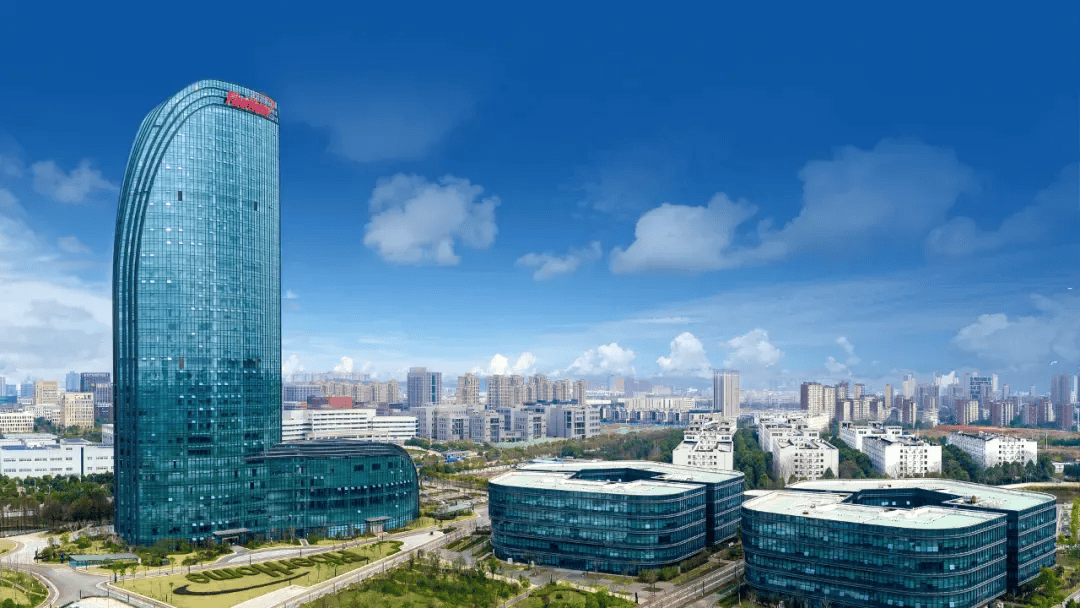
建设世界级数字产业集群
Jing Ji Ri Bao· 2025-03-31 00:39
Core Viewpoint - The digital industry in China is expected to maintain stable operations in 2024, with steady growth in business revenue and profits, optimized industrial structure, enhanced innovation capabilities, and accelerated international expansion, serving as a crucial support for the integration of the real economy and digital economy [1] Group 1: Digital Industry Performance - In 2024, the digital industry revenue in eastern China is projected to grow by 6.5%, accounting for 73.6% of the national total, while the central, western, and northeastern regions will see revenue growth of 4.2%, 0.8%, and 2.5% respectively [1] - The top ten provinces in digital industry revenue, including Guangdong, Jiangsu, Beijing, and others, contribute 81.5% of the national total and account for 99.5% of the revenue growth [1] Group 2: Digital Industry Clusters - Digital industry clusters are formed by enterprises engaged in digital product manufacturing, services, and technology applications, characterized by strong core competitiveness and reliance on information networks for collaborative manufacturing [2] - Four major digital industry clusters in China include: 1. Artificial Intelligence in Haidian District, Beijing 2. Integrated Circuits in Shanghai, Shenzhen, and Beijing-Tianjin-Hebei 3. Optoelectronics in Hubei 4. Computing Power in Guizhou and Inner Mongolia [3] Group 3: Regional Development and Challenges - Distinct digital industry clusters have emerged in various regions, such as the Beijing-Tianjin-Hebei area focusing on AI and quantum information, the Yangtze River Delta on industrial internet and smart manufacturing, and the Guangdong-Hong Kong-Macau Greater Bay Area on consumer electronics [4] - Current challenges include uneven regional distribution, homogeneous competition, and a lack of leading enterprises, prompting experts to recommend government-led development planning for digital industry clusters [4] Group 4: Future Strategies - There is a call for local governments to develop digital industry maps, implement differentiated development strategies, and strengthen ecosystem construction to cultivate competitive digital enterprises [5] - The goal is to promote digital product consumption upgrades, support digital enterprises in expanding globally, and build world-class digital industry clusters [5]