免税经济

Search documents
实探丨提前24天出入境“破亿” 深圳制造满足海淘需求!
Zheng Quan Shi Bao· 2025-05-22 15:31
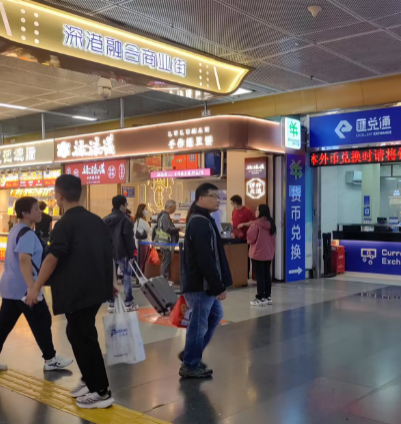
Core Insights - "Inbound tourism" has become a new focal point for various cities, with Shenzhen emerging as a key destination for foreign visitors due to favorable policies and geographical advantages [10][7][11] Group 1: Inbound Tourism Data - As of May 19, 2024, Shenzhen's border inspection station recorded over 100 million inbound and outbound passengers, achieving this milestone 24 days earlier than the previous year [1] - The number of foreign visitors entering Shenzhen reached 2.64 million, a 41% increase year-on-year, with visa-free entries accounting for 560,000, marking a 105% increase [1][10] Group 2: Consumer Trends - Foreign tourists are increasingly drawn to Shenzhen's manufacturing, particularly in the jewelry and electronics sectors, with significant interest in diamond products and innovative tech gadgets [1][2] - Popular products among foreign visitors include drones, AI glasses, and other high-tech items, which are often more affordable than in their home countries [2][10] Group 3: Economic Impact - The influx of foreign tourists has led to a surge in business opportunities, particularly in shopping and dining, with many establishments adapting to cater to this demographic [3][5] - The hospitality sector has seen a notable increase in foreign guest occupancy, with some hotels reporting up to 50% of their guests being international [5][6] Group 4: Strategic Recommendations - Experts suggest that Shenzhen should enhance its appeal by creating technology experience landmarks and improving multilingual guidance systems to better serve foreign tourists [8][11] - The city is encouraged to leverage its unique cultural and historical sites alongside its technological advancements to create a distinctive tourism brand [11][10]

EY安永:2025年免税新纪元:破界重构炽浪突围研究报告
Sou Hu Cai Jing· 2025-04-23 13:23
Core Insights - The report by EY analyzes the duty-free market from both consumer and operator perspectives, highlighting the current state, competitive landscape, and future trends of the industry [1][10]. Group 1: Market Development Trends - The global duty-free market is experiencing robust growth alongside the recovery of the tourism industry, with the Asia-Pacific region being significant but still not fully recovered to pre-pandemic levels, while Europe and the Americas have largely rebounded [1][15]. - The Chinese duty-free market faces challenges due to weakened domestic consumption and outbound consumption diversion, but with supportive policies, it is expected to enter a new phase of prosperity [1][10]. Group 2: Consumer Insights - The global duty-free market saw severe shrinkage during the early pandemic but is gradually recovering, with stable demand for perfumes and cosmetics, which hold a significant market share [2][22]. - In China, luxury goods demand has decreased due to macroeconomic factors, leading to more rational consumer behavior and increased outbound consumption, which has intensified structural adjustments in the duty-free market [2][40]. - Hainan's duty-free market benefits from unique policies, with peak consumption during the Spring Festival, although average spending per customer has shown a slight decline, indicating increased competition and a shift towards value-oriented purchasing [2][44][47]. Group 3: Operator Strategies - The Asia-Pacific region leads the global duty-free market, with China's market share steadily expanding, aided by visa-free transit policies [3][25]. - New regulations for city duty-free stores are invigorating the industry, with companies like China Duty Free Group and Wangfujing actively expanding their presence [3][31]. - Operators are innovating collaboration models with airport duty-free shops to balance interests, while the closure of Haikou has significant implications for the industry, presenting both opportunities and challenges [3][31]. Group 4: Future Outlook - Government policies aimed at boosting consumption and expanding domestic demand are providing favorable conditions for the duty-free industry, which is expected to accelerate transformation through innovative services and models [4][30]. - The recovery of the global tourism market, combined with supportive policies in China, positions the duty-free industry as a vital force for driving growth and stimulating domestic demand [4][30].