Green Finance

Search documents
北京绿色交易所召开2025年参与人大会 推动绿色低碳发展
Zheng Quan Ri Bao Wang· 2025-07-30 06:18
Core Insights - The Beijing Green Exchange hosted the 2025 Participant Conference, attracting over 200 representatives from various sectors in the voluntary carbon market [1] - The Chairman of the Green Exchange, Wang Naixiang, emphasized the company's development history and the construction of two major platforms: voluntary greenhouse gas emission reduction trading and national green technology trading, while promoting a diversified service approach to support national carbon peak and carbon neutrality goals [1] - The Bank of China Postal Savings Bank's Beijing branch highlighted its innovative practices in green finance, showcasing a comprehensive support strategy for the national "dual carbon" strategy through five dimensions: organizational structure optimization, establishment of specialized institutions, policy support innovation, key project investment, and green finance innovation [1] Development and Future Directions - Zhang Ruoyan, General Manager of the Green Exchange, presented the exchange's achievements and future directions, while various experts discussed the potential and development paths of the voluntary carbon market, global climate governance trends, CCUS technology innovations, and the application prospects of RWA technology in carbon credit [2] - Roundtable discussions focused on the opportunities and challenges in the voluntary carbon market, sharing experiences and suggestions for innovative development in carbon market participation [2] - Another roundtable explored the role of green finance in supporting green industry development and future directions, sharing practical experiences and innovative measures [2] Carbon Neutrality Initiatives - The conference utilized a digital platform co-developed with Smart Exhibition for carbon accounting, quantifying the carbon emissions and reductions of the event, with plans for carbon neutrality achieved through the cancellation of carbon credits post-event [3]
点赞!2025年广东绿色金融改革创新推广案例发布
2 1 Shi Ji Jing Ji Bao Dao· 2025-07-23 02:17
Core Viewpoint - The Guangdong financial system is actively promoting green finance to support the province's comprehensive green transformation, with the release of 50 innovative green finance reform cases for 2025 [1][2]. Group 1: Event Overview - The "Beautiful Guangdong · Financial Empowerment" initiative is guided by various governmental bodies, including the People's Bank of China Guangdong Branch and the Guangdong Provincial Development and Reform Commission [1]. - The initiative received 255 case submissions over three months, with 50 cases selected for their innovative contributions to green finance [2]. Group 2: Case Highlights - The selected cases cover a range of areas, including green financial product innovation, mechanism innovation, platform construction, and cross-border business innovation [2]. - The diversity of participating institutions includes traditional financial entities like banks and insurance companies, as well as financial service providers such as leasing companies and private equity funds [2]. Group 3: Future Directions - The People's Bank of China Guangdong Branch plans to enhance collaboration with provincial and municipal departments to promote the selected green finance cases more widely [3]. - The goal is to innovate green finance mechanisms, enrich product offerings, and support low-carbon industrial transformation, contributing to the development of a "Guangdong model" for high-quality economic and social growth [3].
五年一阶 崛起青岛金融“强引擎”
Zhong Guo Jin Rong Xin Xi Wang· 2025-07-16 02:13
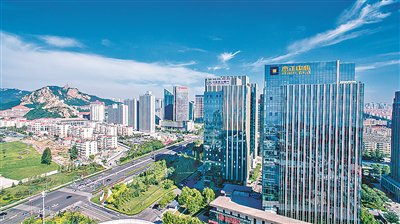
Group 1 - The core objective of the Jinjialing Financial Zone is to establish itself as an international wealth management center, venture capital center, and digital finance center, with a projected increase in financial institutions to over 1,500 by the end of 2025, marking a 50% growth since 2020 [2] - The financial sector in the Jinjialing Financial Zone has achieved an average annual growth rate of approximately 7.78% during the 14th Five-Year Plan period, laying a solid foundation for becoming a top-tier financial district [2] - The financial zone has attracted around 500 new financial institutions over five years, highlighting its competitive advantages in wealth management, venture capital, and digital finance [2][3] Group 2 - Wealth management has become a key focus for the Jinjialing Financial Zone, with three wealth management subsidiaries established since 2019, leading to a product management scale of nearly 2 trillion yuan by the end of 2024, ranking fifth nationally [3] - The financial zone has seen a qualitative and quantitative increase in high-net-worth wealth management institutions, with the establishment of three family offices and significant capital increases in trust companies [3] - The financial zone has developed a diversified wealth management landscape, integrating various financial institutions such as banks, securities firms, and private equity funds [3] Group 3 - The venture capital landscape in the Jinjialing Financial Zone has become increasingly prominent, with 112 registered fund managers and a total fund management scale of 89.2 billion yuan, accounting for over 30% of the city's total [4] - The financial zone has attracted a variety of investment funds, including foreign capital and state-owned capital, enhancing its ability to support the real economy [4] Group 4 - The digital finance sector is emerging as a distinctive feature of the Jinjialing Financial Zone, with over 80 digital finance companies established and the successful implementation of digital yuan applications [5] - The financial zone has hosted three digital finance innovation competitions, showcasing leading innovative cases and establishing a digital finance industry alliance [5] Group 5 - The Jinjialing Financial Zone has effectively facilitated the collaboration between finance and industry, supporting the transformation of the economy and the upgrading of industries [6] - Numerous innovative financial products and services have been launched, including pilot projects in pension wealth management and blockchain applications [6][7] Group 6 - The financial zone has attracted 15 listed companies, with five new listings during the 14th Five-Year Plan period, enhancing its reputation as a hub for listed and pre-listed enterprises [9] - The financial zone is committed to high-quality development, aiming to enhance its international influence in wealth management and deepen reform and opening-up [10]

X @Bloomberg
Bloomberg· 2025-07-15 02:38
Regulatory Concerns - New Zealand farmers criticize proposed green finance rules as impractical and potentially detrimental to rural communities due to increased costs [1]
聚焦数字金融 专家共议出海、监管与场景创新
2 1 Shi Ji Jing Ji Bao Dao· 2025-06-30 10:36
Core Insights - The event "Youth Taking Responsibility for a Financial Strong Nation - Digital Finance Driving Innovative Business Models" highlighted China's leading position in digital finance applications and the challenges faced in regulation and technology [1][2] Group 1: Digital Finance Development - China is recognized for its advanced application of digital finance technologies, with many fintech companies successfully exporting their payment technologies and algorithms to other countries, enhancing financial technology development in Belt and Road Initiative countries [1] - The core competitive advantages of China's fintech sector include vast application scenarios and data accumulation due to its large population, as well as continuous innovation based on early learning from foreign technologies and models [1][2] Group 2: Regulatory Challenges - Current regulatory challenges include differing standards for institutions of varying sizes, with larger institutions focusing on systemic risk prevention while smaller ones have higher innovation tolerance [3] - Regulatory bodies face issues such as insufficient technical investment and talent reserves, which can hinder the development of a regulatory framework that balances technological safety and innovation [3] Group 3: Sector-Specific Insights - Digital technology aligns well with the goals of inclusive finance, but it also introduces new risks such as fraud and social equity issues stemming from the digital divide [4] - In the context of green finance, digital technologies are being utilized to create quantifiable carbon reduction data assets, promoting sustainable behaviors among users [4] - The aging population in China presents significant opportunities for the pension finance sector, with companies leveraging digital technology to enhance service delivery and risk management [5] Group 4: Future Directions - The digital finance sector is seen as a key driver for high-quality development in technology finance, focusing on enhancing financial supply capabilities and extending service chains [5] - There is a call for addressing challenges such as talent shortages and regulatory lag while exploring opportunities for building data markets and fostering international cooperation [5]
证监会:探索数据要素与金融服务深度融合新模式
Sou Hu Cai Jing· 2025-06-24 03:45
Core Viewpoint - The China Securities Regulatory Commission (CSRC) is promoting the "Data Element ×" competition to enhance the integration of data elements in the financial services sector, focusing on innovation and addressing real-world challenges in the securities and futures industry [1][2]. Group 1: Competition Themes - The competition includes four main themes: governance of public opinion in capital markets under artificial intelligence, development of green finance through multi-dimensional data, enhancement of data analysis capabilities in financial services, and strengthening the futures market's ability to serve the real economy and manage risks [1][2]. Group 2: Objectives and Goals - The competition aims to accelerate the release of multiplier effects by encouraging participants to innovate and explore new models that integrate data elements with financial services, thereby bringing new development opportunities to the securities and futures industry [1]. - It seeks to assist the real economy by guiding participants to optimize service processes and improve service quality, addressing issues like financing difficulties and costs for the real economy [1]. - The initiative promotes the concept of green finance by encouraging participants to build data models that assess environmental and social risks associated with financial activities, directing resources towards green and low-carbon sectors [2]. - The competition emphasizes the use of big data and artificial intelligence to enhance the precision and effectiveness of regulatory measures in the securities and futures industry, enabling real-time risk monitoring and management [2]. Group 3: Future Collaboration - The CSRC plans to maintain close cooperation with the National Data Bureau to ensure the successful organization of the "Data Element ×" competition by 2025 [2].
李云泽:进一步拓展金融开放广度和深度
Xin Hua She· 2025-06-18 07:12
Group 1 - The core viewpoint is that China's financial high-level opening has broad prospects, aiming to expand the breadth and depth of financial openness and optimize the foreign investment business environment [1][2] - The restrictive measures in the banking and insurance sectors have been largely lifted, with plans to replicate and promote the experiences of free trade zones and ports to support foreign institutions in participating in more financial business pilot projects [1] - Currently, 42 of the world's top 50 banks have established institutions in China, and nearly half of the 40 largest insurance companies have entered the Chinese market, with total assets of foreign banks and insurance institutions exceeding 7 trillion yuan [1] Group 2 - China is recognized as a vibrant and potential super-large market, which is expected to remain a fertile ground for global financial institutions [2] - Foreign institutions are encouraged to participate deeply in China's technology finance, digital finance, and green finance markets, as well as in pension-related financial products [2] - The foreign investment business environment will be continuously optimized, with a focus on legal construction in the financial sector and establishing a regular communication mechanism with foreign institutions [2]
预见2025:《2025年中国融资租赁行业全景图谱》(附市场现状、竞争格局和发展趋势等)
Qian Zhan Wang· 2025-06-11 02:13
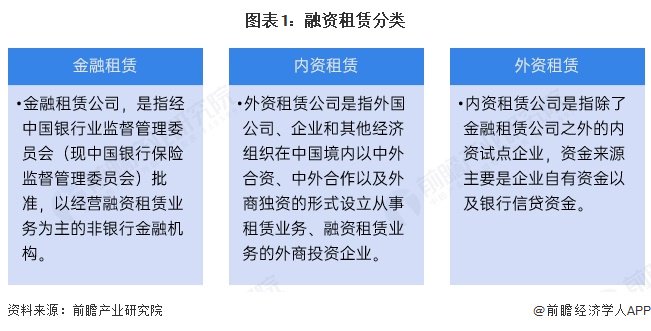
Industry Overview - The financing leasing industry is defined as a non-bank financial form where the lessor purchases the selected leased object from a third party at the request of the lessee and enters into a lease contract to rent it to the lessee for a fee [1] - Financing leasing can be categorized based on the nature of the enterprise into financial leasing, domestic leasing, and foreign leasing [2] Industry Chain Analysis - The industry chain involves three main parties: suppliers, lessors, and lessees. The upstream includes suppliers and banks providing financial support, the midstream consists of financing leasing companies, and the downstream lessees are primarily in sectors like aviation, construction, printing, medical, and automotive leasing [3] Industry Development History - The financing leasing business in China began around 1980, transitioning through various phases including initial growth, adjustment, and regulation. From 2011 to 2017, the industry experienced rapid growth, but since 2018, the number of enterprises has stabilized, and the total balance of leasing contracts has slightly declined, indicating a period of adjustment [7] Policy Background - The National Financial Regulatory Administration is the main regulatory body overseeing the financing leasing industry, responsible for formulating and implementing operational and regulatory rules. Recent government policies have focused on supporting green financing, equipment financing, and financing for small and medium-sized enterprises [10][12] Current Industry Status - The total balance of financing leasing contracts has been declining since 2019, with an estimated balance of approximately 54,600 billion RMB by the end of 2024, reflecting a decrease of about 1,800 billion RMB or 3.2% from 2023 [13] - Financial leasing continues to dominate the market, accounting for 43.0% of the total contract balance, while domestic leasing holds 35.5% and foreign leasing 17.3% as of mid-2024 [14] - The number of financing leasing enterprises is approximately 8,671, showing a stable trend overall [16] - Foreign leasing enterprises remain a significant force, but their proportion has slightly decreased, with domestic leasing enterprises increasing from 2.86% in 2016 to 5.19% by mid-2024 [17] Market Scale and Competition - The financing leasing market in China has shown stable demand, with a projected scale exceeding 30 trillion RMB in 2024. Major players include companies like Far East Horizon, China Merchants Jinling, and Industrial Bank Leasing [25] - The competitive landscape is characterized by a multi-tiered structure, with high-end markets predominantly led by international brands [21] Future Development Trends - The financing leasing industry is expected to evolve towards greater standardization, greening, digitization, and concentration, adapting to policy and market changes to promote sustainable growth [27][28] - Despite a slowdown in overall development since 2024, the market demand remains stable, with an anticipated annual growth rate of around 5% over the next six years [31]
2025【优金融奖】评选启航,推动金融市场稳健前行
Sou Hu Cai Jing· 2025-05-26 06:30
Group 1 - The global economic situation in 2025 is complex, with significant challenges and opportunities in the financial sector, including a notable increase in global economic volatility and a restructuring of international trade order [2] - The domestic economy is undergoing important adjustments, with a focus on stabilizing internal demand and managing the transition between old and new growth drivers, while preventing overheating in emerging industries and capacity excess [2] - Financial risks in areas such as the real estate market, local government debt, and small financial institutions remain key areas of concern [2] Group 2 - The 2025 "Excellent Financial Award" aims to comprehensively review the development of the financial system across various sectors, including banking, insurance, securities, and fintech, leveraging the influence of mainstream financial media [3] - The evaluation process will follow principles of independence, objectivity, and scientific rigor, ensuring fairness and social value through multiple layers of assessment, including market indicators and expert reviews [3][4] - Award categories include various segments such as annual bank awards, insurance company awards, and fintech awards, reflecting a wide range of financial services [4] Group 3 - Evaluation dimensions include policy responsiveness to financial supply-side structural reforms, industry leadership in financial metrics, innovation in financial technology, and support for the real economy, particularly in promoting inclusive finance for small and micro enterprises [4]
Akropolis Group has mandated Citigroup Global Markets Europe AG, ING Bank N.V. and Skandinaviska Enskilda Banken AB (publ) to coordinate bond issuance process and commence meetings with investors
Globenewswire· 2025-05-06 07:36
Group 1 - The Issuer, AKROPOLIS GROUP, UAB, is a leading shopping and entertainment centre development and management company in the Baltic countries [1] - The Issuer has mandated Citigroup Global Markets Europe AG, ING Bank N.V., and Skandinaviska Enskilda Banken AB to arrange fixed income investor meetings starting on May 6, 2025, with a potential benchmark EUR-denominated Green RegS only senior unsecured offering to follow [1] - The Notes are expected to be rated BB+ by S&P and BB+ by Fitch, with Citigroup Global Markets Europe AG and ING Bank N.V. acting as Green Finance Structuring Banks [1] Group 2 - The Issuer plans to allocate the net proceeds from the offering of the Notes to refinance existing EUR 300,000,000 2.875% Guaranteed Notes due 2026, in line with the Green Finance Framework [2] - The proceeds from the Existing Notes were used to finance a portfolio of Eligible Green Projects and/or to finance and refinance Eligible Green Assets as defined in the Green Finance Framework [2] Group 3 - If the transaction is completed on satisfactory terms, the Issuer intends to exercise the make-whole redemption option for its Existing Notes [3]