Tariff uncertainty

Search documents
Market rally could give some back given heightened tariff uncertainty, says F.L.Putnam's Ellen Hazen
CNBC Television· 2025-07-14 19:00
Market Concerns & Tariff Impact - The primary concern revolves around the ultimate impact of tariff uncertainty on economic growth, both domestically and internationally [2][3][4] - Tariffs are projected to be significantly higher than last year's 25%, potentially reaching high single digits or even higher across the economy [3] - International trade may suffer as slower corporate earnings growth occurs due to decreased demand caused by tariffs [4] - The full impact of tariffs is yet to be felt, suggesting potential future headwinds for corporations [5] Economic Outlook & Inflation - The economy is currently holding up well, as evidenced by the labor market and inflation data [6][7] - Inflation numbers are expected to rise in the July and August readings, with acceleration later in the year [7] - The Federal Reserve is likely to remain on hold at the July meeting and potentially the following meeting due to uncertainty about inflation [7] Corporate Earnings - Second-quarter earnings are expected to be favorable, with anticipated growth of only 2% to 3% [8] - Third-quarter reports are expected to reveal more concerns from companies regarding coping with tariffs [8] Cryptocurrency - Crypto and Bitcoin are viewed as a play on inflation and the dollar, functioning as a currency [9] - They can serve as a hedge against inflation and dollar uncertainty, similar to gold, but lack cash flow [10] - Investing in companies like Coinbase is suggested, as they can profit regardless of Bitcoin's price fluctuations [11]


1 Dividend Stock to Double Up on Right Now
The Motley Fool· 2025-06-14 08:11
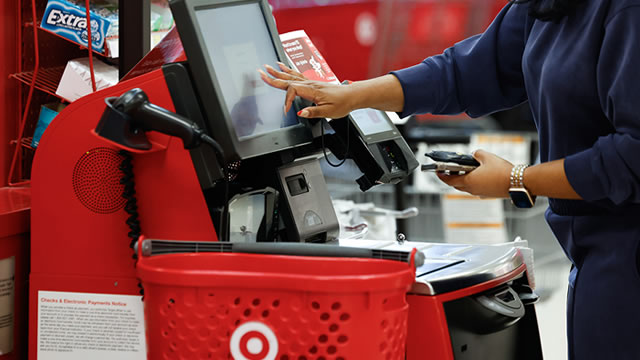
Core Viewpoint - Target is facing significant challenges, with sales declining and stock prices dropping over 60% from their peak, marking the worst performance since the 1990s, but the company is not considered to be dying and has a fundamentally sound financial foundation [1][4][7]. Group 1: Sales and Market Conditions - Target's sales have plateaued and started to decline due to various factors, including increased financial strain on consumers primarily caused by rampant inflation [4]. - Groceries and household essentials accounted for only 40.5% of total merchandise sales last year, meaning that when consumers cut back on discretionary spending, Target is significantly impacted [5]. - Consumer sentiment has dropped to its lowest level since July 2022, exacerbated by tariff uncertainties [5]. Group 2: Company Policies and Backlash - Target faced backlash from shoppers due to its decision to roll back diversity, equity, and inclusion (DEI) policies, leading to a 40-day boycott that began in early March [6]. - Merchandise sales dropped 3.1% year over year in Q1 2025, following a 3.2% decline in Q1 2024, indicating ongoing struggles [6]. Group 3: Financial Stability - Despite challenges, Target maintains a solid financial foundation, with a dividend yield of 4.4% and annual dividend spending of $2 billion, while generating over $3.5 billion in free cash flow over the past year [7][8]. - Target has nearly $2.9 billion in cash, sufficient to fund dividends for a year, and holds an investment-grade credit rating, allowing time to rethink business strategies [8]. Group 4: Growth Plans - Target plans to open 300 new stores over the next decade, increasing its footprint by approximately 15%, indicating a commitment to growth despite current challenges [10]. - The company has less than half the number of stores as Walmart, suggesting that the U.S. market can support further expansion [10]. Group 5: Valuation and Investment Potential - Target's stock is currently priced at a price-to-earnings ratio of 11, significantly lower than Walmart's 41, reflecting pessimistic market expectations [11]. - If Target maintains its 4.4% dividend and achieves mid-single-digit earnings growth, it could generate double-digit annualized investment returns, improving sentiment towards the stock [12]. Group 6: Conclusion - The stock is positioned for potential improvement, as it would require a complete failure for the stock not to recover somewhat from current levels, making it an attractive option for investors seeking dividends while waiting for recovery [13].

Lakeland(LAKE) - 2026 Q1 - Earnings Call Transcript
2025-06-09 21:32
Financial Data and Key Metrics Changes - The company achieved record net sales of $46.7 million, representing a 29% year-over-year increase driven by a 100% increase in fire services products [4][14] - Consolidated gross margin decreased to 33.5% from 44.6% for the comparable period [15][18] - Net loss was $3.9 million or $0.41 per share compared to net income of $1.7 million or $0.22 per share for the same period last year [16][20] - Adjusted EBITDA excluding FX was $600,000, a decrease of $3.2 million or 84% compared to the prior year [20][24] Business Line Data and Key Metrics Changes - Fire services segment grew by 100% year-over-year, contributing $10.5 million to the revenue increase [16][26] - Organic revenue increased by $600,000 or 2% to $36.9 million, with strong growth in the U.S. and Europe, partially offset by declines in Latin America and Canada [17][26] - U.S. net sales increased 42% year-over-year to $22.5 million, while European sales increased 102% to $12.1 million [5][26] Market Data and Key Metrics Changes - Organic fire services business in the U.S. grew by $1 million or 32% year-over-year, while the U.S. industrial organic business grew by $1.1 million or 9.7% [17] - Latin American operations saw a 12% decrease in sales year-over-year, while sales in Asia increased by 15% [25][68] Company Strategy and Development Direction - The company is focused on accelerating growth within the fragmented $2 billion fire protection sector and enhancing operational efficiencies [4][12] - A new company-wide SAP ERP system is being implemented to modernize and consolidate systems [7] - The company maintains a robust M&A pipeline and is engaged in active discussions to explore new opportunities for further consolidating the fire market [12][33] Management's Comments on Operating Environment and Future Outlook - Management expressed confidence in navigating tariff uncertainties and expects sequential growth in gross margins and adjusted EBITDA in the second quarter [12][30] - The company anticipates revenue between $210 million to $220 million for the fiscal year, trending towards the lower end of previously issued adjusted EBITDA guidance [30][33] - Management highlighted the importance of customer relationships and operational efficiency as key focus areas [8][32] Other Important Information - Capital expenditures for the quarter were $1.2 million, primarily related to the new ERP system [6][28] - Inventory increased to $85.8 million due to tariff mitigation strategies and preparation for forecasted sales increases [8][29] Q&A Session Summary Question: Can you provide more details on the impact of purchase variance and amortization on gross margins? - The total increase to manufacturing costs was close to $3 million impacting adjusted EBITDA, with purchase variance estimated to have a 2-3 margin point impact [40][41] Question: What are the expectations for operating expenses moving forward? - Travel expenses were up significantly in Q1 but are expected to taper off, with additional measures in place to identify $4 million in cost savings [46][52] Question: How is the head-to-toe strategy progressing? - The company is seeing greater engagement and opportunities, particularly with larger clients, and is focused on bundling products for comprehensive offerings [55][60]

Apple and Samsung smartphone growth to take hit from tariff uncertainty: Counterpoint Research
CNBC· 2025-06-04 11:35
Core Viewpoint - Counterpoint Research has significantly reduced its global smartphone shipment growth forecast for 2025 due to uncertainties surrounding U.S. tariff policies, now projecting a growth of 1.9% year-on-year, down from 4.2% previously [1][2]. Group 1: Apple and Samsung Shipment Forecasts - Apple's shipment growth is now expected to be 2.5% year-on-year in 2025, a decrease from the earlier forecast of 4% [2]. - Samsung's shipments are anticipated to experience no growth in 2025, a revision from the previously projected 1.7% increase [2]. - The revisions are attributed not only to tariff uncertainties but also to weakened demand in North America, Europe, and parts of Asia [3]. Group 2: Factors Influencing Apple’s Shipment Growth - The downgraded shipment growth for Apple is primarily driven by the iPhone 16 series and a trend of emerging market customers purchasing more expensive phones [3]. - Apple has increased its shipments to the U.S. from India, where it has been boosting production of its iPhones, in response to tariff concerns [4]. Group 3: Market Dynamics and Competitors - Huawei is highlighted as a positive outlier, with an expected shipment growth of 11% year-on-year in 2025, benefiting from easing sourcing bottlenecks and a rebound in sales in China [5][6]. - The Chinese tech giant's recovery is attributed to advancements in semiconductor technology for its devices, which have revitalized its market position [6].


全球外汇策略 - 不确定性是唯一确定的事
2025-06-02 15:44
Summary of Key Points from the Conference Call Industry Overview - The discussion revolves around the **Foreign Exchange (FX) market** and the implications of recent U.S. tariff rulings on the **U.S. Dollar (USD)** and related currency pairs, particularly **USDCHF**. Core Insights and Arguments 1. **Market Reaction to Tariff Ruling**: The FX markets quickly reversed the overnight USD rally following the court's decision to strike down President Trump's IEEPA tariffs, indicating a belief that the ruling will be appealed and that alternative tariff tools are available to the administration [1][3]. 2. **Uncertainty in U.S. Policy**: The main takeaway is that U.S. policy will remain uncertain, with traders recognizing that the court ruling could be appealed or replaced by other tariff mechanisms, such as Section 122, which allows for broad tariffs for a limited time [3][4]. 3. **Extended Tariff Timeline Risks**: The court ruling has likely prolonged the tariff uncertainty, which may affect expectations regarding trade deals and tariff rates, particularly before the July 9 deadline [4]. 4. **Bearish Outlook on USD**: The firm maintains a bearish outlook on the USD for the coming months due to concerns over lower tariff revenue and deteriorating hard data, which could lead to more dovish Federal Reserve pricing [5][10]. 5. **Labor Market Indicators**: An increase in Continuing Claims to post-COVID highs is viewed as a negative sign for the labor market, suggesting a potential rise in the unemployment rate [5][6]. 6. **USDCHF Positioning**: The recommendation to short USDCHF is emphasized, with a specific price point of 0.8245 being critical for confirming a bearish trend. A close below this level could lead to further declines towards 0.80 over time [11][12]. Additional Important Points - **Geopolitical Risks**: Increasing geopolitical risks, particularly related to the Russia/Ukraine conflict, are noted as factors influencing currency positioning and market sentiment [11]. - **Market Dynamics**: The price action reflects a broader market sentiment where the USD could not maintain gains after the tariff news, indicating potential selling pressure as month-end approaches [10][12]. - **Analyst Disclosures**: The report includes disclaimers regarding potential conflicts of interest and the nature of the research, emphasizing that investors should consider this report as one of many factors in their investment decisions [2][14][17]. This summary encapsulates the critical insights and implications discussed in the conference call, focusing on the FX market's response to U.S. tariff policies and the outlook for the USD and related currency pairs.

Aris Water Solutions(ARIS) - 2025 Q1 - Earnings Call Transcript
2025-05-07 14:02
Financial Data and Key Metrics Changes - The company reported adjusted EBITDA of $56.5 million for Q1 2025, marking a 4% sequential increase and a 6% year-over-year increase, driven by record volumes in produced water handling and water solutions [12] - Adjusted operating margin was $0.44 per barrel, reflecting the durability of operating improvements over the last 24 months [12] - Capital expenditures (CapEx) for the quarter were $21 million, down 44% compared to Q1 2024 [12] Business Line Data and Key Metrics Changes - Produced water volumes and water solution volumes grew by 7% sequentially compared to Q4 2024 [8] - The integration of McNeil Ranch into operations is ongoing, with several inbound opportunities being evaluated for additional revenue streams [9] Market Data and Key Metrics Changes - The company expects produced water volumes for Q2 2025 to be between 1.2 million and 1.25 million barrels per day, with water solutions volumes expected to be around 1 million barrels per day [13] - Adjusted operating margin for Q2 is projected to be between $0.41 and $0.43 per barrel, slightly down from Q1 due to well maintenance expenses and lower skim oil price realizations [14] Company Strategy and Development Direction - The company is focused on managing capital investments to align with customer activity levels and has a strong position due to long-term contracts in the Northern Delaware Basin [6][7] - Strategic efforts include beneficial reuse of water, industrial water treatment, and mineral extraction, with plans for a new iodine facility expected to be operational by early 2026 [10] Management's Comments on Operating Environment and Future Outlook - Management expressed confidence in the company's ability to navigate volatility and uncertainty, citing strong customer relationships and a robust balance sheet [16] - There is ongoing dialogue with customers regarding the potential impact of commodity prices on their operations, but no immediate changes to the outlook have been observed [11] Other Important Information - The company successfully refinanced its senior notes, upsizing the offering to $500 million, and ended the quarter with net debt of $480 million and a liquidity of $372 million [15] - A quarterly dividend of $0.14 per share was declared, to be paid on June 18 to shareholders of record on June 5 [15] Q&A Session Summary Question: Expectations for water cuts and volumes if producers move to maintenance mode - Management indicated that they can flex capital expenditures down by 25% to 30% if customer volumes decrease, and water cuts will remain the same, impacting only volume [20][21][22] Question: Update on M&A activity - Management noted that while there is some discomfort in the market due to volatility, the bid-ask spread remains wide, and they are well-positioned to take advantage of opportunities [23][24][25] Question: Volume growth cadence and one-time impacts - Management confirmed that Q1 volumes were strong due to better-than-expected well performance and increased interruptible volumes, but future growth will depend on customer activity [28][29][30] Question: Capital allocation in a downside environment - The company remains committed to maintaining balance sheet strength and plans to continue dividend growth while having the flexibility to reduce capital expenditures if necessary [32][34] Question: Commercialization of McNeil Ranch - Management reported that McNeil Ranch is exceeding expectations with multiple inbound opportunities for monetization, including solar and battery projects [37][38][39] Question: Competitive landscape and impact of new pipelines - Management believes that their long-term contracts and large acreage dedication provide a competitive advantage, despite new pipeline announcements from competitors [50][51][52] Question: Update on beneficial reuse and industrial water treatment - Management confirmed ongoing progress in reducing costs for desalination and expanding applications for treated water, including potential data center uses [52][53][54] Question: Cost recovery for desalination - Management indicated that operational costs could potentially be below $1 per barrel, depending on the scale of operations [83] Question: Future M&A preferences - The company remains focused on core acquisitions but is also exploring smaller bolt-on opportunities, emphasizing discipline in evaluating potential targets [76][77][78]

Aris Water Solutions(ARIS) - 2025 Q1 - Earnings Call Transcript
2025-05-07 14:00
Financial Data and Key Metrics Changes - The company recorded adjusted EBITDA of $56.5 million for Q1 2025, up 4% sequentially and 6% year-over-year, driven by record volumes in produced water handling and water solutions [12] - Adjusted operating margin was $0.44 per barrel, reflecting the durability of operating improvements over the last 24 months [12] - Capital expenditures (CapEx) were $21 million, down 44% compared to Q1 2024 [12] Business Line Data and Key Metrics Changes - Produced water volumes and water solution volumes grew 7% sequentially compared to Q4 2024 [7] - The first quarter represented the first full quarter integrating the McNeil Ranch into operations, with ongoing evaluations for additional revenue streams [7][9] Market Data and Key Metrics Changes - The company expects produced water volumes for Q2 2025 to be between 1.2 million and 1.25 million barrels per day, and water solutions volumes to be around 1 million barrels per day [13] - The current WTI price strip represents a $6 million to $8 million headwind to the business [13] Company Strategy and Development Direction - The company is focused on managing capital investments to align with customer activity levels and has a strong position due to long-term contracts in the Northern Delaware Basin [5][6] - There is an emphasis on beneficial reuse efforts and desalination of produced water for various applications, including reservoir replenishment and industrial use [9][10] - The company is exploring opportunities in industrial water treatment and mineral extraction, with plans for an iodine facility expected to be operational by early 2026 [10][12] Management's Comments on Operating Environment and Future Outlook - Management noted that while there is significant uncertainty around commodity prices and tariffs, the company is off to a strong start in 2025 and expects this strength to continue into Q2 [10][11] - The management team expressed confidence in their ability to manage through volatility and maintain free cash flow, even if customer activity levels decrease [17] Other Important Information - The company successfully refinanced senior notes, upsizing the offering to $500 million, and ended the quarter with net debt of $480 million and a liquidity of $372 million [14] - A dividend of $0.14 per share was declared for Q2 2025, to be paid on June 18 [14] Q&A Session Summary Question: Expectations for water cuts and volumes if producers move to maintenance mode - Management indicated that they can flex capital expenditures down by 25% to 30% if volumes decrease, and water cuts will remain the same, impacting volume rather than the cut itself [20][21][22] Question: Update on M&A activity and seller motivations - Management noted that while there is some discomfort in the market due to volatility, the bid-ask spread remains close, and they are well-positioned to take advantage of opportunities [23][24][26] Question: Volume growth cadence and one-time impacts in Q1 - Management confirmed that Q1 volumes were strong due to better-than-expected well performance and increased interruptible volumes, but future growth will depend on customer activity [30][31][32] Question: Capital allocation in a downside environment - The company remains committed to maintaining balance sheet strength and plans to continue dividend growth while having the ability to flex down capital expenditures if necessary [33][34][35] Question: Update on McNeil Ranch commercialization - Management reported that McNeil Ranch is exceeding expectations with multiple inbound opportunities for surface royalty activities and has already secured permits for disposal capacity [38][39][40] Question: Competitive landscape and impact of new pipelines - Management stated that new pipeline projects do not impact their competitive position due to long-term contracts and a large dedicated customer base [49][50][58] Question: Q2 guidance assumptions regarding interruptible volumes - Management indicated that Q2 guidance is primarily based on contracted volumes, with interruptible volumes viewed as a bonus [60][61] Question: Cost recovery for desalination and potential for iodine production - Management confirmed that operational costs for desalination could be below $1 per barrel, and they are evaluating the economics of iodine production based on the size of the facility [84][86]
LXP(LXP) - 2025 Q1 - Earnings Call Transcript
2025-05-01 12:30
LXP Industrial Trust (LXP) Q1 2025 Earnings Call May 01, 2025 08:30 AM ET Speaker0 Good morning. My name is Aaron, and I will be your conference operator for today. At this time, I would like to welcome everyone to the LXP Industrial Trust First Quarter twenty twenty five Earnings Call and Webcast. All lines have been placed on mute to prevent any background noise. And after the speakers' remarks, there will be a question and answer session. With that, I'm pleased to turn our call over to Heather Gentry, Ex ...
BPG(BRX) - 2025 Q1 - Earnings Call Transcript
2025-04-29 14:00
Financial Data and Key Metrics Changes - The company reported NAREIT FFO of $0.56 per share in Q1 2025, driven by same property NOI growth of 2.8% despite a 160 basis point drag from tenant disruption [15][16] - The debt to EBITDA ratio was reduced to 5.5 times, with $1.4 billion in available liquidity and no remaining debt maturities until June 2026 [10][17] - The signed but not yet commenced pool totaled $60 million, which includes $52 million of net new rent [16][17] Business Line Data and Key Metrics Changes - The company executed 1.3 million square feet of new and renewal leases at a blended cash spread of 21%, with new leases at 48% and renewals at 14% [12] - The occupancy rate declined to 94.1% due to the recapture of space from bankrupt tenants, but the company expects to address this with better tenants at higher rents [12][13] - The reinvestment pipeline reached $391 million with a weighted average return of 10%, and the company stabilized $28 million of reinvestment projects during the quarter [13] Market Data and Key Metrics Changes - The company continues to capture a significant share of new store openings in core categories such as grocery and specialty grocery, with strong tenant demand [8][9] - The traffic in the company's centers showed year-over-year growth, reflecting the positive impact of reinvestment and tenant performance [8] Company Strategy and Development Direction - The company is focused on capitalizing on tenant disruption to bring in better tenants at higher rents, which is part of its all-weather value-added plan [6][7] - The management expressed confidence in the ability to outperform in 2025 and 2026, supported by a robust leasing pipeline and low rent basis [9][10] - The company is well-positioned to navigate potential disruptions and capitalize on growth opportunities in the current volatile market [10][11] Management's Comments on Operating Environment and Future Outlook - Management acknowledged the looming tariff uncertainty and potential economic slowdown but emphasized strong tenant demand and the ability to generate robust leasing activity [6][9] - The management remains optimistic about the growth visibility provided by the signed but not commenced pipeline and the ongoing leasing efforts [17][18] - The company expects base rent to accelerate in the second half of the year as new leases commence [17] Other Important Information - The company has maintained a conservative approach to guidance, allowing for additional tenant disruption while still expecting to meet its financial targets [19][20] - The management highlighted the importance of maintaining a strong credit profile and the resilience of its tenant base in the face of economic challenges [86][87] Q&A Session Summary Question: What is the exposure to Big Lots or Party City at quarter end? - The company experienced a 140 basis point impact from bankruptcies, primarily from Big Lots and Party City spaces [21][22] Question: What is the outlook for same store growth and potential risks? - Management expressed confidence in achieving growth targets, with a strong pipeline and tenant demand, while acknowledging potential risks from economic conditions [26][28] Question: How has leasing activity trended post tariff announcements? - Management noted that leasing discussions remain strong, with tenants focused on growth despite tariff concerns [31][33] Question: What are the expectations for occupancy and leasing activity related to Joann's? - The company expects to recapture Joann's spaces in May, with strong leasing activity anticipated [95][96] Question: How is the transaction market responding to current volatility? - The market has slowed slightly, but there remains strong demand for open-air retail, and the company is positioned to capitalize on opportunities [42][44]

Aerospace and Defense Stocks Take Flight After Strong Earnings
MarketBeat· 2025-04-29 11:46
Core Viewpoint - The aerospace and defense industry has shown unexpected strong performance in Q1 2025, leading to upgrades from Wall Street analysts despite tariff uncertainties affecting manufacturing-heavy stocks [1][2]. Group 1: Boeing - Boeing reported better-than-expected Q1 results, with an adjusted loss per share of -$0.49, surpassing the consensus estimate of -$1.30 [3][4]. - Revenues increased by 18% after four consecutive quarters of negative growth, and commercial plane deliveries grew by 57% year-over-year [4]. - Analysts raised their price targets on Boeing by an average of 8% following the earnings release [4][5]. Group 2: Lockheed Martin - Lockheed Martin exceeded consensus estimates with an EPS of $7.28 and sales growth of over 4% in Q1 [7]. - The company has a substantial backlog of $173 billion, which is 2.4 times its total sales for 2024 [7]. - Analysts have raised their price targets, indicating an average upside of nearly 13% for Lockheed Martin shares [10]. Group 3: GE Aerospace - GE Aerospace surpassed estimates on both EPS and sales, with revenue rising by 11% and an adjusted operating margin increase of 460 basis points [11]. - The company has a backlog of $140 billion, over three times its revenue for 2024 [11]. - Analysts at Bank of America praised GE Aerospace's proactive tariff mitigation strategy, with an average upside of nearly 11% in share price following the earnings release [12].