Inflation

Search documents
What Fed nominee Kevin Warsh's former colleagues told us about his leadership style
Business Insider· 2026-02-02 15:21
Don't expect Kevin Warsh to be a bomb-thrower. Several longtime observers of the Federal Reserve told Business Insider that President Donald Trump's pick to become its next chairman is a good listener who looks for consensus.That could prove essential for Warsh, who has emerged as a sometimes-vocal critic since leaving the central bank more than a decade ago. While some Fed watchers criticized Warsh's nomination, citing shifts in his stance on interest rates, others praised his experience and communication ...


5 Things Kevin Warsh Could Change At The Fed — And Why Markets Are Nervous - State Street SPDR S&P 500 ETF Trust (ARCA:SPY)
Benzinga· 2026-02-02 14:10
President Donald Trump's nomination of Kevin Warsh to succeed Jerome Powell as Chair of the Federal Reserve is already rippling through markets. 1. Inflation Is ‘A Choice,’ Not a Trade-OffWarsh rejects one of the Fed's most entrenched ideas: that low unemployment mechanically leads to inflation.On Monday, veteran strategist Ed Yardeni wrote that Warsh views inflation as "a byproduct of unsound policy decisions," not the inevitable result of economic strength. Warsh explicitly rejects the Phillips Curve fram ...
Family offices brace for higher inflation with real estate and alternative investments
CNBC· 2026-02-02 13:00
Group 1: Investment Strategies - Many family offices are shifting towards real estate and alternative investments, particularly private equity and hedge funds, to protect their portfolios against inflation [1][3] - U.S. family offices reported holding 40% of their investments in public equities, while 34% are in private investments, including private equity, venture capital, private credit, and real estate [5] Group 2: Concerns and Risks - A significant number of family offices are concerned about inflation and geopolitical risks, with 64% citing interest rates and 61% citing inflation as major risks to their portfolios [2] - Nearly three-quarters (72%) of family offices surveyed reported having no exposure to gold, indicating a reluctance to invest in gold despite its recent price surge [6][7] Group 3: Focus on Technology - Artificial intelligence (AI) is a prominent investment theme for family offices, with 65% including AI in their portfolios or prioritizing it for future investments [4] - There is a strong belief among family offices that AI should be a central part of their investment strategy, although there are concerns about concentration risk [6] Group 4: Cash Management - Family offices are maintaining large amounts of cash and cash equivalents, with some holding cash to prepare for potential downturns and to capitalize on opportunistic investments if asset prices decline [8] - Concerns about inflation are leading some family offices to prefer holding cash, as higher rates could result from inflationary pressures [9]
How To Plan for Inflation Throughout Your Retirement, According to Retirement Planners
Yahoo Finance· 2026-02-02 12:14
Core Insights - Inflation significantly impacts retirees by reducing their purchasing power over time, especially as their income sources are often fixed or limited [1][3] - Retirees face unique challenges in managing inflation, as they cannot easily increase their income like working individuals can [2][3] Inflation Impact on Retirees - Inflation erodes the value of static income sources such as pensions and certificates of deposit (CDs), which may not keep pace with rising costs [3] - Rising healthcare and insurance premiums further exacerbate the financial strain on retirees, necessitating proactive planning for increased expenses [3] Planning for Inflation - Financial experts recommend preparing for a 3% inflation rate for general expenses and a 7% rate for healthcare costs, reflecting historical trends [4] - Stress-testing retirement plans against higher inflation rates is essential to ensure retirees can maintain their lifestyle [4] Investment Strategies - Maintaining some exposure to stocks is advised, as they have historically provided higher long-term returns than inflation, helping to preserve purchasing power [6] - Inflation-linked bonds, such as Treasury Inflation-Protected Securities (TIPS) and I Bonds, are recommended as reliable tools for keeping pace with rising prices [7]
What You Need to Know About Letting Your Money Sit Idle in a Savings Account
Yahoo Finance· 2026-02-02 11:48
Key Takeaways Traditional savings accounts preserve your balance but rarely outpace inflation, eroding your money's value. Balances left dormant for too long may be handed over to the state. It's smart to put your savings somewhere it can earn a high return. The best high-yield savings accounts pay 12 times the national average. Putting cash away in a savings account feels reassuring, but comfort alone can come at a cost. Between inflation and the rising cost of living, any account earning less th ...
BlackRock, Pimco See Inflation Risks the Wider Market Doubts
Yahoo Finance· 2026-02-02 10:03
Group 1 - Money managers at BlackRock, Bridgewater, and Pimco are adjusting their portfolios in response to inflation concerns, with BlackRock building short positions in US Treasuries and gilts, Bridgewater favoring stocks over bonds, and Pimco valuing Treasuries with inflation adjustments [3][5] - The yield difference between ordinary Treasuries and inflation-protected notes has increased significantly in January, indicating rising inflation expectations, alongside a rise in inflation swaps [4] - Expectations of a strong US economy potentially reigniting price growth are influencing market strategies, particularly with the nomination of Kevin Warsh as the next Federal Reserve chair, which may lead to quicker or deeper interest-rate cuts [5][7] Group 2 - Ben Pearson from UBS highlights a potential "inflationary boom" as a major risk that investors are underestimating, which could keep the Fed inactive in the first half of the year and lead to interest-rate hikes later [6] - Steven Barrow from Standard Bank predicts that the 10-year bond yield could rise to 5% from approximately 4.25% if the White House's desire for rate cuts is not met [6] - Money markets are currently pricing in 54 basis points of interest rate cuts by the end of the year, reflecting a slight increase in expectations [8] Group 3 - There is a contrast between the cautious approach of US investors and the more optimistic outlook in the euro zone, where investors believe inflation will remain at or below target levels [9]
Trump's Tariffs Push Inflation Higher: 'Trumpists Are Happy To Promote A Straw Man,' Says Paul Krugman - State Street SPDR S&P 500 ETF Trust (ARCA:SPY)
Benzinga· 2026-02-02 09:13
Trade Policy and Inflation - Economist Paul Krugman argues that tariffs have increased U.S. inflation by exactly 0.8 percentage points [1] - Krugman identifies that tax receipts from customs duties rose from 0.3% of GDP pre-Trump to 1.1%, indicating a direct inflationary impact of 0.8 percentage points [2] - The HBS Pricing Lab supports this by estimating that the Consumer Price Index (CPI) is currently 0.8 percentage points higher due to tariffs, aligning with the 2025 core PCE inflation nowcasts at 3% [3] Misconceptions about Tariff Impact - Krugman suggests that the perceived "puzzle" of low tariff inflation is a narrative rather than a mathematical reality [3] - He notes that the modest rise in prices corresponds with actual tariff rates, not headline rates, due to various exemptions and corporate maneuvers [4] - High tariffs led firms to utilize existing exemptions that were previously not worth the paperwork when tariffs were lower [4] Market Performance - The top U.S. indices closed mixed, with the S&P 500 index rising 0.23%, while the Nasdaq Composite and Dow Jones index fell by 0.29% and 0.50%, respectively [5]
US futures and Asian shares slip as worries over Trump's Fed chief pick and AI weigh on markets
ABC News· 2026-02-02 07:01
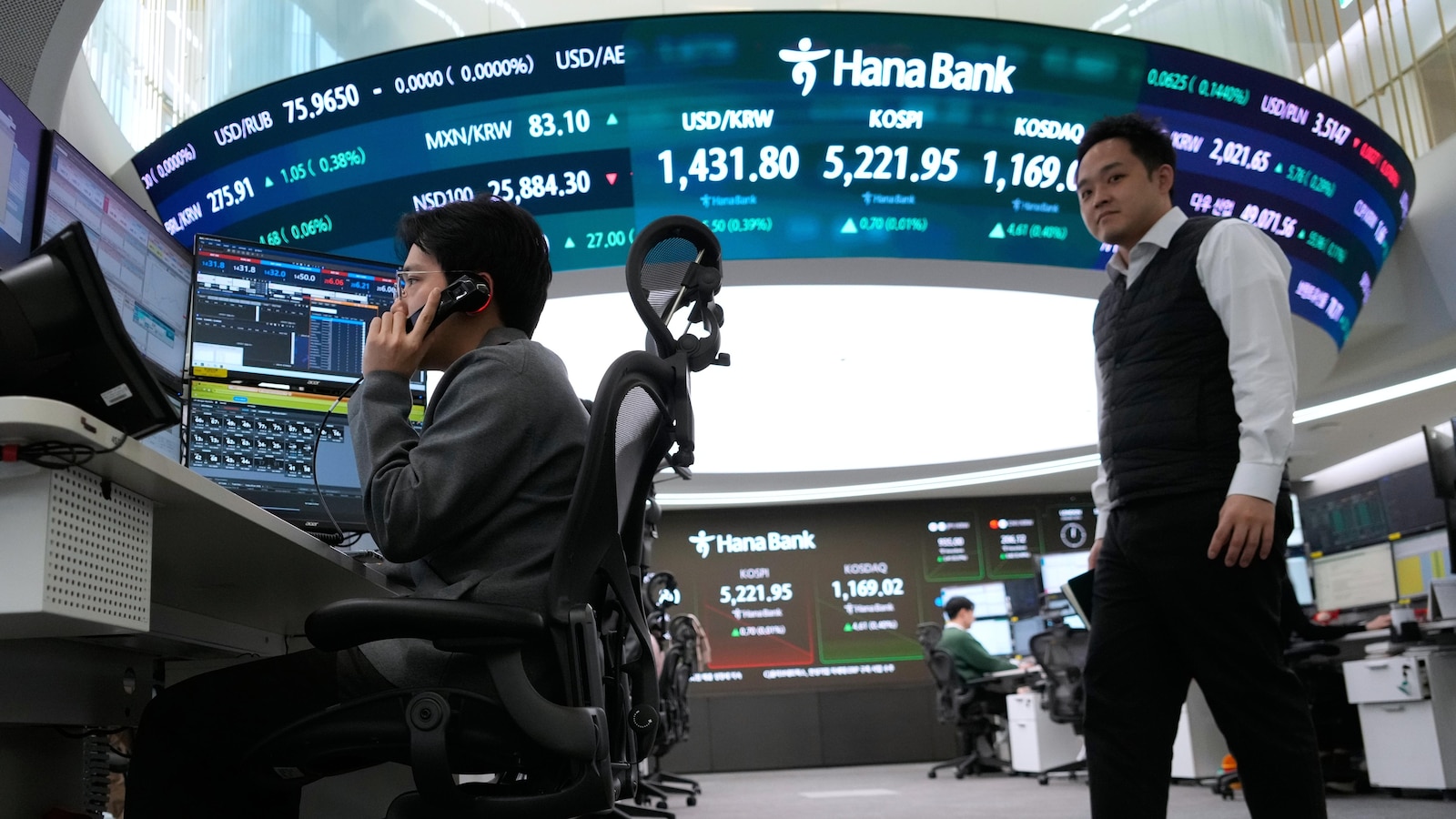
Market Reactions - U.S. futures and Asian shares declined due to concerns over President Trump's nominee for the Federal Reserve chair, which heightened fears of a bubble in the artificial intelligence sector [1][3] - South Korea's Kospi index closed 5.3% lower at 4,949.67, with Samsung Electronics and SK Hynix dropping 6.3% and 8.7% respectively [2] - The S&P 500 futures fell by 1.1% and Dow Jones Industrial Average futures decreased by 0.9% [3] Federal Reserve Nomination Concerns - Kevin Warsh's nomination to lead the Federal Reserve raises concerns about the potential loss of the Fed's independence, as Trump has advocated for more aggressive rate cuts [4][8] - The market's apprehension regarding Warsh's approach to interest rates has contributed to a surge in gold prices and a decline in the U.S. dollar's value over the past year [4] Commodity Market Impact - Gold prices fell by 3.9% and silver by 7.7% early Monday, following a significant rally that saw gold prices nearly double over the past year [5][11] - U.S. benchmark crude oil prices dropped by $3.19 to $62.02 per barrel, while Brent crude fell by $3.25 to $66.07 per barrel [6] Economic Indicators - A recent report indicated that U.S. wholesale inflation was higher than expected, which may pressure the Fed to maintain interest rates rather than cut them [9] - The longstanding belief is that the Fed should operate independently to make necessary but potentially unpopular decisions to control inflation, which is currently targeted at 2% [10]

金价银价创纪录暴跌,深圳水贝挤满“抄底客”!五大行紧急出手
Huan Qiu Wang· 2026-02-02 03:07
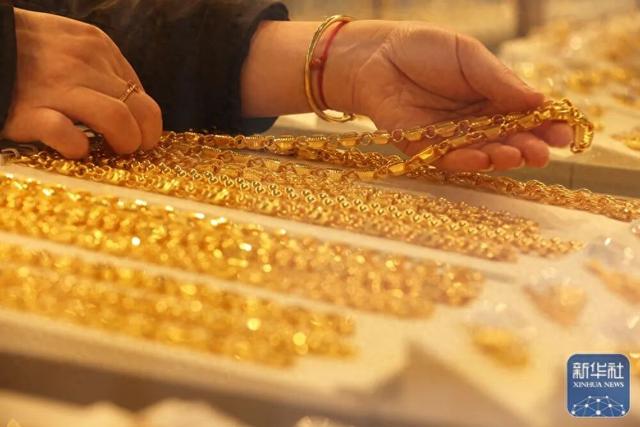
Market Overview - The precious metals market experienced extreme volatility, with international gold prices plummeting from historical highs, leading to significant impacts on domestic futures, stocks, funds, and consumer markets [1] - On January 30, international gold prices fell sharply, losing over 11% in a single day, while silver prices dropped by 31.37%, marking the worst single-day performance since March 1980 [1] - Weekly performance showed a cumulative decline of 4.71% for gold and 22.50% for silver [1] Price Movements - Domestic gold prices also saw a significant drop, with the Shanghai Gold Exchange spot gold price falling to 1070.01 RMB per gram, a decrease of around 10% [3] - Major brands adjusted their gold jewelry prices from over 1700 RMB per gram to between 1500-1600 RMB per gram [3][4] - For instance, Chow Sang Sang reported a drop in the price of its gold jewelry from 1708 RMB to 1618 RMB per gram within two days [3] Consumer Behavior - Following the price drop, there was a surge in consumer interest in purchasing gold, particularly in Shenzhen's Shui Bei market, where prices fell below 1200 RMB per gram [6] - Many consumers expressed that buying gold now is significantly cheaper compared to previous days [6] Investor Reactions - Investors are increasingly concerned about further declines in precious metal prices, leading many to sell gold and silver items to cash out [10] - Reports indicated that some businesses experienced a rapid decline in gold buyback prices, with a drop from 1142 RMB to 1081 RMB per gram in just one day [10] - The volatility in gold prices has led to a cautious approach among investors, with many hesitating to sell due to fears of missing potential price recoveries [10] Market Supply Dynamics - Some suppliers in Shenzhen's Shui Bei market reported shortages of gold bars, attributing this to the recent price drop and the reluctance of suppliers to sell at lower prices [12] - Suppliers indicated that they are not willing to sell gold bars during such volatile conditions, leading to a decrease in available inventory [12] Banking Sector Adjustments - Several major banks, including ICBC, ABC, and CCB, have adjusted their gold investment services in response to the market volatility, issuing risk warnings to investors [14][16] - ICBC announced changes to its gold accumulation business, including limits on transactions during non-trading days [15] - CCB raised the minimum amount for personal gold accumulation to 1500 RMB, reflecting the increased market risks [16][19]



Gold plunges after biggest drop in a decade as rally unwinds
BusinessLine· 2026-02-02 02:26
Core Insights - Gold and silver experienced significant price fluctuations, with gold falling as much as 6.3% and silver dropping to around $75 an ounce after reaching record highs [1][2] - The recent selloff was triggered by the nomination of Kevin Warsh to lead the Federal Reserve, which strengthened the dollar and negatively impacted precious metals [3] - A crowded trade in precious metals, driven by geopolitical concerns and speculative buying, has led to extreme volatility and risk in the market [2][4] Price Movements - As of 9:21 a.m. Singapore time, gold was priced at $4,680.76 an ounce, down 4.4%, while silver declined 2.2% to $83.2965 [5] - The Bloomberg Dollar Spot Index rose 0.1% after a previous gain of 0.9%, indicating a stronger dollar [5] Market Dynamics - The surge in precious metal prices over the past year was fueled by concerns over geopolitical instability and currency debasement, with significant buying from Chinese speculators [2] - The market's volatility was exacerbated by a record wave of call option purchases, which created upward price momentum as sellers hedged their positions [4]