Tariffs

Search documents
Odds for a "January Effect" in 2026?
ZACKS· 2026-01-02 16:36
Market Overview - The first trading day of 2026 shows positive momentum with the Dow up by 139 points (+0.29%), S&P 500 up by 35 points (+0.51%), Nasdaq up by 235 points (+0.93%), and Russell 2000 up by 13 points (+0.53%) [1] - The Nasdaq experienced a remarkable +39% gain from April tariff lows in 2025, with the Russell 2000, S&P 500, and Dow also showing significant increases of +33%, +32%, and +24% respectively [2] January Effect - The "January Effect" refers to strategies that lead to higher market growth at the start of the year, influenced by tax-loss harvesting, rebalancing initiatives, and reinvestment of year-end bonuses [3] Economic Challenges - Potential headwinds for 2026 include tariffs, employment insecurity, and rising healthcare costs, which may impact U.S. consumer spending [4] - A federal government shutdown is also a possibility as Congress reconvenes [4] Tariff Adjustments - Some tariffs are being rolled back for the new year, including those on furniture and Italian pasta, indicating a recognition of affordability issues both domestically and internationally [5] Upcoming Economic Data - The first full trading week of 2026 will begin with significant economic data releases, including ADP private-sector payrolls and the Employment Situation report, following a weak month for jobs [7] - The final S&P U.S. Manufacturing report for December is expected to remain above the growth threshold at 51.7, although it reflects a decline from the previous month [8][9]


The Stock Market Sounds an Alarm as Investors Get Bad News About President Trump's Tariffs. History Says the S&P 500 Will Do This in 2026.
Yahoo Finance· 2026-01-02 09:05
Economic Growth and Tariffs - U.S. GDP increased an annual 4.3% during the third quarter, marking the most robust growth in two years, although this growth was artificially inflated due to low imports as companies stockpiled inventory ahead of tariffs [1] - President Trump claimed that tariffs would protect American workers and create millions of jobs, yet unemployment reached a four-year high, with hiring slowing more profoundly in 2025 than any other year since the Great Recession in 2009 [3] - The Institute for Supply Management reported that U.S. manufacturing activity has contracted for nine consecutive months due to economic uncertainty created by tariffs [4] Consumer Impact and Market Sentiment - Goldman Sachs indicated that U.S. companies and consumers paid 82% of the tariffs in October 2025, with consumers expected to bear 67% of the burden by July 2026 [5] - Consumer sentiment in 2025 recorded its lowest annual average since 1960, contradicting Trump's assertion that tariffs would lead to widespread happiness [2] Stock Market Valuation and Predictions - The S&P 500 added 16% in 2025, marking three consecutive years of double-digit gains, but evidence suggests that Trump's tariffs are negatively impacting the economy, leading to concerns about a challenging 2026 [7] - The S&P 500's average CAPE ratio reached 39.4 in December, the highest since the dot-com crash in 2000, indicating potential overvaluation [10] - Historical data shows that after a monthly CAPE ratio above 39, the S&P 500 has dropped by an average of 20% over the next two years and has never generated a positive three-year return under such conditions [13] Long-term Economic Outlook - Empirical evidence from the Federal Reserve Bank of San Francisco suggests that tariffs have historically led to higher unemployment and slower economic growth, which could negatively affect the stock market [8] - The current high valuation of the S&P 500 serves as a warning for investors, particularly in light of the potential economic slowdown due to tariffs [14]
German exporters face prolonged slump in key U.S., China markets
Yahoo Finance· 2026-01-02 07:36
Core Viewpoint - German exporters are expected to face continued weakness in their two largest markets, the United States and China, with little prospect for recovery in 2026 [1] Group 1: Export Projections - Exports to the U.S. are projected to decline by more than 7% to just under 150 billion euros ($156 billion) in 2025 [2] - Exports to China are expected to contract by 10% to 81 billion euros [2] Group 2: Trade Barriers and Structural Challenges - U.S. tariffs on EU goods have created a significant burden on margins for German exporters, acting as "sand in the gears of transatlantic trade" [3] - Germany faces structural challenges such as a strong euro, high energy costs, excessive bureaucracy, and weak investment [3] Group 3: Impact of China's Industrial Policies - China's industrial policies favoring domestic producers have reduced demand for German goods, particularly in the automotive, mechanical engineering, and chemicals sectors [4] - German companies are increasingly localizing production within China or shifting investments to other Asian markets, which stabilizes global sales but results in fewer exports from Germany [4]
Trump administration scales back proposed tariffs on Italian pasta makers following review
Fox Business· 2026-01-02 01:25
Core Viewpoint - The U.S. has decided to reduce proposed tariffs on Italian pasta producers after an investigation found that many concerns regarding unfair pricing had been addressed by exporters [1][2]. Group 1: Tariff Adjustments - Proposed tariffs on 13 Italian pasta companies have been rolled back, with specific reductions noted for La Molisana to 2.26% and Garofalo to 13.98% [4]. - The remaining 11 pasta makers, including Barilla and Rummo, will now face a tariff of 9.09% [4]. Group 2: Market Impact - Previously proposed duties could have reached up to 92%, in addition to a 15% tariff on most EU imports, which posed a significant threat to the U.S. market valued at nearly $800 million for Italian pasta exporters [7]. - Companies had warned that such high tariffs could effectively exclude them from the U.S. market [7]. Group 3: Future Developments - The final tariff rates are expected to be announced on March 12, with a possibility of extension by up to 60 days [10].

Year in review: How President Trump’s economic agenda is shaping up so far
Fox Business· 2026-01-01 21:03
Economic Growth and Inflation - The U.S. economy grew faster than expected in late 2025, with overall output rising at an annual pace of about 4% to 4.5% in the third quarter, driven by increased consumer spending and business investment [4] - Inflation has cooled, with prices rising 2.7% in November compared to the previous year, which is lower than the 3.1% economists had estimated [5] Stock Market Performance - The S&P 500 ended 2025 with a gain of 17%, indicating a strong year for U.S. stocks [2] Legislative Developments - Trump's One Big Beautiful Bill Act (OBBBA), signed into law on July 4, extends expiring tax cuts from the 2017 Tax Cuts and Jobs Act and introduces new federal initiatives [9][10] - The OBBBA is expected to result in significant tax refunds for working Americans, with predictions of refunds ranging from $1,000 to $2,000 due to changes in tax withholding [13] Tariff Policies - In April, Trump announced "Liberation Day" tariffs aimed at reducing trade imbalances and reviving U.S. manufacturing, although critics warn of potential consumer price increases [20] - Total duty revenue reached $215.2 billion in fiscal year 2025, with $96.5 billion collected since the start of the new fiscal year [21] - Trump claims that tariff revenue could fund a $2,000 dividend for low- and middle-income Americans [23]
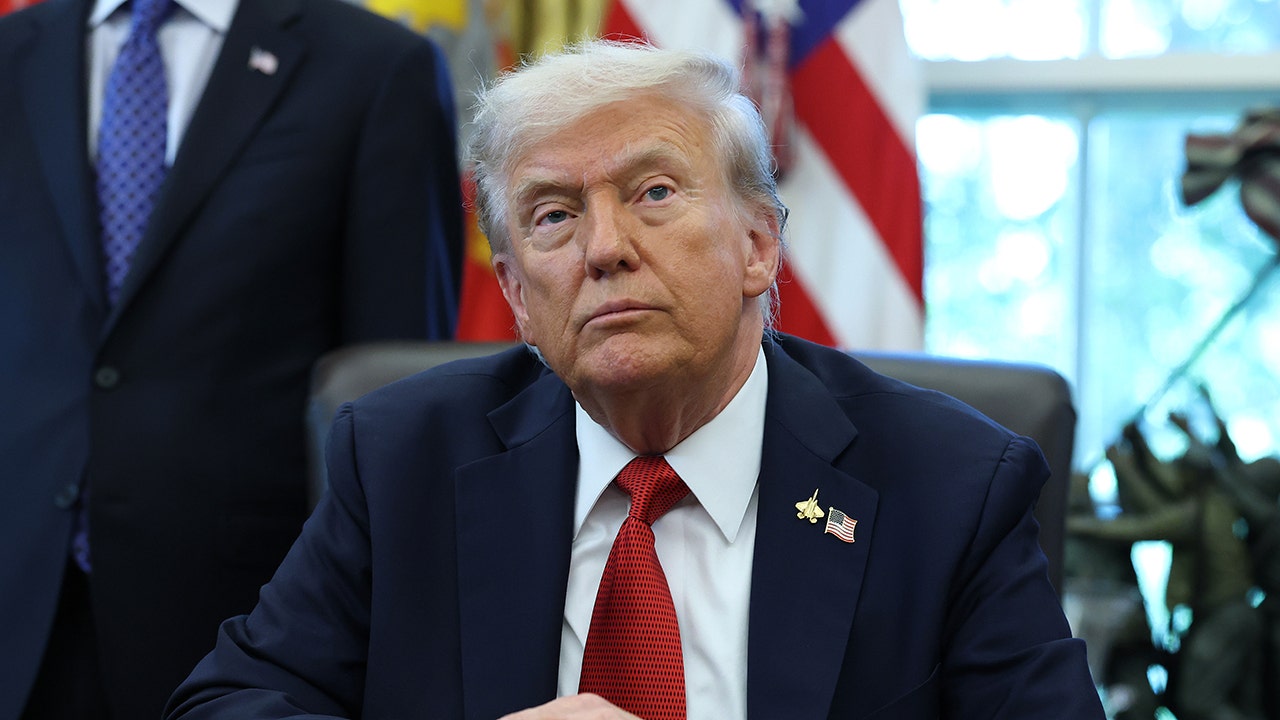
Will 2026 Bring Inflation Relief? Economists Weigh In
Investopedia· 2026-01-01 21:00
Core Insights - The article discusses the ongoing inflation trends and forecasts, indicating that consumer price increases are expected to remain above pre-pandemic levels until at least 2026 [2][3][6] - Economists predict that core Personal Consumption Expenditures (PCE) inflation will stabilize but not return to the Federal Reserve's target of 2% for some time [5][6][11] Inflation Trends - Prior to 2021, core PCE inflation typically rose less than 2% annually, but surged to 5.6% in 2022, the highest in nearly four decades [3] - As of September, core PCE inflation was reported at 2.8%, indicating a slight increase over the year [5][11] Economic Predictions - The median forecast from economists suggests core PCE inflation will be 2.4% by the end of 2026, reflecting a cooling trend but still above pre-pandemic levels [6] - Deutsche Bank economists predict inflation will remain at 2.25% or more through at least 2028, despite lower tariff rates and a slowdown in housing costs [7] Varied Forecasts - Oxford Economics forecasts a more optimistic scenario, expecting core PCE inflation to cool to 2.2% by the end of 2026, driven by decelerating housing costs [8][9] - Conversely, Bank of America predicts core PCE inflation will remain at 2.8% through 2026, attributing this to ongoing tariff impacts [12]

Tariffs Pushed CPER Up 39%, Doubling S&P 500 Returns
247Wallst· 2026-01-01 16:22
Core Viewpoint - In 2025, while investors focused on artificial intelligence stocks and cryptocurrency, a commodity fund achieved returns comparable to the top market performers [1] Group 1 - The commodity fund's performance was notable amidst a market dominated by technology and digital assets [1] - The returns from the commodity fund rivaled those of the biggest winners in the market, indicating strong performance in a competitive environment [1]

Silver, gold and copper trounced stocks. Here’s what a key chart level suggests could be ahead for 2026.
Yahoo Finance· 2025-12-31 20:07
Gold, silver and copper were the big winners of 2025, even with year-end turbulence. What a key chart level may signal about the road ahead. - AFP via Getty Images Year-end turbulence only modestly slowed the surge in silver, gold and copper in 2025, with the metals providing important ballast to portfolios as President Donald Trump’s tariffs rattled markets and a spending frenzy around artificial intelligence entered a new debt-funded chapter. For the year, gold GC00 logged a 64.37% gain and silver SI00 ...
Stock market today: Dow, S&P 500, Nasdaq waver with Wall Street set to put a bow on roller-coaster 2025
Yahoo Finance· 2025-12-31 14:33
Market Overview - US stocks experienced fluctuations as Wall Street concluded a volatile trading year with significant gains, with the Dow Jones Industrial Average, S&P 500, and Nasdaq Composite all losing around 0.1% in early trading [1][6] - The S&P 500 is up over 17% for the year, marking its sixth year of 15%-plus gains in the last seven years, while the Nasdaq Composite has risen over 20% and the Dow is up over 13% [2] Economic Indicators - Initial jobless claims for the week ending December 27 fell to 199,000 from a revised 215,000, surprising economists who had predicted an increase to 218,000 [7][8] - Continuing claims also decreased to 1.86 million from 1.91 million, contrary to expectations of a smaller decline to 1.90 million [9] Federal Reserve Outlook - The Federal Reserve's interest rate strategy remains a focal point, with 85% of bets indicating that rates will remain steady in January [5][10] - The central bank's decision-making process is influenced by labor market conditions rather than inflation data, as indicated by the close call in the December meeting [10] Commodity Market - Sugar prices are on track for their largest annual decline since 2017, dropping approximately 21% due to oversupply [12] - Other agricultural commodities like cocoa and rice have also seen significant price drops, with futures contracts falling by 48% and 32% respectively [14] Currency Performance - The US dollar is set to finish its weakest year since 2017, declining over 9% year-to-date, influenced by economic concerns and a dovish Federal Reserve [15] - In contrast, the euro and pound have gained 13% and 7% respectively, marking their largest yearly gains in eight years [16]
Barclays Keeps Its Overweight Rating On Twist Bioscience Corporation (TWST)
Insider Monkey· 2025-12-31 04:48
Core Insights - Artificial intelligence (AI) is identified as the greatest investment opportunity of the current era, with a strong emphasis on the urgent need for energy to support its growth [1][2][3] Group 1: AI and Energy Demand - AI technologies, particularly large language models like ChatGPT, are extremely energy-intensive, with data centers consuming as much energy as small cities [2] - The increasing demand for AI is straining global power grids, leading to rising electricity prices and a need for utilities to expand capacity [2] - Industry leaders, including Sam Altman and Elon Musk, have highlighted the critical link between AI development and energy availability, warning of potential shortages [2] Group 2: Investment Opportunity - A specific company is positioned as a key player in the AI energy sector, owning critical energy infrastructure assets that will benefit from the anticipated surge in energy demand from AI data centers [3][7] - This company is not a chipmaker or cloud platform but is described as a "toll booth" operator in the energy market, profiting from the increasing need for electricity [5][6] - The company is debt-free and has significant cash reserves, equating to nearly one-third of its market capitalization, making it an attractive investment option [8] Group 3: Market Position and Growth Potential - The company plays a vital role in U.S. LNG exportation, which is expected to grow under the current administration's energy policies [7] - It is capable of executing large-scale engineering, procurement, and construction projects across various energy sectors, positioning it well for future growth [7] - The company also holds a substantial equity stake in another AI-related venture, providing investors with indirect exposure to multiple growth opportunities [9] Group 4: Valuation and Investor Interest - The stock is currently trading at less than 7 times earnings, which is considered undervalued given its connections to AI and energy sectors [10] - There is growing interest from hedge funds, indicating that this investment opportunity is gaining traction among sophisticated investors [9][10] - The company is characterized as delivering real cash flows and owning critical infrastructure, distinguishing it from speculative stocks [11]