
三农工作

Search documents
聚焦省委农村工作会议 今年河南“三农”工作这样干
He Nan Ri Bao· 2026-01-09 23:19
Core Viewpoint - The article emphasizes the importance of advancing agricultural and rural development in Henan Province, particularly in the context of the upcoming 2026 "14th Five-Year Plan" and the need for high-quality "three rural" work [4]. Group 1: Agricultural Security and Modernization - Henan plays a crucial role in national food security, being a core area for grain production, and must enhance its responsibilities amid increasing global food crises and domestic demand [5]. - The province has made progress in agricultural modernization, with a comprehensive mechanization rate of 89% for crops and significant growth in farmers' cooperatives and family farms [5]. - There remains a notable gap in the scale and intensification of agriculture, necessitating further upgrades and the establishment of modern agricultural industries [5]. Group 2: Income Stability for Farmers - Increasing farmers' income is a critical measure of rural work effectiveness, with the per capita disposable income for rural residents projected to reach 21,330 yuan by 2024 [6]. - The income disparity between urban and rural residents is narrowing, with the urban-rural income ratio decreasing from 2.16 in 2020 to 1.97 in 2024 [6]. - External environmental changes and the developmental stage of industries pose challenges to farmers' income growth, highlighting the need for diversified income channels [6]. Group 3: Strategic Initiatives for Rural Revitalization - Ensuring the supply of food and essential agricultural products is a top priority, with Henan's grain output remaining above 130 billion jin for nine consecutive years [7]. - The province aims to enhance its agricultural disaster prevention and mitigation capabilities, focusing on integrated improvements in farming practices and infrastructure [7]. - A new action plan for rural industry development (2025-2027) will target six major industry clusters to promote high-quality rural economic growth [7]. Group 4: Rural Infrastructure and Governance - The construction of livable and workable beautiful villages is essential, with plans to establish 120 pilot areas by 2030, covering 49 towns and over 1,000 administrative villages [9]. - Consolidating and expanding poverty alleviation achievements is a baseline task for rural revitalization, with a focus on improving the quality and effectiveness of ongoing support [9]. - Enhancing rural governance is vital for ensuring social stability and vitality, which will support comprehensive rural revitalization efforts [13].

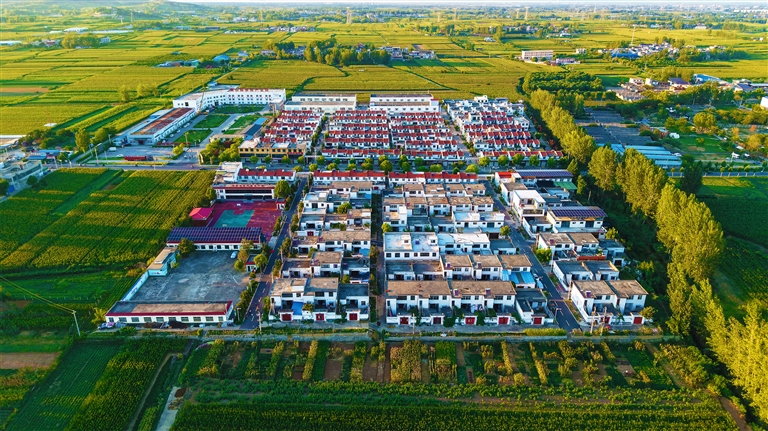
研究做好“三农”等工作
Xin Lang Cai Jing· 2026-01-09 18:42
Group 1 - The meeting emphasized the importance of implementing Xi Jinping's directives on "Three Rural Issues" and aimed to modernize agriculture and rural areas, promoting comprehensive rural revitalization and urban-rural integration [1][2] - The focus is on consolidating agricultural advantages, enhancing production capacity and quality, and ensuring stable income growth for workers through tailored economic development strategies [1][2] - The meeting highlighted the need for a people-centered urban development approach, fostering a harmonious urban-rural community and promoting high-quality urban development [2] Group 2 - The meeting called for a collaborative urban work structure involving unified leadership from the Party, government cooperation, and community participation to build a modernized city with unique characteristics [2] - It stressed the importance of planning and innovation in developing industrial parks and enhancing the management of chemical parks to transition from standard construction to high-quality development [2] - The meeting also underscored the necessity of risk prevention and safety measures in development, promoting green and safe growth [2]
刘宁在省委农村工作会议上强调 落实中央农村工作会议精神 不断开创我省“三农”工作新局面 王凯主持
He Nan Ri Bao· 2026-01-09 10:56
Group 1 - The meeting emphasized the importance of implementing Xi Jinping's directives on rural work and accelerating the construction of a strong agricultural province to support the modernization of rural areas [1][2] - The province aims to ensure food security by enhancing agricultural productivity through technology, management, and market strategies, while also focusing on winter wheat management and land quality improvement [2][3] - There is a strong focus on developing industries that benefit farmers, supporting stable employment for migrant workers, and improving policies to increase farmers' income [2][3] Group 2 - The meeting highlighted the need for effective leadership and accountability in rural revitalization efforts, with a call for a five-level leadership structure to ensure policy implementation [3] - The importance of practical work styles and avoiding superficial projects was stressed to enhance the effectiveness of rural development initiatives [3] - The meeting included discussions on the implementation opinions for advancing agricultural modernization and rural revitalization [3][4]
学习手记 | 乡村振兴,关键在人、关键在干
Xin Hua She· 2026-01-09 07:08
Core Viewpoint - The central rural work conference emphasized the importance of human resources and practical actions in rural revitalization, as highlighted by President Xi Jinping's remarks on the value of people and the necessity of hard work in the "three rural issues" [5][6]. Group 1: Human Resources in Rural Revitalization - President Xi Jinping pointed out that the key to rural revitalization lies in people and their actions, stressing that without labor force, food security and modern agriculture cannot be achieved [6]. - The conference highlighted the importance of talent revitalization, integrating it into a systematic layout of "five revitalizations," which includes industry, talent, culture, ecology, and organization [9]. Group 2: Practical Actions and Local Initiatives - The narrative of rural transformation reflects the significant changes in the lives of farmers and the rural landscape, showcasing the positive outcomes of local employment initiatives [7]. - The emphasis on practical efforts is crucial, as the happiness of the people is achieved through hard work, which also serves to cultivate and test talent within the rural context [10].
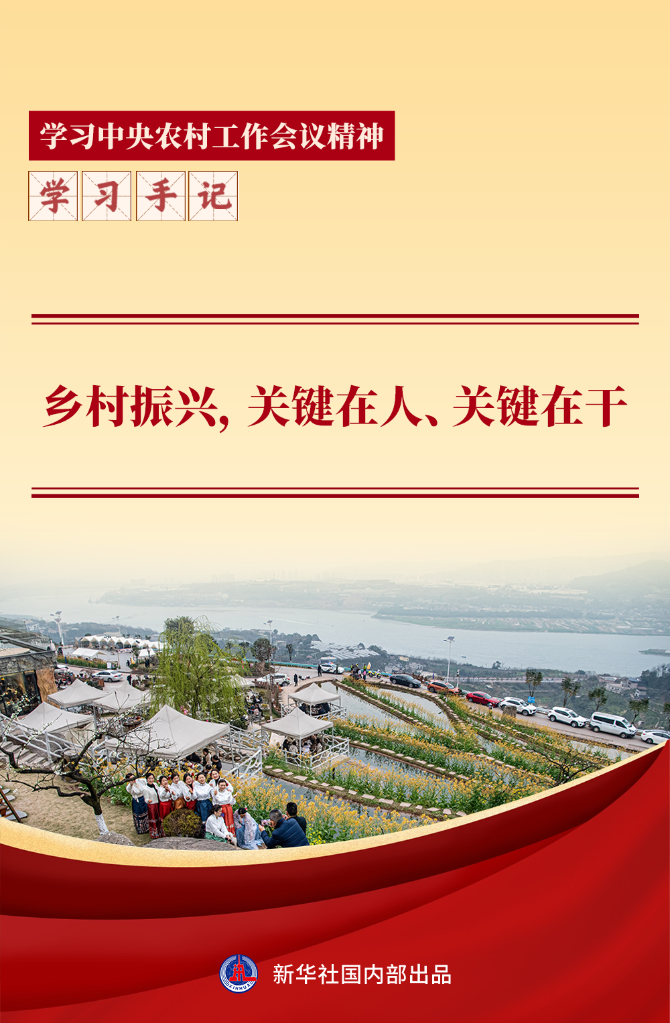
乡村振兴,关键在人、关键在干
Xin Lang Cai Jing· 2026-01-08 19:02
Core Viewpoint - The central theme of the articles emphasizes the importance of human resources and practical efforts in rural revitalization and agricultural development, as highlighted by President Xi Jinping's directives on "Three Rural Issues" [1][4]. Group 1: Human Resources in Rural Revitalization - The focus on talent revitalization is unprecedented, with a systematic approach integrating talent into the broader framework of rural revitalization [3][4]. - The "First Secretary" system is encouraged to persist, reflecting the importance of dedicated leadership in rural areas [2]. - The transformation of rural areas is marked by significant changes in the lives of farmers and the overall rural landscape, showcasing the vitality of rural communities [2]. Group 2: Practical Efforts and Local Initiatives - The emphasis on practical actions and the internal motivation of rural residents is crucial for achieving sustainable development in agriculture [5]. - The role of farmer cooperatives is highlighted as an effective means to increase income and develop modern agriculture, reinforcing the farmers' central position in the industry [4]. - Encouragement for farmers to actively engage in their development is essential, as demonstrated by Xi Jinping's support for local initiatives and the promotion of a hardworking spirit among rural communities [5].
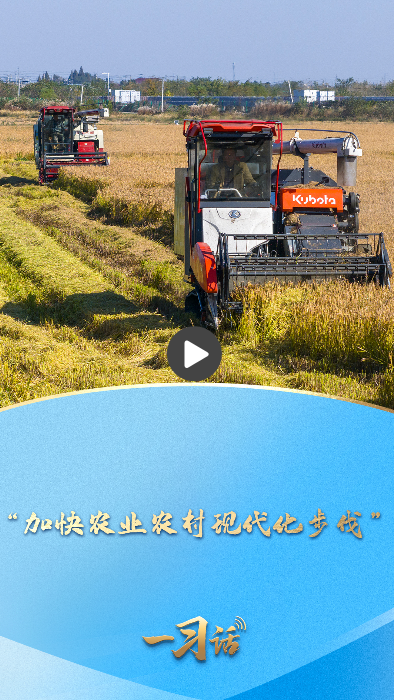
一习话·迈向“十五五”|“加快农业农村现代化步伐”
Yang Guang Wang· 2026-01-08 06:45
Core Viewpoint - The article emphasizes the importance of accelerating agricultural and rural modernization as part of China's overall modernization strategy, highlighting the need for comprehensive rural revitalization and urban-rural integration [2] Group 1: Agricultural Modernization - The "14th Five-Year Plan" suggests a clear focus on advancing agricultural and rural modernization, which is crucial for the overall modernization of China [2] - The year 2026 marks the beginning of the "14th Five-Year Plan," indicating a pivotal moment for agricultural development [2] Group 2: Policy and Implementation - The central rural work conference recently held in Beijing underscored the significance of enhancing grain production and improving policies that benefit farmers [2] - There is a commitment to consolidate and expand the achievements of poverty alleviation, ensuring that large-scale poverty does not reoccur [2] Group 3: Strategic Goals - The article outlines the necessity of building a strong agricultural nation as part of the broader modernization efforts [2] - It stresses the importance of continuing to focus on "three rural issues" (agriculture, rural areas, and farmers) without any slackening in efforts [2]
研究“三农”和非遗保护传承等工作
Liao Ning Ri Bao· 2026-01-08 06:26
Group 1 - The meeting emphasized the importance of addressing "three rural issues" as a top priority, aiming to promote comprehensive rural revitalization and accelerate the construction of a strong agricultural province [1] - The government aims to ensure national food security by enhancing grain production and advancing high-standard farmland and irrigation construction [1] - Policies to support farmers and promote stable income growth are to be strengthened, alongside efforts to consolidate and expand poverty alleviation achievements [1] Group 2 - The meeting highlighted the significance of the review of regulations and administrative normative documents for the establishment of a law-based government [2] - There is a focus on cultural confidence and the protection, inheritance, and utilization of intangible cultural heritage to build a culturally strong province [2] - The government aims to create a first-class business environment and enhance economic operation management to ensure a strong start for the 14th Five-Year Plan [2]
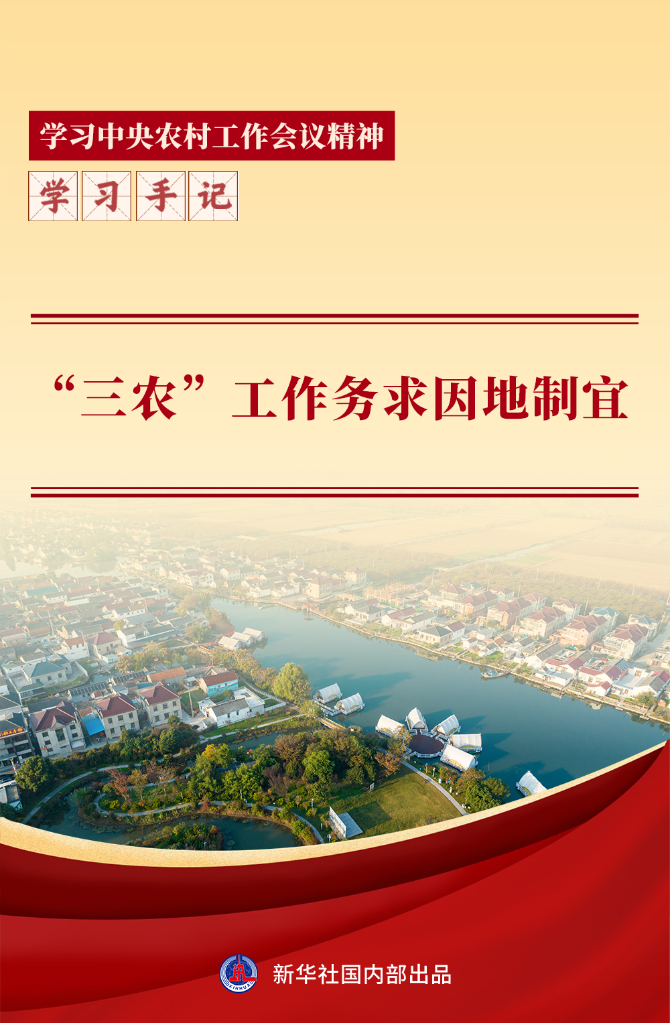
学习手记丨“三农”工作务求因地制宜
Xin Hua She· 2026-01-08 00:16
Core Viewpoint - The central theme of the article emphasizes the importance of the "localized approach" in rural development, as highlighted by President Xi Jinping during the recent Central Rural Work Conference, aiming to enhance rural governance and improve living conditions for farmers [5][6]. Group 1: Principles of Rural Development - The principle of "localized approach" is repeatedly stressed as a methodology for rural work, which should be tailored to local conditions and needs [5][6]. - The "Ten Thousand Projects" initiated in 2003 serves as a successful model for rural environment improvement, demonstrating the effectiveness of localized strategies [5][6]. - The article underscores the necessity of avoiding "performance projects" and "image projects" that do not align with the actual needs of farmers, ensuring that initiatives are practical and beneficial [5][6][8]. Group 2: Specific Examples and Applications - The article cites the example of rural toilet renovations, where President Xi has consistently advocated for a localized approach, recognizing the diverse conditions across different regions [6][7]. - It highlights the need for scientific assessment in determining which villages to preserve, renovate, or consolidate, emphasizing the importance of respecting farmers' opinions and local characteristics [7][9]. - The article notes that rural development should not mimic urban planning but should focus on improving living conditions while preserving the unique cultural and environmental aspects of rural areas [7][9]. Group 3: Future Directions - The "14th Five-Year Plan" suggests further advancing the construction of livable and workable beautiful villages, emphasizing the need for localized strategies that align with farmers' demands [9]. - Continuous exploration of new paths and methods is encouraged to create a modernized vision of rural development across the country [9].
“十五五”开局之年,中央定调“三农”工作
Xin Lang Cai Jing· 2026-01-02 22:39
Core Insights - The central theme of the news is the emphasis on the importance of agricultural modernization and food security in China's 14th Five-Year Plan, with specific goals set for 2026 and beyond [1][2]. Group 1: Agricultural Modernization - The 2026 focus on "anchoring agricultural modernization" reflects a strategic commitment from the government to enhance agricultural strength as part of China's overall modernization [1]. - Key tasks for 2026 include improving the policy support system, enhancing food supply diversity, and promoting rural living environment improvements [1]. Group 2: Food Security - The central government has reiterated the importance of food security, with measures such as maintaining arable land limits and enhancing grain production [2]. - The shift in focus from merely ensuring food availability to improving food quality and diversity indicates a strategic evolution in food security policy [2]. Group 3: Agricultural Resilience - Recent severe water and drought disasters have posed significant challenges to food production, prompting a call for enhanced water infrastructure and disaster resilience in agriculture [3]. - The government aims to ensure stable food supply by promoting farmer income stability and enhancing the agricultural production system's resilience [3]. Group 4: Farmer Income Growth - The increase in rural residents' disposable income, reaching 23,119 yuan in 2024, highlights the government's commitment to improving farmers' livelihoods [4]. - Specific measures to boost farmer income include supporting migrant workers and developing county-level industries to expand farmers' participation in economic activities [4]. Group 5: Rural Development - The emphasis on creating quality living spaces in rural areas reflects a shift towards valuing rural life and enhancing the quality of life for residents [5]. - The approach aims to integrate rural revitalization with modern economic development, fostering a system that supports both agricultural productivity and rural living standards [5].
中央农村工作会议释放“三农”发展新信号
Zhong Guo Xin Wen Wang· 2026-01-02 02:37
Core Viewpoint - The central rural work conference has set the tone for the "three rural issues" in 2026, emphasizing the principle of "local adaptation" in various tasks related to rural development [1][2]. Group 1: Policy Direction - The term "local adaptation" was mentioned three times, focusing on building livable and workable beautiful villages, developing new agricultural productivity, and improving rural construction implementation mechanisms [1]. - The emphasis on "local adaptation" signals a shift from a one-size-fits-all approach to a more tailored strategy that considers local conditions and development levels [1][6]. Group 2: Implementation Strategies - Different strategies are required for various types of villages, such as prioritizing protection for traditional and ancient villages, considering consolidation or reconstruction for underpopulated areas, and maintaining stability in populous villages [3]. - The need for local governments to avoid blindly copying urban models is highlighted, as this has led to issues like uniformity across villages and projects that do not meet farmers' actual needs [1][2]. Group 3: Agricultural Development - The goal of enhancing agricultural productivity is linked to the principle of "local adaptation," with a focus on implementing the "store grain in the ground and technology" strategy [4]. - The agricultural sector must avoid a one-size-fits-all approach, instead finding solutions that are best suited to local conditions to ensure effective agricultural technology development [4]. Group 4: Rural Modernization - The conference acknowledges the diverse development stages and resource endowments across different regions, encouraging local exploration of development models that respect traditional practices and local resources [6]. - Achieving agricultural modernization and improving rural living conditions by 2035 is seen as a realistic goal when local adaptation is effectively applied to address rural issues [7].