光计算

Search documents
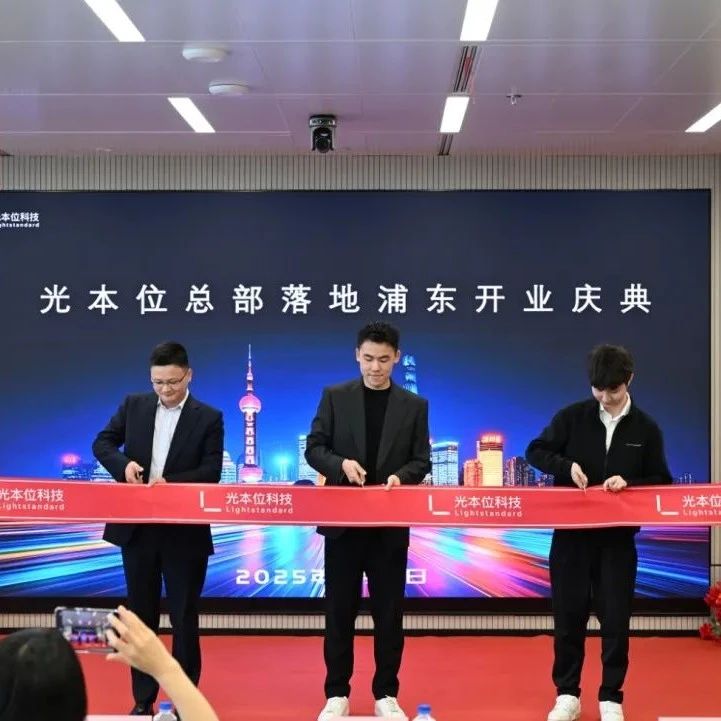
“追光”的事业,中国首家实现存算一体的光计算芯片公司落位浦东
半导体芯闻· 2025-06-13 09:39
Core Viewpoint - The establishment of Guangbenwei in Pudong marks a significant milestone in the development of AI computing paradigms based on photonic technology, aiming to revolutionize computing power deployment and cost efficiency [2][10]. Group 1: Company Overview - Guangbenwei was founded in 2022 and focuses on developing AI computing paradigms using light as a standard, specifically through the creation of phase-change material-based photonic storage computing chips and optoelectronic integrated computing cards [2][12]. - The company has achieved significant technological advancements, including the successful development of a photonic computing chip that can detect similarities in datasets 1000 times faster than traditional machine learning algorithms [4][12]. - Guangbenwei's headquarters in Pudong signifies a new chapter for the company, enhancing its operational capabilities and team dynamics [2][10]. Group 2: Team and Culture - The founding team consists of three young entrepreneurs with diverse backgrounds in AI and materials science, emphasizing a collaborative and innovative work environment [4][5]. - The company promotes an open office layout to foster creativity and collaboration among team members, which is seen as a key to driving innovation [6][10]. - Guangbenwei aims to be a platform for individuals to realize their potential and career aspirations, reflecting a strong team spirit [5][10]. Group 3: Technological Advancements - Guangbenwei's photonic computing chips are positioned to meet the growing demand for computing power, especially in the context of AI model proliferation [12][20]. - The company plans to commercialize its photonic computing chips by 2025, with the first chip achieving a matrix scale of 128x128, surpassing traditional silicon-based chips in performance [14][15]. - Guangbenwei has established partnerships with leading domestic semiconductor manufacturers and research institutions to enhance its technological capabilities and market reach [17][18]. Group 4: Market Potential - The global market for photonic computing is expected to grow significantly, with estimates suggesting it could reach a trillion-dollar valuation if successful [20][25]. - Guangbenwei is strategically positioned within the Pudong Zhangjiang area, benefiting from a dense talent pool and supportive policies that facilitate innovation and collaboration [25][26]. - The company is actively exploring various application scenarios for its photonic chips, collaborating with major internet companies and research institutions to identify potential use cases [23][25].

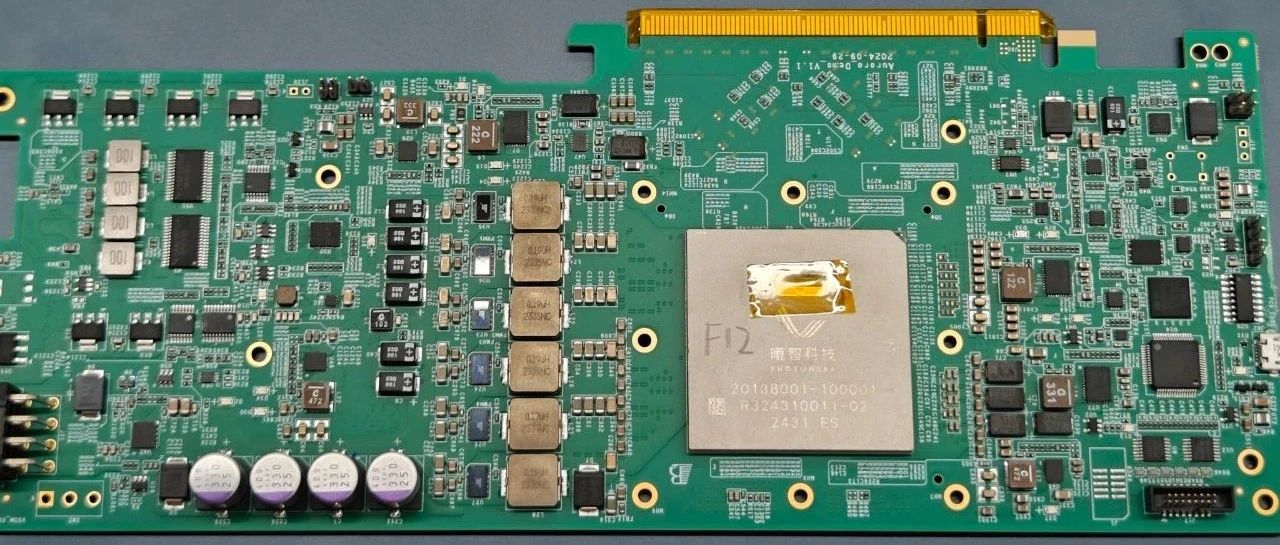
光计算芯片,Roadster时刻
半导体芯闻· 2025-04-08 10:33
Core Viewpoint - The article draws a parallel between Tesla's Roadster and the current state of the chip industry, suggesting that the introduction of "optical-electrical hybrid computing" marks a new era in computing, similar to how the Roadster initiated the electric vehicle revolution [1][6]. Group 1: Industry Challenges - The traditional chip industry is facing limitations due to the failure of Moore's Law, which has been a guiding principle for over 60 years, with performance improvements slowing down significantly [3][4]. - The demand for computing power has surged, particularly driven by advancements in artificial intelligence, leading to a doubling of computational needs every 4-6 months [3][4]. - Current innovations, such as near-storage computing and non-GPU architectures, address bandwidth and transistor utilization issues but do not fundamentally resolve the limitations of transistor density and absolute computing power [4][5]. Group 2: New Paradigm Introduction - The company proposes a new paradigm called "optical-electrical hybrid computing," which aims to overcome the limitations of traditional transistors by utilizing optical components [5][6]. - The introduction of the "Tianshu" system represents a significant advancement, integrating optical chips with electrical chips in a novel 3D stacked architecture to enhance computational capabilities [7][9]. Group 3: Technical Innovations - The optical chip in the Tianshu system employs Optical Multiply Accumulate (oMAC) technology for integer operations, significantly improving computational power without additional energy consumption [8][10]. - The electrical chip is a custom ASIC designed for floating-point operations, and the integration of over 40,000 optical devices allows for high bandwidth and low latency in processing complex algorithms [9][10]. Group 4: Software and Ecosystem Development - The company has developed a software framework to support popular programming languages like PyTorch, facilitating the integration of complex algorithms into the Tianshu system [12][13]. - A performance index called Equivalent Optical Processing Power (EOPP) has been introduced, which combines peak processing power, output precision, and weight refresh rates to provide a more comprehensive measure of performance [14]. Group 5: Future Prospects - The company is exploring further applications of its technology in various fields, including EDA systems, quantitative trading, and security recognition, with plans to expand into more scenarios [14][15]. - Innovations in optical interconnect technologies, such as Optical Network on Chip (oNOC) and Optical inter-chip Networking (oNET), are being developed to enhance data transmission efficiency and flexibility in chip architectures [15][16].