
曦智天枢

Search documents
接连上市,上海 “芯” 势力崛起
Zhong Guo Jing Ji Wang· 2026-01-13 06:41
Core Insights - The recent surge in Shanghai's semiconductor companies listing on the Hong Kong Stock Exchange signifies a robust "Shanghai phenomenon" driven by strong innovation and a favorable ecosystem [1][11] - Companies like TianShu, BiRan, MuXi, and SuiYuan are leading the charge in AI and integrated circuits, showcasing Shanghai's rising influence in these sectors [1][11] Innovation Capability - TianShu's "TianGai" series has delivered over 52,000 units to more than 290 clients, emphasizing the importance of mass production in their strategy [2] - SuiYuan has achieved significant milestones, including over 100,000 units shipped of its AI acceleration card, maintaining a leading position in the domestic market [2] - MuXi's GPU products are deployed in over 10 intelligent computing clusters, with a focus on developing next-generation GPU products [3] - MiniMax, a rapidly growing AI company, has developed a model that ranks among the top five globally in key areas, demonstrating exceptional performance and cost efficiency [3] Development Speed - Companies in Shanghai exhibit rapid growth, with MiniMax going from establishment to listing in just four years [4] - ZhiYuan Robotics achieved a production milestone of 5,000 units of its general-purpose robot in under two years, setting industry records [4] - XiZhi Technology is on track to deploy its distributed optical switching GPU at a large scale, showcasing the fast-paced innovation in the sector [4] Ecosystem Construction - Shanghai's supportive government policies and effective market mechanisms have created a "tropical rainforest" ecosystem conducive to innovation [8] - The city has implemented subsidies for model training costs, significantly reducing the financial burden on AI companies [8] - Shanghai has attracted a significant portion of the national integrated circuit talent and resources, fostering a collaborative environment for innovation [9] - The establishment of specialized industrial parks has facilitated close collaboration among companies, enhancing the overall ecosystem [9] Application Scenarios - Shanghai is actively creating real-world application scenarios for AI technologies, enhancing their practical utility [10] - The city has initiated projects that connect industry challenges with scientific solutions, promoting collaborative innovation [10] - Strategic investments from state-owned enterprises have supported leading companies in the AI and semiconductor sectors, ensuring their growth and sustainability [10] Future Outlook - Shanghai aims to continue its focus on innovation across the entire industry chain, aspiring to develop a world-class integrated circuit and AI industry cluster [11][12] - The city is committed to creating an environment where innovative ideas can thrive and advanced technologies can flourish, positioning itself as a global leader in these fields [12]
筑巢引凤,上海AI“集团军”崛起全球赛道
Guo Ji Jin Rong Bao· 2026-01-09 07:48
Core Insights - Shanghai's AI industry is experiencing a significant IPO wave, with five companies, including MiniMax, successfully listing on the Hong Kong stock market, marking a rapid growth phase for AI enterprises in the region [1][5][8] Policy Support - Shanghai has established a comprehensive policy support system to address core challenges in the AI industry, including computing power, funding, and talent [2][4] - Innovative subsidy policies like "computing power vouchers" and "corpus vouchers" have been introduced, with plans to issue 600 million yuan in computing power vouchers by 2025 to alleviate cost pressures for AI companies [2][4] - The "AI+ Manufacturing" development white paper outlines additional support measures, including project subsidies of up to 10 million yuan and a 400 billion yuan special credit line for customized financial products [2][4] Market Opportunities - The Shanghai government is actively promoting the rapid pilot testing of large models in various applications, creating valuable market opportunities for local companies [3][5] - A list of 50 application scenarios and a directory for smart product promotion have been released, covering key industries such as integrated circuits and high-end equipment [3][5] Talent Development - Talent acquisition and retention are prioritized, with policies in place to stabilize the workforce, including a training program that has created a reserve of over 1,000 engineers [4] - The establishment of AI innovation towns in Pudong Zhangjiang and Xuhui Beiyang has attracted over 300 AI companies and 6,000 innovative talents, fostering a low-cost, high-intelligence development environment [4] Industry Growth - The recent IPOs of five AI companies reflect the robust growth of Shanghai's AI sector, which spans the entire industry chain from computing power to end applications [5][6] - Companies like MiniMax have achieved significant technological breakthroughs, with its models ranking among the top globally in AI model evaluations [5][6] Investment Climate - The capital market has shown strong interest in Shanghai's AI companies, with MiniMax's IPO receiving 1,837 times oversubscription and raising approximately 5.54 billion HKD [7][8] - The involvement of prestigious cornerstone investors, including Alibaba and ADIA, underscores the strong market confidence in these companies [7][8] Future Outlook - Shanghai aims to continue enhancing its talent services and entrepreneurial environment, focusing on building AI innovation hubs to maintain its leadership in the domestic and global AI landscape [8]


全靠硬核,上海“AI天团”成资本宠儿
Jie Fang Ri Bao· 2026-01-09 01:03
Core Insights - Shanghai has established itself as a leading business environment globally, particularly for GPU companies, providing a platform for technology competition that aids entrepreneurs in identifying weaknesses and iterating quickly [1][6] - The AI industry in Shanghai is experiencing rapid growth, with multiple companies going public in a short time frame, indicating a strong market interest and investment potential [2][11] Group 1: Company Developments - MiniMax, a young AI company, has gone public with an average employee age of 29 and generates 70% of its revenue from overseas, boasting over 2.12 million users across more than 200 countries [2] - The recent IPO of TianShuZhiXin saw an oversubscription of approximately 414.24 times, highlighting its status as a significant player in the GPU market [2] - Yingxi Intelligent, which went public on December 30, 2022, has shortened drug development cycles to one-third of traditional methods using AI, and has secured a strategic partnership worth $8.88 billion with a global pharmaceutical company shortly after its IPO [3] Group 2: Industry Trends - The rapid pace of innovation in Shanghai's AI sector is evident, with companies like ZhiYuan Robotics achieving significant production milestones in a short time [4] - MiniMax has developed leading models in voice, video, and text, generating over 5.9 billion videos, showcasing its technological prowess [5] - The ecosystem in Shanghai is characterized by a rich concentration of talent and resources, with over 1,200 integrated circuit companies and nearly 50% of the country's innovation resources located there [8] Group 3: Government Support - The Shanghai government has played a crucial role in supporting AI companies through subsidies and policies that alleviate the costs of model training and computational resources [6][10] - The city has fostered a collaborative environment where companies can easily access resources and partnerships, enhancing innovation and efficiency [7][8] - The investment landscape in Shanghai is robust, with government initiatives attracting global capital to support technology development, creating a cycle of investment and innovation [10]
腾讯参投!光电混合算力独角兽曦智科技完成超15亿元C轮融资
Xin Lang Cai Jing· 2025-09-05 01:17
Company Overview - Xizhi Technology recently completed a C-round financing exceeding 1.5 billion RMB, attracting investments from major institutions including China Mobile's fund, Shanghai Guotou, Guoxin Fund, and Pudong Venture Capital, with continued support from existing shareholders [1] - The company focuses on photonic networks and photonic computing, aiming to drive the commercialization of optoelectronic hybrid technology [2] Leadership and Innovation - The CEO and founder, Shen Yichen, is a MIT PhD graduate who has made significant contributions to the field, including a publication in "Science" during his doctoral studies [2] - Xizhi Technology has launched the world's first distributed optical interconnect GPU super node, LightSphere X, and the first domestic xPU-CPO optoelectronic co-packaged prototype system [2] Market Position and Growth - The global photonic chip market is projected to grow, with an estimated size of approximately 2.78 billion USD in 2023, reflecting a year-on-year increase of 14.4% [3] - Xizhi Technology is recognized as a unicorn in the optoelectronic hybrid computing sector, with plans to accelerate the development of next-generation computing cards that will fully support AI large models [3] Technological Advancements - The company has made strides in photonic computing, releasing the latest generation of optoelectronic hybrid computing cards, which integrate the largest 128×128 photonic matrix globally [3] - Xizhi Technology's advancements in photonic technology are positioned to enhance its competitive edge as domestic firms improve their technological capabilities and market recognition [3]

曦智科技宣布完成超15亿元C轮融资,中国移动和国新基金等参与
Zheng Quan Shi Bao Wang· 2025-09-04 10:25
Company Overview - XiZhi Technology, a provider of optical-electrical hybrid computing power, has completed a C-round financing exceeding 1.5 billion RMB, attracting investments from China Mobile, Shanghai Guotou, and others [1] - The company aims to push the commercialization of large-scale optical integration technology, expecting photon chips to account for 30% of the computing power in intelligent computing centers within the next five years [1] Business Focus - The company focuses on two main business directions: photonic networks and photonic computing, with a vision to "break the boundaries of computing power through optical-electrical integration" [1] - XiZhi Technology has established strategic partnerships with leading domestic optical/electrical wafer manufacturers, packaging factories, and system vendors, facilitating breakthroughs in key areas such as supernode construction and CPO [1] Product Development - In the photonic network sector, the company has launched the world's first distributed optical interconnect GPU supernode, LightSphere X, and received the SAIL Award at the 2025 WAIC [2] - The company has also introduced the first domestic xPU-CPO optical-electrical co-packaged prototype system and is developing higher integration and bandwidth density CPO solutions [2] Industry Context - The demand for computing power is surging due to the development of trillion-level large models, while the performance of electrical chips is nearing physical limits, leading to a growing computing power gap [3] - XiZhi Technology's optical interconnect solutions can build high-bandwidth, low-latency large-scale computing clusters, significantly improving GPU utilization [3] - The optical-electrical hybrid computing architecture offers advantages in enhancing computing density and energy efficiency while reducing latency and overall costs [3]

超15亿!上海芯片独角兽获新一轮融资,中移动参投
是说芯语· 2025-09-04 07:27
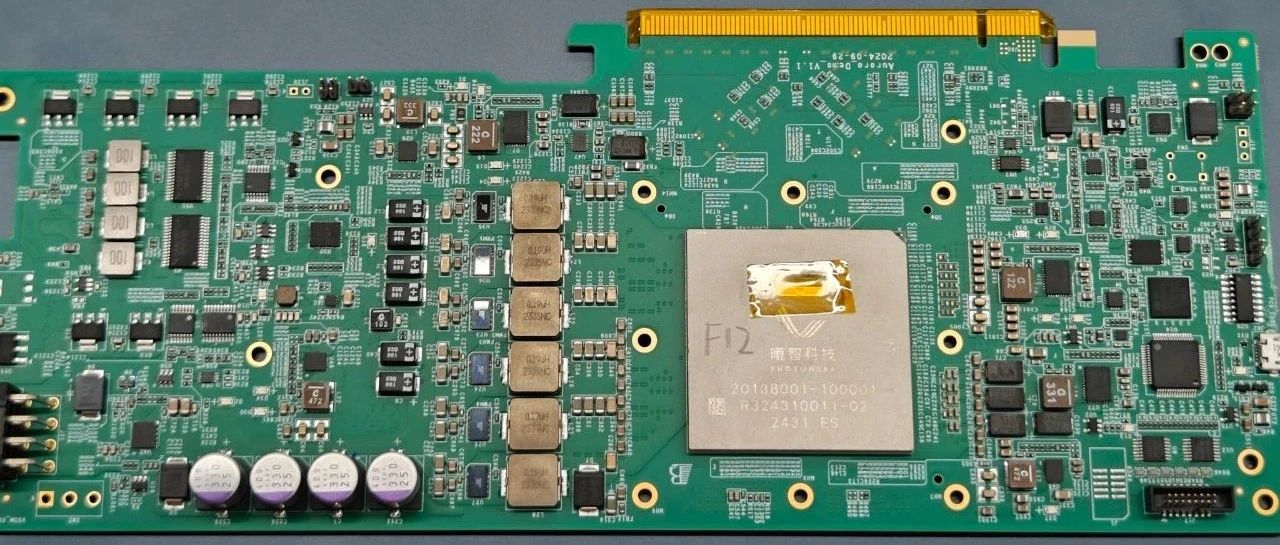
Core Viewpoint - The commercialization of photonic networks and photonic computing is reaching a critical turning point, with significant advancements in technology and funding opportunities for companies in this sector [1]. Group 1: Company Overview - Xizhi Technology, a leading player in the photonic computing sector, has completed over 1.5 billion CNY in Series C financing, with participation from major investors including China Mobile and Shanghai Guotou [2]. - The company is the only domestic unicorn focused on photonic mixed computing and is accelerating the development of the next-generation photonic mixed computing card to support AI large models [2][3]. Group 2: Technological Advancements - The company has developed a high-bandwidth, low-latency optical interconnect solution that significantly enhances GPU utilization and demonstrates advantages in computing density, energy efficiency, and cost reduction [3]. - Xizhi Technology launched the world's first distributed optical interconnect GPU supernode, LightSphere X, during the 2025 WAIC, winning the highest award, the SAIL Award [3][5]. Group 3: Research and Development - The latest generation of photonic mixed computing cards, Xizhi Tian Shu, features a 128×128 photonic matrix, marking the first application of photonic mixed computing in complex commercial models [5]. - The company has established strategic partnerships with leading domestic photonic/electronic wafer manufacturers and system vendors, facilitating breakthroughs in key areas such as supernode construction and CPO [5].
曦智科技完成超15亿元C轮融资,中国移动旗下基金等参投
2 1 Shi Ji Jing Ji Bao Dao· 2025-09-04 06:33
Core Viewpoint - Shanghai Xizhi Technology Co., Ltd. has completed a C round financing exceeding 1.5 billion RMB, aimed at accelerating the development of core technologies and the large-scale implementation of photonic hybrid computing power [1][9] Company Overview - Founded in February 2018, Xizhi Technology has a team of nearly 250 people, with over 80% being R&D personnel, primarily from MIT and other industry experts [2] - The company focuses on photonic networks and photonic computing, transitioning photonic hybrid technology from R&D to industrial application [2] Financing History - Xizhi Technology raised $10.7 million in seed funding in 2018, with investors including Baidu Ventures and ZhenFund [3] - In April 2020, the company completed a $26 million Series A financing led by Matrix Partners China and CICC Capital [3] - The company also completed a Series A+ financing in July 2020, with investments from HeLi Capital [4] - The B round financing details remain undisclosed, but it was reported that Shanghai International Group led the round, with subsequent investments from Tencent and Sequoia Capital [4] Technological Advancements - Xizhi Technology has made significant breakthroughs in key areas such as supernode construction and CPO (Co-Packaged Optics), with multiple technology and commercialization advancements announced recently [5] - The company launched the world's first distributed optical interconnect GPU supernode, LightSphere X, at the 2025 World Artificial Intelligence Conference, which won the highest award, the SAIL Award [5] - The LightSphere X aims to expand Scale-Up networks, introducing advanced optical interconnect technology to overcome physical limitations of traditional interconnect methods, significantly enhancing GPU utilization [5] Market Position and Strategy - With the increasing demand for computing power driven by large model parameters, Xizhi Technology is strategically positioning itself in the supernode market, recognizing it as a significant opportunity [6][7] - The company has completed multiple thousand-card clusters and aims to deploy ten-thousand-card clusters within the year [7] - Xizhi Technology is accelerating the development of the next generation of photonic hybrid computing cards to fully support AI large models while deepening commercial applications and ecosystem development [8]
光计算芯片,Roadster时刻
半导体芯闻· 2025-04-08 10:33
Core Viewpoint - The article draws a parallel between Tesla's Roadster and the current state of the chip industry, suggesting that the introduction of "optical-electrical hybrid computing" marks a new era in computing, similar to how the Roadster initiated the electric vehicle revolution [1][6]. Group 1: Industry Challenges - The traditional chip industry is facing limitations due to the failure of Moore's Law, which has been a guiding principle for over 60 years, with performance improvements slowing down significantly [3][4]. - The demand for computing power has surged, particularly driven by advancements in artificial intelligence, leading to a doubling of computational needs every 4-6 months [3][4]. - Current innovations, such as near-storage computing and non-GPU architectures, address bandwidth and transistor utilization issues but do not fundamentally resolve the limitations of transistor density and absolute computing power [4][5]. Group 2: New Paradigm Introduction - The company proposes a new paradigm called "optical-electrical hybrid computing," which aims to overcome the limitations of traditional transistors by utilizing optical components [5][6]. - The introduction of the "Tianshu" system represents a significant advancement, integrating optical chips with electrical chips in a novel 3D stacked architecture to enhance computational capabilities [7][9]. Group 3: Technical Innovations - The optical chip in the Tianshu system employs Optical Multiply Accumulate (oMAC) technology for integer operations, significantly improving computational power without additional energy consumption [8][10]. - The electrical chip is a custom ASIC designed for floating-point operations, and the integration of over 40,000 optical devices allows for high bandwidth and low latency in processing complex algorithms [9][10]. Group 4: Software and Ecosystem Development - The company has developed a software framework to support popular programming languages like PyTorch, facilitating the integration of complex algorithms into the Tianshu system [12][13]. - A performance index called Equivalent Optical Processing Power (EOPP) has been introduced, which combines peak processing power, output precision, and weight refresh rates to provide a more comprehensive measure of performance [14]. Group 5: Future Prospects - The company is exploring further applications of its technology in various fields, including EDA systems, quantitative trading, and security recognition, with plans to expand into more scenarios [14][15]. - Innovations in optical interconnect technologies, such as Optical Network on Chip (oNOC) and Optical inter-chip Networking (oNET), are being developed to enhance data transmission efficiency and flexibility in chip architectures [15][16].
【电子】名企持续加入机器人产业,新凯来发布半导体设备新品——光大证券科技行业跟踪报告之七(刘凯/于文龙/白玥)
光大证券研究· 2025-04-03 08:47
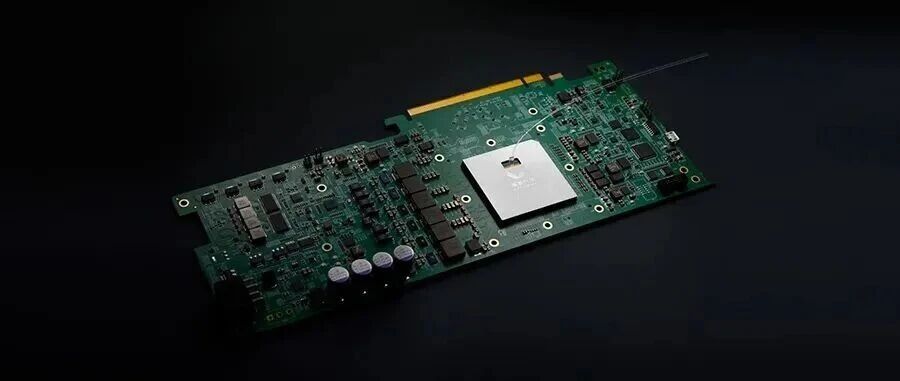
Group 1: AI Developments - The DeepSeek V3 model has completed a minor version upgrade, showing improvements across various capabilities [3] - Tencent has officially launched its self-developed deep thinking model, the mixed Yuan T1, enhancing reasoning abilities [3] - Google's new model, Gemini 2.5 Pro, has achieved state-of-the-art (SOTA) performance in multiple benchmark tests and topped the Arena leaderboard [3] - OpenAI has released the native multimodal image generation feature of GPT-4o, enabling the generation of more realistic images [3] Group 2: Semiconductor Industry - New Kai Lai showcased around 30 devices at the 2025 Semicon China exhibition, covering four major categories: diffusion, etching, thin films, and measurement [5] - The U.S. Department of Commerce announced the addition of 54 Chinese entities to the export control entity list, with 12 listings effective from March 25, 2025, and the remaining 42 expected to take effect from March 28, 2025 [5] Group 3: Robotics Industry - Vivo announced the establishment of "vivo Robot Lab" to enter the home robotics sector during the Boao Asia Forum 2025 [6] - Yijiahe has strategically upgraded, leading to the formal establishment of Lindo Technology [6] - Zhiyuan held its first supplier conference, collaborating with over a hundred partners to layout the robotics market [6] - Wolong Electric Drive has invested in Zhiyuan Robotics to jointly promote the development of embodied robots [6] - Figure Robotics released a new video showcasing its transition from "stumbling" to "steady," unlocking new natural walking skills [6] Group 4: New Product Launches - Xizhi Technology launched the new generation of optical hybrid computing card "Xizhi Tian Shu," which integrates the advantages of optical and electronic chips and employs advanced 3D packaging technology, showing significant performance improvements over previous models [4]
光大证券科技行业跟踪报告之七:名企持续加入机器人产业 新凯来发布半导体设备新品
Xin Lang Cai Jing· 2025-04-03 00:28
AI Industry Developments - DeepSeek V3 model has completed a minor version upgrade, showing improvements across various capabilities [1] - Tencent has officially launched its self-developed deep thinking model, MixT1, with enhanced reasoning abilities [1] - Google's new model, Gemini 2.5 Pro, has achieved state-of-the-art (SOTA) levels in multiple benchmark tests and topped the Arena leaderboard [1] Semiconductor Sector Updates - OpenAI has released GPT-4o with native multimodal image generation capabilities, allowing for more realistic image creation [2] - Xizhi Technology has globally launched a new generation of optoelectronic hybrid computing card, "Xizhi Tian Shu," which integrates optical and electronic chip advantages and employs advanced 3D packaging technology, showing significant performance improvements over previous models [2] - New products from New Kai Lai were showcased at SemiconChina 2025, covering approximately 30 types of equipment across four categories: diffusion, etching, thin film, and measurement [2] - The U.S. Department of Commerce has added 54 Chinese entities to its export control list, with 12 listings effective from March 25, 2025, and the remaining 42 expected to take effect on March 28, 2025 [2] Robotics Industry Trends - VIVO announced the establishment of "vivo Robot Lab" to enter the home robotics sector during the Boao Asia Forum 2025 [3] - Yijiahe has strategically upgraded, leading to the establishment of Lindo Technology [3] - Zhiyuan held its first supplier conference, collaborating with over a hundred partners to expand in the robotics market [3] - Wolong Electric Drive has invested in Zhiyuan Robotics to advance embodied robotics development [3] - Figure Robotics released a new video showcasing its progress from "stumbling" to "steady" walking capabilities [3] Investment Recommendations - The emergence of DeepSeek is expected to catalyze the accelerated iteration of global large models, with AI application scenarios such as edge computing, intelligent driving, and robotics likely to experience higher growth rates [3] - Continued optimism for investment opportunities in the technology sector, particularly in domestic computing infrastructure [3] - Recommendations for the electronic communication sector include focusing on domestic AI computing companies such as Cambrian, Haiguang Information, and others [3] - In the computer industry, attention is drawn to companies like Kingsoft Office and Foxit Software due to the increasing value of high-frequency interaction entry points [4] - The robotics industry suggests monitoring various segments, including connectors, main bodies, PCB, equipment, dexterous hands, 3D vision, motors, scene robots, operating systems, and sensors [4]
