爱国情怀

Search documents
出版界推出一批纪念中国人民抗日战争暨世界反法西斯战争胜利80周年主题图书
Yang Shi Wang· 2025-08-29 12:05
Core Viewpoint - The publishing industry in China is commemorating the 80th anniversary of the victory in the Chinese People's Anti-Japanese War and the World Anti-Fascist War by releasing a series of themed books that emphasize historical remembrance, honoring martyrs, cherishing peace, and creating a better future [1] Group 1: Themed Publications - A collection of significant works has been launched, including "History of the Chinese Anti-Japanese War (1931-1945)", "Newly Compiled History of World War II", and "Compilation of Anti-Japanese War Archives" [1] - The series also features titles such as "The Anti-Japanese War Flag: Mao Zedong", "My Grandfather Yang Jingyu", and "Cultural Resistance of a Scholar" among others, showcasing diverse perspectives on the war [1] - These publications are characterized by clear themes, authoritative historical materials, and rich content, aimed at promoting the spirit of the great anti-war effort, especially among the youth [1] Group 2: Social Impact - The initiative is designed to foster patriotism and a sense of historical continuity, encouraging young readers to draw strength from the past [1] - The books serve as a medium to instill love for the country and enhance the understanding of the sacrifices made during the war [1]
(同心抗战)香港大营救亲历者后人:国家有难时,香港同胞从未缺席
Zhong Guo Xin Wen Wang· 2025-08-29 07:44
(同心抗战)香港大营救亲历者后人:国家有难时,香港同胞从未缺席 原中共香港长洲区委书记陈亮明之女陈凯伦接受中新网采访时表示,她一直觉得香港大营救是一件非常 震撼的事情。在国难当头、国家急需救援之时,香港人从未缺席。香港人的斗争智慧丝毫不逊色于任何 一个地区,他们的爱国情怀同样高涨。(记者 温孟馨 刘轩廷 制作 王芷涵 封面设计 宋晓昱) 来源:中国新闻网 编辑:徐世明 广告等商务合作,请点击这里 本文为转载内容,授权事宜请联系原著作权人 中新经纬版权所有,未经书面授权,任何单位及个人不得转载、摘编或以其它方式使用。 关注中新经纬微信公众号(微信搜索"中新经纬"或"jwview"),看更多精彩财经资讯。 ...
叶浅予抗战漫画燃动香江
Hang Zhou Ri Bao· 2025-08-27 02:25
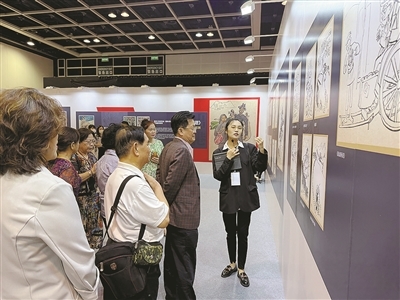
Core Viewpoint - The exhibition "Remembering History, Cherishing Peace" commemorating the 80th anniversary of the victory in the Chinese People's Anti-Japanese War has attracted significant public interest in Hong Kong, particularly the section featuring the anti-war cartoons of Ye Qianyu, which has drawn 48,000 visitors by August 26 [5][6]. Group 1: Exhibition Details - The exhibition took place from August 22 to 29 at the Hong Kong Convention and Exhibition Centre, focusing on the historical significance of the Anti-Japanese War and featuring Ye Qianyu's works [5]. - The core segment of the exhibition, "The Soul of Art and the Iron Wire of National Salvation," showcases Ye Qianyu's anti-war cartoons, particularly from the series "Escape from Hong Kong" and "War-time Chongqing" [6][9]. Group 2: Public Reception - Visitors, including families, expressed emotional connections to the artworks, with one parent highlighting the importance of teaching children about historical patriotism through these cartoons [6][7]. - The exhibition has garnered attention from the art community, with notable figures acknowledging Ye Qianyu's unique style and its educational value for contemporary artists [7]. Group 3: Cultural Significance - The exhibition serves as a cultural bridge between Hong Kong and the mainland, with representatives from the Tonglu Association in Hong Kong expressing pride in showcasing Ye Qianyu's works [7]. - The event has facilitated cultural exchanges, with gifts of local art and crafts presented to Hong Kong officials as a testament to the shared heritage [7].

“有国才有家,爱家先爱国”(“追寻台胞抗日足迹”系列③)
Ren Min Ri Bao Hai Wai Ban· 2025-08-25 22:53
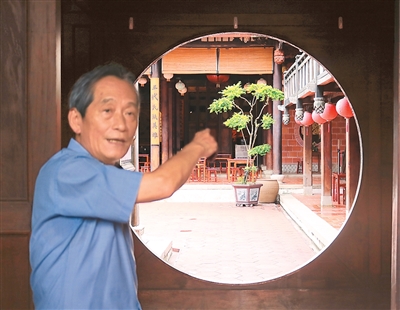
Core Viewpoint - The article highlights the historical significance and contributions of the Lin family in Taiwan's resistance against Japanese colonial rule, emphasizing their legacy of patriotism and national pride [2][3][4][5][6][7]. Group 1: Historical Contributions - The Lin family, known for their large ancestral home in Taichung, has a rich history of involvement in significant events such as the Sino-French War and support for Sun Yat-sen's revolutionary efforts [2][3]. - Lin Chao-dong, a key figure in the family, participated in the Sino-French War and later led a military group against Japanese forces during the First Sino-Japanese War [3][4]. - Lin Tsao-mi, Lin Chao-dong's son, renounced his Japanese citizenship in 1913, becoming the first Taiwanese to restore Chinese nationality after the Xinhai Revolution, despite the loss of family assets [4][5]. Group 2: Legacy of Resistance - The Lin family's commitment to resisting Japanese rule continued through generations, with Lin Cheng-heng, Lin Tsao-mi's son, serving in the military during World War II and sustaining injuries in battle [5][6]. - The family also engaged in non-armed resistance, promoting Chinese culture and participating in organizations aimed at opposing Japanese colonialism [6][7]. - In 2007, Lin Guanghui established the Taiwan Anti-Japanese Martyrs' Relatives Association to preserve and promote the history of Taiwanese resistance against Japanese rule [7]. Group 3: Commemoration and Education - The article mentions a memorial stone at the Yellow Emperor's Tomb, honoring the Taiwanese who contributed to the island's return to China, with Lin Hsien-tang, a family member, being a notable representative [7]. - Lin Guanghui and his family have actively worked to educate the public about the sacrifices made during the anti-Japanese struggle, emphasizing the importance of remembering this history [7].
通讯丨从滇缅公路到吉隆坡——跨越80年的和平守望
Xin Hua Wang· 2025-08-24 01:58
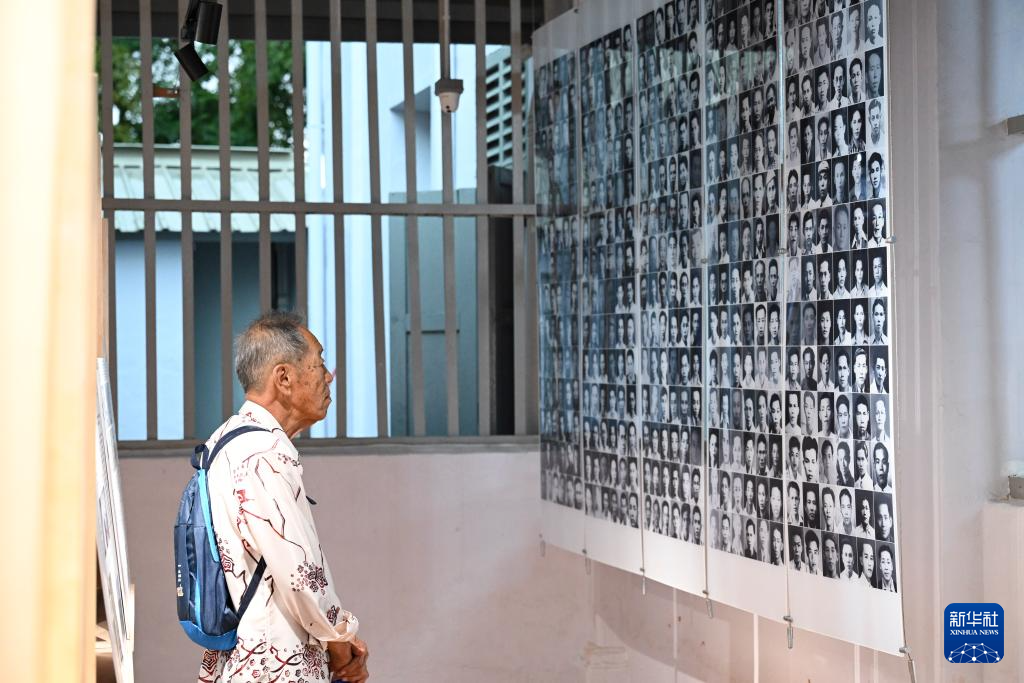
Core Viewpoint - The opening of the South Overseas Chinese Workers Memorial Park and Museum in Kuala Lumpur commemorates the contributions and sacrifices of the South Overseas Chinese workers during the Anti-Japanese War, aiming to educate future generations about this historical significance [1][3][4]. Group 1: Memorial Park and Museum - The memorial park and museum were constructed over four months and officially opened to the public, designed to evoke the courage and resilience of the South Overseas Chinese workers [1]. - The design of the memorial park is inspired by the "Twenty-Four Bends" section of the Burma Road, emphasizing the historical context of the workers' contributions [1]. - The memorial features a wall inscribed with the names of over 3,000 South Overseas Chinese workers who returned to serve during the war [1]. Group 2: Historical Context - The South Overseas Chinese workers played a crucial role in transporting essential supplies along the 1,146-kilometer Burma Road, facing numerous dangers including enemy attacks and harsh conditions [3]. - Over 1,000 South Overseas Chinese workers lost their lives during this effort, averaging one casualty per kilometer [3]. - The initiative to recruit these workers began in February 1939, led by Chinese leader Chen Jiageng, as a response to the dire need for drivers and mechanics due to the war [3]. Group 3: Commemoration and Reflection - The opening ceremony was attended by over a hundred individuals from Malaysia, China, and Myanmar, who paid their respects to the sacrifices made by the South Overseas Chinese workers [3]. - Chinese Ambassador to Malaysia highlighted the indelible contributions of the South Overseas Chinese workers to the victory in the Anti-Japanese War and the global anti-fascist movement [4]. - The memorial serves as a reminder of the importance of peace and the need to respect historical sacrifices, as emphasized by Malaysian Transport Minister [3].
通讯|从滇缅公路到吉隆坡——跨越80年的和平守望
Xin Hua She· 2025-08-23 14:02
Core Viewpoint - The opening of the South Overseas Chinese Workers Memorial Park and Museum in Kuala Lumpur commemorates the contributions and sacrifices of the South Overseas Chinese workers during the Anti-Japanese War, emphasizing the importance of remembering history and fostering a sense of patriotism among younger generations [1][2][3]. Group 1: Memorial Park and Museum - The South Overseas Chinese Workers Memorial Park and Museum was inaugurated in Kuala Lumpur, designed to evoke the courage and resilience of the workers who contributed to the war effort [1]. - The park's design is inspired by the "Twenty-Four Bends" section of the Burma Road, aiming to engage visitors with the historical significance of the South Overseas Chinese workers [1][2]. - The memorial features a wall inscribed with the names of over 3,000 South Overseas Chinese workers who returned to serve during the war [1]. Group 2: Historical Context - The South Overseas Chinese workers played a crucial role in transporting essential supplies along the 1,146-kilometer Burma Road, facing numerous dangers including enemy attacks and harsh conditions [2]. - Over 1,000 South Overseas Chinese workers lost their lives during this effort, averaging one casualty per kilometer [2]. - The initiative to form the South Overseas Chinese Workers Service Corps began in 1939, led by prominent overseas Chinese leader Tan Kah Kee, in response to the urgent need for drivers and mechanics in wartime China [2]. Group 3: Personal Stories and Legacy - Personal accounts highlight the deep sense of patriotism and sacrifice among the workers, with descendants like Hou Weimei reflecting on their ancestors' contributions and the importance of remembering their legacy [3][4]. - The memorial serves as a reminder of the historical sacrifices made for peace, with calls to cherish and uphold the values of patriotism in contemporary society [4].
这支八十年历史的龙狮队,有一个特别的名字
Xin Hua Wang· 2025-08-22 20:38
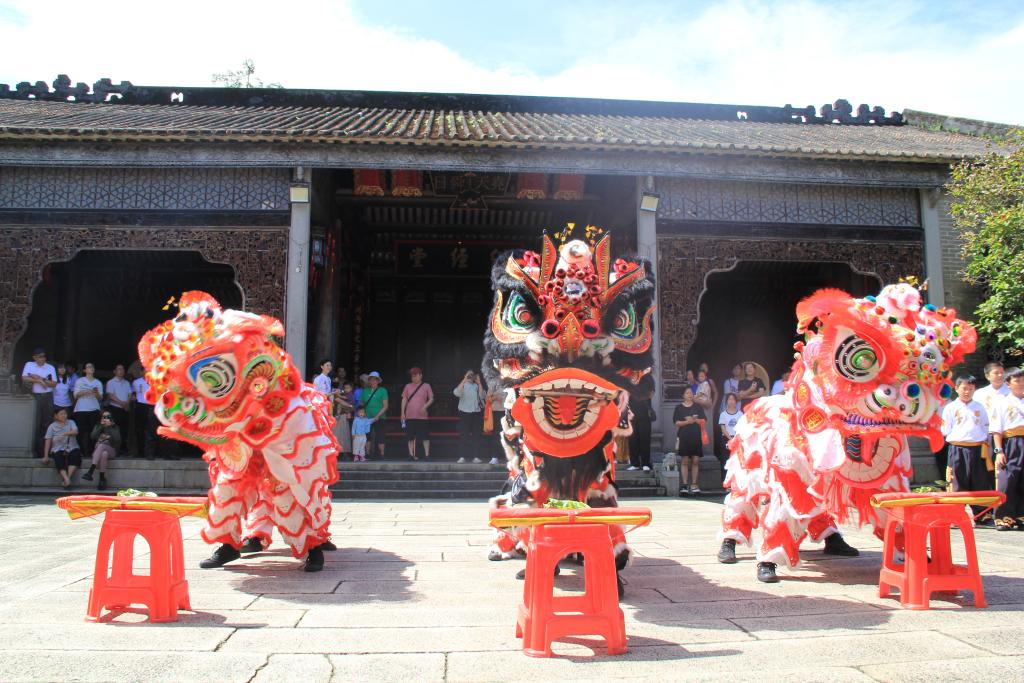
Core Viewpoint - The celebration of the 80th anniversary of the "Victory" lion dance team in Beishan Village highlights the cultural significance and historical continuity of this tradition, which has evolved alongside the village's economic development and community cohesion [1][2][4]. Group 1: Historical Significance - The "Victory" lion dance team was established in 1945 to commemorate the end of World War II and has maintained its name and spirit for 80 years [2]. - The team embodies martial arts spirit and patriotism, with members practicing traditional forms like Cai Li Fo boxing and lion dance [2]. Group 2: Community and Cultural Development - The lion dance team serves as a vital link within the community, fostering a sense of belonging and participation among villagers [2][4]. - The village has transformed economically since the reform and opening-up, becoming a hub for investment and collaboration with Hong Kong and Macau [4]. Group 3: Modernization and Innovation - Recent efforts have focused on revitalizing historical buildings and promoting local brands, leading to the establishment of over 230 businesses in the village [5]. - The lion dance team has adapted to modern influences, with new leadership and training methods enhancing its traditional practices [5].
庆祝东江水供港60周年主题巡回展览在港启幕
Xin Hua Wang· 2025-08-18 01:30
香港中西区青年协会主席李雪萍说,经历过缺水岁月的老一辈香港人对东江水的意义体会尤深,没有国 家的支援就没有香港今日的发展。 展览通过展板、教育单张、现场分享、问答互动等形式,进一步加深香港市民特别是青少年对东江水供 港的认识,鼓励年轻一代深入了解东江水供港工程的历史与运作,强化节约用水的环保意识。 出席活动的全国人大常委会委员、香港爱国主义教育工作小组组长李慧琼表示,通过开展纪念活动可以 增进青少年对东江水供港历史的认识,深切体会到国家无论在任何时候,都在源源不断给予香港巨大支 持。同时,也希望年轻一代更加珍惜注重水资源的利用和保护。 香港特区政府民政及青年事务局副局长梁宏正表示,本次活动既是东江水供港60周年系列活动之一,也 是香港青年节的伙伴活动项目。特区政府今年围绕这主题举办了一系列活动,资助了多个内地交流团, 至今提供2000多个名额,让青年实地考察东江水沿线。 湾仔青年联会主席宋芝龄在现场组织青少年参与东江水知识有奖问答。她表示,市民参与热情高涨,活 动既普及了东江水知识,更让市民深切感受到祖国的关怀。 新华社香港8月16日电(奚天麒)以"一脉相连 饮水思源"为主题的庆祝东江水供港60周年巡回展览1 ...
纪念抗战胜利80周年主题书画展在郑举行
He Nan Ri Bao· 2025-08-16 23:26
Group 1 - The art exhibition titled "The Fire Years Forge the National Soul" commemorates the 80th anniversary of the victory in the Chinese People's Anti-Japanese War and the World Anti-Fascist War, showcasing over 400 artworks, with nearly 200 displayed on the opening day [1] - The exhibition is organized by various provincial departments and aims to remember history, honor heroes, and promote the spirit of the great Anti-Japanese War [1] - The displayed artworks will be donated to the Yuxi Anti-Japanese Base Memorial Hall, reflecting a commitment to preserving historical memory [1] Group 2 - The Henan Great Wall Calligraphy and Painting Institute, established 19 years ago, focuses on charity and education, donating artworks valued at nearly 20 million yuan to revolutionary old areas, disaster zones, and hope primary schools [2] - The institute has been recognized as a "National Defense Education Base" and a "Characteristic Cultural Base" by various provincial authorities [2]
抗战家书寄情义
Hai Nan Ri Bao· 2025-08-04 02:39
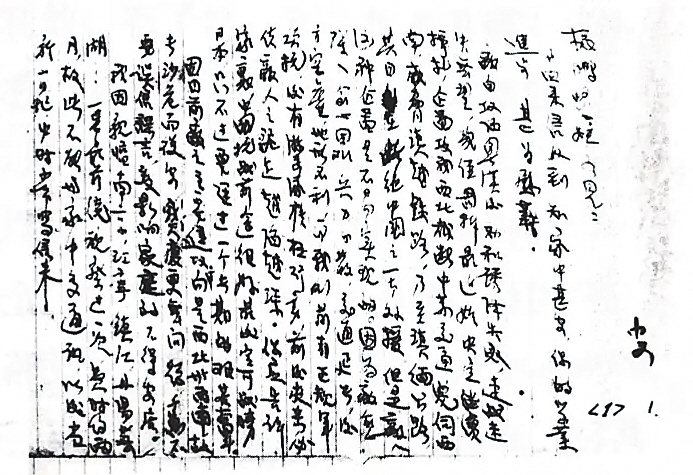
Core Viewpoint - The letters written by anti-Japanese heroes during wartime reflect deep emotional ties to their families and a strong sense of patriotism, showcasing their sacrifices and unwavering commitment to the nation [8][15]. Group 1: Letters from Anti-Japanese Heroes - Zhao Yiman, a renowned anti-Japanese female hero, expressed her deep regret for not being able to raise her son and her steadfast belief in sacrificing for the country in her letters written before her execution [9]. - Left behind a heartfelt message to his wife and daughter, Left Quan, a high-ranking military leader, conveyed his love and concern for his family while fulfilling his duty on the battlefield [10]. - The letters reveal the emotional struggles and patriotic fervor of individuals like Sun Xiaomei and Bai Xuejiao, who chose to join the fight against Japanese aggression despite personal sacrifices [11][12][13]. Group 2: Optimism and Determination - Yuan Guoping's letter to his nephew reflects a sense of optimism about the future of the anti-Japanese struggle, emphasizing the difficulties faced by the enemy and the potential for victory through perseverance [14]. - The letters also highlight the revolutionary spirit and determination of the anti-Japanese fighters, showcasing their belief in eventual triumph despite the harsh realities of war [15].