
生态文明建设

Search documents
厚植八桂生态优势 壮美广西更加秀丽
Zhong Guo Huan Jing Bao· 2026-02-06 04:09
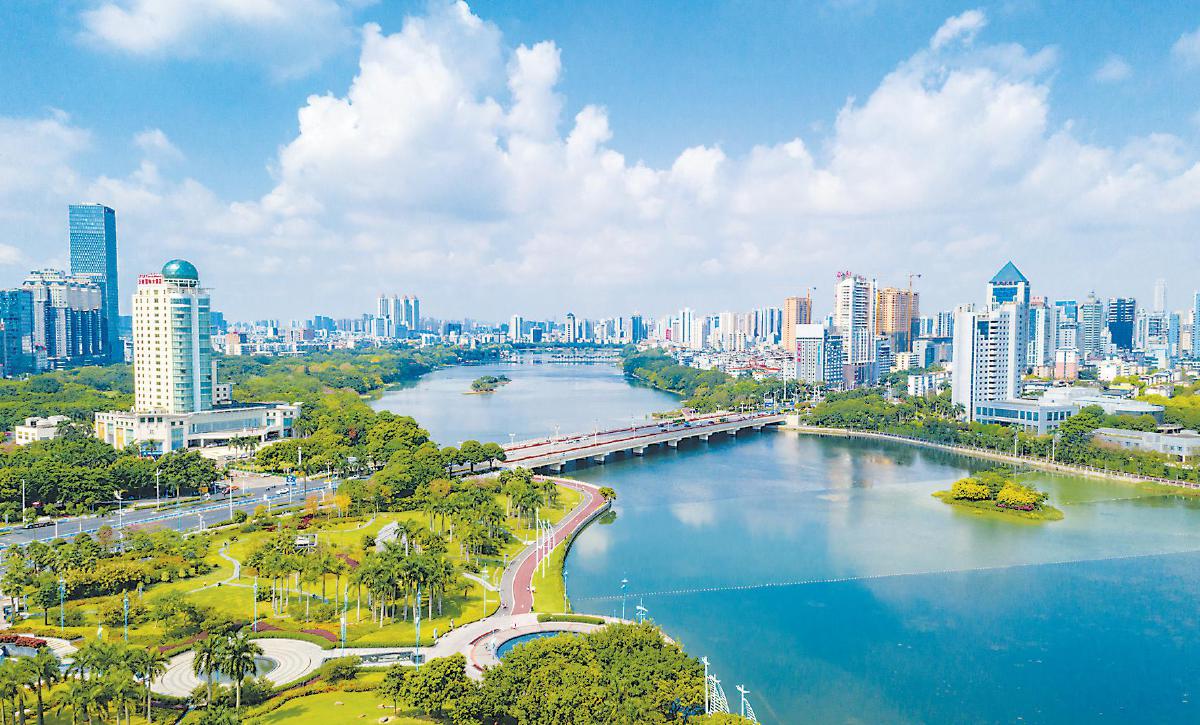
Core Viewpoint - The news highlights the significant progress made by Guangxi in ecological environment protection and sustainable development during the year 2025, emphasizing the integration of ecological advantages into economic growth and the promotion of high-quality development through various environmental initiatives [2][3][4][5][6][7]. Group 1: Ecological Environment Protection Achievements - In 2025, Guangxi's air quality improved significantly, achieving a 96.1% rate of good air quality days and a PM2.5 concentration of 25.9 micrograms per cubic meter [4]. - The region completed the rectification of 128 out of 154 environmental risk points in the Lijiang River basin, with a total of 394 out of 432 environmental risk points addressed across various river basins [4]. - Guangxi's surface water quality and coastal water quality were reported at 99.1% and 94.9% respectively, ranking among the best in the country [4]. Group 2: Pollution Prevention and Control - Guangxi identified 1,919 sources of heavy metal pollution, with 1,564 already rectified and 355 included in long-term management plans [3]. - The region's soil pollution control projects under the national "14th Five-Year Plan" were successfully completed, contributing to the overall stability of soil and groundwater quality [5]. Group 3: Biodiversity and Natural Resource Management - Guangxi established 223 natural protected areas and reported the discovery of 249 new species, ranking third in biodiversity richness in China [6]. - The population of endangered species such as the white-headed leaf monkey increased from over 300 in the 1980s to over 1,400 in 2025 [6]. Group 4: Economic Development and Ecological Integration - Guangxi's ecological environment department has created 22 national ecological civilization demonstration zones and 9 "Green Water and Green Mountains are Golden Mountains and Silver Mountains" innovation bases, leading in the western region [7]. - The region's ecological health industry is expected to thrive, with the ecological environment department planning to implement a three-year action plan for the "Ecological Environment and Big Health" brand [8]. Group 5: International Cooperation and Engagement - The 2025 China-ASEAN Environmental Cooperation Forum was held in Beihai, focusing on practical cooperation in ecological governance and sustainable development [12]. - Various thematic forums during the event discussed climate resilience, green value chains, and environmental technology innovation, enhancing international collaboration [13]. Group 6: Future Directions and Strategic Goals - The ecological environment system in Guangxi aims to fully implement the spirit of the 20th National Congress of the Communist Party of China, focusing on the harmonious coexistence of political and natural ecologies [17]. - The region is set to continue its efforts in carbon reduction, pollution control, and green expansion, striving for a sustainable and beautiful Guangxi [17].

环保设施走进公众视野,除了应开尽开,更要有料有趣
Zhong Guo Huan Jing Bao· 2026-02-06 01:48
环保设施向公众开放,既是观察美丽中国建设成效的一扇窗口,也是强化生态环境保护治理的一个抓 手。截至目前,全国环保设施开放单位已达2512家,覆盖所有地级及以上城市,形成"老四类"(生态环 境监测、城市污水处理、城市生活垃圾处理、危废和废弃电器电子产品处理)+"新四类"(石化、电 力、钢铁、建材)的开放格局。 二是环保设施开放存在"形式化"与"吸引力不足"的问题。不少环保设施的开放仍停留于走马观花式的参 观层面,内容枯燥、讲解生硬、互动缺失,难以满足公众特别是青少年群体对体验性、趣味性、知识性 的更高要求。缺乏专业策划和持续创新,导致公众参与热度难以维系。 三是环保设施开发存在区域与行业的不平衡。东部地区与西部地区、大城市与中小城市、不同行业类别 之间,环保设施开放工作的质量、频次和影响力存在显著差异。部分领域因专业性强、认知门槛高,开 放难度更大。如何实现环保设施开放存在的均衡化、标准化与特色化的统一,是一大难题。 准确把握环保设施开放的各方关切 要解决上述问题,关键在于深刻理解并平衡好环保设施开放中各相关方的核心关切。环保设施向公众开 放,对政府而言,是引进公众监督力量、推进柔性环境监管的需要;对企业而言, ...
青海省国民经济和社会发展第十五个五年规划纲要
Xin Lang Cai Jing· 2026-02-06 00:21
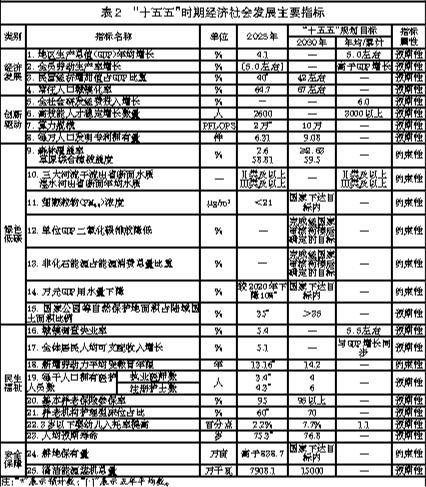
| | | 表2 "十五五"时期经济社会发展主要指标 | | | | | | --- | --- | --- | --- | --- | --- | --- | | 来源 | 指标名称 | 中立 | 2023 8 | | 十五十八 八六十二 | 指示 | | | | | | 18 0600 | 年均在式计 | 图"性 | | | 1. 地区生产总值(GIP)年的理长 | 14 | 4.1 | I | 5.0左右 | 17 10 192 | | 6 31 | 2. 会员学出年产家博长 | 22 | [5.0左右) | | 有平面是因大 | 27 10 14 | | 20 Hr | 3. BE STEP MI REDP PER | 11 | 40 | 42 元 存 | | SANTAL | | | 4. 就在人口的理体系 | 2 | 64.7 | 可在后 | 1 | SANTAR | | | 6. 金杜会祥发编 特丹人赠长 | 94 | - | I | 60 | 77 10 191 | | 色图 | 6. 高校能人才稳定增长数 | | 2600 | 1 | SOOO DI F | 2001 12 | | PR 2 ...
区十届人大五次会议开展 生态文明建设情况报告专题审查
Xin Lang Cai Jing· 2026-02-05 23:23
(来源:嘉兴日报) 转自:嘉兴日报 ■记者 戴瑞雪 通讯员 徐 音 本报讯 昨天下午,区十届人大五次会议在分代表团审议的基础上,专题召开生态文明建设情况报告审 查会议。 今年,区人大继续听取和审议区政府生态文明建设情况报告,"两院"同步在工作报告中作专章阐述。通 过报告制度的深入实施,2025年全区生态文明建设工作合力不断增强,工作成效显著:首次获评美丽浙 江建设工作优秀县(市、区),第三次荣获"大禹鼎"银鼎,生态警务机制作用发挥明显,节能减排各项 指标完成情况良好。 会上,与会人员围绕生态文明建设情况报告踊跃发言、气氛热烈。大家充分肯定秀洲区2025年生态文明 建设工作,就基础设施提升、绿色低碳发展、智慧监管体系建设、生态价值转化等方面提出了许多有深 度、有价值的意见建议,特别是邀请列席会议的生态环境领域专家为秀洲区生态文明建设精准号脉、靶 向开方,提出了具有专业性的发展方向和具体措施。 参会的区生态环境分局等政府职能部门负责人还对代表们提出的意见建议作出了表态回应。 ...
国家公园建设助力增绿增收
Jing Ji Ri Bao· 2026-02-05 22:08
从悠然行走的藏羚羊、雪豹、野牦牛,到格拉丹东姜根迪如"长江第一滴水"、晶莹剔透的岗加曲巴冰 川……在西藏那曲市国家公园科研监测宣教中心,只需轻点鼠标,三江源国家公园唐北区域的实时画面 即可清晰呈现。数据显示,我国于2015年开展国家公园体制试点,自2021年正式设立第一批5个国家公 园以来,旗舰物种野生种群数量持续恢复,生态系统多样性、稳定性、持续性稳步提升。 国家公园是什么、怎么建、如何管?2026年1月起实施的《中华人民共和国国家公园法》作出系统规 定,标志着我国国家公园建设步入法治化、规范化发展新阶段。10年来,从试点探索到立法保护,我国 在依法推进国家公园建设中做了什么工作?现实中有哪些挑战?对此,记者进行了采访。 法治护航 2025年11月,一段东北虎豹国家公园吉林珲春片区拍到的"六虎同框"视频,让东北虎豹国家公园管理局 局长段兆刚兴奋不已。这是我国首次记录到"野生东北虎一胎产五崽"的案例,段兆刚感慨道:"这在世 界野生虎保护领域十分罕见。" 法律首次明确了国家公园的法定概念:"由国务院批准设立,以保护具有国家代表性的自然生态系统为 主要目的,实现自然资源科学保护和合理利用的特定陆地和海洋区域。"这 ...
牧歌与净土:三江源游牧生活的现代启示 | 贝·东周 群培 | TEDxZizhu Park
TEDx Talks· 2026-02-05 17:09
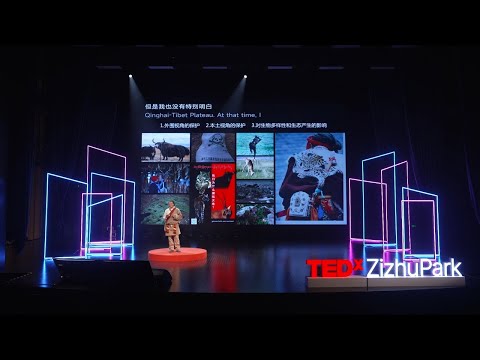
来自青海三江源的贝·东周群培,从小在草原与牧歌间长大。黎明的牦牛声、流动的帐篷、父辈的信仰,都让他体会到人与自然之间最古老的契约。离开高原后,他发现现代生活正在远离自然的秩序,于是选择回到故乡,带领青年志愿者在草原上清理垃圾、修复水源,用行动守护那片“净土”。他相信,保护环境不是口号,而是与土地的情感连接,每一次弯腰拾起垃圾,都是对家园的告白。他说:“牧歌不只属于过去,也能唱进今天。唯有尊重自然,人类才能真正安居。” 从事民间环保与生态文明建设基层实践工作二十余年,先后设计并参与执行了青藏高原旗舰物种监测与保护、亚洲水源守护计划、高原零废弃社区建设、牧民手工艺能力提升和乡村可持续发展等多类项目。基于对三江源自然与牧民的热爱,吸收国内外优秀环保机构的先进理念,打造以社区为主责的自然资源管理保护模式,引领三江源百姓进行生态保护的实践与创新,让本土居民成为实施保护最主要的行动者。2019年成为银杏伙伴;2021年获评《瑞丽》杂志年度公益人物;2023年被《南方周末》评选为年度责任先锋。 This talk was given at a TEDx event using the TED conference form ...
长清区“十四五”发展成绩单
Qi Lu Wan Bao· 2026-02-05 14:28
三大主导产业产值占规上工业产值比重超83%,集聚上下游配套企业百余家,制造业增加值占规上工业比 重提升至95%,主导产业引领作用凸显。 累计培育"四上"企业620家,市场主体总量突破7万户,年均增长8.9%。 地区生产总值实现473.9亿元。一般公共预算收入达31.54亿元,货物进出口总额预计年均增长18.7%。 累计实施重点项目791个,完成投资1076.67亿元,高质量发展根基更加牢固。 高新技术产业产值比重提升至78.9%,五年新增人才1.47万人。 累计建设5G基站3200余个,新基建支撑作用持续凸显;共出让土地4385亩,其中产业用地占比60.6%。 累计建成52个省级和美乡村、7个乡村振兴片区,农村公路总里程达1525公里,基本实现村村通、户户通。 累计投资4.5亿元实施南北大沙河综合治理,完成崮头水库等5座中小型水库除险加固。 滩区迁建任务圆满收官,63个村、4.2万名群众喜迁新居。 街镇污水处理厂实现全覆盖,全区污水日处理能力达11.5万吨,比"十三五"末翻一番。 空气优良天数年均达224天,同比增长17.3%,蓝天常驻成为常态。 受污染耕地、地块安全利用率均达100%,成功获评国家级、省级" ...
让“地球之肾”永葆活力
Ren Min Wang· 2026-02-05 01:17
Core Viewpoint - The importance of wetland protection is emphasized as it plays a crucial role in biodiversity, water resource conservation, climate change mitigation, and food security, making it a strategic issue closely related to human survival and development [1] Group 1: Wetland Value - Wetlands are recognized as a natural "water reservoir" that supports river flow and regulates precipitation distribution, serving as a hidden foundation for food production and urban water supply [1] - Wetlands act as a biodiversity "gene bank," providing habitats for thousands of species and maintaining ecological chain integrity [1] - Wetlands have a carbon sequestration capacity that surpasses forests, playing an irreplaceable role in combating climate change [1] Group 2: National Efforts in Wetland Protection - The Chinese government places high importance on wetland protection as part of ecological civilization construction, leading to a series of decisions and deployments for high-quality development in wetland protection [2] - The implementation of the Wetland Protection Law provides a fundamental legal basis for nationwide wetland protection, with 21 provinces completing local wetland protection regulations, forming a comprehensive legal system [2] - A tiered management system has been established, designating 82 international important wetlands, 80 national important wetlands, and 903 national wetland parks, creating a multi-level protection network [2] Group 3: Local Success Stories - Zhejiang's Xixi Wetland has revitalized degraded wetlands through projects like returning farmland to wetlands and water purification, becoming a model for urban ecological restoration [2] - Guangdong has focused on mangrove protection, creating 9,200 hectares of mangroves to safeguard coastal wetland ecosystems [2] - Heilongjiang's Zhalong Wetland has created a safe habitat for rare birds like the red-crowned crane through water replenishment and habitat restoration [2] Group 4: Economic and Cultural Benefits - The ecological, economic, and cultural values of wetlands are being realized, with Hangzhou's Xixi Wetland generating over 2.6 billion yuan in operating income [3] - The Chongqing Shizhu Tengzigou National Wetland Park has increased average household income by 30,000 yuan for local villagers [3] - The Yunnan Honghe Hani Rice Terraces National Wetland Park has created employment for over 5,000 people through integrated farming models [3] - National wetland parks attract approximately 320 million visitors annually, enriching cultural life and expanding income channels for communities [3] Group 5: Ongoing Challenges - Despite significant achievements, the wetland ecosystem remains fragile, facing challenges from human activities and the complexities of ecological restoration [3] - Wetland protection requires sustained efforts and precise policies to ensure the vitality of these critical ecosystems [3]
山西省政协委员关注农村生态环境:推进农村生活污水治理
Zhong Guo Xin Wen Wang· 2026-02-03 08:52
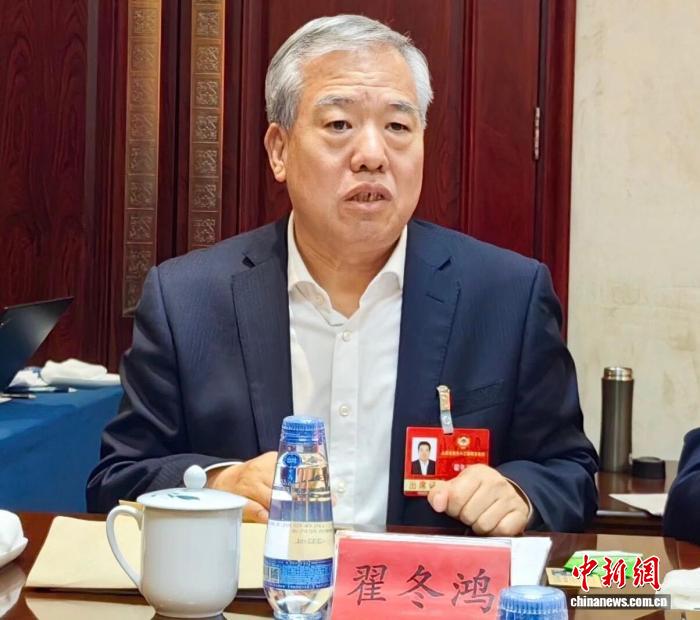
山西省政协委员关注农村生态环境:推进农村生活污水治理 中新网太原2月3日电 (记者 李庭耀)"农村生活污水治理作为改善农村人居环境、保障农民健康、提升区 域生态质量的关键环节,其成效直接关系到生态文明建设的整体水平。"3日,正在召开的山西两会上, 运城市政协副主席、民进运城市委会主委翟冬鸿建议推进农村生活污水治理。 拓展资金投入渠道方面,翟冬鸿认为,在加大各级财政投入、设立农村污水治理专项资金的基础上,应 推动建立"政府引导、市场运作、社会参与"的多元投入机制。通过税收优惠、财政补贴、融资支持等政 策,鼓励企业采用PPP、EOD等模式参与设施建设与运营,同时探索建立农村污水处理收费制度,形成 多污染多缴费的机制。 "在山西各地,应组织力量开展适合实际情况的污水治理技术筛选与评估。"翟冬鸿建议,在晋北干旱地 区,推广节水型生物处理技术;在晋南等地,选用"化粪池+人工湿地"等低成本生态组合工艺,同时支 持科研机构、企业开展技术研发与集成创新,加快成熟技术的推广应用。 针对农村生活污水治理运维管理机制不完善的问题,翟冬鸿建议住建、农业农村等部门依据区域特性制 定差异化污水处理方案,明确县乡政府、村级组织及运营单位职 ...
广东省全力实现美丽中国先行区建设取得新进展
Zhong Guo Fa Zhan Wang· 2026-02-03 08:03
Core Viewpoint - Guangdong Province has made significant progress in ecological and environmental protection during the "14th Five-Year Plan" period, with a focus on improving air, water, and soil quality, and aims to further advance the construction of a beautiful Guangdong and a beautiful China [1][2]. Group 1: Air Quality Improvements - The proportion of days with good air quality in Guangdong exceeds 95%, with a PM2.5 concentration of 20.7 micrograms per cubic meter, consistently better than the World Health Organization's transitional target [2][3]. - Guangdong has been recognized for five consecutive years for its excellent performance in the national pollution prevention and control assessment [2]. Group 2: Water Quality Enhancements - By the end of the "14th Five-Year Plan," the proportion of excellent water quality in national monitoring sections reached 94.6%, an increase of 7.3 percentage points from the end of the "13th Five-Year Plan" [2]. - All black and odorous water bodies in 533 cities and 41 county-level cities have been eliminated, with significant improvements in rivers like the Maozhou River and Lianjiang River [2]. Group 3: Ecological Construction Initiatives - Guangdong has established a multi-level, three-dimensional ecological demonstration system, creating 37 national ecological civilization demonstration cities and 13 "Green Water and Green Mountains are Golden Mountains and Silver Mountains" innovation bases [3]. - The province has implemented a reward-based approach to promote beautiful city construction, with 20 exemplary cases of beautiful county construction [3]. Group 4: Coordinated Development and Protection - Guangdong has developed a "Three Lines and One List" ecological environment zoning control application platform, covering over 1,903 land and 564 sea environmental control units [4]. - The province has optimized project environmental impact assessments and implemented a total pollutant management system to ensure the needs of key industries and major projects are met [4]. Group 5: Future Goals and Plans - By 2030, the Guangdong-Hong Kong-Macao Greater Bay Area aims to be a beautiful China pilot area, with a focus on ecological quality improvement and green financial innovation [5]. - The province plans to increase the proportion of beautiful rural areas to 40% and achieve a 35% completion rate for beautiful rivers and beautiful bays [5]. Group 6: Ongoing Environmental Protection Efforts - Guangdong will enhance drinking water source safety and establish a regular monitoring mechanism for pollution discharge outlets [6]. - The province aims to implement a "waste-free city" initiative and strengthen the management of new pollutants while ensuring environmental quality for events like the APEC meeting [6].