
习近平生态文明思想

Search documents
“人均100棵树”,我国成全球增绿最多最快的国家
Ren Min Ri Bao· 2026-02-24 03:06
Group 1 - China's total forest area has reached 36.14 billion mu, with 1.85 million mu of afforestation during the 14th Five-Year Plan, making it the fastest-growing country in terms of greening globally [1] - As of 2020, there are approximately 142.6 billion trees in China, equating to 100 trees per person, showcasing the country's "green assets" [1][2] - The country has effectively protected 25.78 billion mu of natural forest resources and has planted over 1.1 billion mu of trees since 2012, contributing about 25% of the world's new greening area [2] Group 2 - The "Three North" project has preserved 48 million mu of afforestation, equivalent to half of the Loess Plateau, demonstrating significant ecological engineering efforts [2] - The average annual increase in forest area in China from 2015 to 2025 is 1.69 million hectares, making it the country with the highest net increase in forest area [3] - By 2030, China aims to achieve peak carbon emissions and plans to increase forest stock to over 24 billion cubic meters by 2035, reinforcing its commitment to global green development [3]
创造全球增绿最多最快的绿色奇迹 我国人均“拥有”100棵树
Ren Min Ri Bao· 2026-02-24 00:22
Core Insights - China's total forest area has reached 36.14 billion mu, with 1.85 million mu of afforestation during the "14th Five-Year Plan" period, making it the fastest-growing country in terms of greening globally [1][2] - As of 2020, there are approximately 142.6 billion trees in China, equating to 100 trees per person, showcasing the country's "green assets" [1] - The "14th Five-Year Plan" emphasizes the protection of 5.0819 million ancient trees and effective conservation of 2.578 billion mu of natural forest resources [2] Group 1 - The average annual increase in forest area in China from 2015 to 2025 is 1.69 million hectares, making it the country with the highest net increase [3] - The total output value of the forestry and grass industry is expected to reach nearly 11 trillion yuan by 2025, creating employment for over 60 million people [3] - The "15th Five-Year Plan" suggests large-scale national greening actions, aiming for carbon peak by 2030 and a forest stock of over 24 billion cubic meters by 2035 [3] Group 2 - The "Three North" project has achieved a cumulative afforestation area of 48 million mu, equivalent to half of the Loess Plateau [2] - The introduction of cold-resistant tree species in Tibet's Naqu has successfully overcome high-altitude afforestation challenges, transforming it from a tree-less city to one with greenery [2] - The integration of ecological protection and systematic governance is a key strategy in China's approach to land greening [2]
我国人均“拥有”100棵树
Ren Min Ri Bao· 2026-02-24 00:13
Core Insights - China has a total forest area of 36.14 billion mu, with 18.5 million mu of afforestation during the "14th Five-Year Plan" period, making it the fastest-growing country in terms of greening globally [1][2] - As of 2020, there are approximately 14.26 billion trees in China, equating to 100 trees per person, showcasing the country's "green assets" [1][2] - The "14th Five-Year Plan" emphasizes the protection of 5.0819 million ancient trees and effective conservation of 25.78 million mu of natural forest resources [2] Group 1 - The average annual increase in forest area in China from 2015 to 2025 is 1.69 million hectares, making it the country with the highest net increase [3] - The national forestry and grassland industry is projected to reach nearly 11 trillion yuan in total output value by 2025, creating employment for over 60 million people [3] - The "Three North" project has preserved a total afforestation area of 48 million mu, equivalent to half of the Loess Plateau [2] Group 2 - The "Two Mountains" concept is deeply rooted in the national green development strategy, focusing on expanding, improving, and protecting green spaces [3] - By 2030, China aims to achieve peak carbon emissions and plans to increase forest stock volume to over 24 billion cubic meters by 2035 [3] - The successful introduction of cold-resistant tree species in Tibet's Naqu region demonstrates advancements in high-altitude afforestation technology [2]
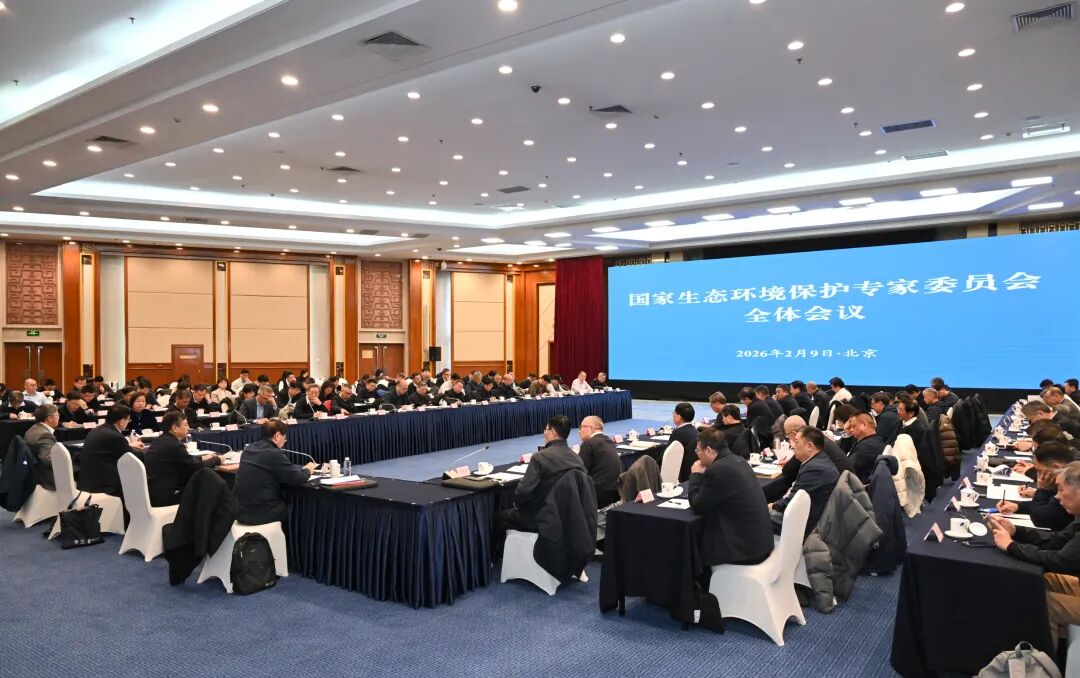
国家生态环境保护专家委员会全体会议在京举行
Xin Lang Cai Jing· 2026-02-09 14:05
Core Viewpoint - The meeting of the National Ecological and Environmental Protection Expert Committee emphasized the importance of strategic consultation and decision support for the "14th Five-Year Plan" and the construction of a beautiful China, highlighting the need for effective implementation of ecological and environmental policies [3][4][5]. Group 1 - The "14th Five-Year" period is a milestone for ecological civilization construction and environmental protection in China, with significant improvements in environmental quality and green low-carbon development [4][5]. - The committee is tasked with providing strategic advice and decision support for ecological environment planning and the implementation of major projects, focusing on improving environmental quality and promoting green low-carbon transitions [5][6]. - The committee's members are encouraged to actively participate in the formulation and evaluation of major policies and projects, contributing their expertise to enhance the effectiveness of ecological governance [6][7]. Group 2 - The meeting reviewed the progress of the "14th Five-Year" ecological environment planning and the development of ecological environment technology work for 2025, with suggestions provided by committee members [7][8]. - The ecological environment department has made significant progress in technology reform and collaboration, aiming for a strong start in ecological environment technology work during the "14th Five-Year" period [6].

深刻理解共建地球生命共同体的创新贡献与时代价值(深入学习贯彻习近平新时代中国特色社会主义思想·原创性概念标识性概念纵横谈)
Ren Min Ri Bao· 2026-02-06 00:38
Group 1 - The core idea of building a community of life on Earth is an extension of the concept of a community of shared future for mankind, emphasizing the importance of ecological civilization and international cooperation [1] - The relationship between humans and nature must be redefined, moving away from a utilitarian perspective to one of coexistence and mutual benefit, which is essential for sustainable development [3][4] - The concept of building a community of life on Earth reflects a significant advancement over Western environmental theories, promoting a holistic and systemic approach to ecological issues [4] Group 2 - The idea of building a community of life on Earth broadens the green dimension of Marxist production theory, emphasizing the need for sustainable development that balances quality and quantity [6][7] - The ecological challenges faced today necessitate a reevaluation of production patterns and international cooperation to address global ecological issues effectively [7][12] - The integration of ecological values into economic development is crucial for achieving a green and low-carbon transformation, as highlighted by China's commitment to ecological civilization [9][10] Group 3 - The establishment of a robust legal and institutional framework is essential for the implementation of the community of life on Earth concept, ensuring effective ecological governance [10] - China's ecological discourse aims to enhance its global influence in environmental governance, advocating for a fair and cooperative global environmental governance system [12][13] - The community of life on Earth concept emphasizes the interconnectedness of human fate and the broader ecological system, promoting a collective approach to global environmental challenges [14]
深刻理解共建地球生命共同体的创新贡献与时代价值
Bei Jing Ri Bao Ke Hu Duan· 2026-02-05 23:28
Core Concept - The concept of building a community of life on Earth is an extension of the idea of a community of shared future for mankind, emphasizing cooperation in ecological civilization and reflecting significant theoretical and practical value [1][2] Group 1: Ecological Challenges and Responses - The health of biodiversity is a crucial indicator of the ecological system's well-being, which has been under severe pressure due to industrial civilization and unchecked ecological consumption [2][4] - The idea of building a community of life on Earth is a timely response to the deepening ecological crises faced by humanity, rooted in Marxist views on nature and ecology [4][5] Group 2: Theoretical Developments - The concept enriches Marxist views on the relationship between humans and nature, advocating for a shift from viewing nature as mere resources to recognizing it as a partner in coexistence [5][6] - It broadens the green dimension of Marxist production theory, emphasizing the need for sustainable development that respects ecological limits [7][8] Group 3: Policy and Institutional Framework - The idea promotes the establishment of mechanisms that support green and low-carbon transitions, requiring a robust legal and institutional framework to ensure effective ecological governance [11][12] - China's commitment to ecological civilization has led to significant legal reforms and the establishment of a comprehensive environmental protection system, which supports the transition to a green economy [11][10] Group 4: Global Cooperation and Influence - The concept calls for enhanced global cooperation to address ecological issues, aiming to create a fair and equitable global environmental governance system [12][13] - It reflects China's role as a responsible major power in global environmental governance, advocating for a community of shared future that transcends narrow national interests [14][15]
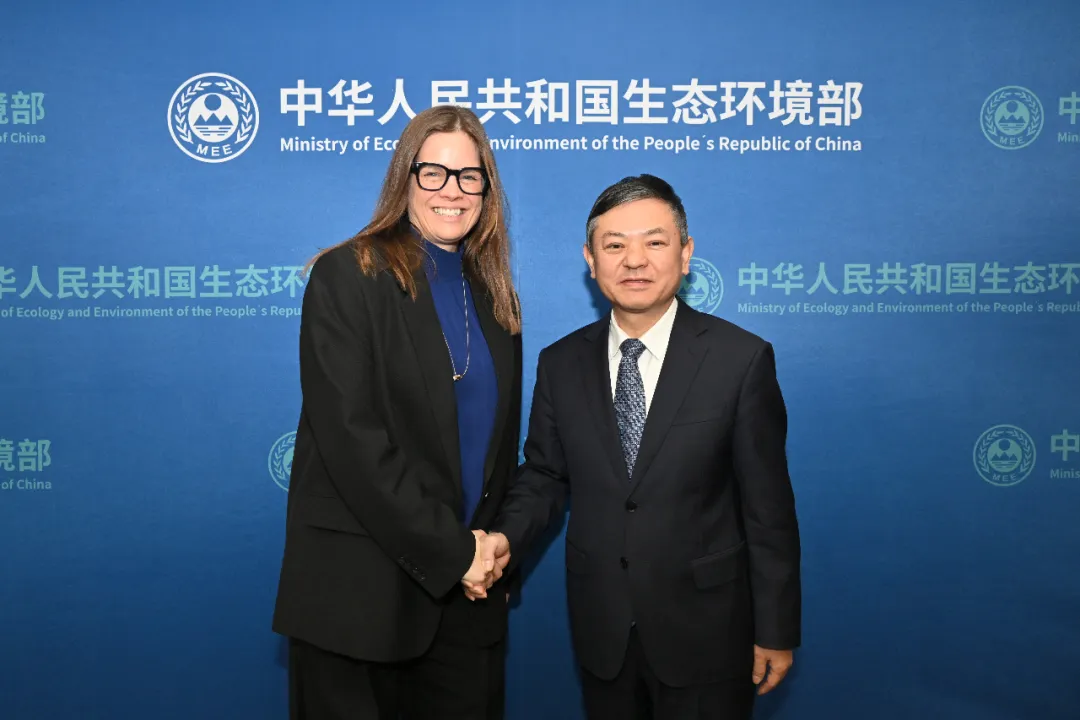
生态环境部部长黄润秋会见儿童投资基金会首席执行官韩佩东
Xin Lang Cai Jing· 2026-02-05 15:06
Core Viewpoint - The meeting between the Minister of Ecology and Environment, Huang Runqiu, and the CEO of the Children's Investment Fund Foundation (CIFF), Hannah Peat, focused on deepening cooperation in climate governance and promoting green low-carbon transformation [2][3]. Group 1: China's Commitment to Environmental Protection - China is committed to ecological priority and green development, achieving significant progress in carbon reduction, pollution control, and green expansion under the guidance of Xi Jinping's ecological civilization thought [3]. - The country actively participates in global environmental and climate governance, showcasing its responsibility and commitment to global green low-carbon transformation [3]. Group 2: Strengthening International Cooperation - The Chinese side will continue to leverage platforms like the China Council for International Cooperation on Environment and Development to enhance cooperation with CIFF in areas such as carbon market construction, climate investment and financing, and biodiversity protection [3]. - CIFF's CEO expressed appreciation for China's achievements in environmental and climate governance and expressed willingness to strengthen communication and collaboration on climate change and green low-carbon development [5].
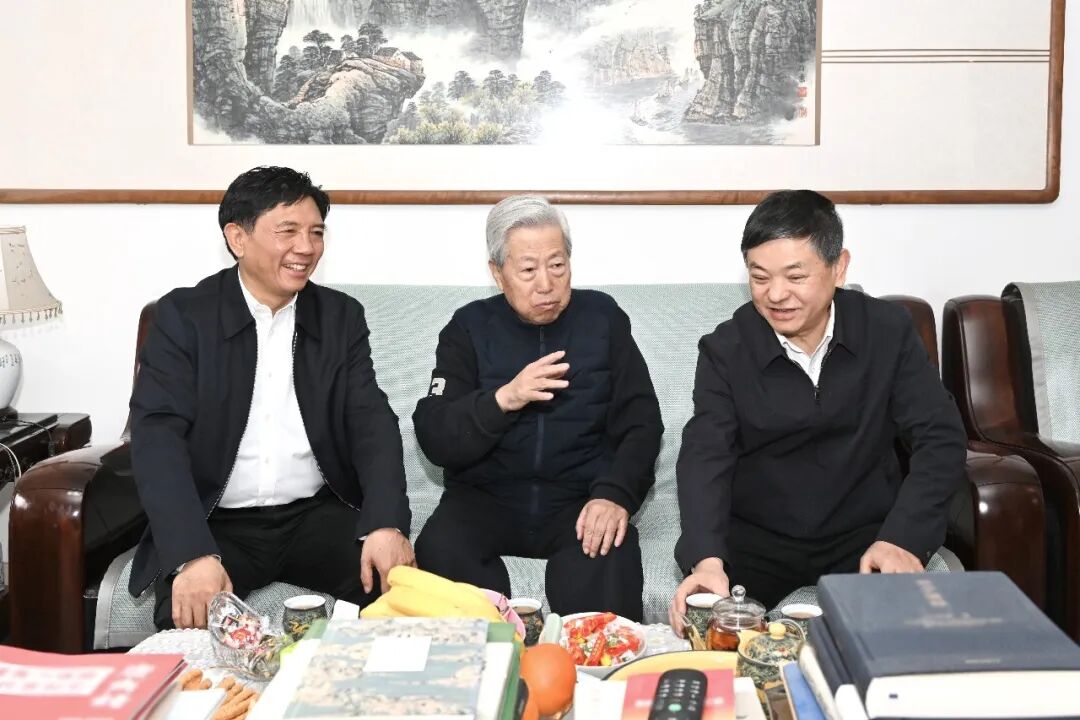
孙金龙、黄润秋看望慰问周生贤
Xin Lang Cai Jing· 2026-02-05 15:05
Core Viewpoint - The Ministry of Ecology and Environment emphasizes the progress made in ecological protection during the "14th Five-Year Plan" and outlines plans for the "15th Five-Year Plan" to further advance the construction of a beautiful China [3][4]. Group 1: Achievements and Progress - The ecological environment system has made significant breakthroughs in pollution prevention and control, accelerated the green and low-carbon transition, and improved ecological quality over the past five years [3]. - The Ministry has successfully completed all annual targets and tasks, ensuring high-quality completion of the "14th Five-Year Plan" [4]. Group 2: Future Plans - The year 2025 is highlighted as a critical year for advancing the construction of a beautiful China, with a focus on achieving carbon peak and carbon neutrality [3]. - The Ministry plans to systematically promote the "15th Five-Year Plan" for ecological protection, aiming for a good start in ecological protection and a comprehensive green transition in economic and social development [4]. Group 3: Leadership and Support - The leadership expresses gratitude to former leaders for their foundational contributions to ecological protection and encourages continued support and advice for future initiatives [4]. - The former leader, Zhou Shengxian, acknowledges the significant achievements during the "14th Five-Year Plan" and expresses optimism for future developments in ecological protection [4].
九三学社中央长江生态环境保护民主监督工作反馈会在蓉召开
Xin Lang Cai Jing· 2026-02-04 22:38
Core Viewpoint - The meeting focused on the democratic supervision of the Yangtze River's ecological environment, emphasizing the importance of ecological protection and sustainable development in the region [1][2]. Group 1: Democratic Supervision and Responsibilities - The democratic supervision work for the Yangtze River's ecological environment over the past five years is a significant achievement for the Jiusan Society, highlighting their commitment to ecological protection [2]. - The Jiusan Society aims to continue promoting high-quality development along the Yangtze Economic Belt, contributing wisdom and support for ecological protection and development in Sichuan [2][3]. Group 2: Government Commitment and Actions - The Sichuan Provincial Government has prioritized ecological civilization and environmental protection, achieving notable results in water quality preservation [3]. - There is an acknowledgment of existing shortcomings in the ecological protection of the Yangtze River, with a commitment to address these issues through effective rectification measures [3][4]. Group 3: Future Strategies and Goals - The government plans to enhance pollution prevention and control, focusing on integrated management of main rivers and tributaries, and ensuring water quality standards are met [4]. - Collaborative governance will be strengthened, including the establishment of inter-provincial ecological compensation mechanisms and joint legislative efforts for cross-border river management [4].
外交部:中国是全球湿地保护修复事业的重要参与者、贡献者和引领者
Xin Hua She· 2026-02-02 16:49
Core Viewpoint - The article emphasizes China's significant role in global wetland protection and restoration, highlighting its achievements and commitment to ecological sustainability [1][2]. Group 1: Wetland Protection Achievements - China ranks first in Asia and fourth globally in wetland area, with the highest number of international wetland cities [1]. - Since the 18th National Congress of the Communist Party, China has made historic achievements in wetland protection and restoration under the guidance of Xi Jinping's ecological civilization thought [1]. Group 2: International Cooperation and Recognition - As a party to the Ramsar Convention, China is a key participant and contributor to global wetland protection efforts, having established the "International Mangrove Center" with 20 member countries [2]. - China has received global honors such as the "Earth Guardian Award" and "World Biosphere Reserve," reflecting international recognition of its green development practices [2]. Group 3: Future Commitment - China aims to continue its path of harmonious coexistence between humans and nature, supporting global ecological governance and promoting the construction of a global community of life [2].