短剧精品化

Search documents
短剧,中国影视的王炸:AI时代,弯道超车好莱坞
Mei Ri Jing Ji Xin Wen· 2025-05-04 13:16
每经记者 杜蔚 每经编辑 张海妮 编者按: 每日经济新闻推出短视频访谈节目《AI煮酒》,邀请中国传媒大学视听艺术研究中心主任、博导赵 晖,短剧《午后玫瑰》总制片人赵聪,资深娱评人、《短剧新圈》主编高庆秀,以及相关影视行业大咖 与人工智能行业新秀,围绕短剧与AI(人工智能),探讨技术从制作到宣发为全产业链带来的潜力空 间。 《中国网络视听发展研究报告(2025)》显示,截至2024年12月,短剧用户规模已经达到6.62亿,仅半 年时间,短剧独立应用的人均单日使用时长从90分钟增长至101分钟,已追平即时通信类应用的使用时 长。 赵晖教授表示,短剧通过"碎片化时间占据+情感化内容供给"的模式,契合了当代观众的收看需求,强 化了陪伴属性。 以爆款短剧《午后玫瑰》为例,该剧聚焦中年女性重返职场这一社会议题,实现了内容与用户情感的深 度共振,证明短剧具备承载复杂主题、引发社会讨论的能力。短剧正从娱乐消费品升级为社会情绪载 体。 赵聪指出,在演员生态方面,短剧能为更多的创作者提供机会。相较影视剧明星演员的高额片酬,短剧 更注重角色适配度。李若彤在剧中的反响和成功,印证了短剧能为新人与转型演员提供广阔空间,构建 更具包容性 ...
《好一个乖乖女》分账风波,是短剧行业商业模式的变化
3 6 Ke· 2025-04-30 07:22
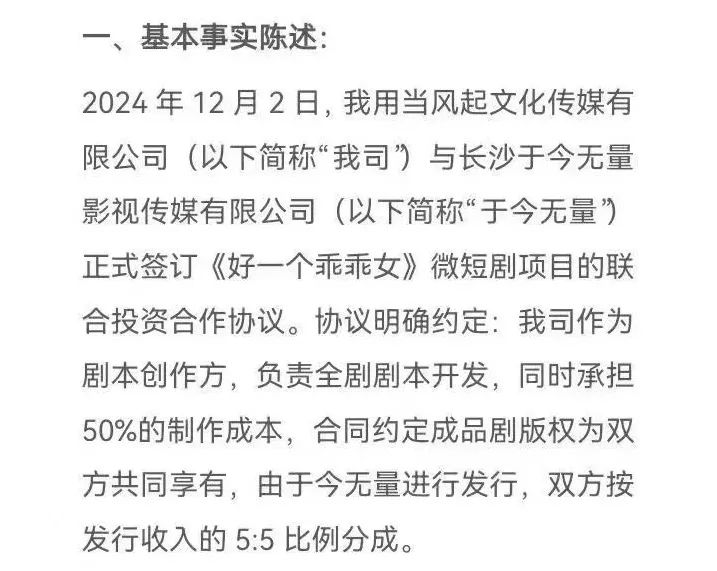
Core Viewpoint - The short drama "Good Girl" has become a significant topic of discussion, particularly due to its high viewership and the ongoing revenue-sharing disputes between the production companies involved [1][2][4]. Group 1: Revenue Sharing Dispute - The production company "Dangfengqi" claims a revenue-sharing dispute regarding the short drama "Good Girl," stating that they are entitled to 50% of the production costs and a 5:5 revenue split, but received only 418 million yuan instead of the expected amount [2][4]. - "Yujin Wuliang" responded, clarifying that the IP was acquired by them and that the revenue-sharing dispute centers on the standards for cost deductions, which are still under negotiation [2][4]. Group 2: Industry Trends - The short drama "Good Girl" is adapted from a popular novel and has quickly gained over 1 billion views, indicating a shift in the industry towards higher-quality content rather than traditional formulaic storytelling [6][8]. - The revenue-sharing model in the short drama industry is evolving from a "pay-to-play" model to a more collaborative revenue-sharing approach, with platforms like Hongguo Short Drama leading the way by implementing a free model that has significantly increased user engagement [8][9]. - As of June 2024, Hongguo Short Drama reported total revenue sharing exceeding 100 million yuan, with multiple projects achieving over 1 million yuan in monthly revenue sharing [9][10]. Group 3: Competitive Landscape - Other platforms, such as iQIYI and Mango TV, are also refining their revenue-sharing models to attract creators, with iQIYI introducing a more detailed revenue-sharing structure and Mango TV launching a new collaboration model for short dramas [10][12]. - The competition in the short drama market is intensifying, with various platforms vying for market share, and the success of these platforms hinges on their ability to produce high-quality content that can drive user engagement and revenue [16].

千亿短剧的十字路口:爱优腾迎战字节
雪豹财经社· 2025-03-05 16:26
Core Viewpoint - The competition between long and short video platforms has intensified, with short dramas emerging as a significant market force, leading to a new copyright battle in the industry [4][6][10]. Market Overview - The micro short drama market in China reached a scale of 50.4 billion in 2023, growing by 34.9% year-on-year, and is expected to exceed 68 billion by 2025 and 100 billion by 2027 [6]. - By the end of 2024, the user base for micro short dramas is projected to reach 662 million, accounting for 59.7% of internet users in China [6]. Industry Dynamics - The traditional hierarchy in the entertainment industry has been disrupted, with short dramas proving to be a lucrative segment, attracting major players to invest heavily [5][6]. - The rise of platforms like Hongguo has shifted the focus from high-budget films to low-cost, high-return short dramas, making them more appealing to content creators [5][10]. Competitive Landscape - Hongguo's rapid growth has positioned it as a significant disruptor in the market, with its monthly active users reaching 150 million by the end of 2024, a 551% increase year-on-year [9][10]. - Major platforms like iQIYI, Tencent Video, and Youku are increasing their short drama offerings, with iQIYI planning to release two new short dramas weekly [10][11]. Financial Aspects - The production costs for short dramas have risen, with some productions now costing up to 80,000 per episode, making profitability more challenging [9]. - Despite the rising costs, the potential for profit remains, as evidenced by successful short dramas generating significant revenue, with some projects earning over 5 million in monthly revenue [14][15]. Future Outlook - The short drama market is expected to continue evolving, with platforms competing aggressively for content supply and audience engagement [12][16]. - The industry is witnessing a shift towards a more sustainable model, where quality and quantity must be balanced to achieve success [21].