
科学智能

Search documents
周伯文“六问”AGI for Science 探索科学智能边界
Xin Hua Cai Jing· 2025-09-25 08:02
Core Viewpoint - The article discusses the potential and challenges of Artificial General Intelligence (AGI) in the context of scientific research, emphasizing the need for a balanced perspective on its capabilities and limitations [1][2]. Group 1: AI for Science Developments - AI for Science (AI4S) is recognized for its value in scientific research, with recent achievements presented at the 2025 Pujiang Innovation Forum, including the Amix-Agent for protein design and the DeepPeptide model for peptide synthesis [2][5]. - The integration of AI in various scientific fields such as biomanufacturing, quantum technology, and climate energy is being promoted through the establishment of the "Scientific Intelligence Strategic Technology Alliance" [5]. Group 2: Six Questions on AGI for Science - The first question addresses the boundaries of AI, questioning whether all scientific problems can be solved by AI, highlighting the historical context of this debate [2]. - The second question examines the predictive capabilities of AGI, cautioning against overestimating current models' ability to predict scientific phenomena due to limitations in existing human knowledge [3]. - The third question focuses on the representation of scientific concepts, suggesting that AI should move beyond natural language to include symbolic languages for better expression [3]. - The fourth question explores the potential for AGI to foster interdisciplinary collaboration, emphasizing its role in revealing unseen connections between different scientific fields [3]. - The fifth question proposes a thought experiment to evaluate AGI's ability to make significant scientific discoveries, using the example of deriving general relativity from prior knowledge [4]. - The sixth question discusses the evolving relationship between researchers, research subjects, and tools, indicating AI's potential to identify valuable patterns in unstructured data [4].
上海人工智能实验室联合多家科研机构发起成立“科学智能战略科技力量联盟”
Zhong Zheng Wang· 2025-09-23 13:53
Group 1 - The core viewpoint of the article is the establishment of the "Scientific Intelligence Strategic Technology Alliance" aimed at fostering collaboration between artificial intelligence and scientific research [1] - The alliance is focused on creating a collaborative innovation ecosystem that integrates artificial intelligence with various scientific fields, including biomanufacturing, quantum technology, brain science, chemical materials, and climate energy [1] - The initiative emphasizes the importance of both technological breakthroughs and the cultivation of interdisciplinary talent for the long-term development of scientific intelligence [1] Group 2 - The forum highlighted the signing of strategic cooperation agreements between Shanghai Chuangzhi Academy, Shanghai Artificial Intelligence Laboratory, and Shanghai Scientific Intelligence Research Institute, focusing on talent development and joint scientific intelligence initiatives [1] - The alliance aims to accelerate the process of major scientific discoveries and technological breakthroughs through a unified approach to theoretical research, technology development, and practical application [1]
科学智能战略科技力量联盟成立 专家纵论AI与各学科深度融合
Zheng Quan Shi Bao Wang· 2025-09-22 15:24
Group 1 - The 2025 Pujiang Innovation Forum will be held in Shanghai from September 20 to 22, focusing on the integration of artificial intelligence (AI) in scientific research [1] - The "Scientific Intelligent Strategic Technology Alliance" has been established to leverage AI for theoretical research, technology development, and application, aiming to accelerate major scientific discoveries and technological breakthroughs [1] - AI's potential in promoting interdisciplinary integration and assisting in significant theoretical innovations is often underestimated, despite its perceived overestimation in solving general problems [1] Group 2 - Climate science is undergoing a paradigm shift driven by AI, which is reconstructing traditional models of the Earth system and human society [2] - The challenges in climate science include not only accurate predictions of extreme weather but also a deeper understanding of complex climate system evolution [2] - The "Top Ten AI Empowered Scientific Research Cases of 2025" were announced, showcasing breakthroughs in the field of scientific intelligence in China [2] Group 3 - A large-scale standardized mass spectrometry dataset, MassNet, has been released for proteinomics, designed for AI applications, achieving superior performance compared to previous algorithms [3]
科学智能战略科技力量联盟成立
Zheng Quan Shi Bao Wang· 2025-09-22 14:53
Core Viewpoint - The establishment of the "Scientific Intelligent Strategic Technology Alliance" aims to leverage artificial intelligence to enhance scientific research and technological innovation, facilitating significant scientific discoveries and technological breakthroughs across various fields [1] Group 1: Alliance Formation - The alliance was initiated by the Shanghai Artificial Intelligence Laboratory in collaboration with over ten research institutions and new R&D organizations [1] - The alliance focuses on integrating theoretical research, technology development, and practical application through artificial intelligence [1] Group 2: Areas of Focus - The alliance will strengthen technological collaborative innovation in fields such as biomanufacturing, quantum technology, brain science, chemical materials, and climate energy [1] - The goal is to accelerate the process of major scientific discoveries from "0 to 1" and technological breakthroughs from "1 to N" [1]
上海科学智能战略科技力量联盟成立
Zheng Quan Shi Bao Wang· 2025-09-22 14:32
Core Insights - The "Scientific Intelligent Strategic Technology Alliance" was established during the 2025 Pujiang Innovation Forum held in Shanghai from September 20 to 22 [1] - The alliance aims to leverage artificial intelligence to enhance theoretical research, technology development, and practical applications, accelerating significant scientific discoveries and technological breakthroughs [1] - The focus areas for collaboration include artificial intelligence, biomanufacturing, quantum technology, brain science, chemical materials, and climate energy [1]
当科研遇到人工智能——来自北京的调查
Jing Ji Ri Bao· 2025-09-16 03:22
Core Insights - The Chinese government has issued an opinion to accelerate the implementation of "Artificial Intelligence +" actions, emphasizing the need for new research paradigms driven by AI to enhance scientific discoveries [1] - Beijing is positioned as a leader in AI4S (AI for Science), leveraging its rich educational, technological, and talent resources to foster innovation and industrial transformation [1][5] - The establishment of the Beijing Institute of Scientific Intelligence marks a significant step in integrating AI with scientific research, aiming to create a new research paradigm and infrastructure [3][9] Group 1: AI4S Development and Impact - AI4S is recognized globally as a new paradigm that enhances scientific research efficiency and effectiveness, moving from theoretical concepts to practical applications [2][6] - The DeepFlame Rocket software exemplifies the transition from research to commercial applications in aerospace, significantly reducing simulation times and costs in rocket engine development [4][5] - Beijing has produced significant original achievements in AI4S, including a large atomic model and a new generation of research knowledge databases, contributing to the emergence of innovative companies [5][9] Group 2: Infrastructure and Ecosystem - The Bol Research Space Station serves as a foundational infrastructure for AI4S, addressing key challenges in literature management, interdisciplinary knowledge discovery, and experimental calculations [7][8] - The establishment of a collaborative ecosystem involving over 30 organizations in the OpenLAM project aims to enhance micro-scale design in various industries, including materials and pharmaceuticals [10][11] - The "Action Plan" outlines a roadmap for developing AI4S in Beijing, targeting the establishment of high-quality scientific databases and a competitive industrial cluster by 2027 [12][13] Group 3: Future Directions - The focus on breaking down disciplinary boundaries and enhancing collaboration between research and industry is expected to drive original innovations and improve research efficiency [6][10] - The ongoing development of large atomic models and other AI-driven tools is anticipated to revolutionize traditional research methodologies and accelerate the pace of scientific discovery [11][12] - Beijing's strategic initiatives aim to solidify its position as a hub for scientific intelligence, fostering an open and collaborative innovation ecosystem [13]
当科研遇到人工智能
Jing Ji Ri Bao· 2025-09-16 01:28
Core Viewpoint - The article discusses the integration of artificial intelligence (AI) into scientific research, highlighting Beijing's role as a leader in this transformation through the AI for Science (AI4S) initiative, which aims to enhance research efficiency and innovation [1][2][6]. Group 1: AI4S Development and Impact - AI4S is recognized as a new paradigm that accelerates scientific research, moving from theoretical concepts to practical applications, with a global consensus on its importance [2][4]. - The establishment of the Beijing Scientific Intelligence Research Institute in 2021 marks a significant step in combining AI with scientific research, aiming to create a new research infrastructure [3][5]. - The DeepFlame Rocket software exemplifies the transition from research to commercial applications in AI4S, significantly reducing the time and cost of rocket engine development [4][5]. Group 2: Infrastructure and Ecosystem - Beijing has developed a comprehensive innovation and industrial chain in AI, producing significant original achievements such as a large atomic model covering over 90 elements and a new generation of research knowledge databases [5][9]. - The "Bohler Research Space Station" serves as a foundational infrastructure for AI4S, providing tools for literature management, interdisciplinary knowledge discovery, and experimental calculations [7][8]. - The OpenLAM project aims to create a large atomic model to facilitate micro-scale design in various industries, demonstrating the collaborative efforts in building research infrastructure [10][11]. Group 3: Future Plans and Goals - The "Action Plan" outlines Beijing's strategy to establish a scientific foundation model and high-quality scientific databases by 2027, targeting over 10 million users and fostering an open-source ecosystem [12][13]. - The plan emphasizes the importance of collaboration among research institutions and enterprises to enhance the AI4S innovation ecosystem and drive significant scientific advancements [12][13].
最肥沃土壤盛放未来之花
Jing Ji Ri Bao· 2025-09-16 00:04
Core Insights - Beijing is emerging as a fertile ground for scientific intelligence, driven by a complete industrial chain and strong academic foundations from top institutions like Peking University and Tsinghua University [1][2] - The city has established significant funding initiatives, such as a 20 billion yuan technology growth fund, to support the development of artificial intelligence and attract global talent [1][2] - Beijing is fostering a collaborative environment for innovation, integrating resources like computing power and data to enhance research and development across various sectors [2][3] Group 1 - The establishment of a data sandbox regulatory mechanism in Beijing is facilitating the development of trustworthy data spaces and computational resources for industry growth [2] - The city is nurturing a diverse ecosystem where both large teams and small enterprises can thrive, emphasizing long-term growth and innovation [2][3] - Beijing is positioning itself as a leader in the integration of artificial intelligence with fundamental sciences, aiming to accelerate key technological innovations in fields like embodied intelligence and new energy materials [3] Group 2 - The city is not rushing to measure success but is instead focusing on providing a supportive environment for various stages of innovation, from original breakthroughs to practical applications [2] - Beijing is witnessing the emergence of groundbreaking AI research spaces and large-scale models, showcasing its potential to transform the landscape of scientific research [2][3] - The government plays a crucial role as a facilitator, ensuring that obstacles to innovation are addressed while allowing the ecosystem to flourish organically [2]
上下楼就是上下游!实探上海张江AI小镇
证券时报· 2025-08-25 00:35
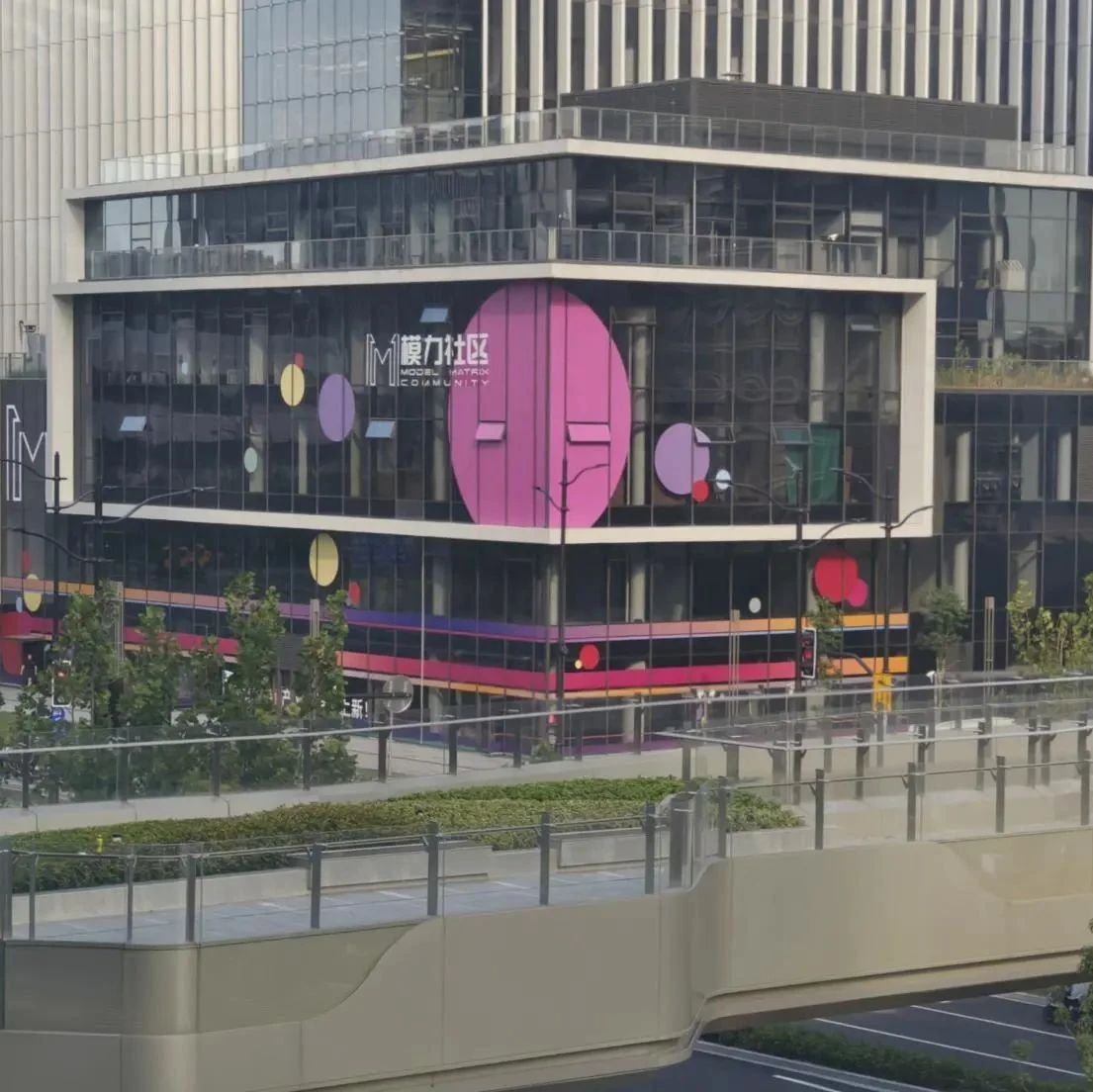
Core Viewpoint - The article highlights the ambition of the Pudong New Area to develop a world-class artificial intelligence (AI) industry cluster, exemplified by the Zhangjiang AI Town, which integrates various resources and fosters collaboration among AI enterprises [2][12]. Group 1: Development of Zhangjiang AI Town - Zhangjiang AI Town spans approximately 1 square kilometer and includes the first "5G+AI" commercial demonstration park in China, the Moduli Community, and the Shanghai Technology Investment Building, creating a robust ecosystem for AI development [2]. - The Pudong New Area focuses on "element support and integration empowerment," leveraging its high-end manufacturing, biomedicine, and fintech sectors to create a vast demand pool for AI applications [2][12]. Group 2: Ecosystem and Collaboration - The Moduli Community has attracted nearly 200 related enterprises, fostering a tightly-knit industrial chain where collaboration is seamless, described as "upstairs and downstairs are upstream and downstream" [4][9]. - The community emphasizes three main directions: embodied intelligence, scientific intelligence, and application intelligence, aiming to close the gap in AI application [4][12]. Group 3: Industry Integration and Data Utilization - Lianren Health, a data technology group, collaborates with local AI firms to enhance medical data collection and processing, integrating clinical data with AI to support new drug development [5][12]. - The AI Island has attracted major companies like IBM and Alibaba, creating a best-practice area for AI that integrates production, education, research, and application [8][12]. Group 4: Economic Impact and Future Plans - The AI Island is projected to achieve over 13.5 billion yuan in revenue by 2024, with plans to attract more major companies by 2025 [8][12]. - Pudong aims to strengthen its AI industry, targeting a scale of 163.7 billion yuan by 2024, accounting for approximately 40% of the city's total AI industry [12].

浦东新区AI产业规模约占上海全市40%,下一步将如何发力
Di Yi Cai Jing· 2025-08-20 12:21
Core Insights - Shanghai Pudong New Area is promoting the development of the AI industry through initiatives like the "Artificial Intelligence Island" and "Moli Community" [1][2] - The AI industry in Pudong is expected to reach a scale of 1,637 billion yuan in 2024, accounting for approximately 40% of the city's total [1] - The Pudong AI ecosystem is rapidly forming, with over 200 companies in vertical model sectors and more than 70 companies in the embodied intelligence industry chain [2] Group 1: AI Industry Development - Pudong is focusing on collaborative innovation in AI through the establishment of key parks like Moli Community and Zhangjiang Robot Valley [1][2] - The AI industry in Pudong has seen an average annual compound growth rate of 11.7% over the past three years [1] - The "Artificial Intelligence Island" has attracted 85 AI-related companies since its establishment in 2019, covering five key areas: AI, large models, big data, intelligent chips, and cloud computing [2] Group 2: Moli Community and Its Role - Moli Community has attracted nearly 200 upstream and downstream related enterprises since its operation began on August 30, 2024 [3] - The community focuses on three main directions: embodied intelligence, scientific intelligence, and application intelligence, aiming to facilitate the last mile of AI implementation [3] - Moli Community differentiates itself by concentrating on vertical models and application-level efforts, leveraging Pudong's industrial foundation in manufacturing and integrated circuits [3][4]