Geopolitical risk

Search documents
Oil prices jump as ‘tankers hit by drones’
Yahoo Finance· 2026-01-13 18:23
Investment Climate - Britain is becoming increasingly unattractive for investment, likened to Venezuela due to Labour's stringent net zero policies affecting the oil industry [7][8] - The chief executive of engineering group Hunting criticized the UK government's approach to carbon reduction, suggesting it has made the country "uninvestable" [7][8] Oil Market Dynamics - Oil prices have surged to two-month highs, with Brent crude reaching approximately $66 per barrel and WTI exceeding $61, driven by geopolitical tensions and drone attacks on oil tankers in the Black Sea [3][6][26] - The price of Brent crude rose by 2.9% following Donald Trump's comments urging Iranians to take action against their regime, contributing to market volatility [6][26] - Protests in Iran have led to a 14% increase in European gas prices over three days, marking the largest rise since March [5][54] Stock Market Reactions - US stocks experienced a decline, with the Dow Jones Industrial Average falling by 0.7% and the S&P 500 and Nasdaq both down by 0.2% amid persistent inflation concerns [1][28] - Oil companies such as BP, Shell, Chevron, and ExxonMobil saw stock price increases as oil prices rose, contributing to a boost in the FTSE 100 index [2][9][56] Geopolitical Influences - Geopolitical risks are at an all-time high, with analysts predicting potential spikes in oil prices due to ongoing tensions in the Middle East [4][26] - The US has imposed 25% tariffs on goods from countries trading with Iran, which could significantly impact global oil supply and prices [16][73]


Markets Price Chaos as Oil Finds Its Footing
Yahoo Finance· 2026-01-13 15:43
Core Insights - Oil prices have sharply rebounded due to geopolitical risks, despite no significant supply losses [1][8] Market Dynamics - The unrest in Iran and the potential for US President Trump to leverage this situation for military action against Tehran have contributed to rising oil prices and increased options trading [3] - A record 556,000 Brent crude call option contracts were traded in a single day, indicating heightened market activity as participants seek to hedge against price spikes [3] - The options market has shifted towards calls over puts, suggesting expectations of significant geopolitical stress ahead [4] Positioning and Sentiment - Hedge funds' net positioning was on the verge of becoming negative for the first time in 16 months, but money managers have since increased long positions, with net length in ICE Brent quadrupling to 122,965 lots in three weeks [5][4] Company Developments - US President Trump may exclude ExxonMobil from his Venezuela strategy after the CEO labeled the country 'uninvestable' [6] - TotalEnergies, along with ENI and QatarEnergy, has been awarded the Block 8 offshore exploration block in Lebanon, expanding its operations in the Eastern Mediterranean [6] - Maersk is looking to increase its use of ethanol as a fuel to reduce reliance on green bunkering fuels, leveraging US and Brazilian biofuel production [7] - BHP is opting to wait on merger discussions between Rio Tinto and Glencore, which could influence the $210 billion megamerger landscape [7] Price Recovery Factors - Social unrest in Iran, Trump's tariffs on Iranian crude, confusion over Venezuela's oil exports, and strikes on tankers in the Black Sea have led to a recovery in oil prices, with ICE Brent reaching $65 per barrel [8] - Despite the price recovery, there has been no physical impact on production, indicating that market sentiment could shift back to concerns of oversupply with new IEA reports [8]
Trump Weighs Military Action In Iran: Crude Rallies As Geopolitical Risk Returns To World's Busiest Oil Route - United States Oil Fund (ARCA:USO)
Benzinga· 2026-01-12 04:51
Group 1: Energy Market Dynamics - Crude oil prices have been increasing, with WTI March futures rising 1.47% over the past week to $59.17 per barrel, and natural gas February futures up 2.30% to $3.242 per MMBtu [1] - The Strait of Hormuz is a critical chokepoint for global energy, with approximately one-third of global seaborne oil shipments and 19% of natural gas passing through it [2] - An average of 20 million barrels per day flowed through the Strait of Hormuz in 2024, highlighting the region's significance to global energy security [3] Group 2: Potential Supply Disruptions - Goldman Sachs analysts warned that Brent crude oil could spike to $110 per barrel if the Strait of Hormuz were to be disrupted, emphasizing strong economic incentives for the U.S. and China to prevent such disruptions [4] - Despite a projected surplus of 3.84 million barrels per day in 2026, this may not be sufficient to offset the impact of significant supply shocks from disruptions in the Strait of Hormuz [5] Group 3: U.S. Political Context - President Trump indicated that the U.S. would support Iranians amid protests, suggesting potential military action could occur before negotiations, which may impact geopolitical stability in the region [7]


贵金属大涨!黄金再创新高,白银猛拉2%,油价直线拉升,中东局势紧张,乌克兰首都响起强烈爆炸声
2 1 Shi Ji Jing Ji Bao Dao· 2026-01-12 00:29
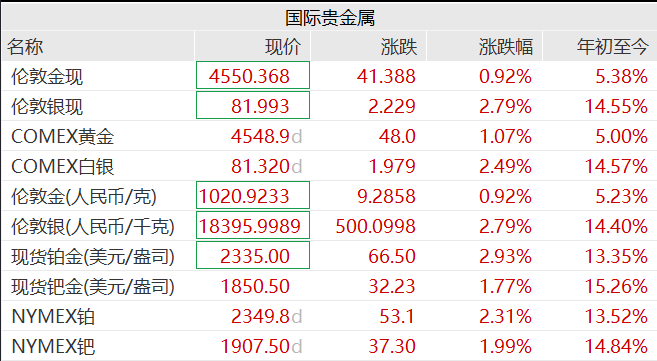
Group 1: Precious Metals Performance - Precious metals experienced a collective surge, with spot gold reaching a historic high of $4550, marking a 0.92% increase and a year-to-date rise of 5.38% [1][2] - Spot silver increased by 2.79%, with its current price at $81.993, reflecting a year-to-date gain of 14.55% [2] - Spot platinum rose nearly 3%, surpassing $2320, and is currently priced at $2335, showing a year-to-date increase of 13.35% [2] Group 2: Oil Price Movements - Oil prices have risen for the third consecutive day, with Brent crude futures increasing nearly 6% over the last two days, reaching close to $64 per barrel [3] - WTI crude futures rose by 0.83%, approaching $60 per barrel [3] Group 3: Geopolitical Risks - Geopolitical tensions are escalating, particularly in the Russia-Ukraine conflict, with reports of significant explosions in Kyiv and military actions targeting Ukrainian industrial sites [5] - In Iran, recent unrest has resulted in the deaths of 111 security personnel, prompting a national mourning period and public demonstrations against violence [5] - European leaders have criticized the U.S. for threatening remarks regarding Greenland, indicating rising geopolitical tensions in the region [5]
Venezuela Shockwaves: Trump's Military Posture Fuels Fresh Defense ETF Trade
Benzinga· 2026-01-07 17:32
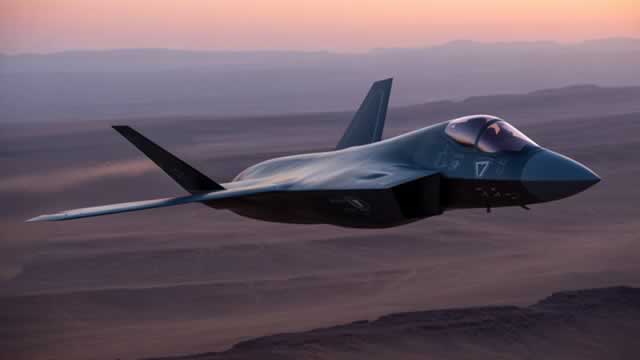
Group 1 - The recent U.S. military operation in Venezuela has heightened global awareness of geopolitical risks, leading investors to consider aerospace and defense ETFs as a hedge against potential volatility [1][2] - The iShares U.S. Aerospace & Defense ETF (ITA) is experiencing a breakout, reflecting concerns among nations regarding regional security and military interventions [2][4] - ETFs focused on defense and aerospace companies provide a way for investors to capture potential upside from increased defense spending, offering diversification and reducing single-stock risk [3][4] Group 2 - The iShares U.S. Aerospace & Defense ETF has seen a growth of over 6% in the past five days, indicating strong interest in major U.S. defense contractors [4] - The Invesco Aerospace & Defense ETF has increased by 6.5% in the same period, showcasing an alternative weighting approach to U.S. defense and aerospace firms [4] - The Global X Defense Tech ETF has gained almost 11% in the past five days, targeting companies involved in advanced defense technology [4]
Trump’s Economic Encore: A Daily Dose of Market Mayhem
Stock Market News· 2026-01-06 18:00
Market Reactions to Geopolitical Events - The U.S. military's capture of Venezuelan President Nicolás Maduro caused significant market reactions, particularly in the energy sector, despite Venezuela's limited economic impact on global GDP [2][3] - On January 5, 2026, major U.S. indices surged, with the Dow Jones Industrial Average rising 1.23% to an all-time high of 48,977.18, the S&P 500 climbing 0.64% to 6,902.05, and the Nasdaq Composite gaining 0.69% to 23,395.82 [3] Energy Sector Performance - U.S. energy stocks benefited from the geopolitical developments, with Chevron's shares increasing by 4% and Exxon Mobil rising by 1.6% on the same day [4] - The S&P 500 energy index reached its highest level since March 2025, reflecting optimism about potential Venezuelan oil production [4] Oil Price Movements - Brent crude futures rose 1.2% to $61.48 per barrel, while West Texas Intermediate (WTI) gained 1.4% to $58.11 on January 5, 2026 [5] - However, Chevron's shares fell by 4% the following day, and WTI futures slipped 1% to $57.75, indicating market volatility [5] Canadian Oil Market Reaction - Canadian oil stocks experienced declines, with major producers like Canadian Natural Resources Ltd. and Cenovus Energy Inc. falling approximately 8% and 8.7% respectively, as analysts deemed the market's reaction an overreaction [6] Financial Sector Impact - Financial stocks also saw gains, with Goldman Sachs up 4.5% and JP Morgan gaining 2.9% on January 5, 2026, indicating a broader market response to the Venezuelan news [7] Tariff Policy Effects - The U.S.-U.K. trade deal, which reduced tariffs on cars from the U.K., led to a 14% increase in Aston Martin shares, while Detroit's automotive giants expressed disappointment over potential competitive disadvantages [9][10] - The Supreme Court's deliberation on Trump's tariffs, which generated $130 billion in revenue, could significantly impact market dynamics, with analysts predicting a 70-80% chance of unfavorable outcomes for Trump [11] Consumer Goods Sector Response - Delays in tariff hikes on furniture led to stock surges for retailers like Wayfair and RH, highlighting the immediate benefits of tariff postponements for certain sectors [12]



The Zacks Analyst Blog Chevron, Lockheed, Northrop, CrowdStrike and Palo Alto
ZACKS· 2026-01-06 10:46
Core Viewpoint - The recent U.S. military action in Venezuela, which holds the world's largest proven oil reserves, has created significant geopolitical implications for global equity markets, particularly affecting sectors like defense, technology, and healthcare [2][3]. Energy Sector Impact - Venezuela possesses approximately 303 billion barrels of proven oil reserves, accounting for 17-18% of global oil reserves, but its crude production has fallen to below 2 million barrels per day from about 3.5 million barrels per day due to infrastructure issues and sanctions [4]. - The U.S. military intervention has renewed interest in Venezuelan crude flows, but analysts caution that any significant increase in production will require years of investment and political stabilization [5][6]. - Major U.S. energy companies like Chevron, which operates in Venezuela under a special license, have seen limited immediate impact from the situation, as Venezuelan operations contribute only a small portion to overall revenues [7]. Defense Sector Benefits - Defense stocks are expected to be the primary beneficiaries of heightened geopolitical tensions, as historical patterns show increased military spending during such periods [9]. - Companies like Lockheed Martin and Northrop Grumman are likely to benefit from long-term contracts and increased order backlogs due to the current geopolitical climate [10][11]. Technology Sector Dynamics - Technology stocks typically respond to geopolitical shocks through risk sentiment rather than direct revenue exposure, with initial pressure on high-value stocks [12]. - Over the medium term, companies like CrowdStrike Holdings and Palo Alto Networks may benefit from increased demand for cybersecurity solutions as security-driven spending rises [12]. Healthcare Sector Resilience - Healthcare equities tend to remain stable during geopolitical uncertainty due to the inelastic nature of demand, with pharmaceutical and medical device companies being less affected by conflicts [13]. - Large healthcare firms and those involved in medical readiness are expected to benefit as governments focus on biosecurity and supply-chain resilience during global instability [13]. Conclusion on Market Dynamics - The evolving geopolitical landscape suggests that defense stocks will benefit most directly, while select technology firms will gain over time through security-related demand, and healthcare will act as a stabilizing force in the market [14][15].

US Stocks Rise as Traders Shrug Off Maduro Ouster: Markets Wrap
Yahoo Finance· 2026-01-05 14:33
Group 1 - Global financial markets are experiencing volatility following the ousting of Venezuela's president, raising geopolitical risks and concerns about oil supply [1][3] - The capture of Nicolás Maduro is expected to lead to a short-term increase in oil prices and a shift towards haven assets like gold [2][6] - Despite Venezuela not being a top-20 crude producer, any sustained rise in oil prices could have inflationary effects on global economies [3][4] Group 2 - Venezuela's oil infrastructure remains operational despite recent US attacks, with key facilities like Jose port and the Amuay refinery unaffected [5] - The event is likely to create short-term volatility in stock markets, but historical trends suggest it could present investment opportunities [4][7] - Investors are advised to monitor US Treasury yields, as rising yields could negatively impact stock performance [7]
Stocks rise after U.S. attacks Venezuela. Gold tells a different story
Yahoo Finance· 2026-01-05 14:21
Group 1: Market Reaction - The S&P 500 index, heavily influenced by the oil and gas sector, was expected to open higher following geopolitical events, particularly the U.S. plans regarding Venezuela after the capture of Nicolás Maduro [1] - Oil stocks such as Chevron, Valero, and ConocoPhillips were leading early gains, indicating a positive market sentiment towards U.S. energy companies [1][6] - The rise in gold and silver prices suggests that while investors are optimistic about the energy sector, they are also hedging against potential geopolitical risks and uncertainties [2][7] Group 2: Geopolitical Context - Nicolás Maduro was indicted on charges including narco-terrorism and drug trafficking, which U.S. prosecutors claim link senior Venezuelan officials to trafficking networks [3] - Maduro and his allies have rejected these charges, framing them as politically motivated and part of a broader narrative of foreign interference in Venezuela [4] - The legality of the U.S. operation against Maduro remains uncertain, with younger American voters expressing strong disapproval of military interventions [5] Group 3: Investor Sentiment - Investors perceive a potential increase in pricing power and political strength for American oil companies due to the current geopolitical situation [6] - The surge in precious metals indicates growing anxiety among investors, who are increasingly concerned about the unpredictability of policy decisions and geopolitical norms [7]
Oil and defense stocks react to Venezuela news: Chevron, Exxon Mobil, Palantir, Lockheed, Halliburton, more
Fastcompany· 2026-01-05 13:02
Market Reaction to U.S. Intervention - The market reaction to the U.S. military intervention in Venezuela has been significant, particularly among energy stocks, with notable movements in publicly traded companies [1][2]. Energy Sector Performance - Chevron Corporation (NYSE: CVX) has seen a rise of 7.3%, while Exxon Mobil (NYSE: XOM) increased by 4.5%, ConocoPhillips (NYSE: COP) also rose by 7.3%, and Halliburton Company (NYSE: HAL) surged by 10.3% [7]. - The intervention is expected to benefit U.S. oil companies, especially Chevron, which has a substantial presence in the region [3][4]. Foreign Oil Companies' Performance - Shell (NYSE: SHEL) and BP (NYSE: BP), both foreign companies, experienced a slight decline of 0.7% in premarket trading, indicating investor skepticism about foreign companies profiting from U.S. actions in Venezuela [4][5]. Defense Sector Performance - Defense stocks have shown a cautious response, with companies like Lockheed Martin (NYSE: LMT) up by 1%, RTX (NYSE: RTX) by 0.7%, Northrop Grumman (NYSE: NOC) by 1%, General Dynamics (NYSE: GD) by 1%, and Boeing Company (NYSE: BA) by 0.2% [9]. - The expansion of military operations is generally seen as beneficial for defense companies, although investors are currently taking a cautious approach [8]. Tech Sector Performance - Tech companies with defense contracts, such as Palantir Technologies (NASDAQ: PLTR) which rose by 3.8%, Honeywell International (NASDAQ: HON) up by 0.2%, and L3Harris Technologies (NYSE: LHX) up by 0.7%, are also expected to benefit from increased military operations [10].