中美经贸合作

Search documents
美方暂停实施对华造船等行业301调查措施,中方回应!
Zhong Guo Zheng Quan Bao· 2025-11-10 13:45
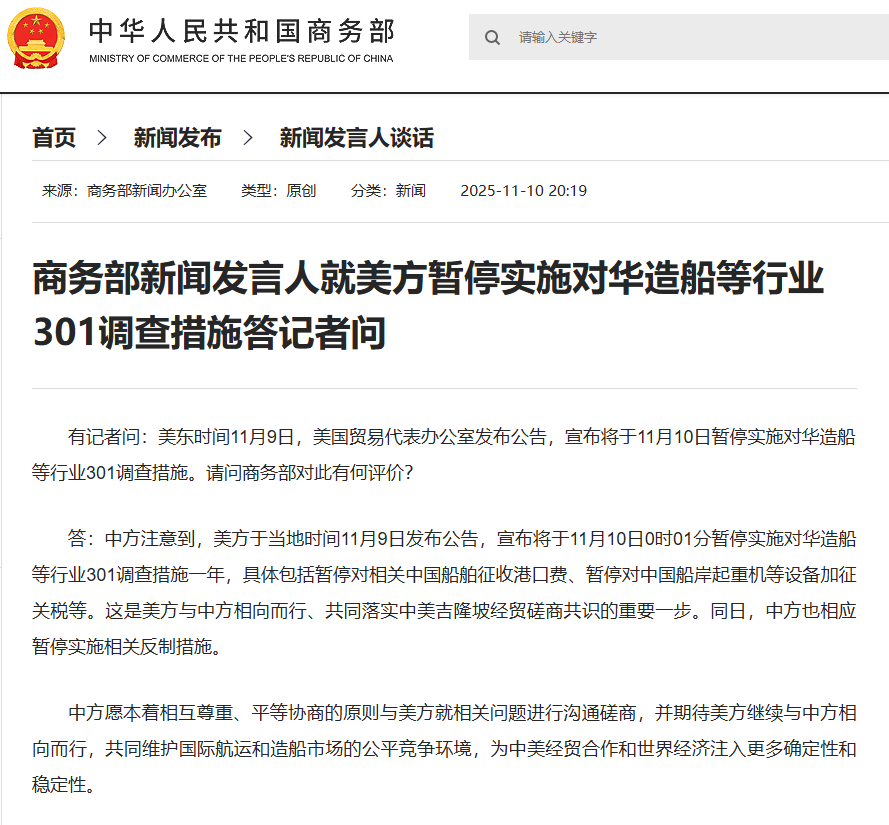
商务部网站截图 商务部新闻发言人就美方暂停实施对华造船等行业301调查措施答记者问 有记者问:美东时间11月9日,美国贸易代表办公室发布公告,宣布将于11月10日暂停实施对华造船等行业301调查措施。请问 商务部对此有何评价? 答:中方注意到,美方于当地时间11月9日发布公告,宣布将于11月10日0时01分暂停实施对华造船等行业301调查措施一年, 具体包括暂停对相关中国船舶征收港口费、暂停对中国船岸起重机等设备加征关税等。这是美方与中方相向而行、共同落实中 美吉隆坡经贸磋商共识的重要一步。同日,中方也相应暂停实施相关反制措施。 中方愿本着相互尊重、平等协商的原则与美方就相关问题进行沟通磋商,并期待美方继续与中方相向而行,共同维护国际航运 和造船市场的公平竞争环境,为中美经贸合作和世界经济注入更多确定性和稳定性。 来源:商务部网站 (文章来源:中国证券报) ...

美方暂停实施对华造船等行业301调查措施,商务部回应
券商中国· 2025-11-10 13:14
Core Viewpoint - The U.S. announced a one-year suspension of the 301 investigation measures against China's shipbuilding industry, which includes halting port fees and tariffs on related equipment, marking a step towards mutual cooperation between the U.S. and China [1] Group 1 - The U.S. Trade Representative's office issued a notice on November 9, stating that the suspension will take effect on November 10 at 12:01 AM [1] - The suspension includes the cessation of port fees on Chinese ships and additional tariffs on Chinese shore cranes and related equipment [1] - China responded by also suspending relevant countermeasures, indicating a willingness to engage in dialogue based on mutual respect and equal consultation [1] Group 2 - The Chinese side expressed hope for continued cooperation with the U.S. to maintain a fair competitive environment in the international shipping and shipbuilding markets [1] - The announcement is seen as a significant step in implementing the consensus reached during the China-U.S. economic and trade consultations in Kuala Lumpur [1] - The move aims to inject more certainty and stability into China-U.S. economic cooperation and the global economy [1]

中美大消息!商务部,最新回应
Zheng Quan Shi Bao· 2025-11-10 13:07
Core Points - The U.S. Trade Representative's Office announced a suspension of the Section 301 investigation measures against China's shipbuilding and related industries, effective from November 10, 2025, for one year [1] - The Chinese Ministry of Commerce noted this as a significant step towards mutual cooperation and maintaining a fair competitive environment in international shipping and shipbuilding markets [1] - Both China and the U.S. are expected to engage in further discussions based on mutual respect and equal consultation [1] Group 1 - The U.S. will suspend the collection of port fees on Chinese vessels and additional tariffs on Chinese shore cranes and related equipment [1] - In response, China will also suspend its countermeasures against related U.S. companies, specifically targeting five subsidiaries of Hanwha Ocean Co., Ltd. [3] - The Ministry of Transport of China announced the suspension of special port fees for U.S. vessels and investigations into the impacts on the shipping and shipbuilding industries, effective from November 10, 2025 [5]
商务部回应美方暂停实施对华造船等行业301调查措施
21世纪经济报道· 2025-11-10 13:06
来源丨央视新闻 编辑丨刘雪莹 SFC 有记者问:美东时间11月9日,美国贸易代表办公室发布公告,宣布将于11月10日暂停实施对 华造船等行业301调查措施。请问商务部对此有何评价? 今日,商务部新闻发言人就美方暂停实施对华造船等行业301调查措施答记者问。 中方愿本着相互尊重、平等协商的原则与美方就相关问题进行沟通磋商,并期待美方继续与中 方相向而行,共同维护国际航运和造船市场的公平竞争环境,为中美经贸合作和世界经济注入 更多确定性和稳定性。 答:中方注意到,美方于当地时间11月9日发布公告,宣布将于11月10日0时01分暂停实施对 华造船等行业301调查措施一年,具体包括暂停对相关中国船舶征收港口费、暂停对中国船岸 起重机等设备加征关税等。这是美方与中方相向而行、共同落实中美吉隆坡经贸磋商共识的重 要一步。同日,中方也相应暂停实施相关反制措施。 ...

美方暂停实施对华造船等行业301调查措施,商务部表态
第一财经· 2025-11-10 13:04
11月10日,据商务部官网,商务部新闻发言人就美方暂停实施对华造船等行业301调查措施答记者 问。 有记者问:美东时间11月9日,美国贸易代表办公室发布公告,宣布将于11月10日暂停实施对华造船 等行业301调查措施。请问商务部对此有何评价? 编辑丨钉钉 答:中方注意到,美方于当地时间11月9日发布公告,宣布将于11月10日0时01分暂停实施对华造船 等行业301调查措施一年,具体包括暂停对相关中国船舶征收港口费、暂停对中国船岸起重机等设备加 征关税等。这是美方与中方相向而行、共同落实中美吉隆坡经贸磋商共识的重要一步。同日,中方也相 应暂停实施相关反制措施。 中方愿本着相互尊重、平等协商的原则与美方就相关问题进行沟通磋商,并期待美方继续与中方相向而 行,共同维护国际航运和造船市场的公平竞争环境,为中美经贸合作和世界经济注入更多确定性和稳定 性。 ...

中美大消息!商务部,最新回应
证券时报· 2025-11-10 12:54
Core Viewpoint - The U.S. Trade Representative announced a one-year suspension of the Section 301 investigation measures against China's shipbuilding and related industries, effective from November 10, 2025, which reflects a mutual effort to enhance economic cooperation between the U.S. and China [1][3]. Group 1: U.S. Measures - The U.S. will suspend the imposition of port fees on Chinese vessels and additional tariffs on Chinese shore cranes and related equipment for one year [1]. - This decision is seen as a significant step towards implementing the consensus reached during the U.S.-China economic consultations in Kuala Lumpur [1]. Group 2: China's Response - In response, China will also suspend its countermeasures against relevant U.S. companies, including the suspension of retaliatory measures against five subsidiaries of Hanwha Ocean Co., Ltd. [3]. - China expresses willingness to engage in further communication and negotiation with the U.S. based on mutual respect and equality [1]. Group 3: Transportation Ministry Announcement - The Ministry of Transport announced the suspension of special port fees for U.S. vessels and the investigation into the impact on the maritime and shipbuilding industries, effective from November 10, 2025 [5]. - This action aligns with the broader suspension of the Section 301 measures and aims to maintain a fair competitive environment in international shipping and shipbuilding markets [5].

商务部回应美方暂停实施对华造船等行业301调查措施
Yang Shi Xin Wen· 2025-11-10 12:43
Core Viewpoint - The U.S. Trade Representative announced a suspension of the Section 301 investigation measures against China's shipbuilding industry, effective November 10, which includes halting port fees and additional tariffs on Chinese ship-related equipment. This move is seen as a step towards mutual cooperation between the U.S. and China in trade discussions [1]. Group 1 - The U.S. will suspend the implementation of Section 301 investigation measures against China's shipbuilding industry for one year [1]. - The suspension includes halting port fees on relevant Chinese vessels and additional tariffs on Chinese shore cranes and related equipment [1]. - This action is viewed as a significant step in fulfilling the consensus reached during the U.S.-China economic consultations in Kuala Lumpur [1]. Group 2 - China has also decided to suspend its corresponding countermeasures in response to the U.S. announcement [1]. - China expresses willingness to engage in communication and negotiation with the U.S. based on mutual respect and equal consultation principles [1]. - The aim is to maintain a fair competitive environment in the international shipping and shipbuilding markets, contributing to stability in U.S.-China economic cooperation and the global economy [1].
美方暂停实施对华造船等行业301调查措施 商务部:期待美方继续与中方相向而行
智通财经网· 2025-11-10 12:41
智通财经APP获悉,美东时间11月9日,美国贸易代表办公室发布公告,宣布将于11月10日暂停实施对 华造船等行业301调查措施。对此,商务部新闻发言人在答记者问时表示,中方愿本着相互尊重、平等 协商的原则与美方就相关问题进行沟通磋商,并期待美方继续与中方相向而行,共同维护国际航运和造 船市场的公平竞争环境,为中美经贸合作和世界经济注入更多确定性和稳定性。 具体问答如下: 商务部新闻发言人就美方暂停实施对华造船等行业301调查措施答记者问 有记者问:美东时间11月9日,美国贸易代表办公室发布公告,宣布将于11月10日暂停实施对华造船等 行业301调查措施。请问商务部对此有何评价? 答:中方注意到,美方于当地时间11月9日发布公告,宣布将于11月10日0时01分暂停实施对华造船等行 业301调查措施一年,具体包括暂停对相关中国船舶征收港口费、暂停对中国船岸起重机等设备加征关 税等。这是美方与中方相向而行、共同落实中美吉隆坡经贸磋商共识的重要一步。同日,中方也相应暂 停实施相关反制措施。 中方愿本着相互尊重、平等协商的原则与美方就相关问题进行沟通磋商,并期待美方继续与中方相向而 行,共同维护国际航运和造船市场的公平 ...
商务部新闻发言人就美方暂停实施对华造船等行业301调查措施答记者问
Xin Lang Cai Jing· 2025-11-10 12:29
Core Points - The U.S. Trade Representative's Office announced on November 9 that it will suspend the implementation of Section 301 investigation measures against China's shipbuilding industry starting from November 10 [1] - This suspension includes halting port fees on relevant Chinese vessels and additional tariffs on Chinese shore cranes and other equipment [1] - The Chinese side views this as a significant step towards mutual cooperation and the implementation of the consensus reached during the China-U.S. Kuala Lumpur economic and trade consultations [1] Industry Impact - The suspension of tariffs and fees is expected to create a more stable and fair competitive environment in the international shipping and shipbuilding markets [1] - Both sides have expressed a willingness to engage in further communication and negotiation based on mutual respect and equality [1] - The actions taken by both the U.S. and China are anticipated to inject more certainty and stability into China-U.S. economic cooperation and the global economy [1]
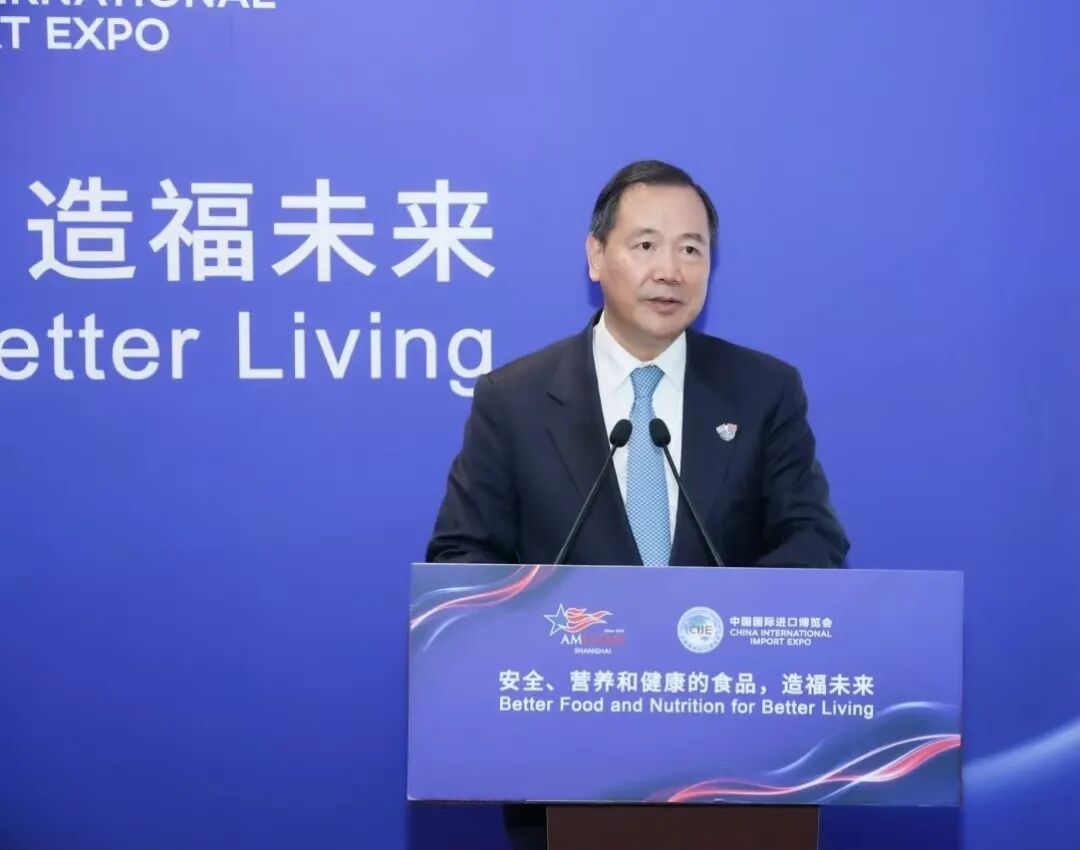
上海美国商会会长郑艺:中美之间更应互利共赢
Guo Ji Jin Rong Bao· 2025-11-09 10:45
Core Insights - The 8th China International Import Expo (CIIE) is being held in Shanghai from November 5 to 10, attracting participation from 155 countries and regions, with over 4,100 exhibiting companies, highlighting its significance as a global trade platform [1] - The U.S. has maintained the largest exhibition area for seven consecutive years, with the U.S. Food and Agriculture Pavilion showcasing 19 exhibitors and covering 350 square meters [1] - The Shanghai American Chamber of Commerce President, Zheng Yi, emphasized the importance of this year's participation in light of recent U.S.-China trade discussions, indicating a positive outlook for future collaborations [1][3] Group 1: Trade Agreements and Economic Impact - In 2023, the collaboration between the Shanghai American Chamber of Commerce and the U.S. Department of Agriculture resulted in over $500 million in signed cooperation agreements during the expo, with the previous year achieving a record of $711 million [3] - On the opening day of the U.S. Pavilion, orders reached $5.8 million, showcasing immediate business opportunities [3] Group 2: Agricultural Trade Dynamics - The U.S. is the largest agricultural exporter globally, while China is the largest agricultural importer, creating a strong complementary economic relationship [5] - In 2023, U.S. agricultural exports to China reached $29.1 billion, making China the top destination for U.S. agricultural products, accounting for nearly 20% of total U.S. agricultural exports [6] - The projected U.S. soybean export total for 2024 is $24.5 billion, with nearly $12.8 billion directed to China, indicating the significant role of China in U.S. agricultural exports [6] Group 3: U.S.-China Relations and Trade Outlook - Zheng Yi noted that trade tensions between the U.S. and China are normal, but emphasized that there are no fundamental conflicts between the two nations, advocating for a mutually beneficial relationship [6] - Despite challenges posed by uncertainties in U.S.-China relations, trade exchanges have remained consistent, with structural issues contributing to trade deficits rather than direct conflicts [6]