AI换脸

Search documents
手机上线AI换脸检测功能,好用吗?实测三品牌:均未识别
Nan Fang Du Shi Bao· 2025-05-09 04:10
Core Insights - The rise of AI-generated content, particularly "deepfake" technology, has led to an increase in fraud cases, prompting calls for legislative action to regulate AI face-swapping and voice imitation [1][3][4] - Several smartphone manufacturers have introduced AI detection features to combat these fraudulent activities, but initial tests show that these features have not been effective in identifying AI-generated content [5][7] Group 1: Fraud Incidents and Economic Impact - From 2022 to early 2024, nearly 100 fraud cases involving "AI face-swapping" have occurred in China, resulting in economic losses totaling approximately 200 million yuan [3] - The Ministry of Industry and Information Technology has indicated that it is collaborating with mobile device manufacturers to launch risk alert features for AI face-swapping scams [3] Group 2: AI Detection Features by Manufacturers - Multiple smartphone brands, including Honor, Xiaomi, and OPPO, have integrated AI detection capabilities into their operating systems to identify potential AI-generated content during video calls [3][4] - Honor's MagicOS 9.0 includes an AI detection module for video calls, while Xiaomi's HyperOS 2.0 provides alerts for potential AI face-swapping and voice forgery risks [3][4] Group 3: Testing and Effectiveness of AI Detection - Tests conducted on Honor, Xiaomi, and OPPO smartphones revealed that none successfully identified AI-generated videos or audio during simulated fraud scenarios [5][7] - Honor's detection feature prompted a user alert but ultimately failed to detect any AI manipulation, while Xiaomi and OPPO provided minimal feedback during the tests [7] Group 4: Expert Recommendations and User Awareness - Experts suggest that manufacturers should focus on promoting AI detection features as supplementary tools rather than definitive solutions, emphasizing the need for users to remain vigilant [8] - There are concerns regarding the responsibilities of manufacturers in ensuring user privacy and the effectiveness of their fraud detection claims, as well as the potential risks associated with ineffective detection [8]



“搬运”短视频赚钱 当心侵犯著作权
Yang Shi Wang· 2025-04-29 17:39
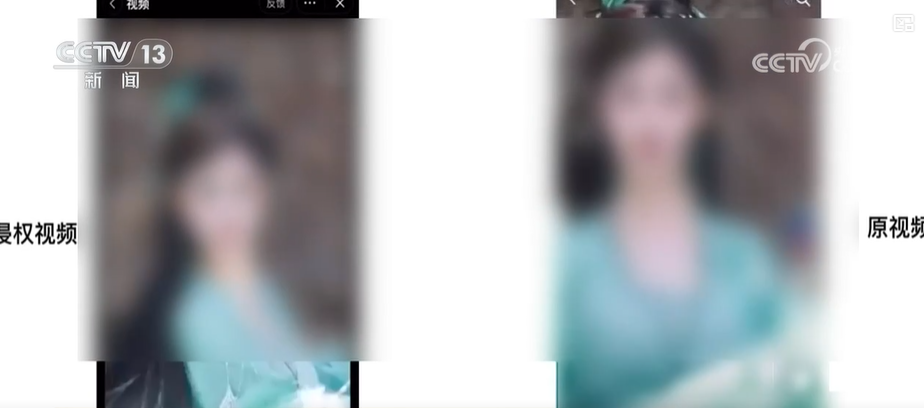
Core Viewpoint - The case highlights the legal implications of using AI technology for content creation, specifically regarding copyright infringement and the use of original works without permission [1][3][4]. Group 1: Company Actions - A Shanghai-based technology company developed a mini-program that allows users to create videos with "face-swapping" technology using traditional Chinese clothing [1]. - The company faced legal action from a photographer who claimed that the program used her original video content without permission [3]. - The company argued that the videos were modified through AI technology and were not identical to the original works, presenting it as a form of creativity [3]. Group 2: Legal Findings - The court found that despite the AI modifications, the new videos retained the original work's unique elements, leading to a conclusion of substantial similarity [4]. - The court ruled that the company's use of the original works for commercial gain constituted an infringement of the photographer's rights [6]. - The company complied with court recommendations by deleting the infringing videos and made commitments to operate within legal boundaries, resulting in a settlement where they compensated the photographer 7,500 yuan [6].
当“AI换脸”撞上版权铁壁
Ren Min Wang· 2025-04-23 00:53
Core Viewpoint - The case highlights the intersection of AI technology and copyright law, focusing on the unauthorized use of original video content by a company using AI face-swapping technology, raising questions about originality and copyright infringement [2][4][6]. Group 1: Case Background - A photographer discovered that her original videos were used in an AI face-swapping app called "某颜" without her permission, leading her to file a lawsuit for copyright infringement [1][2]. - The app, developed by a company, utilized AI algorithms to create face-swapped videos, which included many elements identical to the photographer's original works [2][3]. Group 2: Legal Considerations - The court recognized the photographer's original videos as protected works under copyright law due to their originality in content arrangement, camera angles, and other creative aspects [3][4]. - The defendant argued that the AI-generated videos were sufficiently different from the originals, but the court maintained that the core elements of the original works remained intact, constituting substantial similarity [3][6]. Group 3: Copyright and Commercial Use - The case raised complex legal questions regarding the commercial use of AI-generated content and the responsibilities of platforms in such scenarios [4][5]. - The company was found to have violated copyright laws by using the original works for profit without proper authorization, thus breaching the rights of the original creator [5][6]. Group 4: Platform Liability - The company attempted to invoke the "safe harbor" principle, claiming limited liability as a platform provider, but the court ruled that they failed to exercise reasonable care in monitoring the content [8][9]. - The court emphasized that platforms cannot ignore obvious copyright infringements and must take appropriate actions when notified [8][9]. Group 5: Industry Implications - The case serves as a cautionary tale for small tech companies about the importance of understanding copyright laws and the potential legal ramifications of using AI technologies [9][10]. - The court suggested that the company enhance its compliance awareness and improve its content review processes to avoid future legal issues [9][10].
短剧演员“偷走”迪丽热巴的脸?行业人士:扰乱市场,抵制“偷奸耍滑”
Mei Ri Jing Ji Xin Wen· 2025-04-12 03:03
Core Viewpoint - The incident involving AI face-swapping in short dramas has sparked widespread public concern and debate, particularly regarding the unauthorized use of celebrity likenesses, which could disrupt the industry and market integrity [1][4][9]. Industry Impact - The short drama market is experiencing rapid growth, with projections indicating a market size of 50.44 billion yuan and a user base of 666 million by 2024, expected to exceed 100 billion yuan by 2027 [9]. - The incident highlights the potential for AI technology to disrupt the film and television industry, with industry professionals warning against the misuse of AI for gaining traffic and attention [5][9]. Legal Considerations - Legal experts indicate that unauthorized use of a celebrity's likeness could infringe on privacy rights and may lead to claims of unfair competition and advertising fraud [10]. - The production companies, technology providers, and broadcasting platforms may bear responsibility for any legal repercussions stemming from the unauthorized use of AI face-swapping technology [10][13]. Ethical Concerns - The misuse of AI face-swapping technology raises ethical questions about industry standards and the potential for creating a market environment where low-quality productions thrive at the expense of genuine talent [13]. - There is a call for enhanced content review processes and accountability measures to mitigate the risks associated with AI technology in the entertainment sector [13].