Relationships

Search documents
X @IcoBeast.eth🦇🔊
IcoBeast.eth🦇🔊· 2025-09-02 23:32
Social Network Analysis - The crypto industry observes the Threadguy list as an interesting phenomenon from a social graph perspective [1] - The industry notes a significant increase in unique/high profile followers from outside the usual circle of influence, such as founders and protocol developers, likely due to the list [1] - Building relationships and social capital remains the highest expected value (EV) activity in the crypto space [1]
X @Andrew Tate
Andrew Tate· 2025-08-31 16:32
Never choose your prettiest woman.Never choose your funnest woman.Never choose the smartest woman.Choose the woman who respects you the most and obeys you the most.Long term - any other choice? You’ll regret it. ...
Applying Positive Psychology to Live a Better Life | Vinesh Sukumaran | TEDxMSRIT
TEDx Talks· 2025-08-22 15:41
Core Concept of Positive Psychology - Positive psychology shifts focus from alleviating suffering ("zero to plus one") to enhancing well-being and flourishing ("five to 10"), aiming to move individuals beyond mere relief to a state of passion and engagement [3][4][5] - The PERMA model (Positive emotions, Engagement, Relationships, Meaning, Accomplishment) is a scientifically supported framework for understanding and improving well-being [5][6] Practical Applications and Techniques - To address worry, the industry suggests actionable strategies like talking to a trusted person, writing down concerns, walking in silence, or simply looking out of a window [18][19][20][21][22] - When helping others, ensure advice is actionable and specific, rather than abstract or hopeful statements; simplify guidance for better understanding and implementation [27][28][29][30] - To enhance happiness, the industry recommends helping others, engaging in "strength dates" (activities that utilize individual strengths), and prioritizing meaningful relationships [33][34][37][40] - Simple actions like smiling and looking up can positively influence mood and perception, leveraging the body's inherent "up-down orientation" [41][42][43] Resources and Further Exploration - The International Positive Psychology Association (IPPA) and UPenn's Authentic Happiness website offer free resources for exploring positive psychology [24][25] - UC Berkeley's Greater Good Science Center provides access to the scientific research underpinning positive psychology [26]

TRUSTING YOURSELF GIVES YOU THE STRENGTH TO COPE WITH ANYTHING...
The Diary Of A CEO· 2025-08-19 18:29
Core Philosophy - Building inner strength helps individuals cope with life's challenges [1] - Nurturing the "miracle within" leads to self-realization and stronger connections [1] - Prioritizing close relationships and investing in them is crucial [2] - Reconnecting with nature and the world around us is a powerful remedy [2] Interpersonal Dynamics - Meaningful connections with loved ones are what truly matter [2] - Facing the world "back to back" emphasizes the importance of mutual support [2]
What sales and dating have in common | Atishay Jain | TEDxKCCollege
TEDx Talks· 2025-08-19 15:39
Business Growth & Strategy - The speaker shares a personal journey from an abandoned career at Amazon to building a business that generated $8 million in revenue [1] - In 2024, the business generated 14,900 leads for prospects, equating to $29.8 million in revenue [2] - The speaker advocates for embracing unconventional paths and exploring passions, rather than sticking to conventional or safe choices [16] Sales & Relationship Dynamics - The speaker draws parallels between sales and relationships, highlighting the five-step process common to both: introduction, discovery, proposal, nurturing, and close [3][4][5] - The speaker emphasizes the importance of not being desperate or "creepy" in sales, similar to dating, and advises adding value and staying in the prospect's ecosystem [11][12] - The speaker suggests that success in building relationships (even to the point of marriage) can translate to success in sales, emphasizing the need for confidence [13] - The speaker acknowledges that sales is difficult due to the potential for rejection and stresses the importance of being unattached to the outcome [14] Personal Development & Adaptability - The speaker emphasizes the importance of flexibility and adaptability, comparing life to a game of Tetris where one must adjust to changing circumstances [1] - The speaker shares personal realizations from college, including getting bored easily and not fitting into the traditional career path of working a job for 20 years and retiring at 60 [1] - The speaker encourages embracing unexpected outcomes, even if they initially seem like a "dangerously disgusting tequila cocktail," as they may lead to valuable experiences [1][17]
Be Generous and Expect Generosity from Others
Principles by Ray Dalio· 2025-08-18 13:14
Relationships & Generosity - Generosity fosters a reciprocal system where giving leads to receiving, benefiting both parties [1][2] - Cultivating win-win relationships is invaluable for personal and professional growth [2] - Strong relationships are spiritually enriching and considered the most important aspect of life [1] Behavioral Recommendations - Individuals should be generous and seek out other generous individuals to create a positive and effective network [1][2] - If generosity is not reciprocated, it is advisable to move on and find more supportive relationships [1]
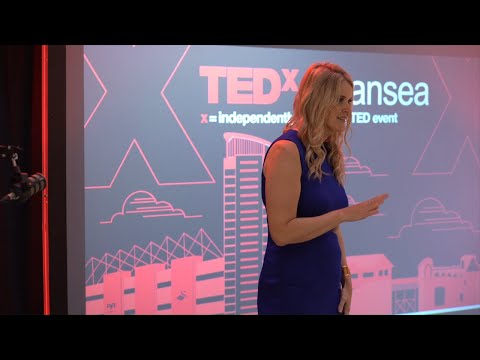
The art of looking up | Erika Glenn | TEDxSwansea
TEDx Talks· 2025-08-15 16:40
Connection & Well-being - The World Health Organization found that 25% of people struggled with depression and anxiety during COVID [1] - In 2023, the US Surgeon General called loneliness, isolation, and lack of connection a public health crisis, equating its harm to smoking 15 cigarettes a day [1] - Brandon McDaniel and Sarah Coin defined "technoference" as attachment to devices interfering with face-to-face relationships [1] Micro Moves for Connection - Three micro moves to foster connection: looking up, listening big, and lifting up [1] - Looking up involves shifting focus from devices to people to fully engage in conversations [1] - The University of Texas MCOME's Business School research showed that people with phones in a separate room had more cognitive capacity [1] - Big listening involves paying attention to small details to build trust and rapport [2] - The University of Warwick study states that four minutes of genuine connection can predict someone's actions and words [2] - Lifting up involves checking in with others, showing compassion, and encouraging them to talk about what excites them [2][3] Impact of Connection - Relationships can change the trajectories of lives and careers [1] - Lack of connection has ripples and effects in schools, workplaces, and communities [1]
"When the Whiskey Speaks“ & "Miss Me" | Lena Schaur | TEDxDonauinsel
TEDx Talks· 2025-08-14 16:43
Hey guys. Hey. How is everybody doing tonight.The first song I'm going to play tonight is called When the Whiskey Speaks. It's an original one. I won't give it a whole backstory.Just listen closely and maybe you will get what I mean. You always say what I want to hear. You say it's nothing. It's just a drink.Is it your pain on. Is that really you. What comes out when the whiskey speaks.You change your truth to fit mine. Are you with me or just by my side. When the whiskers speak into the lie, your words lik ...

The Strange Cure for Loneliness: Strangers | Georgia Reinés | TEDxBlumenau
TEDx Talks· 2025-08-11 15:38
Social & Emotional Trends - Affective crisis and insufficient friendships are prevalent, driven by increased pressure to meet expectations and decreased dedication to relationships [1][2] - Obsession with self-care may lead to a loss of ability to connect deeply with others, resulting in feelings of being unheard and judged [2][3] - Inability to coexist with differing opinions fuels loneliness, with a quarter of Brazilians feeling lonely most of the time [4][5] - Loneliness is recognized as a global health issue, distinct from solitude, and is related to the quality of relationships rather than the quantity [5][6] Intentional Groups & Social Connection - Intentional groups offer a potent form of connection, sometimes exceeding the impact of close relationships, with half of Brazilians participating in such groups [7][8] - 74% of participants find intentional groups as important or more important for their well-being than friendships [9] - Intentional groups are formed through conscious choice and intention to connect, differing from context-driven relationships like family or social media [9][10] - Participation in groups can combat loneliness, with 87% of participants feeling less alone [13][14] - Most intentional groups meet in person and are small, with a median of 12 participants [16] Overcoming Stigma & Promoting Connection - There is societal prejudice against seeking connection outside of family and friends, similar to the historical stigma around therapy [17] - 70% of people who do not participate in groups would like to, but are held back by fear of judgment and vulnerability [18] - Normalizing participation in intentional groups can encourage more people to seek these relationships [19]

How to be a better caregiver for cancer patients | Josh Bedingfield | TEDxUTAustin
TEDx Talks· 2025-08-08 15:25
I need you right now. Me for what. My big sister needed me.I was 17 and she was 20. You know, Katie told me she needed me when she had brain cancer. About a year into her diagnosis, my brother and I were headed out the door to get ice cream.When she asked to go, I said yes, but this wasn't my best day as a caregiver. I slipped and I was tired and showed on my face that I was reluctant to bring her. In that moment, uh, I was balancing supporting my terminally ill sister and my own youth mental health.You kno ...