Autonomous Driving

Search documents
Baidu Teams With Uber and Lyft on Robotaxis—Stock Upside Ahead?
MarketBeat· 2025-08-15 18:08
Industry Overview - The automotive sector is experiencing a new wave of disruption driven by advancements in artificial intelligence and economies of scale, leading to increased competition [1] - Investors who can identify and invest early in these technological themes are expected to benefit significantly throughout the year [1] Company Focus: Baidu - Baidu Inc. is positioned as China's equivalent to Alphabet Inc., controlling a significant portion of the search engine market and expanding into the robotaxi sector [3] - Baidu plans to partner with ridesharing platforms Uber and Lyft to facilitate its expansion into Europe, creating investment opportunities [3][4] Investment Opportunities - Baidu stock is currently trading at 78% of its 52-week highs, presenting a potential upside for investors [5] - Analysts have a consensus Hold rating for Baidu, with a price target of $105.1 per share, while Citigroup's analyst suggests a Buy rating with a target of $140, indicating a possible 60% rally from current levels [6][7] Uber's Position - Uber Technologies is seen as a less volatile investment option, with a 12-month stock price forecast of $102.82, representing a 12.45% upside [9] - Uber's established presence in Europe is expected to aid in the implementation of technology and consumer adoption of robotaxis [9][10] Lyft's Potential - Lyft presents a high-risk, high-reward investment opportunity, with a current price of $15.65 and a 12-month forecast of $16.70, indicating a 6.69% upside [12] - Despite being in the early stages of its European operations, Lyft's partnership with Baidu could lead to significant upside if it successfully expands its robotaxi services [13][14] - The market currently values Lyft at a high P/E ratio of 57.8, reflecting investor optimism about its future growth potential [15]



WeRide Secures Strategic Equity Investment from Grab, Partners to Deploy Robotaxis and Autonomous Shuttles in Southeast Asia
Globenewswire· 2025-08-15 09:18
Core Insights - WeRide has announced a strategic equity investment from Grab to accelerate the deployment of Level 4 Robotaxis and shuttles in Southeast Asia, aiming to integrate WeRide's autonomous vehicles into Grab's network for improved service and safety [2][3][5] Investment and Partnership - Grab's investment is expected to be finalized by the first half of 2026, contingent on customary closing conditions and WeRide's preferred timing, supporting WeRide's growth strategy in Southeast Asia [3] - This partnership builds on a prior Memorandum of Understanding signed in March 2025, focusing on the technical feasibility, commercial viability, and job creation potential of autonomous vehicles in the region [8] Operational Integration - The collaboration will establish a framework for deploying autonomous solutions across Grab's network, enhancing operational efficiency and scalability [4] - WeRide will integrate its autonomous driving technology into Grab's fleet management, vehicle matching, and routing ecosystem [4][12] Vision and Goals - WeRide aims to deploy thousands of Robotaxis in Southeast Asia, aligning with local regulations and societal readiness, leveraging Grab's regional expertise in ride-hailing and digital services [5] - Grab emphasizes the need for reliable transportation in Southeast Asia, particularly in areas with driver shortages, and plans to test WeRide's vehicles in diverse environments to adapt the technology for regional needs [6] Technical Collaboration - The partnership will focus on optimizing dispatch and routing, maximizing vehicle uptime, measuring safety performance, remote monitoring, customer support, and training for driver-partners and local communities [12]


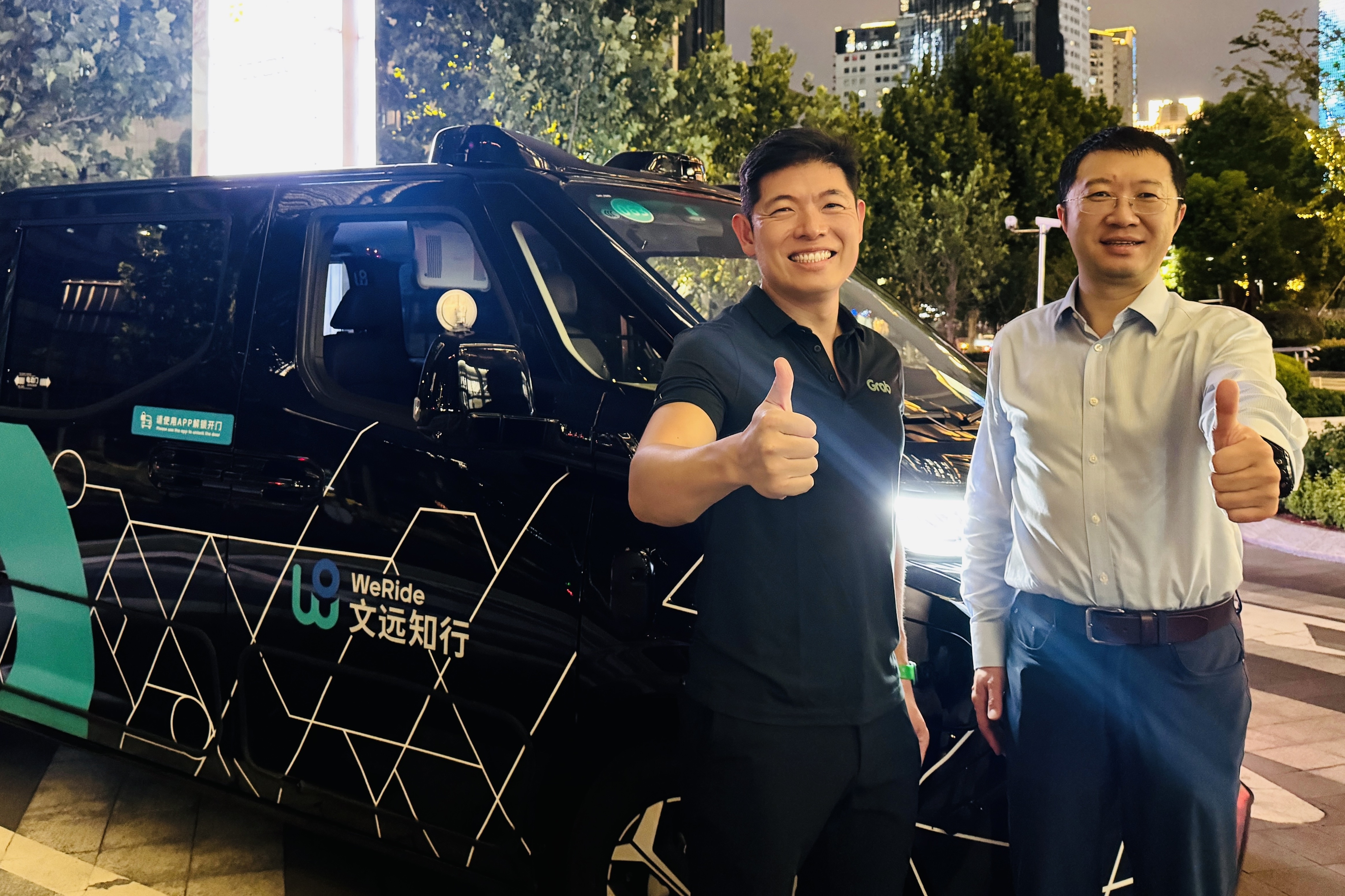
Will Uber's $300M Bet on Gravity Accelerate Lucid's Growth?
ZACKS· 2025-08-14 16:50
Core Insights - Lucid Group, Inc. is forming strategic partnerships to enhance its EV technology offerings, including a significant collaboration with Uber and Nuro to develop a premium robotaxi service [1][3][9] Group 1: Partnership and Collaboration - Lucid has announced a collaboration with Uber and Nuro to create a next-generation premium robotaxi, leveraging Lucid Gravity's advanced software-defined vehicle architecture and Nuro's Level 4 autonomous driving system [1][3] - Uber will invest $300 million in Lucid, pending regulatory approval, and plans to deploy at least 20,000 Lucid Gravity vehicles equipped with Nuro's autonomy over six years in various global markets [3][9] - The partnership marks Lucid's entry into the multitrillion-dollar robotaxi market while the company continues to develop its own autonomous driving capabilities [3][4] Group 2: Technology and Features - Lucid's EV technology includes an AV-capable sensor suite, redundant steering and braking systems, and compact, high-power-density motors, which are essential for the success of robotaxi operations [2] - The secure, software-defined architecture of Lucid's vehicles supports third-party autonomy stacks, enhancing flexibility and integration [2] Group 3: Market Position and Performance - Lucid's stock has underperformed compared to the Zacks Automotive - Domestic industry, with a year-to-date loss of 22.5% against the industry's decline of 13.8% [7] - The company is currently trading at a forward price/sales ratio of 3.10, which is higher than the industry's ratio of 2.74, indicating a potentially overvalued position [10] Group 4: Earnings Estimates - The Zacks Consensus Estimate for Lucid's 2025 EPS has decreased by 4 cents in the past week, while the 2026 EPS estimate has dropped by a penny over the last 30 days [11]


Qualcomm (QCOM) Conference Transcript
2025-08-13 20:12
Qualcomm Conference Summary Industry Overview - **Industry**: Automotive and IoT (Internet of Things) - **Company**: Qualcomm (QCOM) Key Points on Automotive Segment 1. **Revenue Targets**: Qualcomm aims for approximately $4 billion in revenue for fiscal 2026, with expectations to exceed this target. A target of $8 billion is set for fiscal 2029, indicating a compound annual growth rate (CAGR) of around 20% from current levels [2][3][4] 2. **Design Wins**: Over 80% of the projected revenue for the next four years is secured through existing design wins, providing predictability in revenue streams [3][4] 3. **Market Participation**: Qualcomm focuses on segments like cloud connectivity, digital cockpit, and autonomous driving, which are expected to grow at 15% even in a flat automotive market [4] 4. **Content Per Vehicle**: The content opportunity per vehicle is significant, with some vehicles featuring over $2,000 to $3,000 in Qualcomm content, particularly in digital cockpit and ADAS (Advanced Driver Assistance Systems) [8][10] 5. **ADAS Development**: Qualcomm is seeing increased demand for ADAS features, with a trend of OEMs wanting to implement top-tier features across multiple vehicle tiers [10][12] 6. **Strategic Partnerships**: The collaboration with BMW on a jointly developed ADAS stack is crucial, allowing Qualcomm to verify its technology at scale and potentially sell it to other OEMs [14][18] 7. **Robotaxi Market**: Qualcomm views the robotaxi market as a driver for increased demand for autonomous driving features, although it may not significantly alter the overall automotive market in the short term [19][20] Competitive Positioning 1. **Differentiation from Competitors**: Qualcomm does not compete directly with NVIDIA and Mobileye in connectivity and cockpit technologies, focusing instead on ADAS. The Ride Flex SoC allows for scalability across different vehicle tiers, enhancing Qualcomm's competitive edge [23][24][25] 2. **Investment in Technology**: Qualcomm's significant investment across various automotive technologies positions it favorably against competitors [25] IoT Segment Insights 1. **Product Diversification**: Qualcomm's IoT segment includes XR glasses, personal devices, industrial AI, and networking, with a strong emphasis on personal devices as gateways for AI experiences [38][41] 2. **Industrial AI Growth**: The transition from microcontrollers to microprocessors in industrial AI presents a significant opportunity for Qualcomm, particularly in edge AI applications [44][46] 3. **PC Market Strategy**: Qualcomm aims to establish itself as a performance leader in the PC market, focusing on high-end devices while planning to address lower price points in the future [47][52] Data Center Opportunities 1. **CPU and NPU Focus**: Qualcomm is leveraging its custom CPU technology for data center applications, with a focus on AI inference rather than training, which is seen as a strength [54][58][75] 2. **Incremental Investment**: The strategy involves using existing technology to address specific problems in the data center market, with expectations for revenue growth starting in fiscal 2028 [60][67] Handset Market Dynamics 1. **Android Market Growth**: Qualcomm is experiencing growth in the Android market due to increased content in premium devices and a shift towards higher-priced models [78][79] 2. **Long-term Agreements**: Long-term agreements with OEMs like Xiaomi and Samsung are becoming standard practice, providing stability in share positions [81][82] Financial Outlook 1. **Sustainable Margins**: Qualcomm expects to maintain strong operating margins despite potential revenue declines from Apple, with growth opportunities in IoT and automotive segments [87][88] 2. **OpEx Considerations**: The acquisition of AlphaWave will introduce some incremental operating expenses, but Qualcomm's strategy focuses on reallocating investments to diversify and grow in new areas [89]

AEye (LIDR) 2025 Conference Transcript
2025-08-13 19:05
AEye (LIDR) 2025 Conference Summary Company Overview - **Company**: AEye - **Industry**: LiDAR technology for automotive and adjacent markets Key Points and Arguments Strategic Decisions and Product Development - AEye made a pivotal decision in early 2024 to separate from Continental and focus on developing a new LiDAR product called Apollo, aimed at improving performance, cost, and size [5][6] - Apollo was integrated with NVIDIA DRIVE AGX platform, enhancing performance metrics and providing an objective view of capabilities [7][8] Market Dynamics and Opportunities - There is a growing recognition of LiDAR's essential role in the automotive industry, with significant demand expected in the next twelve months [9][12] - AEye anticipates shipping 2 to 3 million sensors in China this year, indicating a strong market presence [11] - Replacement cycles in adjacent industries, such as tolling applications, are driving demand for LiDAR due to its cost-effectiveness compared to traditional methods [13][14] Financial Position and Growth Potential - AEye has over $80 million in cash, with the lowest burn rate in the industry, providing a strong financial position to capitalize on near-term revenue opportunities [17][18] - The company expects significant returns with lower revenue thresholds due to its efficient cost structure [18] Competitive Advantages - AEye's LiDAR technology can gather 4 to 5 times more photons than competitors, allowing for a detection range of up to one kilometer [22] - The Apollo system is designed for easy integration into vehicles without extensive modifications, enhancing its appeal to OEMs [23] Partnerships and Collaborations - AEye's partnership with NVIDIA has provided substantial support, including outbound marketing and validation of their technology, which has accelerated discussions with OEMs [47][50] - The collaboration with Lite On is crucial for supply chain management and cost efficiency, allowing AEye to maintain a competitive edge [60][68] Revenue Generation and Market Strategy - AEye has secured six contracts and is in deep negotiations for 30 more, indicating a robust pipeline for future revenue [31] - The company is focusing on both automotive and non-automotive markets, with higher margins expected in non-automotive applications [61] Future Outlook and Milestones - AEye aims to ship thousands of units by 2026, with a focus on ramping revenue and customer conversions [71] Additional Important Insights - The integration of Apollo and Optus platforms allows for a comprehensive solution that combines sensing and AI capabilities, expanding AEye's addressable market [44][46] - AEye is addressing supply chain concerns proactively, ensuring resilience through strategic partnerships [66][68] - The company is focused on maintaining financial discipline and resource allocation to convert customer engagements into long-term revenue [41][43]


X @Tesla Owners Silicon Valley
Tesla Owners Silicon Valley· 2025-08-13 15:08
Autonomous Technology - The future trend is autonomous technology [1]
Aurora Innovation (AUR) FY Conference Transcript
2025-08-13 13:32
Summary of Aurora Innovation (AUR) FY Conference Call - August 13, 2025 Company Overview - Aurora Innovation is focused on operating driverless trucks on public roads, marking significant progress in the autonomous trucking industry [3][5] - The company has established partnerships with major players such as Hirschbach, Uber Freight, FedEx, Warner, Schneider, and Volvo Autonomous Solutions to expand its operations [5] Key Developments - Aurora operated 20,000 miles with driverless trucks in the second quarter of 2025, starting with one truck and scaling up to three [4][18] - The company has launched both daytime and nighttime operations, with plans to operate in various weather conditions, including rain and wind, by 2025 [11][12] - Aurora's driverless technology aims to enhance asset utilization, allowing trucks to operate over 20 hours a day compared to the traditional 8 hours [13][56] Market Opportunity - The autonomous trucking market is estimated to be a $1 trillion opportunity, with Aurora positioned as a leader due to its unique partnerships and operational capabilities [6][39] - The company anticipates significant revenue growth and improved margins through its "driver as a service" business model, expected to launch in 2027 [9][58] Financial Position - Aurora reported $1.3 billion in cash and short-term investments, providing a strong financial foundation to support operations through 2027 [8] - The partnership with Continental involves a unique pricing model where Aurora pays a per-mile fee for hardware, creating predictable revenue streams for both companies [48][50] Competitive Landscape - The autonomous trucking industry is expected to see increased competition, but Aurora believes it has a multiyear lead and is well-positioned to scale its business [39][40] - The company acknowledges the challenges of the industry and the importance of safety, emphasizing its commitment to developing reliable technology [41][66] Future Plans - In 2026, Aurora plans to introduce a second-generation hardware kit that will be cheaper and more durable, enabling the production of hundreds to thousands of trucks [27][29] - The company aims to expand its operational lanes throughout the Sunbelt and reach customer endpoints, enhancing customer adoption [28][29] Technological Approach - Aurora has developed proprietary lidar technology that enhances safety by allowing trucks to see further and react more effectively in various conditions [66] - The company emphasizes a multimodal sensing approach, combining lidar, cameras, and radars to ensure safe operations [62][66] Conclusion - Aurora Innovation is making significant strides in the autonomous trucking space, with a strong financial position, strategic partnerships, and a clear roadmap for future growth and technology development [8][9][39]

Innoviz Technologies .(INVZ) - 2025 Q2 - Earnings Call Presentation
2025-08-13 13:00
Financial Performance - H1 2025 revenue reached $27.1 million, exceeding the full-year 2024 revenue of $24.3 million[8, 12, 37] - Q2 2025 revenue increased by 46% year-over-year, reaching $9.7 million compared to $6.7 million in Q2 2024[8, 12, 32, 34] - Q2 2025 gross margin was 16%, while the H1 2025 gross margin was 31%[8, 12] - Cash burn in Q2 2025 decreased to $7.3 million, a significant reduction from $21.6 million in Q2 2024[8, 12, 33, 34, 37] - The company's liquidity stands at $79.4 million[12, 33] Strategic Developments - A Statement of Development Work (SODW) agreement was signed with a Top 5 passenger automotive manufacturer for a Level 3 global production vehicle program, with SOP planned for 2027[5, 13, 14, 15, 38] - InnovizSMART was launched for non-automotive applications, with collaborations announced with multiple companies[5, 19, 38] - The company shipped the first InnovizTwo units from Fabrinet's high-volume production line[6, 21, 38] Future Targets - The company aims to grow revenue to $50-60 million, more than double 2024 levels[29] - The company is updating NRE Bookings target to $30-60 million, already booking $20 million+ vs initial guide of $20-50 million[29]

China Automotive Systems(CAAS) - 2025 Q2 - Earnings Call Transcript
2025-08-13 13:00
Financial Data and Key Metrics Changes - Sales increased by 11.1% year over year to $176.2 million in Q2 2025 compared to $158.6 million in Q2 2024 [6][14] - Gross profit increased by 4.2% year over year to $30.5 million, with a gross profit margin decreasing to 17.3% from 18.5% due to increased tariffs and a shift in product mix [10][16] - Income from operations rose by 20.2% to $13 million in Q2 2025 from $10.8 million in Q2 2024 [19] - Net income attributable to parent common shareholders was $7.6 million in Q2 2025 compared to $7.1 million in Q2 2024, with diluted earnings per share at $0.25 versus $0.24 [21] Business Line Data and Key Metrics Changes - Total sales of electric power steering (EPS) systems increased by 31.1% year over year to $72.9 million, representing 41.4% of total sales [6][15] - Sales from traditional steering products increased slightly to $103.3 million [15] - Sales of commercial vehicle steering systems rose by 25.6% to $23.5 million [15] Market Data and Key Metrics Changes - North American sales increased by 14.9% year over year to $30.8 million, primarily due to higher sales to Stellantis [7] - Brazilian sales surged by 49.4% year over year, accounting for 10.1% of total sales [7][8] - Total vehicle unit sales in China increased by 11.4% year over year, with passenger vehicle sales growing by 13% and commercial vehicle sales by 2.6% [9][10] Company Strategy and Development Direction - The company plans to change its corporate registration from Delaware to the Cayman Islands to reduce costs and regulatory burdens, while maintaining its listing on Nasdaq [13][52] - The focus remains on developing high-quality EPS products, particularly for electric vehicles, with 80% of R&D expenditures directed towards EV-related products [12][35] Management Comments on Operating Environment and Future Outlook - Management raised revenue guidance for the full fiscal year 2025 to $720 million based on current operating and market conditions [24] - The Chinese economy's GDP growth was reported at 5.2% year over year, slightly down from 5.4% [8] - Management expressed confidence in the growth of the Brazilian market, which is now a significant contributor to total revenue [40] Other Important Information - R&D expenses remained stable at $8.1 million, with a projected annual spending of $30-35 million, representing about 5% of total revenue [10][35] - The company invested $18.5 million in capital expenditures in 2025 to enhance R&D and production capabilities [24] Q&A Session Summary Question: Why has the income tax rate increased in Q2 2025? - The increase in income tax is due to higher pretax profit and a slight uptick in the tax rate, along with a prior year's tax adjustment affecting the current provision [29][30] Question: Why was R&D flat at $8.1 million in Q2 2025? - R&D expenses were flat due to overspending in the first quarter, with a total of $16.8 million for the first half of 2025, up from $13.5 million in the same period last year [32][34] Question: What is the capacity utilization and need for more capital investment in Brazil? - Capacity utilization in Brazil is about 90%, with plans to add another production line for EPS products, requiring an estimated $3.5 million in capital expenditures [40][42] Question: Can you clarify the company's share buyback and management options? - The company is buying back shares due to perceived undervaluation and issuing options to incentivize management, similar to practices at major US companies [46][47] Question: What are the advantages of moving to the Cayman Islands? - The move aims to reduce overall costs of being a listed company, with lower reporting requirements while maintaining shareholder programs and flexibility for global operations [50][52]

Prediction: 2 Stocks That Will Be Worth More Than Tesla 3 Years From Now
The Motley Fool· 2025-08-13 08:40
Core Viewpoint - Tesla's future stock performance is uncertain, with potential for significant downside if ambitious plans do not materialize [2][8] Group 1: Tesla's Current Position and Challenges - Tesla is valued at over $1 trillion and is a leader in electric vehicles, autonomous driving, and renewable energy [1] - The company is shifting focus from electric vehicles to Robotaxi and humanoid robotics, which may take time to develop [3] - Recent declines in electric vehicle sales may be influenced by CEO Elon Musk's controversial public persona [4] - Tesla's self-driving technology is currently at Level 2, requiring human drivers, which limits its operational capabilities [4] Group 2: Future Prospects and Comparisons - Tesla aims to produce 5,000 units of its humanoid robot, Optimus, but is reportedly behind schedule [5] - If Tesla cannot quickly ramp up Robotaxi and Optimus production, its stock may face significant pressure due to recent sales struggles [6] - Revenue growth for Tesla has stagnated and turned negative, with profit margins decreasing [8] - In contrast, Toyota, valued at $246 billion, continues to grow revenue and has a higher profit margin than Tesla [9] Group 3: Competitive Landscape - Alphabet, valued at over $2.3 trillion, is a leader in self-driving technology through its Waymo subsidiary [13][14] - Alphabet's strong existing businesses in AI, cloud computing, and digital advertising provide a solid foundation for investments in self-driving technology [15] - The potential for Tesla's valuation to drop significantly exists if it fails to meet ambitious goals, while Toyota could surpass Tesla's value if both companies' valuations adjust [12]