Contrarian Investment

Search documents
Rocket Lab: The Neutron Delay Is Not A Major Hit
Seeking Alpha· 2025-11-21 14:20
Core Insights - The investor adopts a contrarian investment style, focusing on high-risk, illiquid options and shares, with a balanced portfolio of approximately 50% in each [1] - The investment strategy emphasizes buying stocks that have recently experienced sell-offs due to non-recurrent events, particularly when insiders are purchasing shares at lower prices [1] - Fundamental analysis is utilized to assess the health of companies, their leverage, and to compare financial ratios with sector and industry averages [1] - Technical analysis is employed to determine optimal entry and exit points, using multicolor lines for support and resistance levels on weekly charts [1] Investment Strategy - The investor's timeframe for holding positions typically ranges from 3 to 24 months [1] - A professional background check is conducted on insiders who purchase shares following a sell-off, ensuring due diligence [1] - The investor screens through thousands of stocks, primarily in the US, but may also invest in companies from less stable economies [1]



This Fund Sold $6 Million in Armstrong Stock Despite Strong Earnings — Here's the Takeaway for Long-Term Holders
The Motley Fool· 2025-11-16 22:20
Core Insights - 1060 Capital Management has fully exited its position in Armstrong World Industries, liquidating 35,000 shares valued at approximately $5.7 million, which represented 12% of the fund's reportable assets [1][2]. Company Performance - Armstrong World Industries reported a revenue of $1.6 billion and a net income of $305.4 million for the trailing twelve months (TTM) [3]. - The company's shares were priced at $182.66, reflecting a 19% increase over the past year, outperforming the S&P 500, which rose by 13% during the same period [2][3]. - In the third quarter, Armstrong's net sales increased by 10% to $425 million, driven by 18% growth in architectural specialties and 6% growth in mineral fiber segments [6]. - Adjusted earnings per share (EPS) rose by 13% to $2.05, and year-to-date adjusted free cash flow surged by 22% [8]. Business Overview - Armstrong World Industries is a leading provider of ceiling and wall systems, focusing on product innovation and a diverse portfolio that serves both commercial and residential construction markets [4]. - The company generates income through sales to various distribution channels, including distributors, contractors, wholesalers, and retailers [4][12].


Archer: Hawthorne And EIPP Make The Q3 Selloff A Bear Trap
Seeking Alpha· 2025-11-10 23:39
Core Insights - The investor adopts a contrarian investment style, focusing on high-risk, illiquid options and shares, with a balanced portfolio of approximately 50% in each [1] - The investment strategy involves identifying stocks that have recently experienced sell-offs due to non-recurrent events, particularly when insiders are buying shares at lower prices [1] - Fundamental analysis is employed to assess the health of companies, their leverage, and to compare financial ratios with sector and industry averages [1] - Technical analysis is utilized to optimize entry and exit points, using multicolor lines for support and resistance levels on weekly charts [1] Investment Strategy - The investor's timeframe for holding positions typically ranges from 3 to 24 months [1] - A professional background check is conducted on each insider who purchased shares after a recent sell-off to ensure credibility [1] - The investor screens through thousands of stocks, primarily in the US, but may also invest in companies from less stable economies [1]


Joby Aviation: Bullish After The First Meaningful Revenue Print
Seeking Alpha· 2025-11-10 21:45
Core Viewpoint - The individual investor adopts a contrarian investment style, focusing on deep value opportunities, particularly in stocks that have recently experienced sell-offs due to non-recurrent events, while also considering insider buying as a positive signal [1] Investment Strategy - The investment portfolio is split approximately 50%-50% between shares and call options, indicating a balanced approach between equity and derivatives [1] - The investor's timeframe for holding positions typically ranges from 3 to 24 months, suggesting a medium-term investment horizon [1] - Fundamental analysis is employed to assess the health of companies, including their leverage and financial ratios compared to sector and industry averages [1] - Technical analysis is utilized to optimize entry and exit points, with a focus on support and resistance levels on weekly charts [1] Stock Selection Criteria - Preference is given to stocks that have undergone a recent sell-off, particularly when there is insider buying at the new lower price, indicating potential recovery [1] - The investor screens through thousands of stocks, primarily in the US, but is open to owning shares in less stable markets, referred to as "banana republics" [1] - Professional background checks are conducted on insiders who purchase shares post-sell-off to ensure credibility and alignment with shareholder interests [1]


Alphabet: AI Supercycle Powered By Cloud, CapEx, And TPUs (NASDAQ:GOOG)
Seeking Alpha· 2025-11-10 09:56
Core Insights - The investor adopts a contrarian investment style, focusing on high-risk, illiquid options and shares, with a balanced portfolio of approximately 50% in each [1] - The investment strategy emphasizes buying stocks that have recently experienced sell-offs due to non-recurrent events, particularly when insiders are purchasing shares at lower prices [1] - Fundamental analysis is utilized to assess the health of companies, including leverage and financial ratios compared to sector and industry averages [1] - Technical analysis is employed to determine optimal entry and exit points, using multicolor lines for support and resistance levels on weekly charts [1] Investment Strategy - The investor's timeframe for holding positions ranges from 3 to 24 months [1] - A professional background check is conducted on insiders who purchase shares following a sell-off, indicating a focus on insider activity as a signal for potential investment [1] - The investor screens through thousands of stocks, primarily in the US, but may also invest in companies from less stable economies [1]


Apple: iPhone 17 Cycle Setting Up A Classic Holiday Beat (NASDAQ:AAPL)
Seeking Alpha· 2025-11-06 20:20
Core Viewpoint - The individual investor adopts a contrarian investment style, focusing on deep value opportunities, particularly in stocks that have recently experienced sell-offs due to non-recurrent events, while also considering insider buying as a positive signal [1] Investment Strategy - The investment portfolio is split approximately 50%-50% between shares and call options, indicating a balanced approach to risk and return [1] - The investor's timeframe for holding positions typically ranges from 3 to 24 months, suggesting a medium-term investment horizon [1] - Fundamental analysis is employed to assess the health of companies, including their leverage and financial ratios compared to sector and industry averages [1] - Technical analysis is utilized to optimize entry and exit points, with a focus on support and resistance levels on weekly charts [1] Stock Selection Criteria - The investor screens for stocks that have undergone recent sell-offs, particularly when there is insider buying at the new lower price, indicating potential recovery [1] - Professional background checks are conducted on insiders who purchase shares post-sell-off, adding a layer of due diligence to the investment process [1]


Apple: iPhone 17 Cycle Setting Up A Classic Holiday Beat
Seeking Alpha· 2025-11-06 20:20
Core Viewpoint - The individual investor adopts a contrarian investment style, focusing on deep value opportunities, particularly in stocks that have recently experienced sell-offs due to non-recurrent events, while also considering insider buying as a positive signal [1] Investment Strategy - The investment portfolio is split approximately 50%-50% between shares and call options, indicating a balanced approach to risk and return [1] - The investor's timeframe for holding positions typically ranges from 3 to 24 months, suggesting a medium-term investment horizon [1] - Fundamental analysis is employed to assess the health of companies, including their leverage and financial ratios compared to sector and industry averages [1] - Technical analysis is utilized to optimize entry and exit points, with a focus on support and resistance levels on weekly charts [1] Stock Selection Criteria - The investor screens for stocks that have undergone recent sell-offs, particularly when there is insider buying at the new lower price, indicating potential recovery [1] - Professional background checks are conducted on insiders who purchase shares post-sell-off, adding an additional layer of due diligence [1]

Microsoft: $250B OpenAI Fuel, Azure Strong Growth, And The 2 GW Fairwater Next Year
Seeking Alpha· 2025-11-06 18:07
Core Viewpoint - The individual investor adopts a contrarian investment style, focusing on deep value opportunities, particularly in stocks that have recently experienced sell-offs due to non-recurrent events, while also considering insider buying as a positive signal [1] Investment Strategy - The investment portfolio is split approximately 50%-50% between shares and call options, indicating a balanced approach to risk and return [1] - The investor's timeframe for holding positions typically ranges from 3 to 24 months, suggesting a medium-term investment horizon [1] - Fundamental analysis is employed to assess the health of companies, including their leverage and financial ratios compared to sector and industry averages [1] - Technical analysis is utilized to optimize entry and exit points, with a focus on support and resistance levels on weekly charts [1] Stock Selection Criteria - The investor screens for stocks that have undergone recent sell-offs, particularly when there is insider buying at the new lower price, indicating potential recovery [1] - Professional background checks are conducted on insiders who purchase shares post-sell-off, adding an additional layer of due diligence [1]


Oracle: The Overlooked Moat Behind OpenAI's $300B Deal
Seeking Alpha· 2025-11-04 09:28
Core Viewpoint - The individual investor adopts a contrarian investment style, focusing on deep value opportunities, particularly in stocks that have recently experienced sell-offs due to non-recurrent events, while also considering insider buying as a positive signal [1] Investment Strategy - The investment portfolio is split approximately 50%-50% between shares and call options, indicating a balanced approach to risk and return [1] - The investor's timeframe for holding positions typically ranges from 3 to 24 months, suggesting a medium-term investment horizon [1] - Fundamental analysis is employed to assess the health of companies, including their leverage and financial ratios compared to sector and industry averages [1] Stock Selection Criteria - The investor screens thousands of stocks, primarily in the US, looking for those that have undergone recent sell-offs, particularly when insiders are purchasing shares at lower prices [1] - Professional background checks are conducted on insiders who buy shares post-sell-off, adding a layer of due diligence to the investment process [1] Technical Analysis - Technical analysis is utilized to optimize entry and exit points, with a focus on support and resistance levels on weekly charts, employing multicolor lines for clarity [1] - Trend lines are drawn in multicolor patterns to assist in visualizing market movements and potential price actions [1]


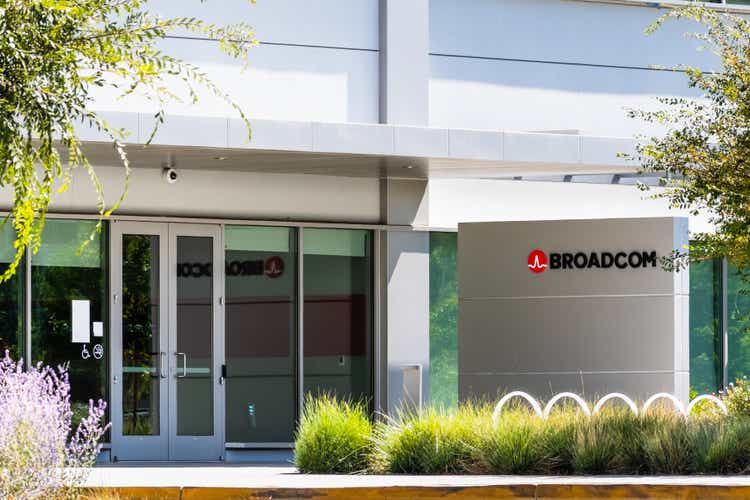
Broadcom: Strong Setup Going Into Q4 2025 Earnings (NASDAQ:AVGO)
Seeking Alpha· 2025-11-03 21:05
Core Viewpoint - The individual investor adopts a contrarian investment style, focusing on deep value opportunities, particularly in stocks that have recently experienced sell-offs due to non-recurrent events, while also considering insider buying as a positive signal [1] Investment Strategy - The investment portfolio is split approximately 50%-50% between shares and call options, indicating a balanced approach to risk and return [1] - The investor's timeframe for holding positions typically ranges from 3 to 24 months, suggesting a medium-term investment horizon [1] - Fundamental analysis is employed to assess the health of companies, including their leverage and financial ratios compared to sector and industry averages [1] - Technical analysis is utilized to optimize entry and exit points, with a focus on support and resistance levels on weekly charts [1] Stock Selection Criteria - The investor screens for stocks that have undergone recent sell-offs, particularly when there is insider buying at the new lower price, indicating potential recovery [1] - Professional background checks are conducted on insiders who purchase shares post-sell-off, adding an additional layer of due diligence [1]