金融风险防控

Search documents
打好金融风险防控持久战
Jing Ji Ri Bao· 2025-03-25 21:58
Group 1 - The core viewpoint emphasizes the importance of effectively preventing and resolving financial risks, maintaining financial security and stability as a priority task [1][2] - The Chinese government has taken significant measures to deepen financial reform, promote financial development, strengthen financial regulation, and prevent financial risks, resulting in a stable financial system and market [1][2] - Despite progress, various financial contradictions and issues remain prominent, with weak regulatory and governance capabilities leading to numerous risk hidden dangers [2][3] Group 2 - The article stresses the need to learn from past global financial crises, recognizing the severe dangers of financial crises, and maintaining a focus on financial risk prevention as a fundamental task [3][4] - It highlights the necessity of balancing financial development and security, asserting that safety is a prerequisite for development, while development ensures safety [3][4] - The focus should be on preventing localized financial risks from escalating into systemic financial risks, as historical experiences show that many crises stem from neglecting early signs of localized risks [4][5] Group 3 - There is a call for improving and strengthening financial regulation, particularly in enhancing regulatory specificity and effectiveness [5] - The article advocates for a comprehensive regulatory framework that covers all financial activities and behaviors, promoting macro-prudential management alongside micro-prudential regulation [5] - It suggests the establishment of a scientific financial risk prevention system, including early identification, monitoring, and emergency response mechanisms [5]
平安银行(000001) - 投资者关系管理信息(2)
2025-03-21 09:56
Group 1: Strategic Direction and Financial Performance - The bank's strategic direction for 2025 focuses on deepening party leadership, enhancing financial services for the real economy, and strengthening financial risk prevention [1] - The core Tier 1 capital adequacy ratio, Tier 1 capital adequacy ratio, and total capital adequacy ratio for the end of 2024 are 9.12%, 10.69%, and 13.11% respectively, meeting regulatory requirements [2] Group 2: Revenue and Income Analysis - The net income from fees and commissions for 2024 is 24.1 billion yuan, a decrease of 18.1% year-on-year [3] - The breakdown of fee income includes: - Settlement fees: 3 billion yuan, down 8.3% - Agency and entrusted fees: 5.4 billion yuan, down 29.4% - Credit card fees: 13.2 billion yuan, down 18.3% - Other fees: 4.8 billion yuan, down 23% [3] Group 3: Retail Deposit Performance - The personal deposit balance at the end of 2024 is 1,287.2 billion yuan, an increase of 6.6% year-on-year [4] - The average daily balance of personal deposits for the year is 1,263.2 billion yuan, up 10.1% compared to the previous year [4] Group 4: Real Estate Loan Quality - The non-performing loan ratio for corporate real estate loans at the end of 2024 is 1.79%, an increase of 0.93 percentage points year-on-year, but still at a low level overall [5] Group 5: Corporate Business Development - The corporate loan balance at the end of 2024 is 1,606.9 billion yuan, an increase of 12.4% year-on-year [6] - The corporate deposit balance is 2,246.5 billion yuan, up 2.1% from the previous year [7]

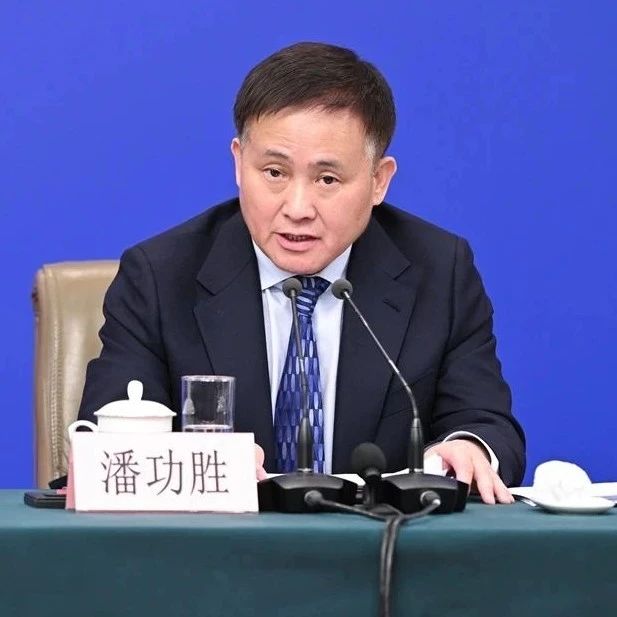
央行行长潘功胜发声,事关货币政策、风险防控|两会时间
和讯· 2025-03-06 11:21
Core Viewpoint - The article discusses the monetary policy and financial support measures for technological innovation in China, as outlined by the Governor of the People's Bank of China, Pan Gongsheng, during a press conference at the National People's Congress. Group 1: Monetary Policy Adjustments - In 2024, the central bank implemented multiple monetary policy adjustments, including two reductions in the reserve requirement ratio and policy interest rates, leading to a significant decline in loan market quotation rates. By the end of 2024, the growth rates of social financing, broad money M2, and RMB loans were all between 7% and 8%, exceeding the nominal economic growth rate by approximately 3 percentage points, with financing costs at historical lows [2]. - For 2025, the central bank plans to maintain a relatively loose monetary stance and will consider further reductions in reserve requirements and interest rates based on domestic and international economic conditions. There is room for downward adjustments in the reserve requirement ratio and the rates of structural monetary policy tools [2]. Group 2: Financial Support for Technological Innovation - The central bank, in collaboration with the China Securities Regulatory Commission and the Ministry of Science and Technology, plans to introduce a "Technology Board" in the bond market to enhance financial support for technological innovation. This initiative aims to facilitate the issuance of technology innovation bonds by financial institutions and support the issuance of medium- to long-term bonds by growing and mature tech companies [4][5]. - The central bank will also expand the scale of re-loans for technological innovation and technological transformation from the current 500 billion yuan to between 800 billion and 1 trillion yuan to better meet the financing needs of enterprises [5]. Group 3: Risk Prevention and Financial Stability - The overall stability of China's financial system is emphasized, with local debt and real estate risks continuing to recede. By the end of 2024, commercial banks had a capital adequacy ratio of 16%, a non-performing loan ratio of 1.5%, and a provision coverage ratio of 211%, all significantly above regulatory standards [6]. - Approximately 40% of financing platforms have exited the market through various means, including market exit and transformation, indicating progress in mitigating local financing platform debt risks [6][7]. - The average interest rate for newly issued bonds by financing platforms was 2.67% in the fourth quarter of 2024, reflecting a significant decline in risk premium levels in the financial market [7].