证券业

Search documents
每日债市速递 | 霍尔木兹海峡又有大消息
Wind万得· 2026-04-01 05:45
Group 1: Monetary Policy and Market Operations - The People's Bank of China conducted a 7-day reverse repo operation of 32.5 billion yuan at a fixed rate of 1.40%, with a net injection of 15 billion yuan after accounting for maturing repos [3][4]. - The interbank market is experiencing a very loose liquidity environment, with the weighted average rate of DR001 falling over 3 basis points to around 1.27% [5]. - The latest transaction for one-year interbank certificates of deposit is around 1.51%, unchanged from the previous day [6]. Group 2: Economic Indicators and Government Actions - The PBOC's monetary policy committee discussed the integration of incremental and stock policies to maintain liquidity and align social financing scale with economic growth and price expectations [13]. - The Ministry of Finance announced arrangements for the issuance of various government bonds, including a 30-year bond on April 3 [13][14]. - Data from the Ministry of Finance shows that from January to February, state-owned enterprises reported total operating income of 12,565.5 billion yuan, a year-on-year increase of 0.2%, while total profits decreased by 2.0% [13]. Group 3: Global Economic Context - U.S. officials report that President Trump is willing to end military actions against Iran even if the Strait of Hormuz remains largely closed, indicating a shift towards diplomatic pressure [16]. - The European Central Bank's council member Müller suggests that the ECB's baseline scenario may be overly optimistic, with potential interest rate increases in the coming quarters if energy prices remain high [16]. Group 4: Bond Market Developments - Agricultural Development Bank plans to issue up to 14 billion yuan in financial bonds on April 1 [18]. - Morgan Stanley has downgraded its global equity rating from overweight to neutral while upgrading U.S. Treasury and cash ratings from neutral to overweight [19]. - A series of negative events in the bond market have been reported, including downgrades and delays in ratings for various issuers [20].


开源证券晨会纪要-20260331
KAIYUAN SECURITIES· 2026-03-31 14:42
Group 1: Macro Economic Overview - The PMI has returned to expansion, with Q1 GDP expected to grow approximately 5.0% year-on-year, driven by post-holiday resumption of production and rising raw material prices [6][9] - Manufacturing PMI for March is reported at 50.4%, indicating a significant improvement of 1.4 percentage points, with demand recovering faster than production [6][9] - The industrial raw material prices have rebounded significantly, with expectations for March PPI to rise year-on-year by about 0.3% [6][9] Group 2: Food and Beverage Sector - Haidilao (603288.SH) reported revenue and net profit for 2025 at 288.7 billion and 70.4 billion yuan respectively, with year-on-year growth of 7.3% and 11.0%, exceeding expectations [17] - The company’s gross margin improved to 40.15% in 2025, up 3.15 percentage points, primarily due to lower raw material costs and operational efficiencies [20] - The product portfolio is shifting towards high-end health products, with organic and low-salt products seeing a growth rate of 48.3% [18] Group 3: Banking Sector - China Everbright Bank (601818.SH) achieved a revenue of 1263.11 billion yuan in 2025, a year-on-year decline of 6.72%, but the decline is narrowing [37] - The bank's net interest margin decreased to 1.40%, down 14 basis points year-on-year, but the decline is less severe than in 2024 [38] - The bank's asset quality remains stable, with a non-performing loan ratio of 1.27% and a capital adequacy ratio of 13.71% [39] Group 4: Real Estate and Construction Sector - China Resources Land (01209.HK) reported a revenue of 180.2 billion yuan in 2025, with a year-on-year increase of 5.7%, and a net profit of 39.7 billion yuan, up 9.4% [41][42] - The company has maintained a high dividend payout ratio, distributing 1.731 yuan per share, reflecting strong cash flow and profitability [43] - The company’s property management and commercial management segments have shown resilience, with revenue growth of 7.7% and 10.1% respectively [45] Group 5: Automotive Sector - BYD (002594.SZ) reported a revenue of 8039.65 billion yuan in 2025, with a year-on-year growth of 3.5%, while net profit decreased by 19.0% due to competitive pressures [53] - The company’s overseas sales significantly increased, accounting for 26.3% of total sales in Q4 2025, with a year-on-year growth of 95.1% [54] - The company is focusing on enhancing its electric vehicle technology and expanding its overseas market presence, with plans for new model launches [55] Group 6: Media Sector - Xindong Company (02400.HK) achieved a revenue of 57.64 billion yuan in 2025, a year-on-year increase of 15%, with net profit rising by 89% [32] - The company’s gross margin improved to 73.8%, driven by strong performance from overseas games and a higher proportion of revenue from high-margin segments [32] - The international version of "Xindong Town" is expected to drive further growth, leveraging the company's experience in domestic operations [33]
利率迅速上升的影响波及全球金融市场
日经中文网· 2026-03-31 02:50
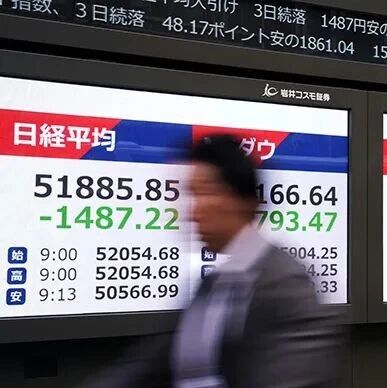
Group 1 - The core issue driving stock market declines is the instability of long-term interest rates, which have reached new highs in the UK, Germany, and Japan due to rising oil prices and inflation concerns [2][4]. - Japan's 10-year government bond yield rose to 2.39% on March 30, marking a 0.275% increase for March, the largest since April 2008 [4]. - The UK and Germany also saw significant increases in bond yields, with the UK's rising by 0.73% and Germany's by 0.44%, both reflecting heightened inflation fears linked to oil price increases [4]. Group 2 - South Korea's 10-year bond yield reached 3.9%, the highest since November 2023, prompting the government to announce a 5 trillion won bond repurchase to curb rising rates [6]. - The European Central Bank is expected to raise interest rates 2-3 times within the year, while the U.S. Federal Reserve's rate cut expectations have diminished significantly [6]. - Short-term interest rates are also rising, with the U.S. 2-year Treasury yield surpassing 4%, indicating a tightening monetary policy outlook [6]. Group 3 - There is growing concern over the risks of financial market turmoil, particularly regarding the trends in private credit from non-bank financial institutions [7]. - High-interest loans to lower-rated small and medium-sized enterprises may lead to increased bankruptcies, impacting financial institutions that provide funding [9]. - The rising interest rates are causing significant bond accounting losses, with estimates suggesting that local banks in Japan could see a 2 trillion yen increase in losses by February 2026 [9]. Group 4 - The Nikkei index fell over 2800 points on March 30, closing at 51,885 points, a 3% drop, as financial institutions began to sell profitable stocks to offset losses [9][10]. - Local banks in Japan are expected to gradually implement strategies to offset losses by selling profitable assets before the fiscal year-end [10].
流动性与机构行为跟踪:基金增长,大行买存单
ZHONGTAI SECURITIES· 2026-03-30 13:04
1. Report Industry Investment Rating No information provided in the content. 2. Core View of the Report - This week (March 23 - March 27), the fund slightly reduced leverage, and the large - scale banks decreased their average daily lending. The maturity of certificates of deposit decreased, and the yield curve of certificates of deposit steepened. In the spot bond trading, the main buyers were funds, with funds increasing their holdings of 7 - 10Y interest - rate bonds and short - term credit bonds. Large - scale banks increased their holdings of certificates of deposit, money market funds were the main sellers and net - sold certificates of deposit, securities firms and small and medium - sized banks mainly sold bonds, and insurance companies increased their holdings of interest - rate bonds [4]. 3. Summary by Directory 3.1 Monetary Fundamentals - **Liquidity Injection**: From March 23 - 27, there were 17.65 billion yuan of reverse repurchase maturities. The central bank respectively injected 0.8 billion, 1.75 billion, 7.85 billion, 22.4 billion, and 14.62 billion yuan of reverse repurchase from Monday to Friday, with a total injection of 47.42 billion yuan. On Wednesday, there were 50 billion yuan of MLF injection and 45 billion yuan of MLF maturity. The net liquidity injection for the whole week was 28.19 billion yuan [4][7]. - **Funding Rates**: As of March 27, R001, R007, DR001, and DR007 were 1.39%, 1.51%, 1.32%, and 1.44% respectively, changing by - 0.9BP, 3BP, - 0.28BP, and 1.89BP compared to March 13, and were at the 18%, 9%, 14%, and 3% historical quantiles respectively [4][9]. - **Large - scale Bank Lending**: From March 23 - 27, the total lending scale of large - scale banks was 24.99 trillion yuan, with a maximum daily lending scale of 5.4 trillion yuan and an average daily lending scale of 5.0 trillion yuan, a decrease of 0.57 trillion yuan compared to the previous week's daily average [4][14]. - **Pledged Repurchase**: The average daily trading volume of pledged repurchase was 7.94 trillion yuan, with a maximum daily volume of 8.29 trillion yuan, a 5.21% decrease compared to the previous week's daily average. The average daily proportion of overnight repurchase transactions was 88.4%, with a maximum daily proportion of 91.7%, a decrease of 2.83 percentage points compared to the previous week's daily average, and as of March 27, it was at the 78.5% quantile [4][15]. 3.2 Certificates of Deposit and Bills - **Issuance and Maturity of Certificates of Deposit**: The issuance scale of inter - bank certificates of deposit increased week - on - week, with a total issuance of 77.052 billion yuan, an increase of 1.183 billion yuan compared to the previous week. The maturity volume was 69.82 billion yuan, a decrease of 46.466 billion yuan compared to the previous week. The net financing was 7.23 billion yuan, an increase of 47.649 billion yuan compared to the previous week. In the next week (March 30 - April 5), the maturity of certificates of deposit was 54.687 billion yuan [4][19][23]. - **Issuance by Bank Type**: The issuance scale of joint - stock banks was the highest. The issuance scales of state - owned banks, joint - stock banks, city commercial banks, and rural commercial banks were 22.982 billion yuan, 26.255 billion yuan, 25.077 billion yuan, and 1.987 billion yuan respectively, changing by 10.525 billion yuan, 2.651 billion yuan, - 8.782 billion yuan, and - 1.29 billion yuan compared to the previous week [19]. - **Issuance by Maturity Type**: The 9M issuance scale was the highest. The issuance scales of 1M, 3M, 6M, 9M, and 1Y inter - bank certificates of deposit were 7.975 billion yuan, 8.77 billion yuan, 13.193 billion yuan, 24.299 billion yuan, and 22.815 billion yuan respectively, changing by 2.543 billion yuan, 0.071 billion yuan, - 7.044 billion yuan, 9.114 billion yuan, and - 3.501 billion yuan compared to the previous week. The 9M certificates of deposit accounted for the highest proportion (31.54%) of the total issuance of certificates of deposit by different types of banks, mainly issued by state - owned banks; the 1Y maturity accounted for 29.61%, mainly issued by joint - stock banks [19]. - **Issuance and Yield Rates**: Most of the issuance rates of certificates of deposit of each bank increased, and the issuance rates of certificates of deposit of each maturity showed differentiation. As of March 27, the one - year issuance rates of joint - stock banks, state - owned banks, city commercial banks, and rural commercial banks changed by 0.49BP, - 0.5BP, 4.37BP, and 7.12BP respectively compared to March 20, and were at the 0%, 1%, 0%, and 1% historical quantiles. The issuance rates of 1M, 3M, and 6M certificates of deposit changed by 1.59BP, - 0.5BP, and - 0.65BP respectively compared to March 20, and were at the 3%, 0%, and 0% historical quantiles. The yield curve of certificates of deposit steepened. As of March 27, the 1M, 3M, 6M, 9M, and 1Y maturity yields of AAA - rated inter - bank certificates of deposit of commercial banks were 1.42%, 1.46%, 1.48%, 1.51%, and 1.53% respectively, changing by - 4BP, - 1BP, 0.75BP, 1BP, and 1BP compared to March 20 [25][29]. - **Shibor Rates**: Most of the Shibor rates decreased. As of March 27, the overnight, 1 - week, 2 - week, 1M, and 3M Shibor rates changed by - 0.2BP, 1.1BP, - 2.1BP, - 1.55BP, and - 1.3BP respectively compared to March 20, reaching 1.32%, 1.43%, 1.5%, 1.5%, and 1.51% [27]. - **Bill Rates**: The bill rates decreased. As of March 27, the 3M direct discount rate of national - share bills, 3M transfer discount rate of national - share bills, 6M direct discount rate of national - share bills, and 6M transfer discount rate of national - share bills were 1.5%, 1.35%, 1.17%, and 1.11% respectively, changing by - 4BP, - 5BP, - 6BP, and - 6BP compared to March 20 [33]. 3.3 Institutional Behavior Tracking - **Leverage Ratio**: The inter - bank leverage ratio decreased slightly week - on - week. As of March 27, the total inter - bank leverage ratio in the bond market decreased by 0.08 percentage points to 105.15% compared to March 20, and was at the 15.90% historical quantile since 2021. The leverage ratios of banks, securities firms, insurance companies, and broad - based funds were 103.6%, 200.1%, 130.4%, and 104% respectively, changing by - 0.33BP, - 1.17BP, 1.1BP, and - 0.05BP compared to March 20, and were at the 15%, 11%, 82%, and 1% historical quantiles as of March 27 [35][37]. - **Net Buying Duration**: The net - buying weighted average duration of funds increased compared to the previous week, while that of insurance companies decreased. As of March 27, the net - buying weighted average duration (MA = 10) of funds was 1.36 years, recovering from - 1.13 years on March 20, and was at the 40% historical quantile. The net - buying weighted average duration (MA = 10) of wealth management products was 0.70 years, showing an increase compared to March 20, and was at the 49% historical quantile. The net - buying weighted average duration (MA = 10) of securities firms was - 1.35 years, showing an increase compared to March 20, and was at the 55% historical quantile. The net - buying weighted average duration (MA = 10) of insurance companies was 10.08 years, showing a decrease compared to March 20, and was at the 64% historical quantile [39]. - **Duration of Bond Funds**: The duration of medium - and long - term pure - bond funds recovered. As of March 27, the duration of medium - and long - term pure - bond funds recovered by 0.07 years to 3.10 years compared to March 20, and was at the 13% historical quantile since 2025. The duration of short - term pure - bond funds recovered by 0.10 years to 1.57 years compared to March 20, and was at the 56% historical quantile since 2025 [43].
宏观与大类资产周报:即将进入关键4月-20260329
CMS· 2026-03-29 13:02
Domestic Economic Indicators - March PPI is expected to be around 0.6% month-on-month, with a year-on-year PPI of approximately 0.1%, potentially ending a 41-month streak of negative PPI[5] - From January to February, industrial profits increased by 15.2% year-on-year, with significant contributions from high-tech manufacturing and related raw material industries[5] Global Economic Risks - Two of the four major global economic pressures have emerged: oil prices exceeding $100 could lead to an early recession in the U.S.; the dollar index breaking 100 may pressure non-U.S. liquidity[5] - The 10-year U.S. Treasury yield surpassing 5% could burden U.S. fiscal health, while the S&P 500 index may adjust by 20% if it reaches its peak, as indicated by historical patterns[5] Market Trends - Oil prices are fluctuating around $100 per barrel, prompting significant political responses, while the dollar index has reached 100, leading to gold sell-offs by central banks in Poland and Turkey[5] - If the U.S. maintains control over the situation, a critical point may be reached in mid to late April, potentially improving global risk appetite[5] Monetary Policy and Liquidity - The central bank has continued net liquidity injections, with a total net injection of 281.9 billion yuan during the week of March 23-27[21] - The average rates for R001, DR001, R007, and DR007 were 1.3871%, 1.3179%, 1.5069%, and 1.4398%, respectively, showing minor fluctuations compared to the previous week[22] Government Debt Financing - Local government debt net financing was 1305.97 billion yuan, and national debt net financing was 948.10 billion yuan, totaling approximately 2254.07 billion yuan for the week[23] - Upcoming local government debt issuance is planned at 1184.24 billion yuan, with net financing expected to be 399.68 billion yuan[23] Stock Market Performance - Major indices in the A-share market experienced declines, with the ChiNext index showing the largest drop of 1.68%[39] - The U.S. stock market also faced downward pressure, with the Nasdaq index leading the decline at 3.23%[39]
流动性与机构行为周度跟踪260329:Q1季末机构负债充裕资金维持宽松-20260329
Huafu Securities· 2026-03-29 05:48
1. Report Industry Investment Rating No information about the report industry investment rating is provided in the content. 2. Core Viewpoints of the Report - The funds remained loose this week despite some disturbances such as government bond supply and OMO net - withdrawals in the first half of the week. The MLF over - renewal and OMO net - injection on Wednesday limited the impact of the quarter - end factor. Short - term interest rates remained low, and the yields of medium - and short - term policy financial bonds continued to decline [3][15]. - The cross - quarter progress of funds slowed down further this week, with the cross - quarter progress of the whole market at 35.2%, 9.3 percentage points lower than the average from 2020 - 2025. However, the disturbance to funds at the quarter - end was limited, and the actual financing cost of non - banks was at a relatively low level compared with previous quarter - ends [4][29]. - Although the scale of money market funds rebounded rapidly in February, their demand for certificates of deposit was weaker than the seasonality, and the scale of reverse repurchase lending was also relatively limited. The probability of a significant rebound in short - term interest rates after the quarter - end was relatively low [39]. - The net payment of government bonds will decrease next week. With the central bank's support, institutions are likely to achieve a smooth cross - quarter. The exogenous disturbances to funds in early April after the quarter - end are also relatively limited, and the loose pattern is expected to continue in the short term [43][67]. 3. Summary According to the Directory 3.1 Money Market 3.1.1 This Week's Fund Review - The central bank's OMO had a net injection of 231.9 billion yuan this week. On Wednesday, the central bank conducted a 500 - billion - yuan MLF operation, with an over - renewal of 50 billion yuan compared with the maturity on that day. Despite the net withdrawal in the first half of the week and the large supply pressure of government bonds on Monday, the funds remained loose. DR001 remained at 1.32% for 11 consecutive trading days [3][15]. - The trading volume of pledged repurchase fluctuated and declined, with the average daily trading volume decreasing by 0.44 trillion yuan to 7.94 trillion yuan compared with last week. The overall scale of pledged repurchase first decreased and then increased, rising above 12 trillion yuan again on Friday. The net lending of large - scale banks first decreased and then increased, and was lower than last week as a whole; the net lending of small - scale banks continued to rise after Tuesday; the overall net lending of banks also first decreased and then increased, and was higher than last week [4][24]. - The non - bank rigid lending increased slightly continuously, mainly due to the large increase in the lending of money market funds. The non - bank rigid borrowing scale began to increase continuously on Tuesday, mainly due to the large increase in other products and insurance. The seasonally adjusted fund gap index fluctuated at a low level in the first half of the week and continued to rise after Wednesday, rising to - 314.6 billion yuan on Friday, higher than - 866.3 billion yuan last Friday; while the pre - seasonally adjusted index dropped to - 954.7 billion yuan, mainly affected by the large increase in the net lending of small - scale banks excluded from the seasonal adjustment [4][24]. - The cross - quarter progress of funds slowed down further. As of Friday, the cross - quarter progress of inter - bank funds was 35.4%, at the lowest level in the same period of previous years, and the gap with previous years continued to widen; the cross - quarter progress of the exchange slowed down again after accelerating on Tuesday, and the cross - quarter progress on Friday was 34.6%, also dropping to the lowest level in the same period of previous years. The cross - month progress of the whole market was 35.2%, 9.3 percentage points lower than the average from 2020 - 2025 [29]. 3.1.2 Next Week's Fund Outlook - The net payment of government bonds this week was 606.4 billion yuan. There is no treasury bond issuance plan next week. The issuance scale of local bonds in 5 regions such as Henan, Chongqing, and Sichuan is 118.4 billion yuan, including 2.1 billion yuan of new general bonds, 29.7 billion yuan of new special bonds, and 86.6 billion yuan of refinancing bonds, among which the issuance of replacement bonds is 11.7 billion yuan. Considering the time lag between issuance and payment, the payment scale of government bonds next week will drop to 146.4 billion yuan, the maturity scale will drop to 131.4 billion yuan, and the net payment scale will drop to 15 billion yuan [40][43]. - The actual issuance scale of treasury bonds in March was 1.38 trillion yuan, with a net financing of 300 billion yuan, in line with expectations. The issuance scale of local bonds in March was 1.08 trillion yuan, with a net financing of 670 billion yuan, lower than the expected 770 billion yuan. The overall actual issuance scale of government bonds in March was 2.47 trillion yuan, with a net financing of 960 billion yuan, lower than the expected 1.07 trillion yuan. The cumulative net financing of government bonds in the first quarter was 3.56 trillion yuan, lower than 4.1 trillion yuan in the same period of 2025 [56]. - Seven regions newly announced the Q2 local bond issuance plan this week. Currently, 22 regions have announced the Q2 plan, with a total scale of 1.9904 trillion yuan, still lower than the actual issuance of 2.0865 trillion yuan in Q1. It is estimated that the issuance scale of local bonds in April may be 1.03 trillion yuan, with a net financing of about 570 billion yuan, revised down by 130 billion yuan compared with last week's forecast. It is estimated that the issuance scale of local bonds in May and June will be 1.02 trillion yuan respectively, with net financings of 750 billion yuan and 490 billion yuan respectively. It is estimated that the issuance scale of government bonds in April, May, and June 2026 will be 2.36 trillion yuan, 2.39 trillion yuan, and 2.62 trillion yuan respectively, with net financings of 1.07 trillion yuan, 1.42 trillion yuan, and 1.06 trillion yuan respectively. The cumulative net financing scale of government bonds in the second quarter is expected to be about 3.55 trillion yuan, still lower than 3.7 trillion yuan in the same period of 2025 [60][62]. - The maturity scale of 7 - day reverse repurchases next week will rise to 474.2 billion yuan, and the net payment of government bonds will drop from 606.4 billion yuan this week to 15 billion yuan, with net repayments in the first half of the week. The new stock of Beijie Stock Exchange, Saiying Electronics, will be issued online on March 30, with a fundraising scale of about 270 million yuan, which may have a relatively lower impact on the exchange fund prices in the first half of the week. Overall, the maturity volume of reverse repurchases next week is lower than that in previous cross - quarter periods. With the central bank's support, institutions are likely to achieve a smooth cross - quarter. The exogenous disturbances to funds in early April after the quarter - end are also relatively limited, and the loose pattern is expected to continue in the short term [67]. 3.2 Inter - bank Certificates of Deposit - The 1 - year Shibor rate decreased by 1.45 BP to 1.5405% compared with March 20. The 1 - year AAA - grade inter - bank certificate of deposit secondary rate increased by 1 BP to 1.525% compared with March 20 [68]. - The issuance scale of inter - bank certificates of deposit increased while the maturity scale decreased this week, and the certificates of deposit turned to net financing of 7.27 billion yuan, an increase of 48.73 billion yuan compared with last week. The net financing scales of state - owned banks, joint - stock banks, city commercial banks, and rural commercial banks were - 55.4 billion yuan, 131.7 billion yuan, 27.6 billion yuan, and - 11 billion yuan respectively. The 9 - month - term certificates of deposit had the largest issuance volume this week, accounting for 32%, and the issuance proportion of 1 - year certificates of deposit decreased by 5 percentage points to 30% compared with last week. The maturity scale of certificates of deposit next week is about 15.51 billion yuan, a decrease of 54.42 billion yuan compared with this week [74]. - The issuance success rates of joint - stock banks, city commercial banks, and rural commercial banks for certificates of deposit decreased month - on - month, while that of state - owned banks increased. Except for the relatively low issuance success rate of rural commercial banks, the others were near the average level in recent years. The issuance spread of 1 - year certificates of deposit between city commercial banks and joint - stock banks narrowed [75]. - The relative supply - demand strength index of certificates of deposit first decreased and then increased this week, rising by 0.2 percentage points to 29.3% for the whole week. The willingness of money market funds to increase holdings in the primary market increased slightly, the willingness of wealth management products and funds to increase holdings was stable, and the willingness of other products to increase holdings in the secondary market decreased. In terms of different terms, the supply - demand indexes of 1 - month and 1 - year certificates of deposit increased, while those of 3 - month, 6 - month, and 9 - month certificates of deposit decreased, with relatively large declines in 6 - month and 9 - month certificates of deposit [85]. 3.3 Bill Market The bill interest rate declined overall this week. As of March 27, the 3 - month and 6 - month bill interest rates of state - owned and joint - stock banks decreased by 13 BP and 11 BP respectively compared with March 20, to 1.30% and 1.06% [92]. 3.4 Bond Trading Sentiment Tracking - Interest - rate bonds fluctuated downward this week, and the credit spreads of medium - and long - term bonds compressed. Large - scale banks tended to reduce their bond holdings overall, and the scale of their increased holdings of treasury bonds also decreased. They tended to reduce their holdings of treasury bonds within 1 year and 5 - year treasury bonds, the willingness to increase holdings of 7 - year treasury bonds decreased, but they turned to be inclined to increase holdings of treasury bonds over 10 years. At the same time, they tended to reduce their holdings of policy financial bonds within 1 year, the willingness to reduce holdings of 1 - 3 - year policy financial bonds increased, but the willingness to reduce holdings of local bonds decreased [95]. - Trading - type institutions tended to increase their bond holdings overall. Among them, the willingness of securities companies to reduce holdings decreased, the willingness of fund companies to increase holdings increased, but the willingness of other institutions and products to increase holdings decreased [95]. - Allocation - type institutions' willingness to increase bond holdings increased overall. Among them, the willingness of small - and medium - sized banks to reduce holdings decreased, the willingness of wealth management products to increase holdings increased, but the willingness of insurance companies to increase holdings decreased [95].
【财闻联播】芯片大消息!中国科学院最新公布,多家巨头参与!恒生科技指数成份股有重大披露
券商中国· 2026-03-26 13:12
Macro Dynamics - By the end of 2025, China's banking sector is projected to have foreign financial assets of $19,775 billion and foreign liabilities of $14,110 billion, resulting in a net foreign asset of $5,665 billion [2] - The net liabilities in RMB amount to $1,436 billion, while net assets in foreign currencies total $7,101 billion [2] Investment Trends - Recent visits by global executives from multinational companies to China indicate that investing in China has shifted from an optional strategy to a necessary one for global development [3] - The Chinese economy is recognized for its resilience, innovation, and large market advantages, making it an attractive destination for investment [3] Market Regulation - The State Administration for Market Regulation held a meeting focusing on fair competition among enterprises, emphasizing the need for regulatory enforcement against monopolistic practices and support for companies to expand internationally [5] Technology Development - The Chinese Academy of Sciences announced significant advancements in RISC-V technology, launching the next generation of open-source chips and systems, which are crucial for developing controllable computing power [6] - The "Kunming Lake" joint research plan aims to enhance performance, reduce power consumption, and improve security in chip technology [6] Housing Policy - Several cities in Guangdong have recently adjusted housing provident fund policies to increase loan limits and support families with multiple children, as well as those purchasing green or prefabricated buildings [7] Tourism Sector - Domestic tourism bookings for the upcoming Qingming Festival have surged, with ticket reservations for scenic spots increasing by over 70% compared to the previous year [8] Financial Performance - China Ping An reported an operating profit of 134.415 billion yuan for 2025, a year-on-year increase of 10.3%, with a net profit of 143.773 billion yuan, up 22.5% [10] - China Pacific Insurance announced a net profit of 53.505 billion yuan for 2025, reflecting a 19% increase year-on-year [11] - New Strong Union reported a staggering 1,151.44% increase in net profit for 2025, amounting to 818 million yuan [22] - Meituan's revenue for 2025 grew by 8.1% to 364.9 billion yuan, but it faced a significant loss of 23.4 billion yuan due to intensified competition [23] - Gigabit's net profit increased by 89.82% in 2025, reaching 1.794 billion yuan, with a proposed cash dividend of 70 yuan per 10 shares [24]





信用周报20260324:二永中长端有所修复,普信继续陡峭化-20260324
China Post Securities· 2026-03-24 08:26
1. Report Industry Investment Rating No relevant information provided. 2. Core Viewpoints of the Report - The mid - long - end of Tier 2 capital bonds and perpetual bonds of banks has recovered, and the curve of ordinary and perpetual bonds continues to steepen. The 2 - 3 - year ordinary and perpetual bonds are more favored by institutions. Considering the unclear geopolitical conflict pattern and inflation concerns, the 3Y - 2Y interval can be used as a key allocation area in the future [2][3][17]. - The trading volume of mid - long - term Tier 2 capital bonds and perpetual bonds has decreased, while the trading volume of urban investment bonds has increased significantly, driving the overall increase in the trading volume of ordinary and perpetual bonds [18][21]. - In primary issuance, the issuance of industrial bonds has increased, while the issuance of Tier 2 capital bonds and perpetual bonds remains at a low level. The issuance of science and innovation bonds has decreased compared with the previous period but still shows a significant year - on - year increase [26][29][30]. 3. Summary According to the Directory 3.1 Secondary Market: Divergent Trends of Tier 2 Capital Bonds and Perpetual Bonds, and an Increase in the Trading Volume of Urban Investment Bonds 3.1.1 Market Trends - **Tier 2 Capital Bonds**: The yields of all maturities have generally declined, with the mid - long - end declining more than the short - end. The spreads have been comprehensively compressed, and the curve shows a co - existence of local steepening in the middle and flattening at the long - end [9]. - **Perpetual Bonds**: The yield and spread trends are similar to those of Tier 2 capital bonds. The 2 - 3 - year maturity has relatively high cost - effectiveness, while the long - term bonds are more volatile [10]. - **Ordinary and Perpetual Bonds**: The curve steepening is further strengthened. The yields of 1 - 5 - year maturities generally decline, and the long - end steepening is more significant [13][14]. - **Urban Investment Bonds**: The yields of all maturities generally decline, and the curve steepening trend continues. The 2 - 3 - year maturity has a relatively large decline in yield [16]. 3.1.2 Trading Volume - **Tier 2 Capital Bonds and Perpetual Bonds**: The trading volume of mid - long - term bonds has decreased. The total trading volume of Tier 2 capital bonds has decreased by about 279 billion yuan, and that of perpetual bonds has decreased by about 252 billion yuan [18]. - **Ordinary and Perpetual Bonds**: The total trading volume has increased significantly, with an increase of more than 260 billion yuan. The trading volume of industrial bonds, urban investment bonds, and quasi - urban investment bonds has all increased to varying degrees [21]. - **High - Yield Urban Investment Bonds**: The high - yield trading last week was mainly concentrated in Shandong, Beijing, Sichuan, Fujian, Guizhou, Jiangxi and other places [25]. 3.2 Primary Issuance: Increased Issuance of Industrial Bonds, and Low - level Issuance of Tier 2 Capital Bonds and Perpetual Bonds - **Ordinary and Perpetual Bonds**: The total issuance last week was about 397 billion yuan, with a net financing of about 117 billion yuan. The issuance of industrial bonds has increased significantly, and the issuance of urban investment bonds has increased slightly [26]. - **Financial Bonds**: The total issuance last week was about 50.2 billion yuan, with a net financing of about 2.4 billion yuan. The issuance of securities company bonds is still the main force, and the issuance of Tier 2 capital bonds, commercial financial bonds, and TLAC non - capital bonds remains at a low level [29]. - **Science and Innovation Bonds**: The issuance last week was about 58.4 billion yuan, with a net financing of about 42.1 billion yuan. Although the issuance and net financing scale have declined compared with the previous period, they still show a significant year - on - year increase [30].
流动性阶段受扰,货币政策或为破局关键
Southwest Securities· 2026-03-23 09:45
Report Industry Investment Rating - Not provided in the given content Core Viewpoints - The short - term trading of inflation expectations may have come to a temporary end. Before the next round of price data is released, the market's motivation for re - pricing inflation is limited, and the trading focus is expected to shift from fundamental expectations to the marginal changes in the capital and liquidity environment. The central bank is likely to continue to support liquidity and hedge through other monetary policy tools at key points, but there may still be a "frictional" liquidity shock due to the staggered rhythm of liquidity withdrawal and injection and the end - of - quarter factors. It is recommended to moderately reduce the allocation weight of highly crowded ultra - short - term assets and focus on 3 - 5 - year bonds [2][88]. Summary by Directory 1. Important Matters - In January - February 2026, the cumulative year - on - year growth rate of national fixed asset investment was 1.8%, showing a mild recovery. Manufacturing investment was resilient, and state - owned investment accelerated, while private investment was still in a cautious range [5]. - In March 2026, the 1 - year LPR was 3.00% and the 5 - year - plus LPR was 3.50%, remaining unchanged from the previous month. The reason may be that the comprehensive social financing cost has decreased, and the net interest margin of banks is still under pressure [9]. - On March 20, 2026, the draft of the Financial Law of the People's Republic of China was publicly solicited for opinions. The central bank focuses on the dual - pillar framework of monetary policy and macro - prudential policy, the National Financial Regulatory Administration focuses on micro - prudential and conduct supervision, and the China Securities Regulatory Commission focuses on capital market construction [10][11]. - In March 2026, the Fed maintained the policy interest rate, but the expectation of interest rate hikes increased. The market's pricing of the interest rate cut path in 2026 has converged, and the probability of not cutting interest rates is over 50% by December [12]. 2. Money Market 2.1 Open Market Operations and Fund Interest Rate Trends - From March 16 to 20, 2026, the central bank injected 2423 billion yuan through 7 - day reverse repurchase operations, with 1765 billion yuan due, resulting in a net injection of 658 billion yuan. From March 23 to 27, 2026, the expected maturity and withdrawal of base money is 6923 billion yuan [17]. - Last week, liquidity was still relatively loose, with DR001 fluctuating around 1.32%. As of March 20, 2026, R001, R007, DR001, and DR007 were 1.396%, 1.477%, 1.321%, and 1.421% respectively, with changes of 0.45BP, - 2.64BP, - 0.09BP, and - 4.07BP compared to March 16 [20]. 2.2 Certificate of Deposit Interest Rate Trends and Repurchase Transaction Conditions - Last week, the issuance scale of inter - bank certificates of deposit was 758.69 billion yuan, a decrease of 87.19 billion yuan from the previous week. The maturity scale was 1162.86 billion yuan, an increase of 154.66 billion yuan from the previous week, and the net financing scale was - 404.17 billion yuan [27]. - The issuance interest rates of inter - bank certificates of deposit decreased last week. The average issuance interest rates of 3 - month and 1 - year inter - bank certificates of deposit for state - owned banks were 1.48% and 1.53% respectively, with changes of - 2.00BP and - 2.83BP from the previous week [31]. - In the secondary market, the demand for liquid assets was still strong. The yields of inter - bank certificates of deposit decreased significantly, and the term spread widened to some extent [33]. 3. Bond Market - In the primary market, last week, 98 interest - rate bonds were issued, with an actual issuance amount of 1071.234 billion yuan, a maturity amount of 253.192 billion yuan, and a net financing amount of 818.042 billion yuan. The issuance rhythm of national bonds in 2026 was slightly behind that of local bonds [35]. - In the secondary market, long - term bonds were still weak, while medium - and short - term bonds continued to perform well. The yield curve became steeper. The active bonds of 10 - year national bonds and 10 - year policy financial bonds changed, and the average spread between the active and secondary - active bonds of 10 - year national bonds and 10 - year policy financial bonds widened [35][45]. 4. Institutional Behavior Tracking - In February 2026, the leverage ratio of inter - bank institutions decreased seasonally, and the leverage ratio of securities companies decreased from a high level. Last week, the scale of leveraged trading remained high due to the relatively loose liquidity environment [61]. - In the cash bond market, large banks bought a large amount of national bonds with a maturity of less than 5 years, small and medium - sized banks continued to increase their holdings of national bonds with a maturity of more than 10 years, insurance companies increased their buying efforts, securities companies continued to sell, and funds continued to prefer policy financial bonds [70]. 5. High - Frequency Data Tracking - Last week, the settlement price of rebar futures increased by 5.97% week - on - week, the settlement price of wire rod futures decreased by 5.71% week - on - week, the settlement price of cathode copper futures increased by 2.04% week - on - week, the cement price index decreased by 0.37% week - on - week, and the Nanhua Glass Index increased by 2.02% week - on - week [86]. - The CCFI index decreased by 4.00% week - on - week, and the BDI index increased by 4.75% week - on - week. The wholesale price of pork decreased by 2.53% week - on - week, and the wholesale price of vegetables decreased by 5.02% week - on - week. The settlement prices of Brent crude oil futures and WTI crude oil futures decreased by 1.41% and 1.78% respectively week - on - week. The central parity rate of the US dollar against the RMB was 6.92 [86]. 6. Market Outlook - In the short term, the trading of inflation expectations may have ended. The trading focus will shift to the capital and liquidity environment. The central bank is likely to maintain the overall stability of the capital market, but there may be a "frictional" liquidity shock. It is recommended to reduce the allocation of ultra - short - term assets and focus on 3 - 5 - year bonds [88].
国企廉洁新规落地,这些投资行为被画红线
母基金研究中心· 2026-03-23 09:00
Core Viewpoint - The revised regulations for the integrity of state-owned enterprise leaders, issued after 17 years, aim to enhance supervision and set higher standards for ethical conduct in line with the new requirements of strict governance by the Communist Party of China [2] Summary by Sections Prohibited Conduct - The new regulations outline seven areas of prohibited conduct, explicitly listing 58 types of behaviors in a "negative list" format [3] - Notably, it prohibits using one's position to seek personal benefits, including behaviors such as entrusting others to invest in securities or funds without actual capital contribution, or engaging in hidden equity transactions [3] Corruption Trends - The Supreme People's Court emphasizes the need to address new trends in corruption, including hidden and evolving forms, and aims to enhance the analysis and judgment of such issues [3] - The court will impose strict penalties for corruption in key sectors like finance, state-owned enterprises, and education, maintaining a high-pressure stance against corruption [3] Case Studies - Recent cases highlight the misuse of power for personal gain, such as the expulsion of senior officials for engaging in corrupt practices under the guise of financial investment [4][6] - The Central Commission for Discipline Inspection has noted a rise in cases where officials hold shares in unlisted companies, which is considered a violation of integrity regulations [4][6] Investment Regulations - The regulations clarify that party members and leaders are prohibited from investing in private equity funds, as such actions are deemed equivalent to engaging in business activities [9][10] - The potential for conflicts of interest arises when officials use their positions to gain insider knowledge about non-listed companies, leading to significant personal financial benefits [9][10] Leadership Conduct - The guidelines stress that leaders must avoid dual roles as both officials and businesspeople, warning against the risks of corruption associated with such duality [7] - The regulations also extend to the family members of leaders, imposing stricter rules on their business engagements to prevent conflicts of interest [10] Definition of Party Leaders - The definition of "party leaders" includes various levels of leadership across government and state-owned enterprises, ensuring comprehensive coverage of those subject to these integrity regulations [11]