雨雪天气

Search documents
南方多地今晨能见度不佳局地现特强浓雾 本周中后期寒潮驱散雾和霾
Yang Shi Wang· 2025-12-08 04:03
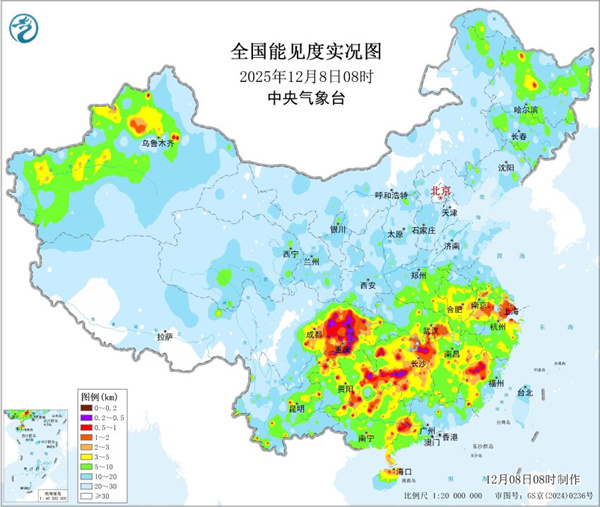
Group 1 - Southern regions of China experienced heavy fog this morning, with visibility in some areas dropping below 50 meters, such as 32 meters in Youxi and 49 meters at Jiuxianshan [1][3] - Air quality issues were reported, with severe pollution in Fuyang, Anhui, and haze conditions in parts of Anhui, Zhejiang, and Hunan [3] - A cold wave is expected to bring strong winds, temperature drops of 6 to 10 degrees Celsius, and localized drops of around 16 degrees Celsius, starting from Xinjiang and moving eastward across the country [3][5] Group 2 - From December 11 to 13, widespread rain and snow are forecasted across central and eastern China, with regions like the Sichuan Basin and southern Jianghan expected to receive light to moderate rain, and parts of Xinjiang and the northeast experiencing light snow or sleet [5] - The cold air mass will improve atmospheric dispersion conditions in North China and the Huanghuai region after December 12, alleviating haze issues [3][5]

10级大风,要来了!高度警惕→
新华网财经· 2025-11-25 10:17
Group 1 - The article discusses the frequent cold air activities affecting various regions in China, with significant temperature fluctuations expected from November 24 to 30 [2][3][4] - A strong cold air mass is predicted to impact the central and eastern regions, causing temperature drops of 4 to 12 degrees Celsius, along with strong northerly winds [4][5] - The article highlights the expected weather conditions, including rain and snow in regions like Xinjiang, Northeast, and North China, advising the public to be cautious while traveling [6][7] Group 2 - Specific temperature changes are noted, with areas in the north experiencing drops of 8 to 12 degrees Celsius, while southern regions may see significant day-night temperature differences, reaching up to 18 degrees Celsius [5][6] - The article emphasizes the need for the public to adjust their clothing accordingly due to the rapid temperature changes and potential health risks [5][6] - It also warns about the impact of heavy snowfall in certain areas, which could affect transportation and agriculture [7]

冷空气活动频繁气温起伏大 华北东北雨雪将发展
Yang Shi Wang· 2025-11-25 00:39
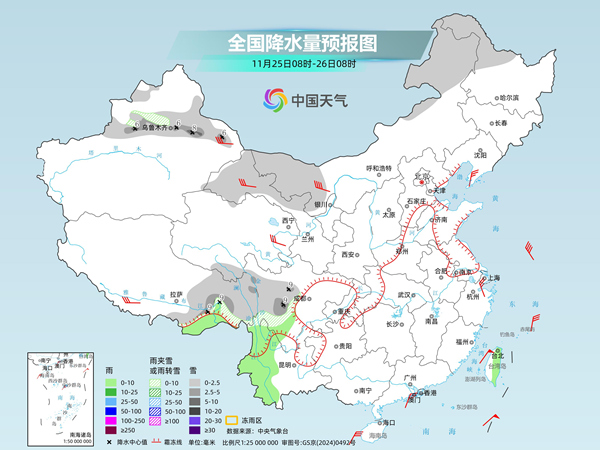
Summary of Key Points Core Viewpoint - A series of cold air masses are affecting various regions in China, leading to significant temperature fluctuations and precipitation events, particularly in the northern and central parts of the country [1][2][4]. Temperature Changes - A strong cold air mass impacted many areas in central and eastern China, causing temperature drops of 8 to 10 degrees Celsius in regions such as Qinghai, Gansu, and parts of Inner Mongolia, with some areas experiencing drops of 12 to 17 degrees Celsius [2] - The temperature in the central and eastern regions is expected to drop by 4 to 6 degrees Celsius, with northern areas seeing drops of 8 to 12 degrees Celsius [2] - The temperature in Shenyang is projected to fluctuate from a high of 1 degree Celsius to a low of -1 degree Celsius over the next few days [2] Precipitation Events - Rain and snow are expected to increase in Xinjiang, with some areas experiencing moderate to heavy snowfall [4] - The northeastern region will see a reduction in precipitation today, but rain and snow will increase again tomorrow [4][5] - The central meteorological authority forecasts small snow or sleet in regions such as Inner Mongolia and parts of the northeast, with moderate to heavy snow expected in specific areas [5][6] Public Safety Advisory - Due to the severe weather conditions, particularly in Xinjiang and the northeast, the public is advised to be cautious regarding transportation and outdoor activities [7]
全国降水稀少冷空气短暂间歇 23日起新一股冷空气影响显现
Yang Shi Wang· 2025-11-21 01:18
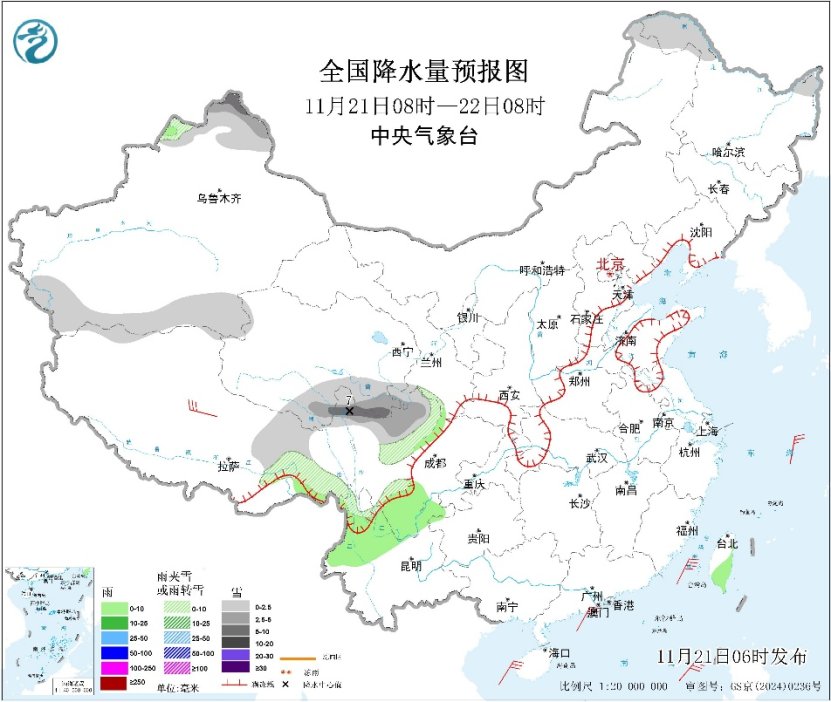
Summary of Key Points Core Viewpoint - The article discusses the weather forecast for China, indicating a period of scarce precipitation and frequent cold air activities, particularly affecting northern regions. Group 1: Weather Forecast - The overall weather in late November is expected to be characterized by scarce precipitation and frequent cold air activities, with a more pronounced impact on northern regions [1] - A strong cold air mass is predicted to sweep across most of China from November 23 to 25, leading to significant temperature drops, particularly in the north where temperatures may decrease by 6 to 8 degrees Celsius, and in some areas by 10 to 12 degrees Celsius [1] - The northern regions, including parts of Xinjiang, Northwest China, North China, and Northeast China, may experience light to moderate snow, with some areas in northern Xinjiang facing heavy snow and localized blizzards [1] Group 2: Public Advisory - The public is advised to pay attention to temperature changes and to dress warmly, as well as to ensure safety when using heating devices [1] - A subsequent strong cold air mass is expected to impact the central and eastern regions of China around November 26, bringing strong winds, temperature drops, and light rain or snow [1] Group 3: Wind Warning - The Central Meteorological Observatory has lifted the blue wind warning due to reduced wind strength at sea, although certain maritime areas will still experience winds of 6 to 7 degrees and gusts of 8 to 9 degrees [4]
寒潮抵达华南 寒潮和大风预警继续发布
Yang Shi Wang· 2025-11-18 01:42
Summary of Key Points Core Viewpoint - A significant cold wave is affecting various regions in China, leading to temperature drops of 6-10°C, with some areas experiencing drops exceeding 12°C. The cold wave is accompanied by strong winds and precipitation, including snow and rain, prompting weather warnings from the Central Meteorological Observatory [1][2]. Group 1: Temperature Changes - On November 18, areas such as Huanghuai East, Jianghuai, Jianghan, and parts of southern China are experiencing temperature drops of 6-10°C, with some regions seeing drops of over 12°C [1]. - The lowest temperature line is expected to move south to the southern parts of Jiangsu and Anhui, reaching central Hubei [1]. Group 2: Wind Conditions - Regions including Inner Mongolia, Hebei, and parts of southern China are experiencing winds of 5-6 levels, with gusts reaching 7 levels. Coastal areas are facing stronger winds of 7-8 levels, with gusts up to 10-11 levels in certain sea areas [2]. - The Central Meteorological Observatory has issued a blue warning for strong winds due to these conditions [2]. Group 3: Precipitation Forecast - On November 17, light snow or sleet was reported in northeastern Inner Mongolia and eastern Heilongjiang, with some areas experiencing moderate to heavy rain [2]. - Rain and snow are expected to primarily affect the central and eastern Tibetan Plateau, as well as parts of Yunnan and Guangxi on November 18 [2].
寒潮继续携大风降温影响我国 中东部气温将陆续跌入低谷
Yang Shi Wang· 2025-11-17 01:33
Core Points - A cold wave is affecting central and eastern China, bringing strong winds and significant temperature drops, with many areas expected to reach new lows for the past six months [1][2][4] - The cold wave will continue to impact regions from north to south, with temperature drops of 6 to 12 degrees Celsius expected in various areas [2][4] - Rain and snow are forecasted, but the extent will be limited due to average moisture conditions, primarily affecting northeastern regions [5][6] Summary by Sections - **Temperature Changes** - The cold wave is causing temperature drops of 6 to 10 degrees Celsius across several regions, with some areas experiencing drops exceeding 12 degrees Celsius [2][4] - The lowest temperatures are expected to occur in the south on the following day, with significant drops noted in areas like southern Anhui, where local temperatures may exceed a 14-degree drop [2][4] - **Weather Patterns** - The cold wave will lead to a transition from rain and snow to clearer and drier weather across most of the country starting tomorrow [5][6] - Rain and snow are mainly expected in northeastern areas and around the Qinling Mountains, with limited coverage due to average moisture conditions [5][6] - **Public Advisory** - Increased rainfall in the south may lead to slippery roads and reduced visibility, prompting public advisories for caution during travel [8] - As humidity levels drop below 30% in many areas, the public is advised to stay hydrated and consume moisture-rich foods [8]
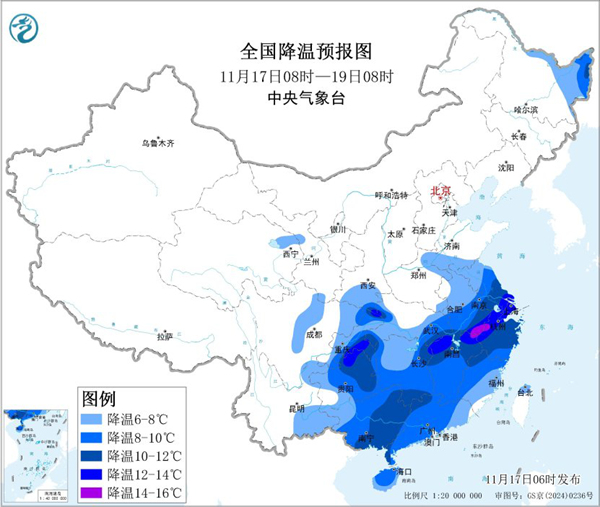
京津冀局地出现10级以上大风,秦岭及大巴山将有暴雪或大暴雪
Xin Jing Bao· 2025-11-16 22:41
Summary of Key Points Core Viewpoint - A cold wave is affecting various regions in China, leading to significant temperature drops and strong winds, with warnings issued by the Central Meteorological Observatory [1][2]. Group 1: Temperature Changes - Areas such as Inner Mongolia, western and central Gansu, and northwestern Hebei have experienced temperature drops of 6°C to 10°C, with some regions in Inner Mongolia seeing drops exceeding 12°C [1]. - From November 16 to 18, the cold wave is expected to continue southward, impacting the central and eastern regions, with temperature decreases of 6°C to 10°C forecasted for several areas, and some regions may experience drops of 10°C to 14°C, particularly in southeastern Shaanxi where local drops could exceed 14°C [1]. Group 2: Wind Conditions - The Central Meteorological Observatory has issued blue alerts for cold waves and strong winds, with gusts reaching 7 to 9 levels in various regions, and localized gusts could reach 10 to 11 levels [1]. - From November 16 at 8 AM to November 17 at 8 AM, parts of eastern and northern Xinjiang, northeastern and southwestern Qinghai, central and eastern Inner Mongolia, and other areas are expected to experience winds of 5 to 6 levels, with gusts of 7 to 9 levels [2]. Group 3: Precipitation and Snowfall - The cold air moving south will interact with warm moist air from the southwest, leading to significant rain and snow in the Qinling area and surrounding regions [1]. - Snow or sleet is expected in parts of northeastern Inner Mongolia, eastern and northern Northeast China, southeastern Northwest China, and other areas, with some regions in southern Shaanxi, northern Chongqing, and western Henan forecasted to receive heavy snow, and localized areas in the Qinling and Daba Mountains may see blizzards with precipitation of 20 to 22 millimeters and snow depth exceeding 15 centimeters [1].
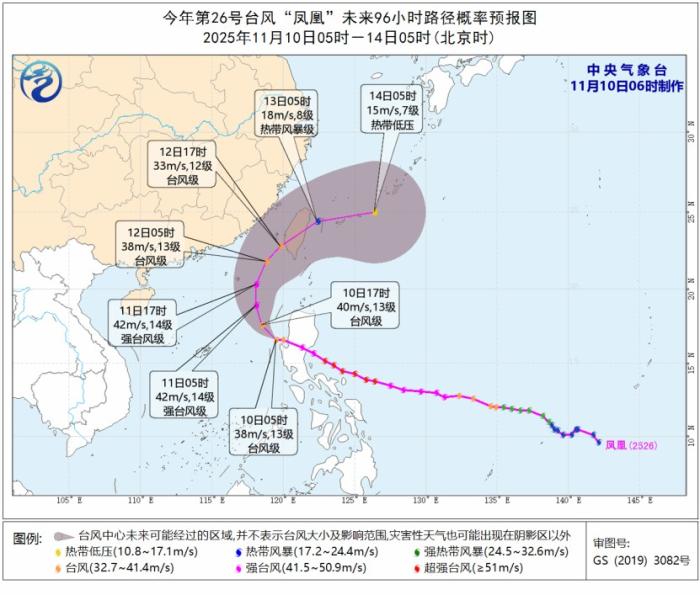
中央气象台:“凤凰”即将移入南海 南海北部等地有大风
Zhong Guo Xin Wen Wang· 2025-11-10 00:23
Core Viewpoint - The Central Meteorological Administration has issued warnings regarding Typhoon "Phoenix," which is expected to impact the South China Sea and surrounding areas, bringing strong winds and heavy rainfall [3][4]. Group 1: Typhoon "Phoenix" Development - Typhoon "Phoenix" weakened from a super typhoon to a strong typhoon after making landfall in the Philippines, with maximum wind speeds of 15 levels (50 m/s) and a minimum central pressure of 940 hPa at landfall [3]. - As of November 10, the typhoon's center was located approximately 275 kilometers northwest of Manila, with maximum wind speeds of 13 levels (38 m/s) and a minimum pressure of 965 hPa [3]. - The typhoon is expected to move into the central and eastern South China Sea, with potential maximum intensity reaching strong typhoon level (14 levels, 42-45 m/s) [3]. Group 2: Weather Impact Forecast - From November 10 to 12, areas including eastern Guangdong, coastal Fujian, and Taiwan are expected to experience winds of 5-7 levels, with gusts reaching 8 levels due to Typhoon "Phoenix" [4]. - The eastern and central South China Sea will see winds of 7-8 levels, with gusts of 9-10 levels, while some areas may experience winds of 9-11 levels and gusts of 12-13 levels [4]. - Cold air will also bring winds of 5-6 levels and gusts of 7-8 levels to regions such as northern Xinjiang, central and western Inner Mongolia, and parts of Heilongjiang [4]. Group 3: Precipitation Forecast - From November 10 to 11, regions including northern Xinjiang, eastern Inner Mongolia, and parts of Tibet are forecasted to receive light snow or sleet, with some areas in northern Xinjiang and eastern Qinghai expecting moderate to heavy snow (5-9 mm) [6]. - Taiwan is predicted to experience heavy to torrential rain, with some areas facing extreme rainfall (250-300 mm) [6]. - From November 11 to 12, similar weather patterns are expected, with parts of Taiwan and southeastern Fujian likely to see heavy rain or torrential rain (100-180 mm) [8].
较强冷空气明起登场,这些地方或有暴雪
Zhong Guo Xin Wen Wang· 2025-11-04 09:35
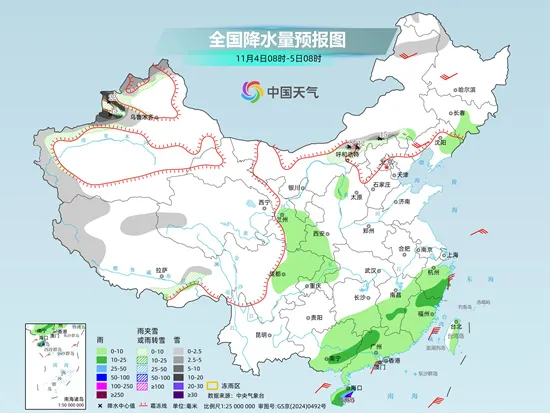
Core Viewpoint - A strong cold air mass from West Siberia is expected to bring significant temperature drops, widespread rain, snow, and strong winds to most parts of China from November 4 to November 9 [1][3]. Summary by Sections Weather Impact - The cold air will first affect regions including Xinjiang, western Inner Mongolia, and the Tibetan Plateau, with temperatures dropping by 6°C to 8°C, and in some areas of Xinjiang, the drop could reach 10°C to 16°C [3][4]. - Heavy snowfall is anticipated in high-altitude areas of Xinjiang, with snow accumulation expected to reach 10 to 20 centimeters, and in some localities, it could exceed 40 to 50 centimeters [5]. Regional Forecast - From November 5 to 7, the cold air will primarily impact Xinjiang, western Tibetan Plateau, and western Inner Mongolia, with strong winds of 4 to 6 levels, and gusts reaching 10 to 11 levels in mountain passes [3][4]. - From November 7 to 9, the cold air will continue to move eastward, affecting most parts of central and eastern China [1][3]. Agricultural and Transportation Concerns - The combination of strong snowfall and winds may severely impact agricultural facilities and livestock, while rain and snow could significantly affect transportation [5].
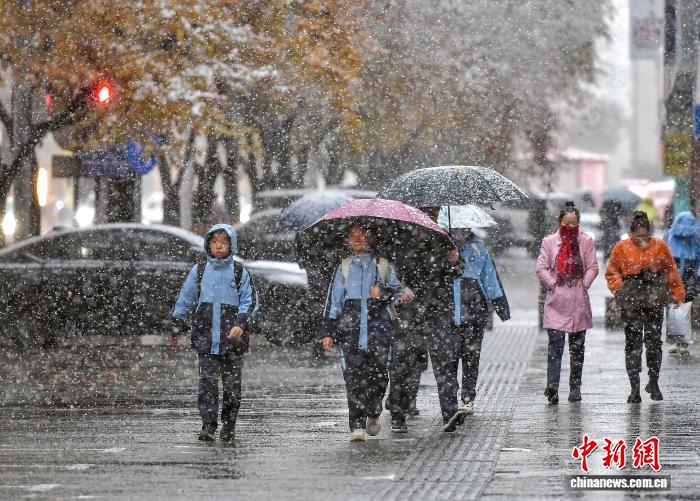
大雨暴雨、大雪暴雪!新一轮雨雪天气来袭!
Jin Rong Shi Bao· 2025-11-04 09:05
Summary of Key Points Core Viewpoint - A significant weather change is expected in China, with a new round of rain and snow starting in Xinjiang and affecting a large part of the central and eastern regions, accompanied by strong cold air leading to temperature drops and strong winds [2][6]. Group 1: Weather Forecast - On November 4, rainfall in southern China will significantly decrease, but eastern Hainan Island will still experience heavy rain [1][2]. - From November 5, a new round of rain and snow will begin in northwestern Xinjiang, gradually impacting most of the central and eastern regions [2][3]. - The Central Meteorological Observatory predicts that on November 4, parts of Xinjiang, Inner Mongolia, and Heilongjiang will experience light to moderate snow or sleet, with some areas in Xinjiang and Inner Mongolia facing heavy snow [2][3]. Group 2: Snow Accumulation and Rainfall - On November 5, parts of northern and western Xinjiang, central Qinghai, and northeastern Inner Mongolia will see moderate to heavy snow, with some areas experiencing blizzards and snow accumulation of 8 to 15 centimeters, locally exceeding 20 centimeters [3][4]. - On November 6, similar weather patterns will continue, with light to moderate snow in parts of Xinjiang and Inner Mongolia, and heavy rain in southern regions including Hainan Island [4][5]. Group 3: Cold Air Impact - A strong cold air mass will move from west to east starting November 5, leading to temperature drops of 4 to 8 degrees Celsius in many areas, with some regions experiencing drops exceeding 10 degrees [6]. - The northern regions will see a transition from higher to lower temperatures, with some areas potentially reaching new lows for the second half of the year [6].