GDP Growth

Search documents
X @Watcher.Guru
Watcher.Guru· 2025-12-07 15:48
JUST IN: 🇺🇸 Treasury Secretary Bessent says the US will finish the year with 3% GDP growth. ...
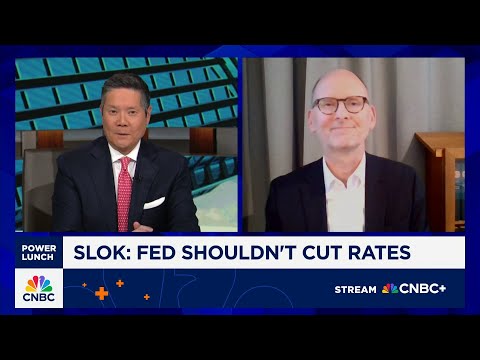
Fed shouldn't cut rates next week, says Apollo Global's Torsten Slok
CNBC Television· 2025-12-05 20:11
But our next guest says based on the data the Fed should not cut rates next week. Torson SLock is the chief economist over Apollo Global Management. Torston, thanks for being with us right now.Take us through the case as to why the Fed needs to hold steady. >> Well, if you look at the incoming data, for example, we had a lot of discussions here now about a month ago of course of Triricolor and First Brands and whether the credit cycle was about to get worse. But if you look at the actual numbers for default ...

A Close Look At Jerome Powell’s Possible Replacement At The Fed
From The Desk Of Anthony Pompliano· 2025-12-05 15:30
Who's going to be the next Federal Reserve chairman. President Trump seemed to give us a little hint. Watch what he said here about Kevin Hasset.>> I guess a potential Fed chair is here, too. I don't know. We allowed to say that potential.He's a respected person that I can tell you. Thank you, Kevin. >> So, who exactly is Kevin Hasset and do we think this is a good choice.He's a well-known supply side economist. He wants to unleash economic growth through tax cuts, deregulation, and accommodative monetary p ...

10 Bold Market Calls For 2026 From Bank Of America: AI Boom, Strong GDP, Lower Yields
Benzinga· 2025-12-03 20:41
Core Viewpoint - Bank of America Global Research anticipates a stronger global economy entering 2026, driven by robust growth in the U.S. and China, ongoing AI investments, and a shift in market leadership [1][2] Economic Growth - U.S. GDP growth is projected at 2.4% for 2026, exceeding consensus, supported by fiscal policies and business investments [3][4] - China's GDP growth is upgraded to 4.7% for 2026, with positive trade developments and stimulus measures contributing to this outlook [8] AI Investment - The AI investment cycle is expected to continue its upward trajectory, with significant capital expenditures in data centers, chips, and automation driving GDP growth [5][6] - Concerns about an AI bubble are deemed overstated by Bank of America [2][5] Emerging Markets - Emerging markets are likely to benefit from a weaker U.S. dollar and lower U.S. interest rates, easing financing pressures and enhancing capital flows [7] Corporate Earnings - S&P 500 earnings per share (EPS) are expected to rise by 14% in 2026, but price gains are projected to be limited to 4%-5% [9] Treasury Yields - Treasury yields may fall more than anticipated, with projections for the 10-year yield to be between 4% and 4.25% due to expected Fed rate cuts [10] Housing Market - National home prices are expected to remain flat in 2026, with potential upside risks due to lower mortgage rates [11] Market Volatility - Increased volatility is anticipated in 2026 as the impact of AI on economic fundamentals becomes clearer [12] Private Credit - Returns on private credit are expected to moderate to about 5.4% in 2026, down from approximately 9% in 2025 [13] Commodity Outlook - Copper prices are projected to remain strong in 2026, supported by tight supply and improved global demand [14]


Stocks in news: Bajaj Housing Finance, Ambuja Cement, HUL, Hero MotoCorp
The Economic Times· 2025-12-02 02:09
Market Overview - India's Q2 GDP growth of 8.2% provided an initial boost to markets, leading the Nifty and BSE Sensex to record highs of 26,325.80 and 86,159 respectively [6] - Selling pressure in pharma and financial stocks caused a decline in indices, despite support from auto and IT sectors [6] Derivatives Insights - Derivatives data indicated noticeable call writing at the 26,250 strike and strong put interest at 26,150, suggesting a tight near-term trading range [6] - A sustained close above 26,300 is deemed essential to reignite bullish momentum in upcoming sessions [6] Company Developments - Bajaj Housing Finance is expected to see a block deal where promoter Bajaj Finance may sell a 2% stake at a floor price of Rs 95 per share, representing a 9% discount to the closing price of Rs 104.59 [6] - Hero MotoCorp reported dispatches of 604,490 units in November 2025, reflecting a 31% year-on-year growth [6] - Ambuja Cement successfully commissioned a 4 Million Ton Per Annum (MTPA) brownfield expansion of its Clinker Unit in Bhatapara, Chhattisgarh [6] - Hindustan Unilever Limited appointed Vandana Suri as Executive Director, Home Care, effective January 1, 2026 [6] - Amber Enterprises announced that its subsidiary IL JIN Electronics acquired an 80% equity stake in Shogini Technoarts Pvt Ltd for approximately Rs 506 crore [6] - IHCL's subsidiary, Roots Corporation Ltd, acquired a 51% stake in Pride Hospitality and ANK Hotels with investments of Rs 81.2 crore and Rs 109.3 crore respectively [6]

FOMC Minutes Setup December Nailbiter | Presented by CME Group
Bloomberg Television· 2025-12-01 18:40
Some key takeaways from the FOMC minutes from the October 28th 29th meeting. Real GDP growth moderated in early 2025 admit data limitations from the government shutdown with forecast predicting modestly stronger expansion through 2028. Labor market risk appeared skewed to the downside while inflation risk are tilted to the upside.PCE and core PCE inflation both stood at 2.8% 8% in September with PCE data up year-over-year due to tariffs but core unchanged. Inflation is expected to ease towards 2% after 2026 ...

美国经济-2026 前瞻展望:前景向好-2026 year-ahead outlook_ Sunny side up
2025-12-01 01:29
Summary of Economic Outlook and Key Insights Industry Overview - The report focuses on the **US economy** and its outlook for 2026 and 2027, highlighting key economic indicators and potential risks and opportunities. Core Insights 1. **Economic Growth Forecast**: The US economy is expected to grow by **2.4% in 2026** and **2.2% in 2027**, driven by consumer resilience and fiscal stimulus from the OBBBA [1][11][25] 2. **Tailwinds for Growth**: Five main factors are identified as tailwinds for 2026: - OBBBA contributing **0.3-0.4 percentage points** to GDP growth [2][14] - Lagged effects of Fed rate cuts boosting activity in the second half of 2026 [2][16] - Supportive trade policies regardless of IEEPA tariff outcomes [2][21] - Continued growth in AI-related investments [2][24] - Base effects from the end of the government shutdown enhancing GDP growth [2][24] 3. **Inflation Projections**: - Headline PCE inflation is forecasted at **2.6%** and core PCE at **2.8%** for 4Q 2026, remaining above the Fed's target through 2027 [3][26] - Tariffs are expected to keep core PCE inflation above **3%** until 3Q 2026 [3][27] 4. **Labor Market Dynamics**: - The labor market is stabilizing, with job growth expected to average **50,000 per month** in 2026, and the unemployment rate projected to peak at **4.5%** before declining to **4.3%** by 4Q 2026 [4][38] - Immigration policy changes are impacting job growth, lowering the breakeven job growth rate to about **20,000 per month** [4][39] 5. **Federal Reserve Policy Outlook**: - The Fed is anticipated to maintain rates around **3.0-3.25%** by 3Q 2026, with potential for further cuts depending on labor market stabilization [5][43] - The next Fed Chair is expected to adopt a dovish stance, influencing future monetary policy [5][42] Risks and Opportunities 1. **Downside Risks**: - A potential labor market downturn could lead to reduced consumer spending and further job cuts [6][44] - A slowdown in AI investment could shock equity and credit markets, impacting consumption [6][46] 2. **Upside Risks**: - Additional fiscal stimulus, such as tariff refunds to consumers, could enhance growth and inflation [7][51] - The Fed may cut rates to **2%** despite a resilient economy, which could lead to financial repression [7][54] Additional Insights - The report emphasizes the importance of consumer spending, which has shown resilience despite labor market challenges [10][37] - The potential impact of the **men's soccer World Cup** on service prices is noted, indicating possible one-off price adjustments [28] - The report highlights the K-shaped nature of consumer spending, where higher-income households are driving spending growth [46][49] This comprehensive outlook provides a detailed analysis of the US economic landscape, identifying key growth drivers, inflation expectations, labor market trends, and potential risks that investors should consider.
Q2 GDP: Sizzling, six-quarter high growth lights up India economic scene
The Economic Times· 2025-11-29 01:42
Economic Growth Overview - India's economy experienced a significant growth of 8.2% in the July-September period, marking a six-quarter high, driven by a surge in consumer demand and a reduction in goods and services tax (GST) [12][5][6] - The expansion was primarily led by a 9.2% growth in services and a 9.1% rebound in manufacturing [12][1] Consumer and Investment Trends - Private consumption, which constitutes nearly 60% of GDP, rose to a three-quarter high of 7.9% in the July-September period, up from 7% in the previous quarter [2][12] - Gross fixed capital formation, an investment measure, increased by 7.3%, slightly lower than the 7.8% growth in the prior quarter [2][12] - Agriculture growth was recorded at 3.5% in Q2, a slight decrease from 3.7% in Q1 [2][12] Future Growth Projections - The strong economic performance is expected to lead to upward revisions in growth estimates for FY26, with rating agency Crisil raising its forecast from 6.5% to 7% [7][12] - First-half FY26 growth was reported at 8%, an increase from 6.1% a year earlier, with gross value added (GVA) rising by 7.9% compared to 6.2% in the same period [7][12] Rural Consumption and Inflation - Strong agricultural performance and easing inflation are contributing to improved rural consumption growth, which is anticipated to continue into the first half of FY27 [8][12] - Retail inflation slowed to a record low of 0.25% in October, which, combined with strong growth, has complicated the outlook for potential rate cuts [10][12] Trade and Policy Considerations - The imposition of a 50% tariff by the US on India, including a 25% penalty for importing Russian oil, is a significant factor affecting future growth, with ongoing negotiations for a trade deal [8][12] - The GST Council's approval of a two-slab tax structure is expected to positively impact consumption by lowering taxes on various household goods [8][12]

Halftime traders talk the fate of 'the broadening' into 2026
Youtube· 2025-11-26 18:10
Core Insights - The earnings growth in 2026 is expected to be driven primarily by technology and communication services, with artificial intelligence playing a significant role [2][3] - There is a shift towards quality factors in the market, with healthcare and financial sectors showing strong performance, alongside technology [4][5] - The market dynamics in 2026 are anticipated to be more challenging, with a potential for elevated volatility and a need for different positioning compared to previous years [3][5] Earnings Growth - The majority of earnings growth in recent quarters has been attributed to artificial intelligence, particularly in technology and communication services [2] - A cyclical reacceleration is expected in 2026, with productivity and stable GDP growth contributing to this trend [6][7] Sector Performance - Financials and healthcare are expected to perform well in a reacceleration phase, with a potential focus on value-centric names and cyclical sectors [8] - Consumer staples may also become attractive as a defensive play in the face of market volatility, especially during the midterm election year [9] Market Outlook - Bank of America projects a 4% increase in the S&P 500, targeting a price of 7100 for 2026, indicating a positive outlook despite potential challenges [10][11] - The leadership in the market is expected to change, with a focus on sectors that can withstand volatility and provide stability [9]

'Very confident' labor market will turn around in 2026, says Treasury official Joe Lavorgna
Youtube· 2025-11-25 22:33
Economic Overview - The PPI report for September indicates that wholesale prices are rising less than expected, suggesting a potential cooling of inflation [1] - Consumer confidence has hit its lowest level since April, raising concerns about the labor market [1][11] - Retail sales numbers have softened, following a previous gain of 610 million [1][3] Inflation and Federal Reserve - The Atlanta Fed's growth estimate is at 4%, supported by strong consumer spending and capital expenditures [3][7] - Commodity prices are near a 52-week low, and energy prices are moderating, contributing to a positive inflation outlook [4] - The Fed is expected to respond to the improving inflation outlook and the current rates being above neutral [4][9] Labor Market Insights - The labor market has shown signs of weakness, with significant downward revisions in job numbers for 2023 [6] - Concerns exist regarding college graduates struggling to find jobs, attributed to a slowing job market and the impact of AI [11][13] - Small businesses continue to show high confidence levels, which are crucial for job creation [12] Capital Expenditures and Future Outlook - Capital spending has seen a 15% increase in the first half of the year, the best performance since 2011, which typically leads to hiring [13] - Optimism around the administration's policies on capital expensing is contributing to an investment boom [7] - A forecast suggests that the labor market will improve for new graduates by 2026 [14]