
Autonomous Driving

Search documents
Pony AI's U.S. Arm Up for Sale? AV Space Heats Up Further
ZACKS· 2025-06-30 15:47
Core Insights - Uber Technologies is in preliminary talks to acquire the U.S. arm of Pony AI, a significant development in the autonomous vehicle sector [1][8] - Pony AI currently operates around 250 robotaxis and aims to expand its fleet to over 1,000 by 2025 [2] - The partnership between Uber and Pony AI is set to launch robotaxi services in the Middle East later this year, with initial operations including a safety operator onboard [2] Company Developments - Uber's former CEO Travis Kalanick is reportedly involved in discussions to help fund the acquisition of Pony AI's U.S. unit, which could enhance Uber's position in the competitive autonomous vehicle market [3] - The collaboration between Uber and Pony AI is expected to strengthen Uber's presence in the autonomous vehicle space amid increasing competition [8] Industry Landscape - Other key players in the autonomous vehicle sector include Alphabet's Waymo, which has commercial operations in several U.S. cities and recently partnered with Uber for an autonomous ride-hailing service in Atlanta [4] - Tesla has launched its robotaxi service in Austin, TX, focusing on in-house development of its Full Self-Driving technology, allowing for greater control over its autonomous vehicle capabilities [5] Financial Performance - Year-to-date, Uber's shares have increased by 51.8%, while Pony AI's shares have declined by 4.8% [6] - The Zacks Consensus Estimate for Uber's earnings per share (EPS) for 2025 and 2026 has seen upward revisions in the past 30 days, while Pony AI's loss estimates have remained stable [10][11]



QCOM Focuses More on Automotive Business: Is it a Key Growth Driver?
ZACKS· 2025-06-30 15:00
Core Insights - Qualcomm's Snapdragon Digital Chassis platform is gaining traction among automotive customers, with recent compatibility validation from Silicon Motion Technology for its UFS solution on the Snapdragon Cockpit SA8295P platform [1][2] Group 1: Qualcomm's Automotive Strategy - The Snapdragon Cockpit SA8295P platform delivers powerful AI performance, advanced multi-display graphics, and Automotive Safety Integrity Level B functional safety support, aimed at enhancing smart cockpits [2] - Qualcomm's acquisition of Veoneer, Inc. strengthens its position in driver-assistance technology, expanding its Snapdragon Ride ADAS portfolio with Arriver's software capabilities [3][7] Group 2: Competitive Landscape - Other tech firms like NVIDIA and Intel are also focusing on the ADAS market, with NVIDIA leveraging AI for autonomous vehicles and Intel enhancing its capabilities through the acquisition of Mobileye [4][5] Group 3: Financial Performance and Valuation - Qualcomm shares have declined 20.8% over the past year, contrasting with the industry's growth of 21.8% [6] - The company's stock trades at a forward P/E ratio of 13.45, significantly lower than the industry average of 33.17 [7][8] - Earnings estimates for 2025 and 2026 have decreased by 0.4% and 5.3%, respectively, indicating potential challenges ahead [9]


Alphabet's Waymo and Services Beginning to Feel the Pressure?
MarketBeat· 2025-06-30 14:19
Core Insights - Alphabet Inc. is facing increasing scrutiny and competition, particularly in its autonomous driving unit, Waymo, and its core productivity suite, Google Workspace [2][9][10] - The company reported strong financial performance in Q1 2025, with revenue of $90.24 billion and EPS of $2.81, but must navigate significant challenges to maintain its market position [13] Group 1: Waymo and Autonomous Driving - Waymo aims to create a fully autonomous driving system, with millions of miles driven on public roads and services launched in Phoenix and San Francisco, now expanding to Los Angeles and Austin [3][4] - The long-term potential for autonomous ride-hailing is substantial, with the possibility of multi-billion-dollar revenue streams, but monetization remains limited and public perception poses challenges [4][5] - Tesla's rapid rollout of its robotaxi program presents a direct threat to Waymo, with Tesla's model allowing car owners to participate in ride-hailing, potentially scaling faster and achieving profitability sooner [6][7][8] Group 2: Competition and Market Dynamics - OpenAI's plans to develop a new workspace productivity platform could challenge Google Workspace, which is crucial for Alphabet's revenue and supports its advertising ecosystem [9][10][11] - If OpenAI's platform proves to be more innovative, it could disrupt Alphabet's enterprise market share over time, impacting the company's overall ecosystem [11][12] Group 3: Financial Performance and Future Outlook - Alphabet's stock forecast indicates a potential upside of 12.71%, with a target price of $199.95 based on analyst ratings [12] - The company must defend its core businesses against emerging competitors while converting long-term investments like Waymo into growth drivers to avoid falling behind [14]


XPENG becomes the only Chinese automaker invited to present at the 2025 CVPR autonomous driving workshop
Globenewswire· 2025-06-30 14:06
Core Insights - XPENG Motors was the only Chinese automotive company invited to present at the 2025 Conference on Computer Vision and Pattern Recognition (CVPR), highlighting its advancements in autonomous driving technology [1][2][4] - The company delivered a speech titled "Scaling up Autonomous Driving via Large Foundation Models," sharing significant insights with industry leaders such as Waymo and NVIDIA [4][7] - XPENG announced the launch of the world's first AI-powered car, the G7, which features an L3 computing platform, setting new standards for next-generation autonomous systems [4][5] Company Overview - Founded in 2014, XPENG is a leading AI-driven mobility company in China, focusing on the design, development, manufacturing, and marketing of Smart EVs [8][9] - The company aims to become a global leader in AI mobility, leveraging cutting-edge technology to drive the Smart EV revolution [8] - XPENG develops its full-stack advanced driver-assistance system (ADAS) technology and intelligent in-car operating system in-house, enhancing customer experience [9] Industry Context - The frontier of autonomous driving research is increasingly shifting towards automakers with large-scale fleets and extensive real-world data, positioning XPENG as a key player in this data-driven era [7] - XPENG's participation in CVPR demonstrates the contribution of automakers to academic research, bridging the gap between industry and academia [7]

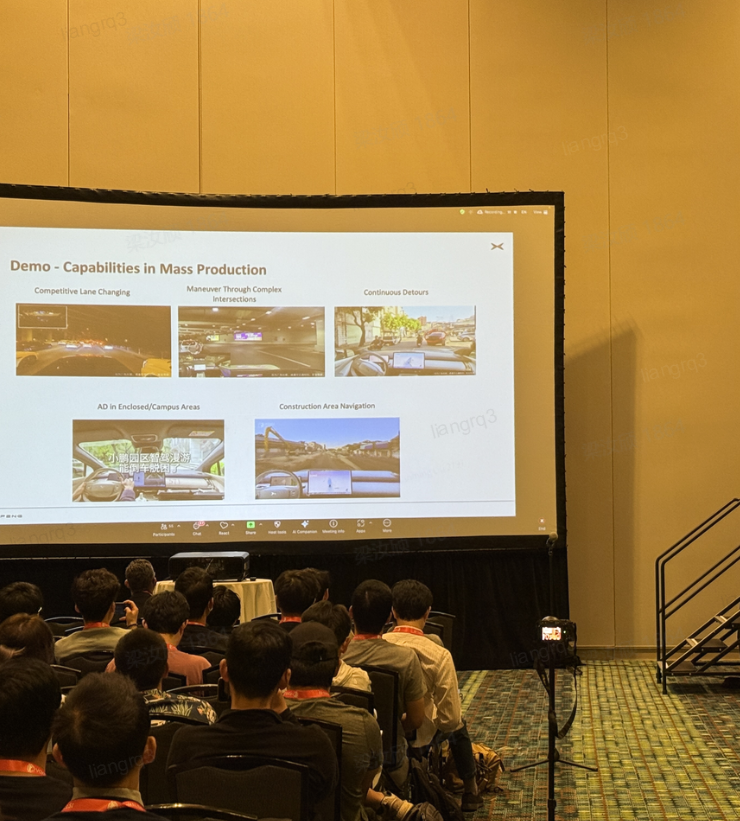
Uber: In The Autonomous Sweet Spot
Seeking Alpha· 2025-06-30 11:14
Core Insights - Pony AI has developed autonomous vehicle technology at a significantly lower cost compared to Waymo, indicating a competitive advantage in the robotaxi market [1] - The economics of robotaxis are complex, with the average fare of US$12 needing to cover various operational costs [1] Company Analysis - Pony AI's approach to autonomous vehicle technology suggests a focus on cost efficiency, which may attract more users and increase market share [1] - The experience of the analyst spans over 30 years across various industries, providing a robust foundation for understanding the dynamics of the autonomous vehicle sector [1] Industry Context - The autonomous vehicle industry is influenced by various macroeconomic, monetary, and political factors, which can impact the development and adoption of technologies like those offered by Pony AI [1] - Historical crises and technological advancements have shaped the current landscape of the industry, highlighting the importance of adaptability and innovation [1]
Strength Seen in Aeva Technologies (AEVA): Can Its 8.6% Jump Turn into More Strength?
ZACKS· 2025-06-30 09:11
Group 1 - Aeva Technologies, Inc. (AEVA) shares increased by 8.6% to close at $36.43, with a notable trading volume and a 93.8% gain over the past four weeks [1][2] - The company is positioned to benefit from growth in industrial automation, robotics, and autonomous driving, as more businesses adopt robotics for task handling [2] - Aeva is expected to report a quarterly loss of $0.44 per share, reflecting a year-over-year change of +22.8%, with revenues projected at $3.4 million, up 69.2% from the previous year [3] Group 2 - The consensus EPS estimate for Aeva has remained unchanged over the last 30 days, indicating that stock price movements may not continue without trends in earnings estimate revisions [4] - Aeva Technologies holds a Zacks Rank of 3 (Hold), while Strattec Security (STRT), another company in the same automotive industry, has a Zacks Rank of 1 (Strong Buy) and has seen an 11.1% return over the past month [5][6]

双非研究生,今年找工作有些迷茫。。。
自动驾驶之心· 2025-06-30 05:51
Core Viewpoint - The article emphasizes the importance of advanced skills and knowledge in the fields of autonomous driving and embodied intelligence, highlighting the need for candidates with strong backgrounds to meet industry demands. Group 1: Industry Trends - The demand for talent in autonomous driving and embodied intelligence is increasing, with a focus on cutting-edge technologies such as SLAM, ROS, and large models [3][4]. - Many companies are transitioning from traditional methods to more advanced techniques, indicating a shift in the required skill sets for job seekers [3][4]. - The article notes that while there is a saturation of talent in certain areas, the growth of startups in robotics presents new opportunities for learning and development [3][4]. Group 2: Learning and Development - The article encourages individuals to enhance their technical skills, particularly in areas related to robotics and embodied intelligence, which are seen as the forefront of technology [3][4]. - It mentions the availability of resources and community support for learning, including access to courses, hardware, and job information through platforms like Knowledge Planet [5][6]. - The community aims to create a comprehensive ecosystem for knowledge sharing and recruitment in the fields of intelligent driving and embodied intelligence [5][6]. Group 3: Technical Directions - The article outlines four major technical directions in the industry: visual large language models, world models, diffusion models, and end-to-end autonomous driving [7]. - It highlights the importance of staying updated with the latest research and developments in these areas, providing links to various resources and papers for further exploration [8][9].
X @Tesla Owners Silicon Valley
Tesla Owners Silicon Valley· 2025-06-29 15:34
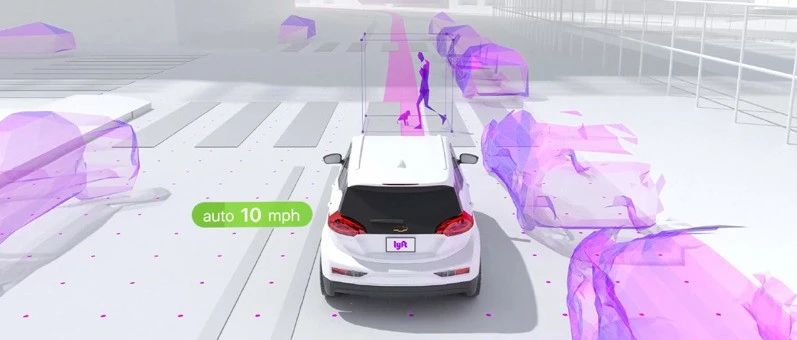
Tesla Robotaxi Revolution Riding into the Future with Autonomous Ease https://t.co/hVrvp7cim9 ...

Is Tesla Stock a Millionaire Maker?
The Motley Fool· 2025-06-29 12:30
Core Insights - Tesla has generated significant wealth for investors, with shares increasing by 20,290% since its IPO in June 2010, turning a $5,000 investment into $1 million [1] - Despite its past success, Tesla is currently facing challenges, with a reported $14 billion in automotive revenue in Q1 2024, but a decline of 9.2% in total revenue in Q1 2025 [4][5] - The company's operating income fell by 66% due to lower average selling prices, fewer deliveries, and increased expenses [4] Valuation Assessment - Tesla's current P/E ratio of 179 suggests it is overvalued, with a potential downside of 72% if it were to trade at a more reasonable P/E of 50 [6][8] - The market cap stands at $1 trillion, indicating that investors are betting on Tesla's future potential in autonomous driving and robotics [8] Technological Developments - Tesla has launched a robotaxi service in Austin, Texas, but initial results have been underwhelming, with human supervisors present and operational issues reported [9] - The company is also developing a humanoid robot, Optimus, with plans to produce 1 million units annually by the end of the decade [10] Future Potential - If successful, Tesla's ventures into robotaxis and humanoid robots could tap into trillion-dollar markets, potentially creating significant financial returns for investors [11] - However, there are concerns about the company's ability to meet high expectations, given a history of delays [12]
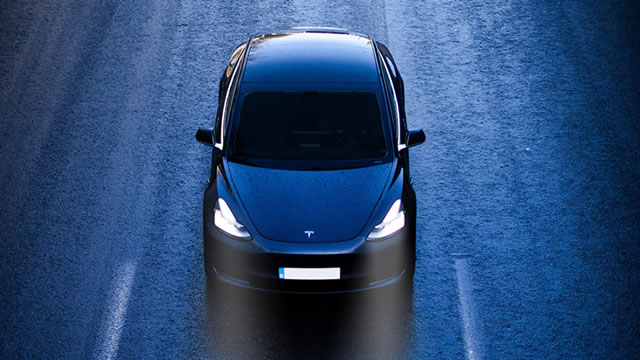
X @Tesla Owners Silicon Valley
Tesla Owners Silicon Valley· 2025-06-29 12:10
.@Tesla @Robotaxi ride and WOW—this is the future! 📷 No driver, just pure AI magic zipping me through Austin.The app is slick, the ride is smooth, and it’s Tesla’s Robotaxi is about to FLIP ride-sharing upside down.Forget Uber, Lyft—this is the FIRST mass-scale, fully autonomous game-changer. ...