G7

Search documents
小鹏汽车 - 强劲新车型管线与技术变现将对冲成本通胀带来的利润率压力;买入评级
2026-03-26 13:20
23 March 2026 | 2:31PM CST Equity Research XPENG INC. (XPEV/9868.HK) Key takeaways from conference call n Positive sequential volume growth outlook underpinned by new model Goldman Sachs does and seeks to do business with companies covered in its research reports. As a result, investors should be aware that the firm may have a conflict of interest that could affect the objectivity of this report. Investors should consider this report as only a single factor in making their investment decision. For Reg AC ce ...
CGM战场扩容:瞄准更大人群
思宇MedTech· 2026-03-24 06:18
文章来源: 思 宇Me dTec h 转载要求:可以直接转载,请在文首注明来源 在2026年ATTD大会上,全球连续血糖监测(CGM)龙头 Dexcom德康 公布了一组关键数据:其G7产品在 未使用胰岛素的2型糖尿病人群 中,长期使用可显著降 低糖化血红蛋白(A1C),并带来体重管理改善。 # Dexcom是谁:CGM赛道的定义者之一 Dexcom成立于1999年,是全球最早推动CGM商业化的公司之一,也是目前高端CGM市场的核心玩家。 其产品演进路径清晰: 最新一代G7产品,已经具备: 在欧美市场,CGM已逐步成为糖尿病管理的基础设施之一。 # 一个关键变化:从"胰岛素人群"走向"更大基数人群" 过去,CGM的核心使用人群是: 从专业型设备走向消费级可穿戴 从医院端走向院外长期管理 从"血糖监测"走向"数据驱动的糖尿病管理" 更小体积 更长佩戴周期(15天版本) 更强的数据连接与算法能力 原因很现实: 但问题在于: 这部分人群规模有限。 Dexcom此次强调的新数据,指向一个更大的市场—— 未使用胰岛素的2型糖尿病人群。 这一人群具备几个特点: 如果CGM能够在该人群中证明价值,其市场空间将被重新定义。 # ...



小鹏汽车 VLA最新进展
数说新能源· 2026-03-18 03:02
Core Insights - The article discusses the growth and developments in the new energy vehicle (NEV) sector, highlighting key trends and performance metrics in the industry. Group 1: Performance Metrics - The comprehensive score for safety, compliance, comfort, and efficiency has improved by 4-5 times compared to the previous generation, with a significant increase in MPI by approximately 5 times [4] - Real-world testing showed a maximum of 1220 km without manual takeover during a 5000+ km journey across China, indicating strong performance in unfamiliar cities [4] - The goal for the end of the year is to enhance performance by an additional 5-10 times [4] Group 2: Market Trends - The number of test drive sessions at 732 stores nationwide has nearly doubled, with the Ultra model's share increasing significantly [5] - The company plans to gradually roll out new models, starting with the P7 and followed by G7, X9, and others within three months [7] - The focus is shifting towards integrating cockpit and intelligent driving systems, aiming to redefine vehicles as "intelligent entities" with autonomous driving as a core capability [6] Group 3: Strategic Developments - The company is working on merging cockpit and intelligent driving systems under a unified team, with a target completion for the architecture by Q2 and acceleration in Q3-Q4 [6] - The next decade is expected to see a transition from smart cars to smart entity cars, emphasizing the vehicle's ability to understand user intent and control various functions [6] - The company is also expanding its presence in Southeast Asia, indicating a strategic move to tap into emerging markets [17]


【汽车】春节长假扰动销量,关注财报季业绩表现——新势力2月销量跟踪报告(倪昱婧/邢萍)
光大证券研究· 2026-03-03 23:03
Core Viewpoint - The article discusses the impact of the Spring Festival holiday on February's new energy vehicle (NEV) sales, highlighting the performance of various manufacturers and the upcoming product launches in the industry [4][5][7]. Group 1: February NEV Sales Performance - Li Auto's delivery volume increased by 0.6% year-on-year but decreased by 4.5% month-on-month to 26,421 units [4] - NIO's delivery volume rose by 57.6% year-on-year but fell by 23.5% month-on-month to 20,797 units, with the NIO brand up by 65.8% year-on-year and down by 27.5% month-on-month to 15,159 units, while the Lada brand decreased by 26.4% year-on-year and 14.3% month-on-month to 2,981 units [4] - Xpeng's delivery volume dropped by 49.9% year-on-year and 23.8% month-on-month to 15,256 units [4] Group 2: New Flagship Models Launch - On February 6, Li Auto officially launched the L9 Livis, a flagship SUV featuring an 800V fully active suspension and a self-developed high-performance driving platform [5] - On February 8, Xpeng announced the core parameters of the GX, an AI luxury six-seat flagship SUV, equipped with an 800V high-voltage platform and L4-level autonomous driving capabilities [5] - The flagship models from Li Auto and Xpeng aim to enhance product strength through chassis architecture and intelligent driving features to capture high-end NEV market share [5] Group 3: Financing and Delivery Updates - Tesla's domestic Model 3 delivery cycle has been shortened to 1-3 weeks, with various financing policies extended, including an 8,000 yuan limited-time insurance subsidy [6] - Li Auto maintains delivery cycles for L6/L9 at 1-3 weeks, while the delivery cycle for L8 has been extended to 2-4 weeks [6] - NIO's delivery cycles for several models remain stable, with the new ES8's cycle shortened to 4-5 weeks [6] - Xpeng's delivery cycles for several models have been adjusted, with the G9's cycle extended to 1-5 weeks [6] - Xiaomi's delivery volume exceeded 20,000 units in February, with financing offers continuing [6] - Huawei's Hongmeng Zhixing saw a year-on-year delivery increase of 31.1% but a month-on-month decrease of 51.3% to 28,000 units [6] Group 4: Upcoming Product Launches and Financial Performance - The industry anticipates a surge of new vehicle launches from multiple manufacturers in March and April, with a focus on financial performance amid rising costs [7][8] - Tesla is expected to launch the third-generation Optimus humanoid robot in Q1 2026, presenting potential investment opportunities in components related to domestic and international robot mass production [8]


小鹏汽车-VLA 2.0:大胆跨越,捕捉 “X 因素”
2026-03-03 03:13
Summary of XPeng Inc. Conference Call Company Overview - **Company**: XPeng Inc. - **Industry**: China Autos & Shared Mobility - **Stock Rating**: Overweight - **Price Target**: US$34.00 - **Current Price**: US$17.56 (as of February 27, 2026) - **Market Cap**: Rmb104,825 million - **52-Week Range**: US$28.23 - US$16.13 Key Developments - **VLA 2.0 Launch**: XPeng unveiled its VLA 2.0, which boasts a 12x faster model inference compared to the previous generation, enhancing the driving experience by improving handling of complex scenarios and corner cases. This update will be available on models P7, G7, and X9 Ultra in the second half of March 2026, with other models receiving updates in April [2][5][9]. - **Licensing Revenue**: Volkswagen will be the first external customer to adopt XPeng's VLA 2.0, indicating a potential for increased licensing revenue as more OEMs may follow suit [3]. - **Robotaxi Deployment**: XPeng is on track to deploy fully autonomous robotaxis in Guangzhou later this year, leveraging the capabilities of VLA 2.0. Initial deployment may be small, but the strategy aims to establish a foundation for commercial expansion of its robotaxi fleet [4]. - **Global Competition**: XPeng plans to roll out VLA 2.0 globally by 2027, which may intensify competition with global leaders like Tesla, as XPeng aims to match their autonomous driving capabilities [5]. Financial Projections - **Revenue Growth**: Projected revenue for the fiscal year ending December 2026 is Rmb102,874 million, with an expected increase to Rmb120,366 million by December 2027 [7]. - **Earnings Per Share (EPS)**: EPS is expected to improve from a loss of Rmb6.65 in 2024 to a profit of Rmb1.27 by 2027 [7]. - **EBITDA**: Expected to turn positive by 2026, with projections of Rmb1,363 million in 2026 and Rmb2,451 million in 2027 [7]. Investment Considerations - **Valuation Methodology**: The valuation is based on a probability-weighted DCF methodology with a terminal growth rate of 3% and a WACC of 12.8% [10]. - **Risks**: - Upside risks include competitive model introductions and better-than-expected branding with superior in-car user experience [12]. - Downside risks involve intensified competition in the midrange/high-end segments and cash flow pressure due to lower profitability [12]. Conclusion XPeng Inc. is positioning itself as a leader in the autonomous driving space with the launch of VLA 2.0 and plans for global expansion. The financial outlook shows potential for significant revenue growth and profitability improvements, although the company faces competitive pressures in the evolving automotive landscape.
Will DXCM Deliver Q4 Earnings Beat on G7 Stabilization, Volume Growth?
ZACKS· 2026-02-10 17:25
Core Insights - DexCom, Inc. (DXCM) is set to report its fourth-quarter 2025 results on February 12, with adjusted earnings per share (EPS) of 61 cents in the last quarter exceeding the Zacks Consensus Estimate by 7% [1] Group 1: Q4 Estimates and Preliminary Results - The Zacks Consensus Estimate for Q4 revenues is $1.25 billion, reflecting a 12.4% increase year over year, while the earnings estimate is 65 cents, indicating a 44.4% growth [2] - Preliminary results suggest Q4 2025 total revenues of approximately $1.26 billion, up 13% from Q4 2024, with U.S. revenues projected at $892 million (11% growth) and international revenues expected to rise 18% to around $368 million [3] Group 2: Factors Influencing Performance - Recovery in new customer starts following G7 deployment issues and quality-related disruptions is a critical factor for Q4 performance [4] - Management noted that new starts in Q3 were slightly below record levels due to sensor deployment issues, but improvements in sensor performance and educational samples are expected to enhance new-start momentum in Q4 [5] - Gross margins are anticipated to improve as supply chain pressures ease, with management indicating that scrap rates and freight costs have improved sequentially [6][7] Group 3: International Growth and Market Dynamics - Sustained international momentum and broader adoption among type 2 diabetes patients are expected to positively impact earnings, with accelerating international growth supported by coverage expansions in markets like France and Canada [10] - The ability to convert increased access into volume growth in Q4 is likely to significantly influence earnings outcomes [11] Group 4: Seasonal Trends and Future Outlook - Investors are likely to focus on exit-rate trajectories adjusted for seasonality, as the fourth quarter now contributes a smaller share of full-year revenues [12] - Despite potentially modest headline growth, underlying patient growth remains solid, prompting investors to assess trends in user growth and pricing stability for a healthy baseline in 2026 [13] Group 5: Earnings Prediction - The Zacks model predicts an earnings beat for DexCom, supported by a positive Earnings ESP of +3.08% and a Zacks Rank of 3 (Hold) [14][15]

光大证券:1月各车企购车优惠加码 关注AI转型、以及上游原材料涨价压力消化
Zhi Tong Cai Jing· 2026-02-03 07:17
Core Viewpoint - The report from Everbright Securities highlights the focus on AI transformation in the automotive industry, particularly among new energy vehicle (NEV) manufacturers, while also addressing the pressure from rising raw material prices affecting profit margins. Group 1: AI Transformation in Automotive Industry - New energy vehicle companies are actively transitioning towards AI, especially in humanoid robotics, with Tesla planning to convert its Model S/X production line for humanoid robots, Xiaopeng announcing mass production of humanoid robots by 2026, and Li Auto establishing a humanoid robot team [1] Group 2: January NEV Performance - In January, the performance of NEVs was weak, with Li Auto's deliveries down 7.5% year-on-year and 37.5% month-on-month to 27,668 units; NIO's deliveries increased by 96.1% year-on-year but decreased by 43.5% month-on-month to 27,182 units; Xiaopeng's deliveries fell 34.1% year-on-year and 46.6% month-on-month to 20,011 units [1] Group 3: New Model Launches - Various NEV manufacturers launched updated models in January to meet tax requirements and enhance product competitiveness, including BYD's long-range versions of the Qin and Sea models, Xiaopeng's new P7+ and G7 models, and AITO's M7 long-range version [2] Group 4: Increased Purchase Incentives - Tesla is offering significant purchase incentives, including an 8,000 yuan insurance subsidy and low-interest financing for its Model 3 and Model Y vehicles, with delivery timelines ranging from 1 to 6 weeks [3] - Li Auto has maintained short delivery timelines for several models and extended purchase subsidies into February, while NIO and Xiaopeng have also introduced low-interest financing options across their vehicle ranges [4]

中国汽车_海外电动汽车机遇及潜在风险-China Automobiles_ The overseas EV opportunities & the risks that may ensue
2026-01-21 02:58
Summary of Key Points from the Conference Call Industry Overview - **Industry**: China Electric Vehicles (EV) and New Energy Vehicles (NEV) - **Market Growth**: The overseas market is expected to be a significant growth area for China EV sales in 2026, with a projected **35% year-over-year (yoy) volume growth** [1][15]. Core Insights - **Price Competition Framework**: A framework was developed to assess potential price cuts in overseas markets based on three parameters: 1. Is the auto market in contraction? 2. Do Chinese OEMs have high penetration? 3. Is there excess production capacity? - Thailand is currently the only market exhibiting all three parameters, making it an exception rather than the norm for price competition [1][16][24]. - **Profitability in Overseas Markets**: Chinese OEMs, particularly BYD, are achieving significantly higher Average Selling Prices (ASP), gross margins, and unit profits in overseas markets compared to domestic sales. For instance, BYD's ASP is **50%-120% higher**, with gross margins **5-10% higher**, and unit profits **43%-420% higher** for the same models sold outside China [3][49]. - **NEV Market Penetration**: As China's NEV penetration reaches **60%** with a slowdown to **11% yoy growth** by 2026, overseas markets are entering a mass-adoption phase. The overseas NEV sales are expected to reach **7.4 million units** in 2026, with Chinese brands fulfilling **55%** of this volume [4][62][65]. Market Dynamics - **Thailand as a Case Study**: Thailand is highlighted as a key market for Chinese OEMs due to favorable local policies and cultural proximity. The market is projected to see **141,000 NEV sales** in 2025, with a **26% market share** for Chinese brands [17][18]. - **Price Cuts and Market Concerns**: Two rounds of price cuts in Thailand have raised concerns about a potential price war similar to that in China. The price cuts were driven by market contraction, high penetration of Chinese OEMs, and excess production capacity [31][39]. - **Future Risks**: If other overseas markets begin to exhibit similar conditions as Thailand, there could be a **16%-19% downside** to cash margins at 0% [2][12][44]. Investment Recommendations - **Recommended Stocks**: BYD and XPeng are identified as well-positioned for overseas growth due to their higher exposure to international markets and expanding sales networks [4][62]. Additional Insights - **Cyclical Nature of the Auto Industry**: The cyclical nature of the auto industry and potential changes in local production requirements could impact future pricing strategies and market dynamics [2][44][46]. - **Local Production Capacity**: Chinese OEMs are building localized production capacity to meet overseas demand, with expectations of **0.9 million** and **1.7 million** NEV production capacity overseas by the end of 2025 and 2026, respectively [4][62]. - **Competitive Landscape**: Chinese brands are gaining market share in various overseas markets, with significant growth in developed markets such as the UK, Spain, and Australia, where they achieved double-digit market share gains [75][76]. This summary encapsulates the key points discussed in the conference call, focusing on the dynamics of the Chinese EV market, particularly in relation to overseas expansion and competitive strategies.

2026,小鹏拼了!
电动车公社· 2026-01-14 16:00
Core Viewpoint - Xiaopeng Motors is gearing up for a significant product year in 2026, launching multiple new models and enhancing its technology to compete in both domestic and global markets [2][7][38]. Group 1: Product Launch and Technology - Xiaopeng Motors introduced four new models on January 8, 2026, focusing on range extension and advanced technology [2][3]. - The new models feature self-developed Turing chips, moving away from Nvidia's Orin X chips, and include enhancements like the second-generation VLA and VLM for improved driving assistance and smart cockpit capabilities [3][4][21]. - The company emphasizes that its range-extended vehicles are fundamentally electric, maintaining low energy consumption and offering a pure electric range of 430 km [11][12]. Group 2: Market Position and Growth - In 2025, the sales of range-extended vehicles in China reached 1.235 million units, a 6% increase year-on-year, while pure electric vehicle sales grew by 24.4% [9]. - Xiaopeng Motors ranked among the top ten global new energy brands in sales, with the potential to break into the top five with the addition of range-extended models [9][10]. - The company aims to achieve a sales target of 550,000 to 600,000 vehicles in 2026, representing a 30% increase from 2025 [52][53]. Group 3: Global Market Strategy - Xiaopeng Motors is actively targeting international markets, with a goal of achieving a 1:1 sales ratio between overseas and domestic markets [41][50]. - The company has expanded its presence to 60 countries and regions, indicating a strong commitment to global growth [51]. - The focus on global media engagement during product launches reflects Xiaopeng's strategy to enhance its visibility and reputation in international markets [46][50]. Group 4: Competitive Landscape - The automotive market in 2026 is expected to be increasingly competitive, with strong rivals like Tesla, Xiaomi, BYD, and Leap Motor [58][59]. - Xiaopeng Motors is positioning itself to leverage its technological advancements and product offerings to navigate this competitive environment [60].
放弃“轿车依赖”?小鹏汽车今年要推4款全新SUV,从车市“红海”抢份额
Mei Ri Jing Ji Xin Wen· 2026-01-14 07:23
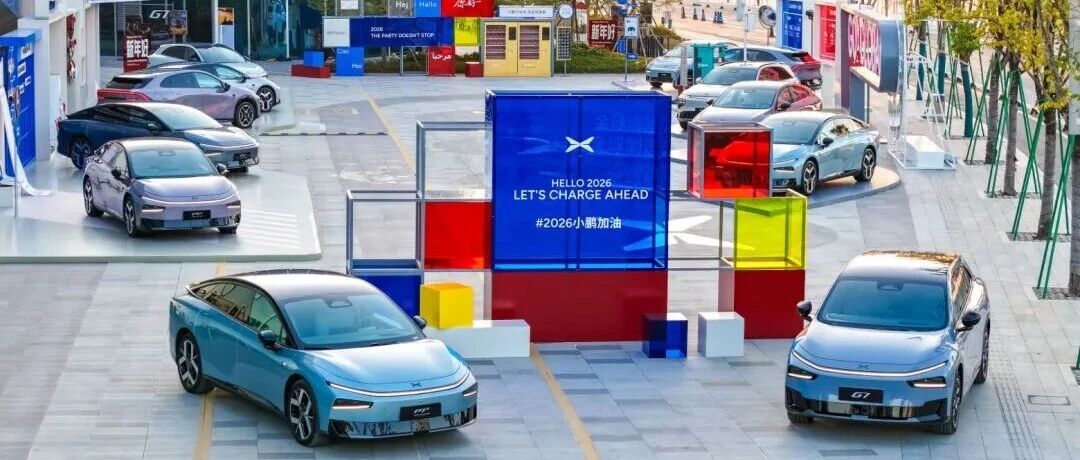
Core Viewpoint - Xiaopeng Motors is set to launch four new SUV models in 2023, aiming to shift its product sales structure and enhance its market presence in the competitive automotive industry [2][3]. Group 1: Product Strategy - Xiaopeng Motors plans to release over ten new products in 2026, including the recently announced G6, G9, G7, and P7+ models, with a focus on SUVs [2]. - The four new SUVs will include two models from the MONA series and a full-size SUV, with three of them expected to feature the Robotaxi autonomous driving system [2]. - The company aims to establish a strong product cycle with the introduction of new models, which is anticipated to drive sales growth [3]. Group 2: Sales Targets - Xiaopeng Motors has set an ambitious sales target of 550,000 to 600,000 vehicles for 2026, representing a growth of approximately 28% to 40% compared to 2025 [4]. - In 2025, the company delivered around 429,400 vehicles, marking a year-on-year increase of 126%, with the MONA M03 and P7+ accounting for over 65% of total sales [2][4]. Group 3: Market Conditions - The overall automotive market in China is projected to grow modestly, with total vehicle sales expected to reach approximately 35.5 million units in 2026, a 2% increase year-on-year [4]. - Changes in government policies regarding vehicle trade-in subsidies and tax adjustments for electric vehicles may significantly impact consumer behavior and present both challenges and opportunities for Xiaopeng Motors [4]. Group 4: Global Expansion - Xiaopeng Motors plans to expand into more overseas markets in 2026, focusing on local R&D and manufacturing to cater to both left-hand and right-hand drive markets [5]. - The company anticipates that growth in international markets will outpace domestic growth, aiming for a sales ratio of 1:1 or higher between overseas and Chinese markets in the coming years [5].