
一件事改革

Search documents
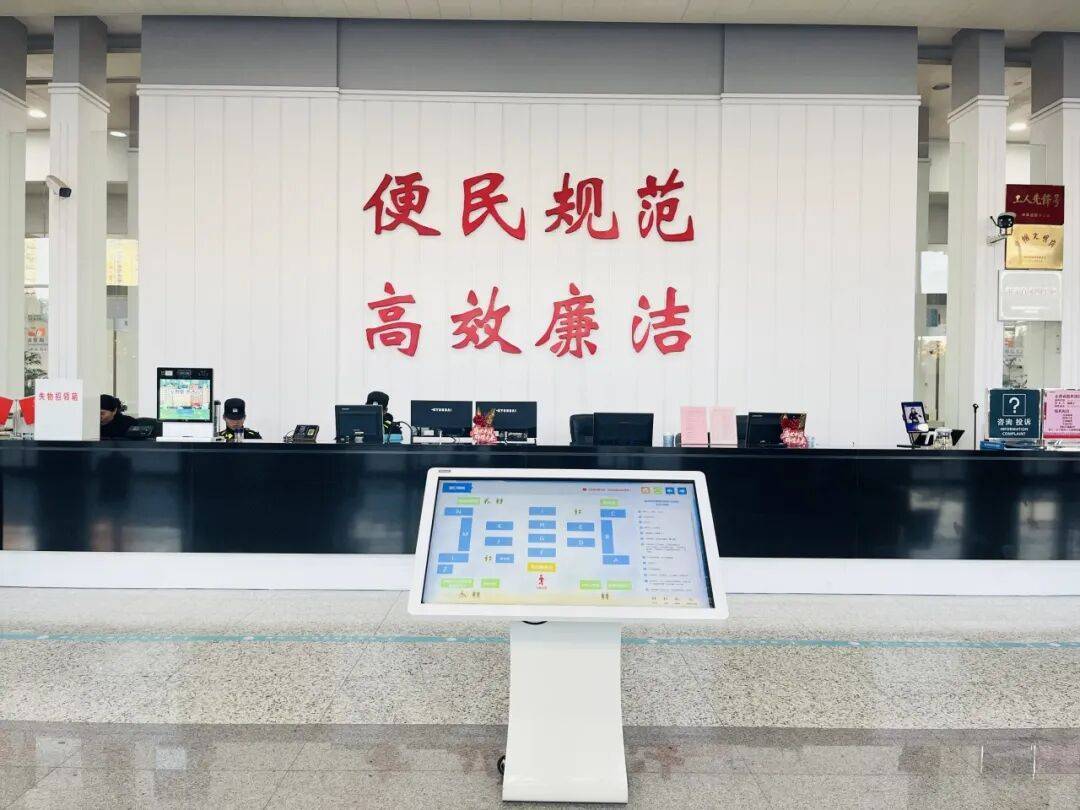
政务大厅的“国际声音”:英文讲解词里的“智慧政务·无锡温度”
Sou Hu Cai Jing· 2026-02-23 02:43
Core Viewpoint - The article emphasizes the transformation of Wuxi's municipal government service hall into a welcoming and efficient space for international visitors, showcasing a blend of smart governance and human touch in public service delivery [1][4][16]. Group 1: Value Proposition - The service hall is defined as a "living room," which conveys an open and friendly atmosphere, moving beyond the traditional "government service center" terminology [3]. - The guiding principle of "Smart Governance with a Human Touch" highlights the balance between digital efficiency and the importance of addressing people's real needs and emotions [4][5]. Group 2: Efficiency and Competitiveness - The service hall focuses on key functional areas to ensure that foreign delegations grasp the essential points within limited time [6]. - In the market access zone, it is stated that completing core procedures for a new company takes only half a working day, illustrating Wuxi's commitment to optimizing the business environment [8]. - The "One-Thing" service for foreign nationals simplifies the process by combining multiple permits into a single streamlined package, enhancing user experience [10][11]. Group 3: Service Accessibility - The self-service terminals, named "Chengquan e-Station," provide access to over 1,000 public services 24/7, emphasizing convenience and availability [13][17]. - These terminals are deployed across various locations in the city, ensuring that public services are accessible "anytime, anywhere, at your fingertips" [14][17]. Group 4: Overall Impression - The English explanation aims to create a lasting impression of Wuxi as a professional yet friendly city, balancing rules with warmth and showcasing its governance philosophy [16][18]. - The goal is to transform visits to the service hall from mere procedural assessments into meaningful exchanges and memorable experiences [18].

我省27个“高效办成一件事”全部完成
Xin Lang Cai Jing· 2026-02-01 21:21
Core Viewpoint - The implementation of the "One Thing" initiative in Jiangsu Province has successfully streamlined services for both individuals and businesses, enhancing efficiency and accessibility in receiving social assistance and business support [1][2][3]. Group 1: Overview of the "One Thing" Initiative - As of now, all 27 "One Thing" services set by the national and provincial governments for 2025 are operational, completing the task three months ahead of schedule and serving 21 million cases [1]. - The initiative includes 12 key items from the first batch and 9 from the second batch, with Jiangsu adding 6 additional provincial items focused on aiding vulnerable populations [1][2]. Group 2: Implementation Mechanisms - The provincial government has established a regular mechanism for advancing the "One Thing" initiative, involving multiple departments to ensure coordinated efforts and reduce administrative costs [2]. - A total of 40 provincial departments participated in the implementation of the initiative last year, integrating 94 business platforms and systems [2]. Group 3: Focus on Individual and Business Services - The "One Thing" initiative addresses challenges faced by vulnerable groups, such as multi-department management and data sharing issues, with 22 services now interconnected and 20 sharing data [3]. - For businesses, the initiative has streamlined the process for financial support, with over 1.6 billion yuan allocated to 8,565 enterprises through a centralized platform [3]. Group 4: Continuous Improvement and Feedback - Jiangsu is committed to ongoing evaluation of the "One Thing" services through feedback mechanisms and self-assessments to identify and resolve operational challenges [4].
北京深改跑出“减量提质”加速度
Bei Jing Shang Bao· 2025-12-11 14:01
Core Insights - Beijing has become the first super-large city in China to implement a reduction development strategy, focusing on high-quality urban planning and reform during the 14th Five-Year Plan period [1] Group 1: Economic Development and Foreign Investment - Over the past five years, Beijing has established a diverse open economy framework, combining free trade zones, key parks, and comprehensive bonded zones, with the "Two Zones" key parks occupying less than 2% of the city's area while contributing over 20% of the revenue from large-scale enterprises [3] - The actual foreign investment in Beijing's free trade zone has increased from less than 10% at its inception to over 40% [3] - More than 9,000 new foreign-funded enterprises have been established in Beijing from 2021 to 2024, with the total import and export volume of goods reaching 3 trillion yuan, averaging an annual growth rate of 11.5% [4] Group 2: Regulatory and Business Environment - Beijing has introduced a series of reforms aimed at optimizing the business environment, including non-intrusive supervision and a "no disturbance" list for 550,000 low-risk, creditworthy enterprises, significantly reducing on-site inspections [5] - The city has implemented a "one-stop" service reform for key matters, launching 105 "one matter" initiatives that cover various stages of business and personal life, achieving an overall time reduction of 56% and material simplification of 55% [6] Group 3: Social Services and Elderly Care - Beijing has built 152 regional elderly care centers, covering 2.07 million elderly individuals, with a focus on providing specialized care for the elderly population [7] - The city plans to introduce a new elderly care service regulation and develop a comprehensive plan for the elderly care system during the 14th Five-Year Plan period, addressing critical needs such as long-term care and meal services [7] Group 4: Early Childhood Education and Care - The city is focusing on providing quality childcare services by utilizing existing resources and establishing a dynamic allocation mechanism for early childhood education resources [8] - Plans are in place to promote the establishment of nursery classes in public kindergartens and enhance the integration of medical and educational services for infants [8]

我市在全省率先开发“跨境电商线上快速备案”系统
Nan Jing Ri Bao· 2025-09-11 02:15
Core Viewpoint - The implementation of the "one-stop service" reform in Nanjing has significantly streamlined the process for businesses, enhancing efficiency and reducing the bureaucratic burden associated with administrative procedures. Group 1: Cross-Border E-Commerce - Nanjing's cross-border e-commerce online rapid registration system allows businesses to submit application materials once online, eliminating the need for physical submissions and reducing customs approval time to 1-2 working days [1] - The system aims to facilitate the transition of domestic e-commerce companies to international markets, as evidenced by the experience of Nanjing Sibery Trading Co., which found the process to be time-saving and cost-effective [1] Group 2: Business Transformation - The "individual to enterprise" service allows individual business owners to upgrade to corporate status by submitting a single application online, streamlining the process that previously required multiple paper submissions and approvals from various departments [2] - This integrated service model has simplified the bureaucratic process, enabling businesses to complete necessary steps in one visit [2] Group 3: Overall Reform Impact - Since the launch of the "one-stop service" reform, over 300 scenarios have been introduced to benefit citizens and businesses, covering all lifecycle aspects from market access to business exit [3] - The reform emphasizes integration, achieving a streamlined process for project approvals and regulatory compliance, with an average of four departments collaborating on comprehensive oversight [4] Group 4: Efficiency Metrics - The "one-stop service" for businesses has reduced the number of required materials from 16 to 9, with a 75% sharing rate of materials between departments, significantly cutting down processing times [5] - In the first quarter of this year, Nanjing has successfully implemented all key "efficient service" items, reducing average processing times by approximately 66% and cutting down the number of required submissions by over 70% [5] Group 5: Future Developments - Nanjing is focusing on further enhancing the "one-stop service" by integrating artificial intelligence to assist in the application process and improve efficiency [6] - The city is also advancing the "Ningqi Tong" platform to consolidate various business services, aiming to enhance the accessibility and effectiveness of government support for enterprises [6]
山东优化营商环境方案迭代升级至6.0版
Da Zhong Ri Bao· 2025-04-23 00:59
Core Points - Shandong has upgraded its business environment optimization plan to version 6.0, introducing 35 tasks and 158 reform measures aimed at enhancing the "Civil Affairs Worry-Free, Business Affairs Solved, Government Affairs Efficient" service brand [1] - The province has implemented a total of 739 reform measures over the past six years, consistently ranking among the top ten provinces for business environment in China [1] - The new plan emphasizes a problem-oriented approach, integrating systems, benchmarking, and leveraging digital intelligence to address the most pressing concerns of businesses and citizens [1] Group 1: Civil Affairs - Shandong aims to improve the civil service system with 59 reform measures focusing on education, consumption, medical care, and elderly care [2] - Specific initiatives include reforms for kindergarten admissions, educational services, and medical service sharing among provincial institutions [2] Group 2: Business Affairs - The province has proposed 65 reform measures to enhance services for enterprises, focusing on market access, talent services, and cross-border trade [3] - Key initiatives include implementing a negative list for market access, promoting individual business transformation, and facilitating cross-border e-commerce [3] Group 3: Government Affairs - Shandong has outlined 34 reform measures to improve government efficiency, focusing on digital empowerment, regulatory standardization, and credit system development [4] - Plans include deepening reforms for a "no proof province," "no deposit city," and "no manual approval" to streamline government services [4] Group 4: Digital Platforms - The province will optimize five digital platforms to support the implementation of the business environment reforms, including the "Love Shandong" government service platform and the "Shandong Tong" collaborative office platform [4] - Future steps will involve further detailing and decomposing the 6.0 version of the reform plan to ensure effective implementation [4]