
三国历史

Search documents
刘馥:三国时合肥城的建设者
Xin Lang Cai Jing· 2026-01-22 18:09
Core Viewpoint - Liu Fu played a crucial role in the construction and defense of Hefei during the Three Kingdoms period, establishing it as a strategic base for the Cao Wei regime, despite his relatively obscure historical presence [1][4]. Group 1: Historical Context - Liu Fu's governance began during a time of turmoil in Hefei, which had suffered from prolonged warfare, leading to a significant population displacement and damaged infrastructure [2]. - He successfully persuaded local military leaders to support Cao Cao, which led to his appointment as the governor of Yangzhou [2]. Group 2: Achievements in Governance - Liu Fu is credited with transforming Hefei from a desolate city into a fortified stronghold, significantly increasing its population and stabilizing the local economy through various reforms [2][5]. - His initiatives included the establishment of schools and large-scale agricultural projects, which improved fiscal revenues and living conditions for the populace [2]. Group 3: Military Significance - Liu Fu's preparations and strategic resource management were pivotal during the first battle of Hefei in 208 AD, where his stored supplies helped defend the city against Sun Quan's forces [3][4]. - The fortifications and resources he established laid the groundwork for future military successes, including Zhang Liao's defense against multiple attacks [3]. Group 4: Water Management and Infrastructure - Liu Fu prioritized water management, overseeing the construction of irrigation systems that enhanced agricultural productivity in the region [6][7]. - Key projects included the Qiepi and Wutang irrigation systems, which are still recognized for their historical significance and continued utility in modern agriculture [6][8].
成都45分钟直达!这座藏着三星堆的宝藏小城,才是真正的“益州门户”
Sou Hu Cai Jing· 2026-01-10 04:32
Core Insights - The article emphasizes the hidden charm of Guanghan, a city near Chengdu, which is often overshadowed by the famous Sanxingdui archaeological site. It highlights the importance of exploring Guanghan beyond just visiting Sanxingdui to fully appreciate its cultural and historical significance [1][24]. Group 1: Understanding Guanghan - Guanghan is a county-level city in Sichuan Province, located 45 kilometers from Chengdu, and is known as the "open-air museum" of ancient Shu civilization. It has a rich history dating back to the Western Han Dynasty and has undergone various administrative changes [3][11]. - The city is characterized by its unique blend of cultural influences from both Chengdu and Deyang, resulting in a distinctive local culture and cuisine [3][11]. Group 2: Sanxingdui Insights - Sanxingdui is recognized as a world-class archaeological site, featuring remarkable artifacts such as the bronze trees and masks that challenge conventional understanding of ancient civilizations [6][8]. - Visitors are advised to explore the archaeological site before the museum to enhance their understanding of the ancient Shu civilization, as the site provides a contextual backdrop for the artifacts displayed in the museum [7][8]. Group 3: Additional Attractions in Guanghan - Guanghan is not limited to Sanxingdui; it also boasts historical sites like the ancient military stronghold of Luocheng, which played a significant role during the Three Kingdoms period [12][11]. - The city is recognized as a pioneer in rural reform in China, with historical significance tied to the implementation of the "household responsibility system" in the late 1970s [13][11]. - Guanghan is home to the Civil Aviation Flight University of China, known as the "Huangpu Military Academy" of civil aviation, which trains a significant number of China's pilots [15][11]. Group 4: Culinary Highlights - Guanghan is renowned as the "capital of hot pot ingredients" in China, with a thriving market for fresh and affordable hot pot supplies, making it a paradise for food lovers [16][11]. - Local delicacies such as Chansi Rabbit and Lianshan Twice-Cooked Pork are must-try dishes that reflect the region's culinary richness [16][11]. Group 5: Travel Recommendations - The article suggests tailored travel itineraries for different demographics, including families, couples, seniors, and young adults, ensuring that each group can enjoy a fulfilling experience in Guanghan [16][20][22]. - Visitors are encouraged to spend more time in Guanghan to explore its local culture, cuisine, and historical sites, rather than treating it merely as a stopover [24][26].

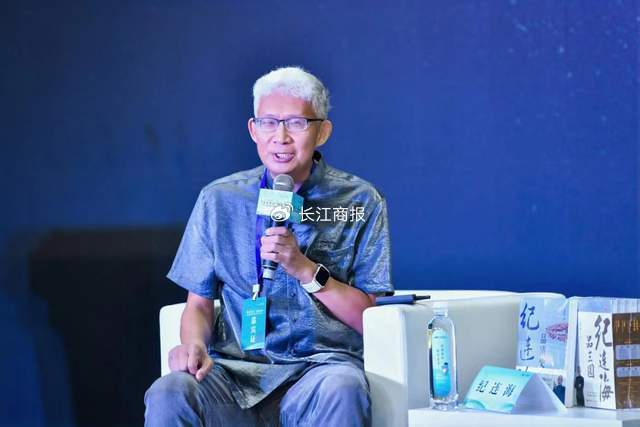
纪连海亮相武汉书展开讲“品三国 荆楚论英雄”
Chang Jiang Shang Bao· 2025-09-19 14:03
Core Viewpoint - The event featured renowned historian Ji Lianhai, who presented his new book "Ji Lianhai on the Three Kingdoms" and conducted a lecture on the connection between the Jingchu region and the heroes of the Three Kingdoms [1][5]. Group 1: Event Highlights - Ji Lianhai's lecture was characterized by his humorous style, engaging the audience with lively historical details that elicited laughter and applause [3]. - The lecture began with a discussion on Zhuge Liang's retreat to Xiangyang, focusing on his networking skills and personal branding, emphasizing that "Hubei is the incubator of Zhuge Liang's wisdom" [4]. - The discussion on Eastern Wu highlighted the strategies of figures like Zhou Yu and Lu Su, illustrating how they leveraged the Jingchu region to establish a foothold in the Three Kingdoms [4]. Group 2: Book Insights - "Ji Lianhai on the Three Kingdoms" consists of 108 chapters divided into four volumes, breaking traditional historical narratives by not judging heroes based on success or loyalty [5]. - Ji Lianhai noted that different age groups gain various insights from reading the Three Kingdoms, reflecting on themes of youth, middle age, and old age [6]. Group 3: Audience Interaction - During the interactive session, a reader asked about the hypothetical scenario if Zhuge Liang had not emerged, to which Ji Lianhai humorously responded that Hubei's landscape would await another "Zhuge Liang" [7]. - The event concluded with Ji Lianhai emphasizing that while life cannot be relived, history can be revisited to uncover essential truths [7].
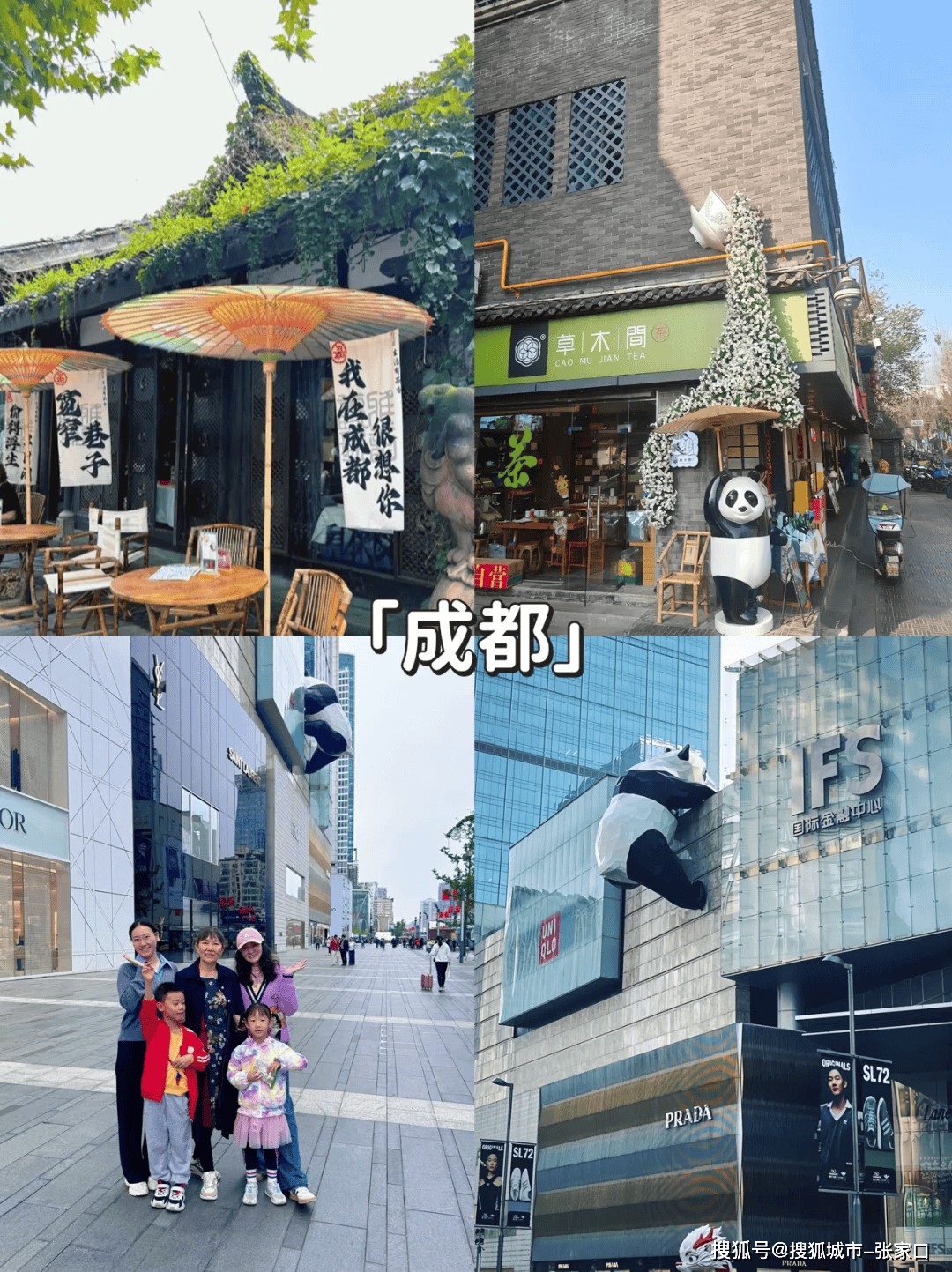
两大两小到四川玩四天三晚人均多少钱?成都亲子游四天时间怎么安排?
Sou Hu Cai Jing· 2025-09-14 02:22
Group 1: Core Attractions of Sichuan - Sichuan is highlighted as a top travel destination in China, known for its stunning natural landscapes such as Jiuzhaigou, Emei Mountain, and the Leshan Giant Buddha [1][2] - Jiuzhaigou is described as a paradise with clear lakes and vibrant colors, while Emei Mountain offers breathtaking views from its summit [1] - The Leshan Giant Buddha is noted as the world's largest stone-carved sitting Buddha, showcasing the region's rich cultural heritage [1] Group 2: Cultural and Historical Significance - Sichuan boasts a deep cultural history, with sites like the Sanxingdui archaeological site revealing ancient artifacts that reflect the mysterious Shu civilization [2] - The Wuhou Shrine is mentioned as a historical site that commemorates the Three Kingdoms period, allowing visitors to connect with the past [2] Group 3: Travel Experience and Cost - A four-day itinerary in Sichuan is presented, emphasizing the affordability of the trip, with average costs ranging from 1000 to 1500 yuan per person [3] - The itinerary includes visits to various attractions, showcasing the diverse experiences available in the region [6][7][8][9] Group 4: Local Cuisine - Sichuan cuisine is renowned for its bold flavors, with recommendations for dishes such as hot pot, skewers, and traditional noodles [16][17] - The unique taste profiles of these dishes, including spicy and numbing flavors, are highlighted as a significant aspect of the culinary experience in Sichuan [16][17]
历史幽深里的三国
Jing Ji Guan Cha Bao· 2025-05-21 13:58
Core Viewpoint - The article explores the author's journey of discovering the historical significance of the Three Kingdoms through museum visits and archaeological findings, emphasizing how artifacts bring history to life and reshape perceptions of historical figures [1][3][9]. Group 1: Museum Exhibitions and Artifacts - A special exhibition in Japan showcased 162 artifacts related to the Three Kingdoms, including pottery, bronze weapons, and inscriptions, which provided a tangible connection to the historical narrative [2][4]. - The artifacts selected for the exhibition were carefully curated to illustrate the origins and developments of the Three Kingdoms, linking them to significant historical figures like Liu Bei and Cao Cao [2][5]. Group 2: Archaeological Discoveries - The discovery of the tomb of Zhu Ran in Ma'anshan revealed over 80 lacquerware items, providing insights into the lifestyle and preferences of this Three Kingdoms general [6][7]. - The tomb of Ding Feng, discovered in 2021, contained over 300 burial items, including a unique set of 16 glazed pottery figurines, which highlighted the cultural exchanges during the Three Kingdoms period [10][11]. Group 3: Impact on Historical Understanding - The author emphasizes that museums serve as a gateway to understanding the Three Kingdoms, allowing for a more vivid and detailed reconstruction of historical narratives through artifacts [8][9]. - The ongoing discoveries in archaeology continuously reshape the understanding of historical figures and events, demonstrating that history is dynamic and ever-evolving [11][12].