
上市公司保壳

Search documents
多家*ST公司花式保壳 监管紧密跟踪防违规
证券时报· 2026-01-07 00:13
Core Viewpoint - Many *ST companies are engaged in a "shell protection war" as the year ends, utilizing various methods to avoid delisting, but face increasing regulatory scrutiny and challenges in compliance [2][4]. Group 1: Self-Rescue Strategies - Companies are employing strategies such as bankruptcy restructuring, mergers and acquisitions, divesting loss-making businesses, and debt restructuring to self-rescue [2][5]. - In 2025, 50 listed companies successfully removed their ST status, with 31 companies lifting "other risk warnings" and 19 companies removing "delisting risk warnings" [4]. - Examples include *ST Nan Zhi selling assets for 1 yuan to divest from a loss-making real estate business, and *ST Green Kang selling subsidiaries for 0 yuan to exit the photovoltaic sector [4]. Group 2: Bankruptcy Restructuring - Bankruptcy restructuring is identified as a core path for shell protection, with several companies like Youkeshu and Wen Tou Holdings undergoing restructuring or bankruptcy applications [5]. - *ST Dong Yi announced a capital increase plan to improve its financial situation, while other companies like *ST Zhong Ji and *ST Jian Yi have received debt waivers from major shareholders or creditors [5]. Group 3: Regulatory Environment - The regulatory environment is tightening, with authorities conducting thorough inquiries and investigations to prevent fraudulent shell protection actions [7]. - Companies like *ST Guandian faced inquiries regarding significant increases in accounts receivable and payable, highlighting the scrutiny on financial reporting [7]. - Regulatory bodies are increasing penalties for violations, and intermediary institutions are urged to maintain diligence to avoid misconduct [7]. Group 4: Market Dynamics and Governance - A normalized delisting mechanism is forming in the A-share market, with companies like Guangdao Tui being forcibly delisted for major violations [9]. - Experts emphasize that companies must return to their core business and enhance competitiveness to avoid temporary shell protection measures [9]. - The upcoming governance initiatives aim to strengthen internal constraints and promote healthy development within companies, discouraging speculative trading in ST and *ST stocks [9].

A股再现“中国好股东” ,不仅免了控股公司14亿元债务,还捐赠其4亿元现金
Mei Ri Jing Ji Xin Wen· 2025-12-26 04:15
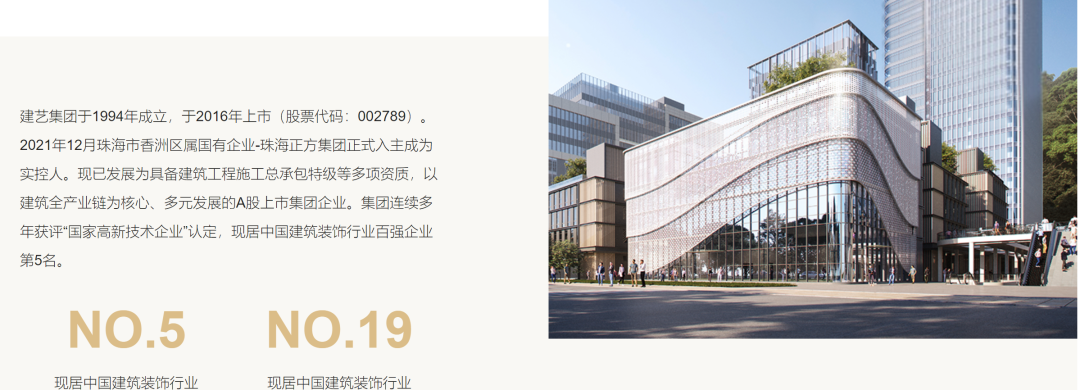
Core Viewpoint - The controlling shareholder of *ST Jianyi, Zhuhai Zhengfang Group, has waived a debt of 1.4 billion yuan and donated 400 million yuan in cash to support the company and prevent its delisting [1][3]. Group 1: Financial Support Details - Zhuhai Zhengfang Group has issued a debt waiver letter and a donation letter, waiving the principal debt of 1.4 billion yuan and corresponding interest of 8.897 million yuan [3]. - The total financial support from Zhuhai Zhengfang Group amounts to over 1.8 billion yuan, which is significant given the group's own financial struggles, including a net loss of 600 million yuan last year and 920 million yuan in the first three quarters of this year [3][4]. - As of the end of the third quarter, *ST Jianyi reported total equity of -893 million yuan, indicating a critical need for financial assistance to avoid delisting [4]. Group 2: Urgency of Financial Actions - The deadline for *ST Jianyi to rectify its negative net asset situation is approaching, with only about a week left until the end of 2025 [3][4]. - The cash donation has already been deposited into *ST Jianyi's designated bank account, which is crucial for meeting the requirements for positive net assets in the upcoming financial reports [4]. - The company will process the debt waiver and cash donation according to accounting standards, but the final impact on net assets will depend on the annual audit results [4]. Group 3: Strategic Importance of Maintaining Listing - Maintaining the listing status is a top priority for both *ST Jianyi and its controlling shareholder, as it serves as the only listed platform for the Zhuhai City Xiangzhou District State-owned Assets Supervision and Administration Commission [5]. - Previous plans to sell fixed assets and subsidiary equity were halted, indicating a shift towards direct financial support from the controlling shareholder to stabilize the company [7]. - The stock price of *ST Jianyi experienced volatility, with a significant drop followed by a recovery, reflecting investor sentiment regarding the company's future prospects [7].

*ST公司年末冲刺“保壳” “多点开花”化解退市风险
Shang Hai Zheng Quan Bao· 2025-12-22 18:23
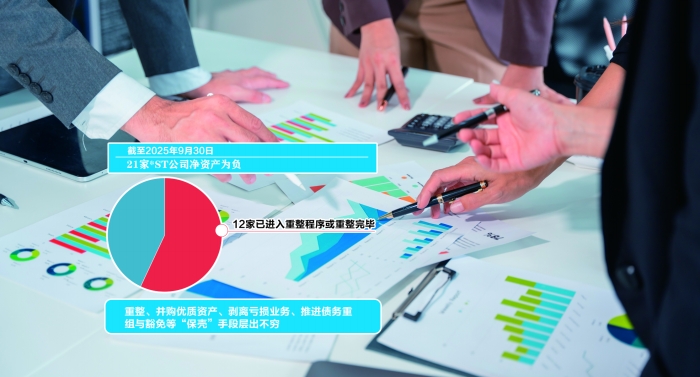
Core Viewpoint - The A-share market is experiencing a renewed "shell protection" battle as companies adopt various strategies to avoid delisting, including restructuring, asset acquisitions, and debt management [2][3]. Group 1: Restructuring and Asset Management - *ST Dongyi announced on December 21, 2025, that the Beijing First Intermediate People's Court approved its restructuring plan, which could significantly improve its asset-liability structure and increase the probability of avoiding delisting [2]. - The approach to "shell protection" is shifting from technical maneuvers to substantial improvements, focusing on key indicators such as revenue, profit, and net assets [2][3]. - Companies are increasingly turning to asset acquisitions and divestitures to enhance their financial health, with examples including *ST Huike's acquisition of a 51% stake in Yizheng Tong, which is expected to contribute at least 34 million yuan in revenue for 2025 [3][4]. Group 2: Strategies for Avoiding Delisting - Several *ST companies are opting for drastic measures to eliminate delisting risks, such as *ST Nanzhi's sale of real estate assets for 1 yuan to shed 11.582 billion yuan in debt, which is projected to improve its net asset position from -2.45 billion yuan to 538 million yuan [5]. - *ST Lvkang has also disclosed plans to divest three subsidiaries at a zero price to exit its loss-making solar business [5]. - The net asset indicator is becoming a focal point for many *ST companies, as it does not involve deduction rules, allowing for various methods to improve asset positions, such as donations and debt forgiveness [6]. Group 3: Bankruptcy Restructuring and Regulatory Environment - Bankruptcy restructuring is viewed as a last resort for *ST companies, with 21 companies having negative net assets as of September 30, 2025, and 12 of them already undergoing or completing restructuring [7]. - However, not all companies are able to secure restructuring approvals, with some like *ST Zhongji and *ST Huicheng still awaiting their restructuring applications [8]. - The regulatory environment remains stringent, with the China Securities Regulatory Commission maintaining a "zero tolerance" policy towards fraudulent shell protection practices, as evidenced by recent investigations into *ST Huke and *ST Bosen [10][11].
*ST华嵘“保壳”自救恐生变:4.5亿收购款远未到位 新主刚成立即收监管函
Xin Lang Cai Jing· 2025-12-11 07:02
Core Viewpoint - The control transfer of *ST Huarong, aimed at avoiding delisting due to nine consecutive years of losses, is under scrutiny due to the buyer's financial uncertainties and regulatory warnings [1][2][3]. Group 1: Transaction Details - *ST Huarong plans to transfer 25.01% of its shares to Hainan Bocheng for approximately 4.5 billion yuan, changing the actual controller from Lou Yongliang to Lin Moshun [2][4]. - The transfer involves Zhejiang Hengshun and its associates, who will sell 19.5% and 5.51% of shares respectively [2][4]. - Hainan Bocheng's funding sources include 2.4 billion yuan from partners and a planned loan of 2.25 billion yuan from China Merchants Bank, with only 1.35 billion yuan being self-funded [2][3]. Group 2: Regulatory Concerns - Hainan Bocheng and Lin Moshun received regulatory warnings for failing to disclose necessary reports and appoint financial advisors [3][9]. - The regulatory actions reflect a cautious approach to control transfers at the brink of delisting, emphasizing adherence to rules to protect investor rights [3][9]. - Lin Moshun disclosed a pending arbitration case involving a debt of approximately 18 million yuan, raising doubts about the buyer's financial stability [3][9]. Group 3: Financial Performance and Risks - *ST Huarong has reported negative net profits since 2016, with a projected loss of 4 million to 2.7 million yuan for the first half of 2025 [4][10]. - The company is under delisting risk warning since April 29, 2025, due to negative financial indicators [4][10]. - The control transfer is perceived as a last-ditch effort to inject quality assets or restructure the business to avoid delisting [4][10][11].
近三百家公司出售资产,A股公司年末“交易忙”
2 1 Shi Ji Jing Ji Bao Dao· 2025-11-20 11:37
Core Viewpoint - The A-share market is experiencing a surge in asset sales as companies aim to liquidate underperforming assets and improve financial positions ahead of year-end [2][4][5] Group 1: Asset Sales Trends - Nearly 300 listed companies have announced asset sales since October, significantly higher than in previous quarters, with over 100 being first-time disclosures [2] - Companies are selling assets to recover cash and enhance profits, while also focusing on core business operations by divesting non-core assets [2][4] Group 2: Specific Company Examples - *ST Baoying plans to sell investment properties for 86.87 million yuan, expecting a profit impact of approximately 42 million yuan [3] - Oriental Yuhong is selling several properties to improve asset structure and financial status, having previously sold other real estate to alleviate cash flow issues [4] - Zhuhai免税集团 is divesting real estate assets to focus on its core duty-free business, with a transaction value of approximately 5.518 billion yuan [4] Group 3: Loss-Making Asset Sales - Songyang Resources is selling a loss-making subsidiary for a minimum price of 10 million yuan after incurring cumulative losses of about 750 million yuan over three years [5] - Companies like Longxin General and Liujin Technology are transferring stakes in loss-making subsidiaries for as low as 1 yuan, highlighting a trend of divesting underperforming assets [6][7] Group 4: Market Reactions and Concerns - The trend of selling assets for 1 yuan or even zero has raised market concerns about the quality of these assets and potential hidden liabilities [7][8] - Regulatory scrutiny has increased, with exchanges questioning companies about their financial health and asset evaluations following such low-priced transactions [8][9]

“1元大甩卖”频现A股,有何玄机?
Zheng Quan Shi Bao· 2025-09-23 14:33
Core Viewpoint - The phenomenon of A-share listed companies transferring assets for 1 yuan has garnered significant market attention, indicating strategic decisions rather than mere loss transactions [1][2][3] Group 1: Asset Transfer Dynamics - Many companies are engaging in "clearance-style" transfers, relinquishing control of assets that often have negative net worth and poor operational performance [1][2] - The low-priced asset transfers are often accompanied by debt transfer arrangements, effectively shifting liabilities along with the equity [1][5] - Companies like *ST Nan Zhi and ST Yi Gou are using these transactions as a strategy to exit non-core areas and mitigate losses [2][8] Group 2: Strategic Adjustments - The majority of the assets being transferred are in the real estate sector, which has been a significant burden on company performance due to ongoing losses [2][3] - By divesting from real estate, companies aim to pivot towards lighter asset business models, enhancing operational efficiency and profitability [2][3] Group 3: Financial Implications - The transfer of assets at 1 yuan often indicates the presence of substantial debts, with the receiving party assuming these liabilities [5][6] - For instance, ST Yi Gou's subsidiaries had significant negative equity, highlighting the financial distress associated with these assets [6][7] Group 4: Market Perception and Risks - While these transactions can improve financial metrics in the short term, they may also lead to negative market perceptions regarding the company's fundamentals and asset quality [7][8] - The practice of low-priced asset transfers can raise concerns about potential regulatory scrutiny and investor trust issues [7][8] Group 5: Long-term Considerations - Although divesting unprofitable assets can temporarily enhance financial statements, it may also result in reduced business scale and profitability sources in the long run [8][9] - Companies are encouraged to focus on building a competitive business structure and sustainable profit models to navigate the challenges of transformation [9]


