不太积极的二级市场

Search documents
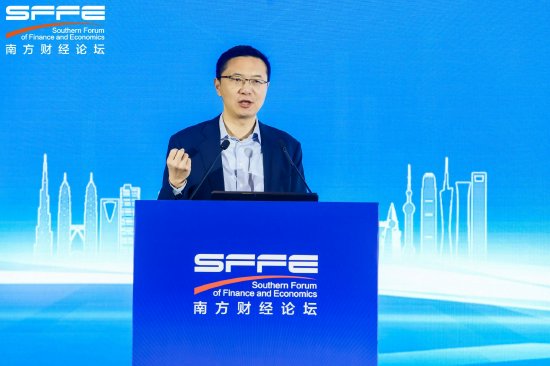
二级市场不应“太积极”,田轩:应降低科创企业信披频率,为长期创新释放空间
Xin Lang Cai Jing· 2026-01-15 07:18
Group 1 - The core task during the "14th Five-Year Plan" period focuses on vigorously developing the real economy and achieving high-level technological self-reliance and strength [3][20] - The capital market must undergo systematic reforms to better serve national strategies, particularly in the context of artificial intelligence as a key driving force [3][20] - There is an urgent need to construct a "less aggressive secondary market" that reduces short-term speculation and volatility, shifting towards a more stable state that emphasizes long-term value [3][20] Group 2 - To shape a "less aggressive secondary market," four specific paths are proposed: 1. Enhance the stability of control rights in listed companies through measures like the AB share system and staggered boards to protect founding teams from short-term capital interference [7][21] 2. Reasonably guide stock liquidity, as excessive liquidity may attract short-term arbitrage investors, potentially suppressing long-term innovation, with research indicating that high liquidity can lead to an approximately 11% decline in innovation output [7][24] 3. Cultivate long-term institutional investors who can provide patient capital and promote business focus, leading to significant improvements in innovation efficiency, as evidenced by over 400 case studies [11][27] 4. Optimize information disclosure and external supervision mechanisms to alleviate management's focus on short-term stock prices and quarterly performance, allowing for a more conducive environment for long-term strategic implementation [14][29] Group 3 - The goal of shaping a "less aggressive secondary market" is not to suppress market vitality but to guide the capital market from being transaction-driven to innovation-driven, thereby supporting the transformation and upgrading of the real economy and technological self-reliance [16][31]

清华田轩:用“包容创投”与“不太积极”的二级市场激发科技创新
2 1 Shi Ji Jing Ji Bao Dao· 2025-12-06 13:25
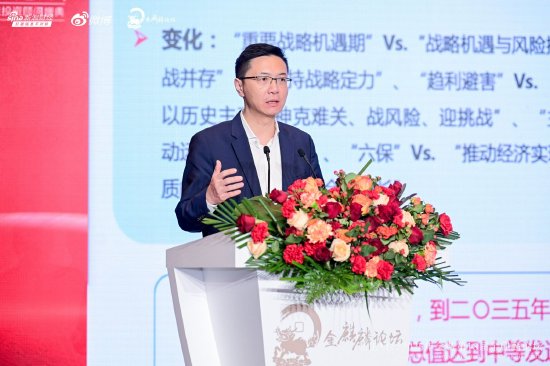
Core Viewpoint - The speech by Tian Xuan emphasizes the need for a more inclusive venture capital market and a "not overly aggressive" secondary market to support high-level technological self-reliance in China's capital market [2][4]. Group 1: Venture Capital Market - The primary focus of financial support for technological innovation is to create a truly inclusive venture capital market, which is essential for nurturing "patient capital" [2][3]. - Since 1998, the venture capital industry in China has developed, and the concept of "patient capital" has been repeatedly highlighted in key policy documents, underscoring its role in cultivating new productive forces [2][3]. - Understanding and accepting the characteristics of entrepreneurs is fundamental to building an inclusive ecosystem, which includes recognizing diverse traits among successful innovators [2][3]. Group 2: Innovation and Market Dynamics - Disruptive innovation requires entrepreneurs to possess unique and unconventional thinking, which is essential for breaking existing frameworks and generating innovative ideas [3]. - A healthy innovation ecosystem must be supported by long-term capital, as evidenced by research showing that venture capital firms with a higher tolerance for failure produce companies with superior innovation outcomes [3][4]. - The transition from startup to growth and public listing necessitates a shift in the capital market environment to support long-term, high-quality technological innovation [4]. Group 3: Secondary Market Mechanisms - A "not overly aggressive" secondary market can effectively encourage listed companies to focus on long-term technological innovation, despite the pressures of short-term performance [4][5]. - Strong anti-takeover provisions, such as dual-class share structures, can protect companies from short-term acquisition threats, allowing management to invest in long-term R&D projects [4][5]. - Maintaining moderate stock liquidity is crucial, as excessive liquidity can attract speculative capital that pressures companies to prioritize short-term profits over long-term innovation [5]. Group 4: Systemic Financial Ecosystem - The integration of an inclusive venture capital market and a supportive secondary market forms a cohesive "dual" ecosystem that addresses both the survival of innovative ideas and the amplification of innovation outcomes [5][6]. - The ultimate mission of comprehensive reform in China's capital market is to create a financial ecosystem that understands and supports long-term technological innovation, fostering great technology companies that can define the future [6].
清华大学五道口金融学院副院长田轩:支持科技创新,创投市场需要耐心资本,需包容像马斯克一样的疯子与天才
Sou Hu Cai Jing· 2025-12-05 04:53
Core Viewpoint - The South Finance Forum 2025 emphasizes the need for a more inclusive venture capital market and a less aggressive secondary market to support technological innovation and achieve high-level self-reliance in technology [1][3]. Group 1: Venture Capital Market - A more inclusive venture capital market is necessary, which requires acceptance of diverse entrepreneurial traits, including those that may be seen as negative, such as being eccentric or difficult to work with [3]. - The characteristics of "super entrepreneurs" are essential for innovation, as they often think outside the box and drive technological advancements [3]. - The current venture capital market in China is characterized by a shorter fund lifespan of approximately 5-7 years compared to the 10-12 years typical in the U.S., limiting the ability to invest in early-stage and high-risk projects [3][4]. Group 2: Limited Patience Capital - The composition of Limited Partners (LPs) in China has shifted from individual investors to state-owned entities, which tend to be more risk-averse due to concerns over state asset preservation [4]. - The lack of "patient capital" in China's venture capital landscape hinders the ability to support early-stage investments necessary for technological innovation [4]. Group 3: Secondary Market - A less aggressive secondary market is needed, characterized by strong anti-takeover provisions, limited stock liquidity, a focus on long-term institutional investors, fewer analysts tracking stocks, and less frequent information disclosure [4]. - The combination of a more inclusive venture capital market and a less aggressive secondary market is essential for leveraging technology and finance to support innovation and achieve technological self-reliance [4].
清华大学五道口金融学院副院长田轩:支持科技创新,创投市场需要耐心资本,需包容像马斯克一样的“疯子与天才”
Sou Hu Cai Jing· 2025-12-05 04:35
Core Viewpoint - The South Finance Forum 2025 emphasizes the need for a more inclusive venture capital market and a less aggressive secondary market to support technological innovation and achieve high-level self-reliance in technology [1][3]. Group 1: Venture Capital Market - A more inclusive venture capital market is necessary, which should be open to diverse entrepreneurs, including those with unconventional traits that drive innovation [3]. - The characteristics of "super unicorn" entrepreneurs often include traits that are typically seen as negative, such as being eccentric or difficult to work with, which are essential for groundbreaking innovation [3]. - The current structure of venture capital in China, with a typical fund lifespan of "5+2" years, is significantly shorter than the "10+2" model in the U.S., limiting the ability to invest in early-stage and high-risk projects [3][4]. Group 2: Limited Patience Capital - The composition of Limited Partners (LPs) in China has shifted from individual investors to state-owned entities, which tend to be more risk-averse due to concerns over state asset preservation [4][5]. - The lack of "patient capital" in China's venture capital market results in insufficient support for early-stage investments, which are crucial for fostering technological innovation [5]. Group 3: Secondary Market - A less aggressive secondary market is needed, characterized by strong anti-takeover provisions, limited stock liquidity, and a focus on long-term institutional investors [5]. - The secondary market should also have fewer analysts tracking stocks and less frequent information disclosure to create a stable investment environment [5].
资本市场如何推动科技创新?清华大学田轩:需要“更加包容”的创投市场与“不太积极”的二级市场
Xin Lang Cai Jing· 2025-12-05 04:19
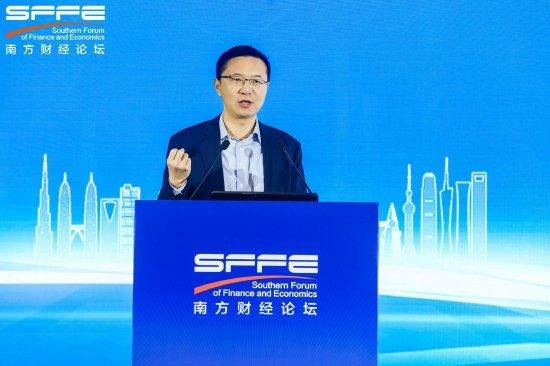
Core Viewpoint - The South Finance Forum 2025 emphasizes the need for a more inclusive venture capital market and a less aggressive secondary market to support technological innovation and achieve high-level self-reliance in technology [1][5]. Group 1: Venture Capital Market - A more inclusive venture capital market is necessary, which should be accommodating to the unique traits of "super unicorn" entrepreneurs, who often possess unconventional characteristics that drive innovation [3][7]. - The current venture capital market in China lacks "patient capital," with fund durations averaging 5-7 years compared to the 10-12 years typical in the U.S., limiting investments in early-stage projects [8][9]. - The composition of Limited Partners (LPs) in China has shifted from individual investors to state-owned entities, which tend to be risk-averse and less willing to invest in early-stage ventures due to concerns over state asset preservation [4][9]. Group 2: Secondary Market - The secondary market in China needs to be less aggressive, requiring strong anti-takeover provisions, reduced stock liquidity, and a focus on long-term institutional investors [4][9]. - There should be fewer analysts tracking stocks and less frequent information disclosure to create a more stable investment environment [9].