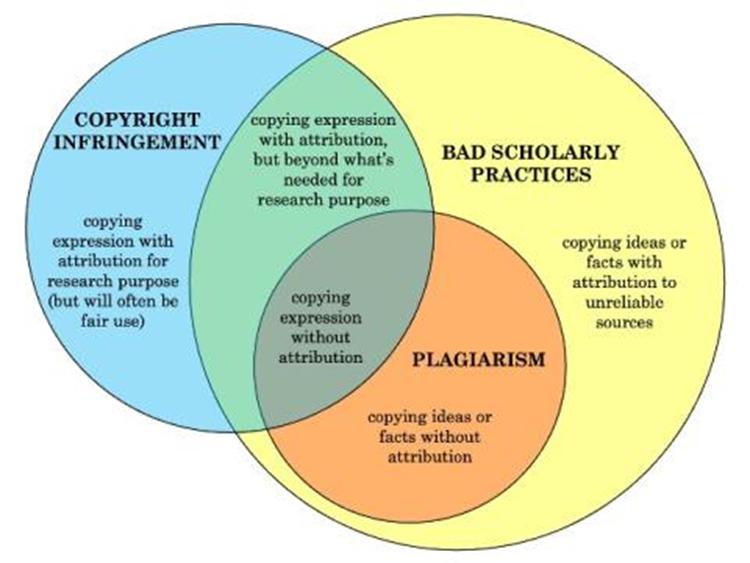
不良学术行为

Search documents
AI 辅助写作:“侵犯版权”还是“抄袭”?
3 6 Ke· 2025-11-25 08:17
Core Points - The article discusses the implications of generative AI in academic writing, particularly focusing on the issue of plagiarism and copyright infringement [1][2][3] - It emphasizes the distinction between plagiarism and copyright infringement, noting that while plagiarism is an ethical violation, copyright infringement is a legal issue [5][8][10] Group 1: Plagiarism and AI - Generative AI tools like ChatGPT are widely used in academic writing, with a significant percentage of students reporting their use for assignments [3] - The outputs from generative AI can create a false sense of originality, leading users to unknowingly present others' ideas as their own [4][16] - The lack of clear attribution in AI-generated content breaks traditional citation chains, complicating the identification of original sources [3][4] Group 2: Legal and Ethical Boundaries - Copyright laws generally prohibit the reproduction of creative expressions but do not protect ideas themselves, allowing for the sharing of thoughts without infringement [5][10] - The article highlights that generative AI outputs typically do not infringe copyright as they do not exhibit substantial similarity to the protected expressions used in training data [6][10] - There is a growing concern that the conflation of plagiarism and copyright infringement could lead to misunderstandings in legal contexts [7][10] Group 3: Distinction Between Concepts - Plagiarism is defined as the unauthorized use of another's language, ideas, or works without proper attribution, while copyright infringement involves the unauthorized use of protected expressions [9][10][13] - The article outlines that not all unethical academic behaviors constitute plagiarism, and some may not even infringe copyright [13][14] - The need for clear definitions and boundaries between copyright infringement, plagiarism, and poor academic practices is emphasized [8][11] Group 4: Attribution Rights - The article discusses the lack of universal attribution rights in U.S. law, suggesting that while attribution is important, it does not always constitute a legal violation [14] - Proposals for establishing new attribution rights are met with skepticism due to the complexity of copyright law and the potential for conflicting interpretations [14] - The importance of maintaining academic integrity and transparency in the use of AI-generated content is highlighted, advocating for clear guidelines in academic institutions [16]