东南亚投资机会

Search documents
FT中文网精选:东南亚的投资机会初探(下)
日经中文网· 2025-12-01 02:48
Group 1 - The article discusses investment opportunities in Southeast Asia, drawing parallels to the investment landscape in China two decades ago, suggesting that those who seize these opportunities may achieve long-term returns [4][5] - It highlights the Thai stock market as a significant and distinctive market within Southeast Asia, closely linked to Thailand's domestic economy, politics, and global capital flows [4] - The SET index is identified as the core index of the Thai stock market, comparable to China's Shanghai Composite Index or the S&P 500, indicating its importance in the region [5] Group 2 - The Thai stock market is characterized as a medium-sized emerging market with relatively good liquidity compared to other ASEAN countries, despite its small global market capitalization [5]

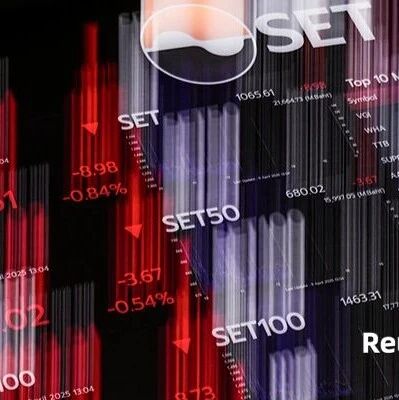
FT中文网精选:东南亚的投资机会初探(上)
日经中文网· 2025-11-27 02:53
Core Insights - The article discusses the evolving trade dynamics between China and the United States, highlighting a shift towards a "divergent restructuring" of bilateral trade relations, while emphasizing the growing trade volume between China and ASEAN countries, particularly Vietnam and Thailand [6][5]. Group 1: Trade Dynamics - The trade relationship between China and the U.S. is entering a phase of "competitive cooperation," with a noticeable trend of restructuring in trade patterns [6]. - The proportion of bilateral trade between China and the U.S. is decreasing, while trade with ASEAN countries has increased by 54% over the past five years [6]. - In 2024, China's trade surplus with Vietnam is projected to be approximately 450 billion RMB, while the surplus with Thailand is expected to be around 270 billion RMB [6]. Group 2: Economic Conditions in Thailand and Vietnam - Thailand's economic development remains stable, characterized by a steady growth trajectory [6]. - Historically, Thailand was recognized as a rising economic star in Southeast Asia, particularly during its economic boom from the 1980s to the 1990s, with an average growth rate of 6%-8% [7]. - The success of Thailand's export-oriented industrialization has been driven by the transfer of industries from Japan and the "Asian Tigers," focusing on textiles, apparel, automotive parts, and electronics assembly [7].