
严管厚爱

Search documents
贯彻落实五次全会精神·践悟丨着力锻造高素质专业化纪检监察铁军
Zhong Yang Ji Wei Guo Jia Jian Wei Wang Zhan· 2026-02-09 23:59
Core Viewpoint - The article emphasizes the importance of enhancing the political and professional capabilities of disciplinary inspection and supervision cadres to build a high-quality, professional team that can effectively combat corruption and uphold political integrity [6][10][16]. Group 1: Political Capability Enhancement - Political capability is prioritized as the foremost ability for disciplinary inspection cadres, focusing on improving political judgment, comprehension, and execution [6][9]. - Various educational methods, including political education and theoretical learning, are employed to instill political values and enhance political capabilities throughout the career development of cadres [6][8]. - The integration of political requirements into the entire process of supervision and law enforcement is emphasized, ensuring that political considerations are at the forefront of case investigations [7][9]. Group 2: Professional Skill Development - A comprehensive training system is established to enhance the professional skills of inspection and supervision cadres, focusing on practical training and real-case scenarios [10][11]. - Training is tailored to different levels of personnel, ensuring that new recruits, experienced staff, and leadership receive appropriate and targeted education [10][12]. - The implementation of practical training initiatives, such as case reviews and hands-on experiences, is crucial for developing the necessary skills to handle complex situations effectively [11][15]. Group 3: Recruitment and Evaluation - A unified approach to talent cultivation and evaluation is advocated, ensuring that all levels of disciplinary inspection personnel are developed and assessed consistently [16][18]. - The focus is on selecting and promoting individuals based on their practical performance and capabilities, fostering a culture that values merit and accountability [16][18]. - Mechanisms for recognizing and addressing issues faced by cadres are established, promoting a supportive environment that encourages proactive engagement and responsibility [17][18].

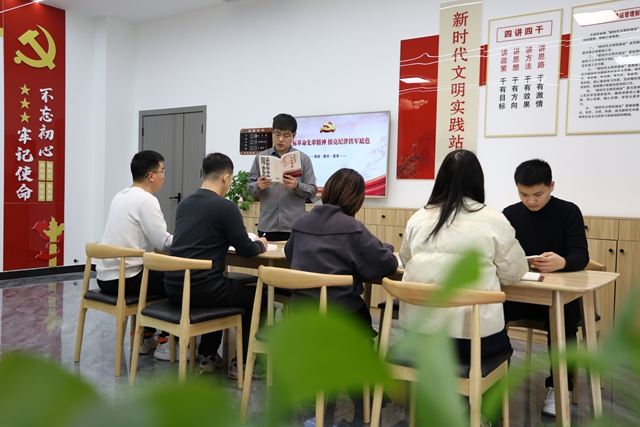
见贤思齐 | 以正气铸铁军
Zhong Yang Ji Wei Guo Jia Jian Wei Wang Zhan· 2026-01-04 23:58
Core Viewpoint - The article emphasizes the importance of integrity and responsibility in leadership roles, particularly in the context of personnel selection and team building within the disciplinary inspection and supervision system in China [1][2]. Group 1: Leadership Responsibility - The role of the "first responsible person" in personnel selection is crucial, as they must uphold principles and resist corrupt practices to build a loyal and capable inspection team [2][3]. - A case study of a former school party secretary illustrates how nepotism and corruption can damage both individual careers and team integrity, highlighting the need for principled leadership [3]. Group 2: Standards for Personnel Selection - The article advocates for a value-oriented approach to personnel selection, emphasizing the importance of both moral character and professional competence [4]. - The practice of integrating political loyalty, business capability, and a spirit of responsibility into the evaluation system is essential for fostering a competent workforce [4]. Group 3: Institutional Framework - The necessity of adhering to democratic centralism in the personnel selection process is stressed, as a lack of institutional constraints can lead to corruption and irregularities [5][6]. - Establishing a comprehensive mechanism for candidate selection that includes collective research, democratic recommendations, and public supervision is vital for transparency and accountability [6]. Group 4: Motivation and Support - The article highlights the dual approach of strict management and supportive measures to enhance the internal motivation of personnel [7]. - Creating an environment that encourages accountability while providing mentorship and support for younger staff can lead to a more dynamic and effective team [7]. Group 5: Learning from Best Practices - The practices of the Juxian County Discipline Inspection Commission serve as a valuable reference for other regions, emphasizing the need for principled, capable, and accountable leadership in the inspection and supervision field [8].
严管厚爱激励干部担当作为
Zhong Yang Ji Wei Guo Jia Jian Wei Wang Zhan· 2025-07-17 00:35
Group 1 - The core viewpoint emphasizes the integration of strict management and supervision with encouragement for responsibility among officials, promoting innovation and entrepreneurship while adhering to regulations [1][2] - The article highlights the importance of maintaining strict standards and measures for officials to ensure they operate within the correct framework for development [2][3] - It stresses the need for a comprehensive and systematic approach to discipline education, ensuring that it is integrated throughout the entire career cycle of officials [5] Group 2 - The article discusses the necessity of a dual approach in discipline education, combining regular and concentrated efforts to reinforce the learning outcomes of party discipline [5] - It points out the significance of addressing specific issues and individuals, particularly focusing on key positions and younger officials to guide them in aligning their actions with party regulations [5] - The need to protect and support those who are committed to their work while addressing false accusations is also emphasized, aiming to enhance the vitality and dynamism of the party [5]
严管不是枷锁而是风帆(思想纵横)
Ren Min Ri Bao· 2025-06-05 22:02
Group 1 - The core viewpoint emphasizes the importance of unifying strict management and supervision with encouraging responsibility among party members to foster innovation and entrepreneurship while adhering to discipline [1][4] - The article highlights that party discipline is essential for the safety and effectiveness of party members' work, showcasing historical examples of exemplary party members who achieved remarkable results while strictly adhering to party rules [1][3] - It discusses the concept of "strict management is not a one-size-fits-all approach," advocating for a balanced governance strategy that allows for flexibility and error correction while maintaining discipline [2][3] Group 2 - The implementation of mechanisms such as error correction and clarification systems is noted as a way to create a "safe zone" for party members, encouraging them to take initiative and responsibility in their roles [3] - The article stresses that the effectiveness of strict management should ultimately be reflected in solving pressing issues faced by the public and driving high-quality development [4] - It calls for a continuous commitment to the spirit of the Central Eight Regulations, balancing strict requirements with practical guidance to invigorate the entrepreneurial spirit within the party [4]