
靶向治疗

Search documents
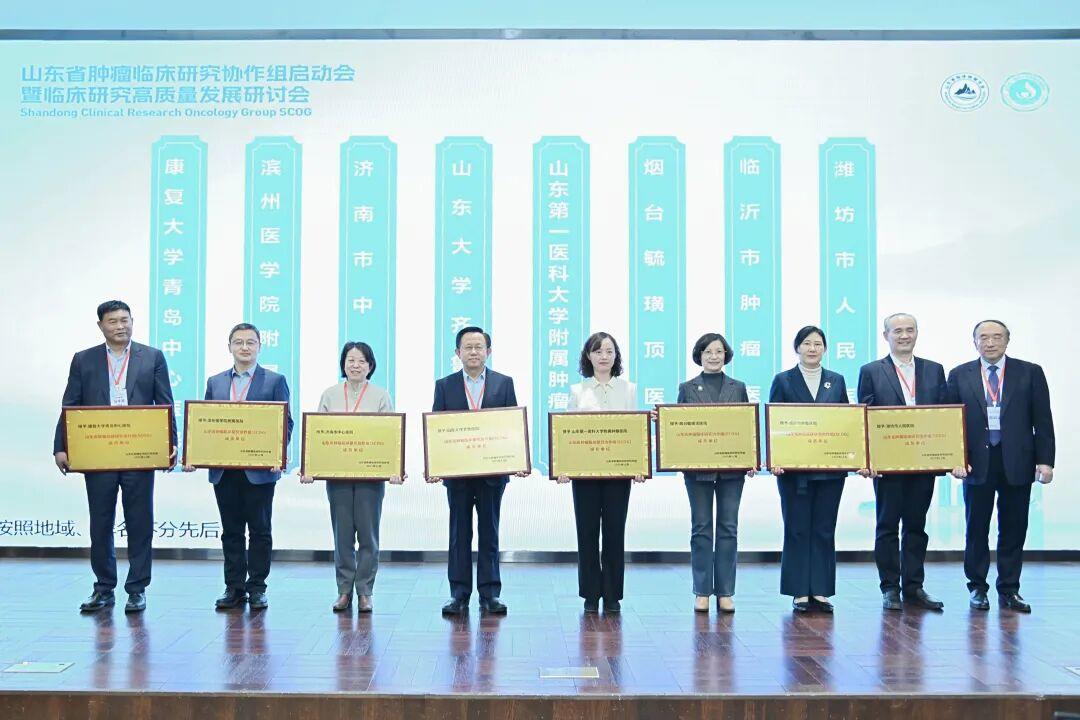
滨医附院成为山东省肿瘤临床研究协作组(SCOG)成员单位
Qi Lu Wan Bao· 2026-01-01 12:23
Core Viewpoint - The establishment of the Shandong Clinical Research Oncology Group (SCOG) aims to integrate high-quality medical resources and research capabilities across Shandong province to enhance cancer treatment and research, ultimately improving patient outcomes and facilitating medical innovation [3]. Group 1: Establishment and Objectives - The SCOG was launched to create a standardized, regulated, and quality-controlled clinical research platform to tackle cancer challenges and improve treatment levels [3]. - The inclusion of Binzhou Medical University Affiliated Hospital as a founding member signifies its formal integration into a high-level provincial cancer clinical research network [2]. Group 2: Clinical Research Achievements - Binzhou Medical University Affiliated Hospital has conducted nearly 500 clinical trials, with over 150 focused on various types of cancer, including lung, gastric, colorectal, and breast cancers, involving cutting-edge treatments such as immunotherapy and targeted therapy [3]. - These studies have provided critical data for drug development and have directly benefited thousands of patients by offering access to innovative treatments, effectively extending their lives and improving their quality of life [3]. Group 3: Future Plans and Responsibilities - The hospital plans to actively engage in provincial multi-center clinical research and conduct specialized studies on regionally prevalent cancers [4]. - It will adhere to the standardized treatment and quality control standards set by the SCOG, aiming to enhance the uniformity of high-quality medical resources [4]. - The hospital will focus on talent development and academic exchange to continuously improve research innovation capabilities, ultimately benefiting cancer patients and contributing to the health of the nation [4].

STTT:华西医院魏霞蔚团队等发现克服肺癌放疗抵抗的新靶点
生物世界· 2025-12-02 05:18
Core Viewpoint - Lung cancer is the most common cancer globally and a leading cause of cancer-related deaths. Radiation therapy (RT) is an effective method for controlling local tumors in lung cancer, but its long-term benefits are often compromised by radioresistance, leading to tumor recurrence. The development of targeted therapies has significantly improved the prognosis for lung cancer patients, particularly those with non-small cell lung cancer (NSCLC). However, inherent and acquired resistance to targeted drugs remains a challenge, and the complex interactions between targeted therapies and radiation therapy are a research focus. Therefore, understanding the molecular mechanisms of radioresistance in lung cancer and exploring the combination of targeted therapy with radiation therapy is urgent [1][4]. Group 1 - The study published by researchers from Sichuan University West China Hospital identifies the JMJD6/EHF signaling axis as a potential therapeutic target to overcome radioresistance in non-small cell lung cancer [2][3]. - The research aims to explore new mechanisms of tumor metastasis following radiation therapy in NSCLC patients and to enhance the durability of radiation therapy's efficacy [5]. - The study utilized human NSCLC tissue arrays, whole transcriptome sequencing, CUT&Tag sequencing, and single-cell RNA sequencing to identify gene expression changes induced by radiation therapy [5]. Group 2 - Results indicate that radiation therapy upregulates the expression of JMJD6 in NSCLC tissues, and high expression of JMJD6 is associated with reduced overall survival [5]. - This upregulation activates EHF and leads to the demethylation of H4R3me2s, subsequently transcribing pluripotency factor genes. The JMJD6/EHF signaling axis plays a critical role in the metastasis of NSCLC, potentially mediated through TGF-β/SMAD and AKT/ERK signaling pathways [5]. - These findings suggest that JMJD6 may serve as a potential therapeutic target against tumor metastasis following radiation therapy in non-small cell lung cancer [5].
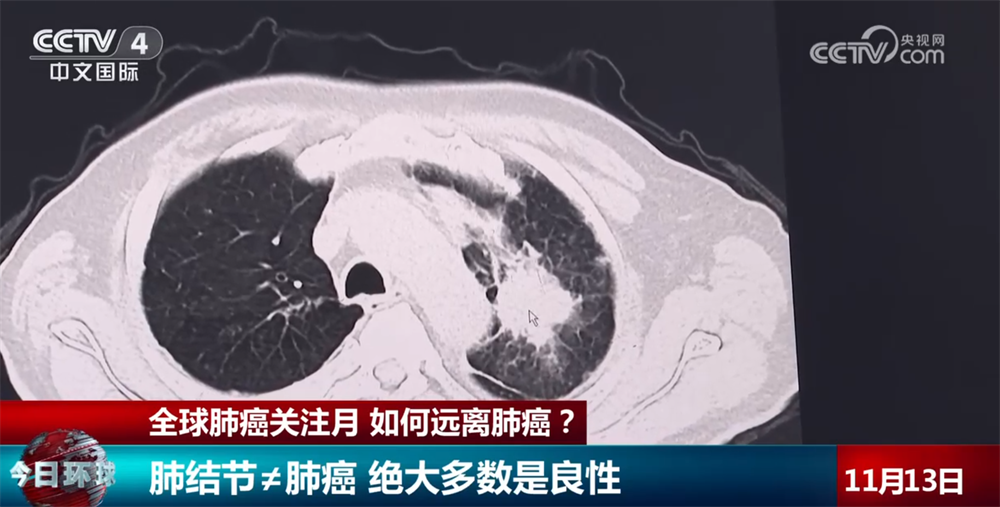
肺结节是否需要立刻手术?如何远离肺癌?这篇关于健康的提示请收藏↓
Yang Shi Wang· 2025-11-13 03:28
Core Viewpoint - Lung cancer is the most prevalent and deadly malignancy in China, with an increasing number of lung nodules being detected due to the widespread use of chest CT scans. It is crucial to understand that lung nodules do not equate to lung cancer, and most are benign. Regular monitoring is recommended rather than immediate surgical intervention [1][3]. Group 1: Lung Nodules and Screening - Lung nodules larger than 2 millimeters can be detected via CT scans, and the majority of these nodules are benign. Initial detection should not cause panic; instead, follow-up examinations are advised based on medical guidance [1][3]. - For ground-glass nodules with a diameter of 3 centimeters or less, over 95% are benign. Nodules smaller than 6 millimeters typically do not require intervention and can be monitored through annual health check-ups [3]. Group 2: High-Risk Groups and Recommendations - Individuals aged 50 and above, particularly those with a smoking index over 400 (smoking more than one pack a day for over 20 years), a family history of tumors, chronic lung diseases, or occupational exposure, are advised to undergo at least one chest CT for early lung cancer screening [5][6]. Group 3: Advances in Lung Cancer Treatment - Despite the high incidence of lung cancer, China has developed mature treatment methods. The advent of targeted therapies and immunotherapies has led to a more precise and personalized approach to lung cancer treatment [6]. - Current discussions around early lung cancer treatment focus on minimizing the costs associated with treatment while preserving patients' normal work and life capabilities. Even in late-stage lung cancer, some patients have achieved a chronic disease status, with life expectancy exceeding five years [8].
专家科普:规范化诊疗需从“早”到“晚”
Xin Jing Bao· 2025-11-11 07:56
Core Insights - Lung cancer is the most prevalent and deadly malignancy in China, with 1.0606 million new cases and 733,000 deaths reported in 2022 [1] - The five-year survival rate for lung cancer patients in China is gradually increasing, supported by national cancer prevention strategies [2] - Early diagnosis and treatment are crucial for improving survival rates, with multidisciplinary teams (MDT) playing a significant role in personalized treatment plans [3][4] Group 1: Lung Cancer Statistics and Trends - In 2022, China reported 1.0606 million new lung cancer cases and 733,000 deaths, highlighting the severity of the disease [1] - The "Healthy China 2030" initiative aims to increase the overall five-year cancer survival rate to 46.6% by 2030, with lung cancer survival rates also on the rise [2] Group 2: Early Detection and Management - The detection rate of lung nodules in China is approximately 20%, emphasizing the importance of public awareness regarding lung nodules as early signs of lung cancer [2] - Comprehensive management of lung nodules should include screening, follow-up, and intervention to enhance early detection and treatment [2] Group 3: Treatment Advances - Surgical intervention remains key for early-stage lung cancer, with minimally invasive techniques improving recovery times and treatment outcomes [3] - For late-stage lung cancer patients, treatment goals shift from cure to prolonging survival and enhancing quality of life, with new therapies like targeted and immunotherapy showing promise [3] Group 4: Multidisciplinary Approach - MDTs facilitate collaborative treatment planning by integrating expertise from various medical fields, leading to personalized and effective treatment strategies [4] - The MDT approach allows for a comprehensive evaluation of treatment options, optimizing decision-making and improving patient outcomes [4]
全球肺癌关注月丨专家科普:规范化诊疗需从“早”到“晚”
Bei Ke Cai Jing· 2025-11-11 07:52
Core Insights - Lung cancer is the most prevalent and deadly malignancy in China, with 1.0606 million new cases and 733,000 deaths reported in 2022 [1] - The five-year survival rate for lung cancer patients in China is gradually improving, with a target of 46.6% set for 2030 as part of national health strategies [2] - Early detection and management of lung nodules are crucial, as they can be early indicators of lung cancer, but not all detected nodules indicate malignancy [2] - Multidisciplinary teams (MDT) are essential for personalized treatment plans, improving patient outcomes through collaborative approaches [4][5] Group 1: Lung Cancer Statistics and Trends - In 2022, China reported 1.0606 million new lung cancer cases and 733,000 deaths, highlighting the disease's significant burden [1] - The five-year survival rate for lung cancer patients is on the rise, with comprehensive cancer prevention measures being implemented across the country [2] Group 2: Early Detection and Management - The detection rate of lung nodules in China is approximately 20%, necessitating public education to alleviate fears associated with these findings [2] - Proper management of lung nodules should encompass screening, follow-up, and intervention to enhance early detection and treatment possibilities [2] Group 3: Treatment Advances - Surgical intervention remains a key treatment for early-stage lung cancer, with minimally invasive techniques improving recovery times and outcomes [3] - For advanced lung cancer patients, treatment goals have shifted from cure to prolonging survival and enhancing quality of life, with new therapies like targeted and immunotherapy showing promise [3] Group 4: Multidisciplinary Approach - MDTs facilitate comprehensive treatment planning by integrating expertise from various medical fields, ensuring personalized and effective care for lung cancer patients [4][5] - The collaboration among specialists allows for optimized decision-making and improved management of the complex clinical presentations of lung cancer [5]
乳腺癌进入精准诊疗时代,专家提示女性警惕无痛性乳房肿块等信号
Bei Ke Cai Jing· 2025-10-13 11:33
Core Insights - Breast cancer treatment is transitioning from a focus on surgery and chemotherapy to a new era of precision medicine, improving overall patient quality of life [1][2] - Breast cancer is the most common malignant tumor among women in China, with approximately 420,000 new cases and 120,000 deaths annually [1] - Early detection remains crucial, with common warning signs including painless breast lumps, bloody nipple discharge, skin abnormalities, nipple retraction, and swollen lymph nodes [2] Group 1 - The treatment landscape for breast cancer is evolving towards personalized approaches, utilizing molecular subtyping to tailor therapies such as endocrine, targeted, and immunotherapy [1] - Innovative drugs have emerged, overcoming previous limitations where no treatment options were available, with advancements in single-target, dual-target, TKI, and ADC therapies [1] - The treatment goal has shifted from merely tumor removal to extending survival while ensuring patients' physical and mental well-being, encapsulated in the philosophy of "living longer and living better" [1] Group 2 - Patients with advanced breast cancer and their families face significant challenges, including treatment difficulties, financial burdens, social stigma, and psychological stress [2] - Women are encouraged to perform monthly self-examinations to detect abnormalities early, using methods such as visual inspection, palpation, and nipple discharge assessment [2]
成都再添一家肿瘤特色二级综合医院 国际前瞻肿瘤治疗落地成都鹏瑞利国际医疗健康中心
Sou Hu Cai Jing· 2025-05-09 12:35
Core Insights - Peng Ruili Group and Nanjing Ruizhong Biotechnology have signed a cooperation agreement to invest 150 million yuan in building a secondary general hospital focused on oncology in Chengdu [1][2] - The new hospital will cover over 25,000 square meters and have approximately 250 beds, aiming to provide comprehensive services for cancer prevention, diagnosis, treatment, and rehabilitation [1][2] - The project is expected to begin trial operations by the end of this year, integrating advanced cancer treatment technologies and expert resources from across the country [1][2] Investment and Development - The new hospital will focus on comprehensive cancer treatment and will explore innovative anti-cancer therapies in collaboration with Nanjing Ruizhong Biotechnology [2] - It will adopt a multidisciplinary team (MDT) approach to create personalized treatment plans for various malignant tumors, including thyroid cancer, lung cancer, liver cancer, pancreatic cancer, prostate cancer, and glioma [2] - The hospital will implement a full-cycle management model, utilizing high-precision imaging and AI-assisted diagnostic systems for early detection and treatment [2] Strategic Positioning - Chengdu Peng Ruili International Medical Health Center is the first "shared medical + high-speed rail hub" complex developed by Singapore's Peng Ruili Group in China, aiming to establish a "highland for innovative cancer treatment" [3] - The hospital will vertically integrate with other institutions within the center to enhance early cancer screening and treatment capabilities, leveraging advanced technologies such as PET-CT and AI imaging analysis [3] - The strategic location near Chengdu East Station will enable comprehensive coverage of the southwestern region, providing hope for more cancer patients through access to cutting-edge technologies [3]
科学防治肺癌 早期筛查至关重要
Ren Min Wang· 2025-05-06 03:02
Core Viewpoint - The article emphasizes the urgent need for early screening and prevention of lung cancer, highlighting the rising incidence and mortality rates in China, and the importance of public awareness and multi-disciplinary approaches in treatment [1][2][4]. Group 1: Lung Cancer Statistics - Lung cancer accounts for approximately 1.06 million new cases annually in China, representing 22% of all malignant tumors, with a death toll of 730,000, making it the leading cause of cancer-related deaths [2]. - The early cure rate for lung cancer is nearly 100%, but most patients are diagnosed at advanced stages, underscoring the critical need for early detection [2]. Group 2: High-Risk Groups and Screening - High-risk populations for lung cancer include smokers, individuals with occupational exposure, those with a family history of lung cancer, and patients with chronic obstructive pulmonary disease [2]. - It is recommended that individuals over 40 years old undergo annual low-dose chest CT screenings to facilitate early detection [2]. Group 3: Symptoms and Diagnosis - Clinical symptoms of lung cancer can vary widely, including cough, hemoptysis, chest pain, and headaches, with some patients showing no obvious symptoms [2]. - Diagnosis involves imaging tests such as chest CT and PET-CT, along with tissue biopsies and genetic testing to guide treatment decisions [2]. Group 4: Complications and Treatment Strategies - Meningeal metastasis is a severe complication of lung cancer, with a survival period of only 4-6 weeks; early warning signs include headaches and nausea [3]. - Treatment options include surgery, radiotherapy, chemotherapy, targeted therapy, and immunotherapy, tailored to the patient's condition and tumor characteristics [3][4]. Group 5: Multi-Disciplinary Approach - The integration of various specialties in lung cancer treatment has been shown to improve patient outcomes, with personalized treatment plans developed through multi-disciplinary discussions [4]. - Monitoring of liver and kidney functions, as well as blood counts, is essential during treatment to manage potential side effects [4]. Group 6: Prevention and Public Awareness - Preventive measures include smoking cessation, limiting alcohol intake, and maintaining a healthy lifestyle, along with regular screenings for high-risk groups [4]. - The article calls for collective efforts from society to enhance public awareness, improve early screening, and promote standardized treatment to increase survival rates and quality of life for lung cancer patients [4].