
中国人民抗日战争暨世界反法西斯战争胜利

Search documents
国防部——坚决阻击日本军国主义幽灵复活
Ren Min Ri Bao· 2025-12-15 22:17
Group 1 - The Chinese government, represented by the Ministry of National Defense, emphasizes the importance of remembering historical tragedies to prevent their recurrence, particularly in relation to Japanese militarism [1] - This year marks the 80th anniversary of the victory in the Chinese People's War of Resistance Against Japanese Aggression and the 88th anniversary of the Nanjing Massacre, where approximately 300,000 Chinese were killed by invading Japanese troops [1] - The Chinese government calls for Japan to reflect on its historical actions and cease any attempts to distort or glorify its invasion history [1] Group 2 - The spokesperson for the Ministry of National Defense clarifies that on December 6, the Liaoning aircraft carrier's task force communicated its flight training plans to Japan, which confirmed receipt of the information [2] - Despite receiving the training notifications, Japan's actions of sending aircraft into the training area are deemed provocative and a threat to flight safety, placing the responsibility on Japan [2] - The Chinese government accuses Japan of misleading its public and the international community regarding the nature of China's military training, suggesting that Japan may be attempting to divert attention from its own provocative actions [2]
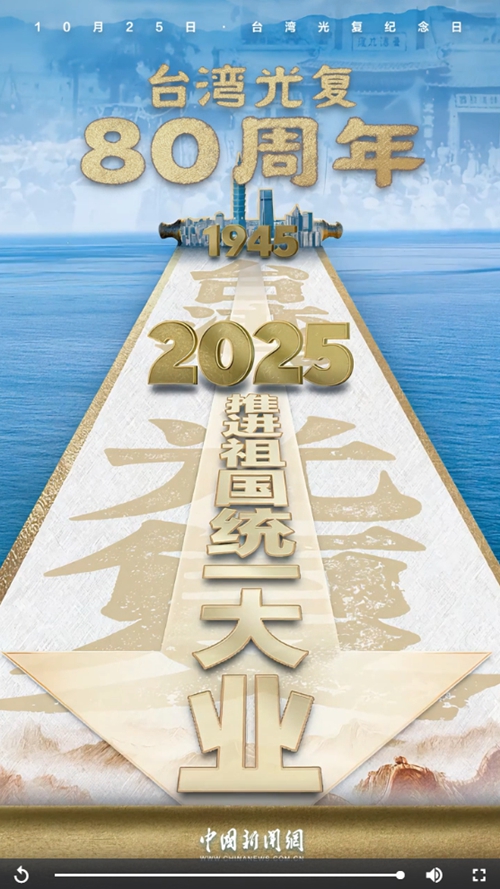
今天,纪念台湾光复!
Zhong Guo Xin Wen Wang· 2025-10-25 08:26
Core Viewpoint - The 18th meeting of the 14th National People's Congress Standing Committee has established October 25 as Taiwan Recovery Day, commemorating the victory of the Chinese people in the War of Resistance against Japan and the global anti-fascist war, which led to Taiwan's return to China [1] Group 1 - The decision highlights the historical significance of Taiwan's recovery as a crucial outcome of the Chinese people's victory in the anti-Japanese war [1] - It emphasizes the restoration of China's sovereignty over Taiwan as an important legal and historical fact [1] - The commemoration serves as a shared glory for both sides of the Taiwan Strait and a collective memory for all Chinese people [1]

习近平总书记在纪念大会上的重要讲话引发热烈反响
Yang Shi Xin Wen Ke Hu Duan· 2025-09-07 00:44
Group 1 - The speech by General Secretary Xi Jinping commemorates the 80th anniversary of the victory in the Chinese People's Anti-Japanese War and the World Anti-Fascist War, emphasizing the historical significance and the need to remember history, honor the martyrs, cherish peace, and create a better future [2][4][16] - The speech highlights the immense sacrifices made by the Chinese people during the Anti-Japanese War, marking it as the first complete victory against foreign invasion in modern history, which contributed significantly to the preservation of human civilization and world peace [4][8] - Various officials express that the speech has invigorated national pride and spirit, urging the population to carry forward the great spirit of resistance and to work towards the rejuvenation of the Chinese nation and the construction of a community with a shared future for mankind [6][19][22] Group 2 - The speech is seen as a call to action for all sectors, including education, culture, and national defense, to integrate the spirit of the Anti-Japanese War into their work and to foster a strong sense of patriotism among the youth [13][21][22] - Officials from different departments emphasize the importance of Xi Jinping's thoughts in guiding future policies and actions, particularly in maintaining national security, social stability, and promoting economic development [15][19][22] - The speech serves as a reminder of the role of the Communist Party in the victory of the Anti-Japanese War, reinforcing the need for unity and collective effort in achieving national goals [8][19]
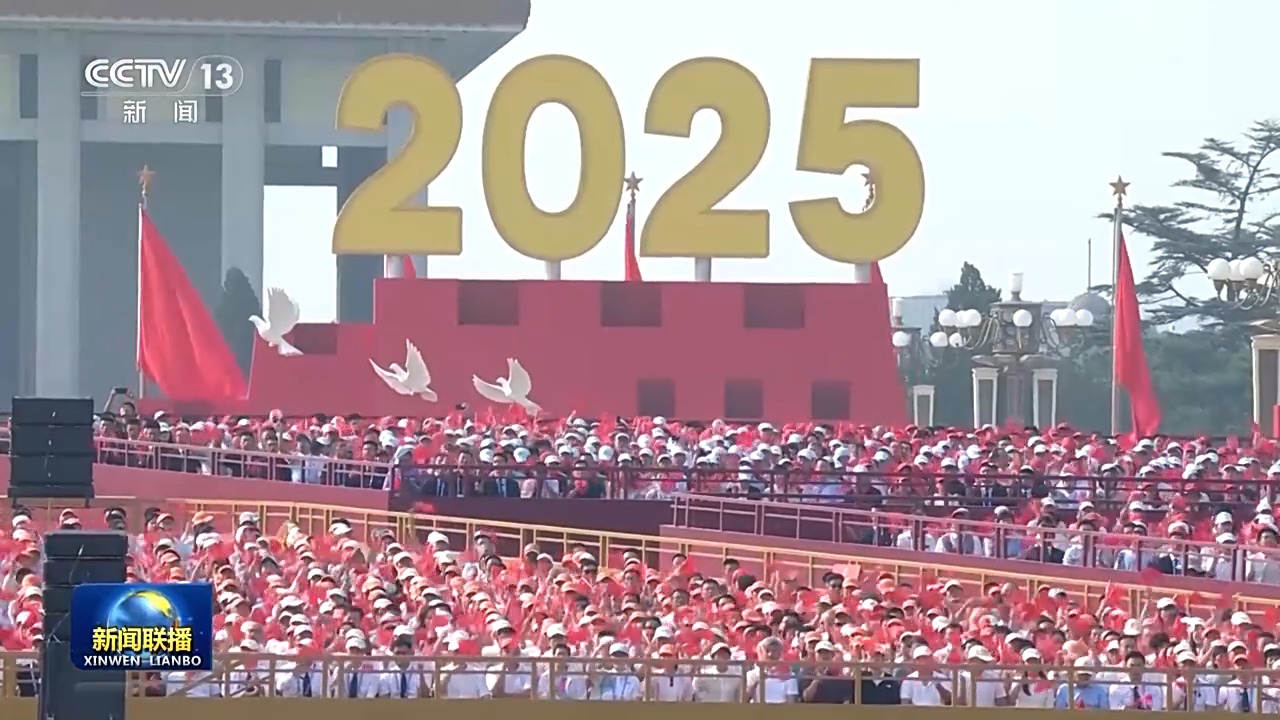
胜利的歌声 正义的回响
Ren Min Ri Bao· 2025-09-04 22:57
Core Viewpoint - The event commemorates the 80th anniversary of the victory in the Chinese People's Anti-Japanese War and the World Anti-Fascist War, highlighting the sacrifices made by the Chinese people and the importance of unity in overcoming adversity [1][12]. Group 1: Historical Context - The event featured a performance titled "Mountain River Remembered," which revisited the painful history of the 1931 September 18 Incident when Japan invaded Northeast China [2][5]. - The narrative emphasized the early call to arms by the Communist Party of China, which rallied the nation to resist Japanese aggression [4][7]. Group 2: Artistic Representation - Various performances depicted the sacrifices of heroes during the war, including the emotional portrayal of the Nanjing Massacre and the resilience of the Chinese people [6][11]. - The use of diverse artistic forms, such as dance and poetry, aimed to convey the emotional weight of the historical narrative and the spirit of resistance [6][8]. Group 3: National Unity and Legacy - The performances underscored the theme of national unity, showcasing how the Communist Party galvanized the entire nation to fight against foreign aggression [8][9]. - The event concluded with a message of hope and strength, reflecting on the achievements of modern China and the enduring legacy of those who fought for the nation's independence and dignity [15][16].