中国创新反哺全球

Search documents
中英经贸合作新范本:阿斯利康千亿投资引领跨国药企在华发展步伐
2 1 Shi Ji Jing Ji Bao Dao· 2026-01-31 10:26
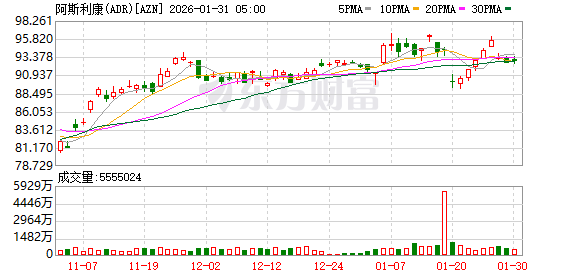
Core Viewpoint - AstraZeneca plans to invest over 100 billion RMB (approximately 15 billion USD) in China by 2030, marking its largest strategic investment since entering the market in 1993, aimed at expanding its pharmaceutical production and R&D footprint [2][4] Group 1: Investment Details - The investment will cover the entire value chain from drug discovery, clinical development to manufacturing, enhancing AstraZeneca's capabilities in cell therapy and antibody-drug conjugates [4][5] - The investment will significantly deepen AstraZeneca's R&D presence in China, linking over 500 clinical hospitals with its global strategic R&D centers in Beijing and Shanghai [4][5] - AstraZeneca's collaboration with CSPC Pharmaceutical Group could reach up to 18.5 billion USD (approximately 128.5 billion RMB), with an initial payment of 1.2 billion USD (approximately 8.4 billion RMB) [3][5] Group 2: Market Dynamics - China's pharmaceutical market is undergoing structural changes, with a record 76 innovative drugs approved by the National Medical Products Administration in 2025, indicating a trend towards diversified innovative therapies [3][6] - Approximately one-third of global licensing transactions are related to Chinese biopharmaceutical companies, with over 30% of clinical trials in cutting-edge fields like cell therapy and ADCs occurring in China [3][6] Group 3: Strategic Partnerships - AstraZeneca has formed partnerships with leading biotech companies in China, aiming to leverage local innovations and enhance global supply chains [5][6] - The company has engaged in 17 licensing collaborations with 15 Chinese partners since 2023, with contract values exceeding 10 billion USD in 2025 alone [5][6] Group 4: Innovation and Development - The investment aligns with China's "Healthy China 2030" initiative, focusing on improving disease prevention, early screening, and accessibility of innovative drugs [10][12] - AstraZeneca's R&D pipeline in China has grown significantly, with over 200 projects, and is expected to yield around 20 new drug approvals by 2030 [7][9] Group 5: Industry Impact - AstraZeneca's investment reflects the ongoing opening of the Chinese pharmaceutical market, supported by favorable policies and reforms that enhance the R&D environment [7][10] - The company has invested in 31 Chinese innovative enterprises through its medical industry fund, facilitating 17 global licensing collaborations worth over 13.7 billion USD [9][10]


日产在华加速转型:以“中国创新”重塑全球竞争力
Feng Huang Wang· 2025-04-27 08:21
Core Insights - Nissan is strategically transforming its operations in the Chinese market, focusing on new energy products and local innovation, with plans to increase its new energy vehicle offerings from 8 to 10 by summer 2027 [1][2] Group 1: Strategic Focus - Nissan's core strategy in China is summarized as "In China, for China, and to the world," leveraging China's advantages in new energy and smart technology to accelerate product iterations [2] - The company plans to invest 10 billion yuan in the next three years to expand its technology center and reduce the R&D cycle to 24 months, empowering local teams to lead vehicle development [2] Group 2: Product Development - The Frontier Pro PHEV, Nissan's first globally electric pickup designed and produced in China, aims to break the traditional utility image and target the high-end leisure market, with a torque of 800 Nm [3] - Over the next two years, Zhengzhou Nissan plans to launch 9 new vehicles, including 5 under the Nissan brand, covering various market segments [3] Group 3: Local Collaboration - Nissan's localization strategy extends to full industry chain cooperation, partnering with local tech firms like Momenta and Huawei for smart driving and cockpit technologies [3] - The company has also established a joint research center with Tsinghua University to focus on sustainable development in the automotive industry [3] Group 4: Global Market Strategy - Nissan aims to export two new models within a year, ensuring that vehicles meet global safety standards from the development stage [6] - The company emphasizes flexibility in market share goals, focusing on a diverse range of powertrains to meet varying consumer needs [6] Group 5: Long-term Vision - Nissan is addressing past strategic delays by restructuring its local R&D system and adopting a "China innovation feeding back to the world" approach, positioning itself as a key player in the global automotive transformation [5][6]