中国式科幻

Search documents
从银河奖看“中国式科幻”创作生态的形成
Xin Lang Cai Jing· 2025-11-25 09:53
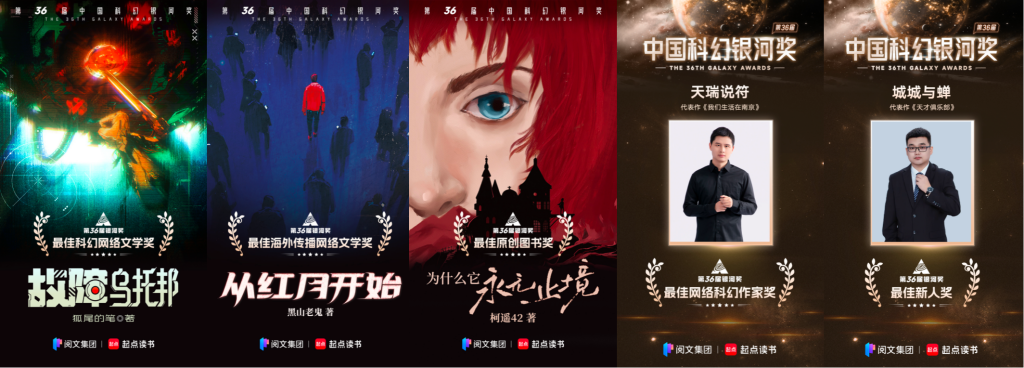
Core Insights - The Chinese Sci-Fi Galaxy Awards recognized outstanding contributions in the field of science fiction literature, highlighting the emergence of young authors and innovative narratives [1][3][6] Award Winners - Fox Tail's Pen won the Best Sci-Fi Online Literature Award for "Utopian Malfunction," showcasing a complex narrative that intertwines consciousness uploading, AI rebellion, and human redemption [1][3] - Ke Yao 42 received the Best Original Book Award for "Why It Never Ends," which explores themes of individual choice amidst divine blessing and harsh realities, marking a significant contribution to female-centric sci-fi narratives [4][6] - Cheng Cheng and Cicada won the Best Newcomer Award, indicating a growing recognition of new talent in the genre [1][3] - Tian Rui Shuo Fu, awarded Best Online Sci-Fi Writer, has produced diverse works centered on "near-future + hard technology + regional characteristics," establishing a unique narrative style [4][6] - Heishan Laogui's "Starting from the Red Moon" won the Best Overseas Dissemination Award, reflecting the global potential of Chinese sci-fi narratives [5][6] Industry Trends - The Galaxy Awards have evolved to include various categories, such as Best Original Book and Best Newcomer, reflecting the diversification of the sci-fi literature landscape in China [6][10] - The integration of cyberpunk themes into Chinese sci-fi literature has led to a redefinition of traditional narratives, incorporating local aesthetics and cultural symbols [7][9] - Suspense and mystery elements are increasingly blended with sci-fi, creating a hybrid genre that enhances narrative complexity and reader engagement [8][9] - The rise of "transcendent Chinese psychological realism" in sci-fi literature is facilitating the global dissemination of Chinese cultural elements [9][10] Collaborative Initiatives - The launch of the "Galaxy Plan" aims to support young sci-fi creators and enhance the professional and diverse nature of the Galaxy Awards, promoting a healthy development of the sci-fi literature ecosystem [10][12] - The collaboration between Qidian Reading and "Science Fiction World" magazine is set to streamline the submission process and enhance the circulation of quality sci-fi works [10][12] Future Outlook - The Chinese sci-fi literature ecosystem is transitioning from individual works to a comprehensive IP universe, indicating a shift towards high-quality development and global engagement [12]

刘慈欣:科幻最大挑战,是科技已来到我们身边
Zhong Guo Xin Wen Wang· 2025-09-29 13:30
Core Insights - The biggest challenge facing science fiction today is that technology has become an integral part of daily life, diminishing the sense of wonder that once surrounded it [5][15] - Despite efforts to innovate within the genre, science fiction literature is experiencing a decline, and the author believes it is fulfilling its historical mission [5][14] Group 1: Challenges and Responses - Science fiction authors have attempted to incorporate modern literary techniques to diversify the genre, but these efforts have not significantly reversed its decline [5] - The emergence of new cultural expressions is anticipated as technology continues to evolve, potentially leading to new forms of storytelling [5] Group 2: Impact of Digital Platforms - Online literature platforms have a large readership and strong interactivity, which can lead to the creation of more popular works [7] - However, the rapid production of content on these platforms may compromise quality, as authors face pressure to produce quickly [7] Group 3: Cultural Elements in Science Fiction - The integration of elements from traditional Chinese literature, such as "Shan Hai Jing," into science fiction has not yet made a significant impact on the genre's trends [8] - The concept of "Chinese-style science fiction" is often discussed, but the genre is diverse and cannot be easily categorized [10] Group 4: Audience and Future Outlook - A significant advantage for Chinese science fiction is its large youth readership, which fosters curiosity about the universe [11] - The genre's evolution is linked to China's modernization, allowing it to convey a vision of the future to international audiences [12] Group 5: Historical Context and Future Prospects - While there is hope for a revival of a "golden age" of science fiction, the current environment differs greatly from that of the past [14] - The sense of wonder associated with technology, which was crucial for the genre's development, has diminished as technology has become commonplace [15] - To advance science fiction, there is a need to develop modern media such as film and television alongside literary efforts [16]