
中国离岸金融指数

Search documents
《报告》:中国离岸金融从“规模扩张”迈向“结构优化”
Zhong Guo Jing Ying Bao· 2025-12-22 11:41
Core Insights - The "China Offshore Financial Index Report (2024-2025)" indicates a slight increase of 0.31% in the offshore financial index for China, reaching 106.16 points, marking a new phase of stabilization and recovery after experiencing "double V-shaped" fluctuations [1] - The report highlights a significant structural transformation in China's offshore finance, characterized by a "four increases and one decrease" pattern, including a 3.04% growth in offshore bond issuance, a 1.28% rise in offshore trade settlement volume, and a 14% year-on-year increase in cross-border RMB transactions, surpassing 35 trillion yuan [1] - The comprehensive tax rate in free trade pilot zones has decreased to 8.63%, while the proportion of traditional offshore lending and deposit business is gradually shrinking, indicating a shift from extensive growth to qualitative development in offshore finance [1] Recommendations - The report suggests the need for continuous promotion of synergy between onshore and offshore markets, leveraging reform and innovation to address development challenges and enhance China's voice and influence in the international financial system [2]
中国离岸金融指数企稳回升,去年离岸跨境人民币收付同比增14%
Di Yi Cai Jing· 2025-12-21 13:07
Core Insights - The report indicates a shift in China's offshore finance from scale expansion to structural optimization, with the offshore financial index rising to 106.50 points in 2024, a 0.31% increase from 2023 [1][3] Group 1: Offshore Financial Index Overview - The offshore financial index serves as a comprehensive measure of China's offshore financial development, reflecting the depth of financial openness and international competitiveness [1] - The index's slight recovery amidst a complex global financial environment demonstrates the resilience and stability of China's offshore financial system [1] Group 2: Structural Changes in Offshore Finance - The 2024 offshore finance landscape shows a "four increases and one decrease" pattern: offshore bond issuance grew by 3.04%, offshore trade settlement increased by 1.28%, and cross-border RMB transactions exceeded 35 trillion yuan, up approximately 14% [3] - Traditional offshore lending and deposit business has seen a decline in its share of the overall business structure, indicating a transition towards a multi-functional and comprehensive financial service system [3] Group 3: Policy and Institutional Developments - The continuous optimization of the free trade zone's tax system and cross-border financial regulations provides a stable and predictable environment for offshore financial development, supporting the index's recovery [4] - The report emphasizes that the core driver of the index's stability is the ongoing institutional opening and structural adjustments in offshore finance [5] Group 4: Future Development Directions - The report outlines three key directions for future development: deepening institutional openness, promoting Shanghai-Hong Kong collaborative development, and expanding the full-chain functions of offshore RMB in pricing, settlement, and investment [5] - The establishment of the Hainan Free Trade Port is highlighted as a significant institutional milestone that will provide new experimental space for offshore financial innovation [5] Group 5: Role in Global Financial Governance - The role of offshore finance in supporting high-level openness and participating in global financial governance is expected to become more prominent [6] - The report suggests that continued collaboration between onshore and offshore markets is essential for enhancing China's influence in the international financial system [6]

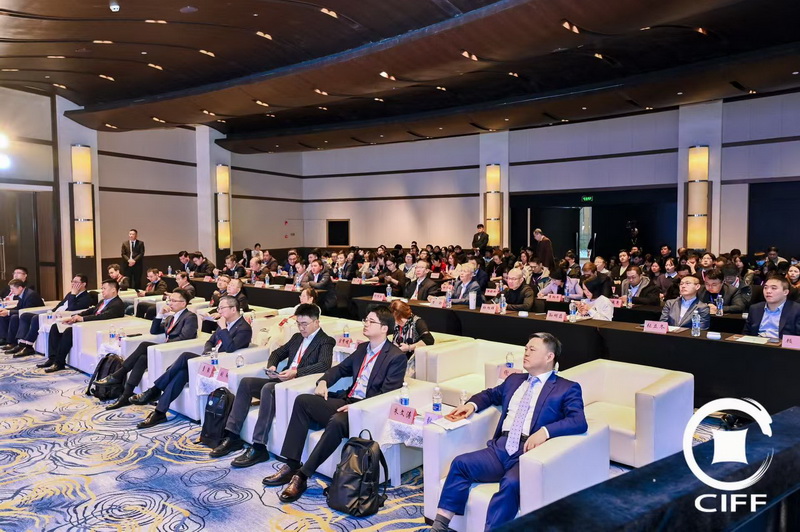
中国离岸金融指数去年企稳回升至106.5点
Xin Lang Cai Jing· 2025-12-21 12:29
Core Insights - The 2024 China Offshore Financial Index shows a slight increase of 0.31% from 2023, indicating a stabilization and recovery after "double V-shaped" fluctuations [1] - Offshore bond issuance grew by 3.04%, and offshore trade settlement volume increased by 1.28%, reflecting a shift from extensive growth to structural optimization in China's offshore finance [1] Group 1 - The offshore financial sector is considered a "hardcore engine" for the construction of international financial centers, with Shanghai's cross-border RMB payment amounting to 47% of the national total [2] - The offshore RMB bond issuance exceeded 689.9 billion yuan, and the global foreign exchange trading volume of RMB rose to 8.5%, indicating a transition of RMB from a settlement function to trading, reserve, and pricing functions [2] - The comprehensive tax rate in the Hainan Free Trade Zone has decreased to 8.63%, facilitating cross-border capital flow and laying the groundwork for financial innovation post-closure [2] Group 2 - The closure of Hainan Island is seen as a landmark project for expanding high-level opening-up, with the offshore financial index acting as a "financial adapter" for this initiative [2] - Recommendations include using Hainan's closure as an opportunity to pilot mutual recognition of "domestic offshore + overseas offshore" rules, breaking down institutional barriers between onshore and offshore markets [3] - A macro-prudential and micro-regulatory risk prevention system is suggested to ensure the safety of offshore financial innovations [3]
景建国展望“十五五”:将以指数为“锚”,构建与我国经济地位相称的现代化离岸金融生态体系
Xin Lang Cai Jing· 2025-12-20 02:09
Core Viewpoint - The 22nd China International Financial Forum highlighted the development of a smart financial ecosystem in the digital economy era, with a focus on the release of the China Offshore Financial Index Report (2024-2025) [1][7]. Group 1: Offshore Financial Index Insights - The China Offshore Financial Index is described as a comprehensive measure of the depth of financial openness and global competitiveness, serving as a "barometer" and "compass" for national strategy and the Hainan free trade zone [3][9]. - The index increased to 106.50 points in 2024, reflecting a 0.31% growth from 2023, indicating the resilience of China's offshore financial market and providing a solid foundation for building a financial powerhouse [3][5][11]. - The index reveals structural weaknesses such as the decline of traditional businesses and insufficient integration of onshore and offshore finance, offering quantitative data to address these issues with targeted policy measures [3][9]. Group 2: Global Financial Center Development - Shanghai's cross-border RMB payment volume accounts for 47% of the national total, indicating the emergence of a dual-engine model alongside Hong Kong, which supports Shanghai's goal of becoming a global RMB asset allocation center [4][10]. - The gap between the integration of onshore and offshore finance and the IMF's 30% standard highlights a critical area for Shanghai to enhance its global resource allocation capabilities [4][10]. Group 3: RMB Internationalization - The issuance of offshore RMB bonds surpassed 689.9 billion yuan, and the global foreign exchange trading volume of RMB increased to 8.5%, illustrating a positive cycle of "onshore pricing, offshore trading, and global allocation" [4][10]. - These developments are pushing RMB from a settlement function towards roles in trading, reserve, and pricing [4][10]. Group 4: Hainan Free Trade Zone - The full closure of Hainan Island is a significant project for expanding high-level openness, with the offshore financial index monitoring key indicators such as fund flow efficiency and foreign investment participation [4][10]. - The index serves as both a "health check" for the effectiveness of financial openness post-Hainan's closure and a "navigation tool" for making Hainan a global hub for offshore financial innovation [4][10]. Group 5: Future Outlook - The index's increase to 106.50 points marks the beginning of a new phase of stabilization and recovery, shifting the focus from scale expansion to structural optimization [5][11]. - A "106.5+" action plan is proposed to leverage the current index as a starting point, focusing on three collaborative paths to enhance offshore finance qualitatively and quantitatively [6][11]. - The vision for the 14th Five-Year Plan includes a dual-driven approach of "central authorization + local innovation" and "business-first + legislative support" to address structural shortcomings and promote Hainan as an innovative financial testing ground [6][11].
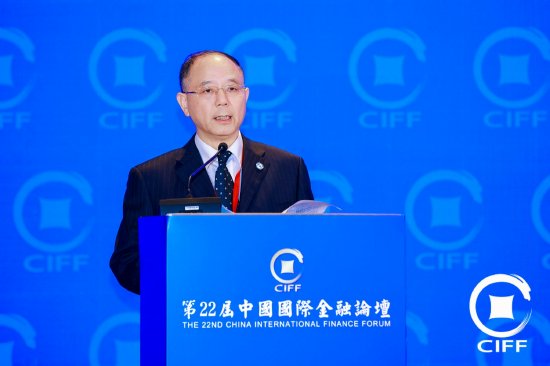
报告:中国离岸金融指数微升0.31%,结构优化特征显现
Xin Lang Cai Jing· 2025-12-19 09:40
Core Insights - The "China Offshore Financial Index Report (2024-2025)" indicates a slight increase of 0.31% in the index compared to 2023, reflecting a stabilization and recovery phase after previous fluctuations [1][3] - The report highlights a structural feature of "four increases and one decrease" in the offshore financial landscape, with notable growth in offshore bond issuance and cross-border RMB transactions [1][3] Group 1: Key Metrics - Offshore bond issuance increased by 3.04% year-on-year [1][3] - Offshore trade settlement volume rose by 1.28% [1][3] - Cross-border RMB payment volume exceeded 35 trillion yuan, marking a 14% year-on-year growth [1][3] - The comprehensive tax rate in free trade pilot zones decreased to 8.63% [1][3] - The proportion of traditional offshore deposit and loan business has declined [1][3] Group 2: Future Development Directions - The report outlines three main areas for high-quality development in China's offshore finance: deepening institutional opening, enhancing financial infrastructure and risk prevention, and strengthening cooperation between Shanghai and Hong Kong [2][4] - The internationalization of the RMB will be a key focus, expanding its functions in pricing, settlement, and investment financing, along with accelerating the global node layout of the Cross-Border Payment System (CIPS) [2][4] - Multiple factors are expected to influence the development of offshore finance during the 14th Five-Year Plan period, including geopolitical changes and the evolving role of the RMB as an international and reserve currency [2][4]