
中性原子量子计算

Search documents
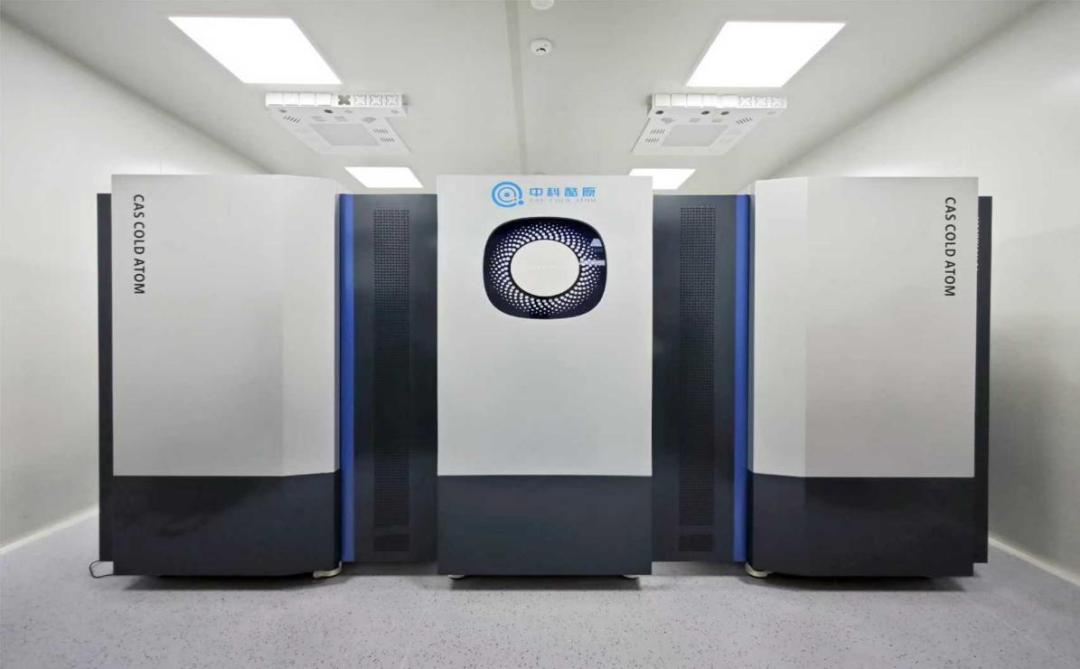
中国移动链长基金战略加持,国内首台原子量子计算系统研发团队完成新一轮战略融资丨早起看早期
36氪· 2026-01-17 01:12
Core Viewpoint - The article highlights the significant advancements and commercialization of quantum computing technology by Zhongke Kuyuan Technology (Wuhan) Co., Ltd., particularly in atomic quantum computing, supported by a recent strategic financing round of nearly 100 million yuan [5][8]. Group 1: Company Overview - Zhongke Kuyuan is the first company in China to possess both research and industrialization capabilities in atomic quantum computing and quantum precision measurement [5]. - The core team originates from the Chinese Academy of Sciences and has over 20 years of experience in neutral atom quantum technology research [5]. Group 2: Market Potential - The global quantum technology market is projected to reach $8 billion in 2024, with China accounting for nearly 25% of this market [7]. - By 2035, the global market size is expected to exceed $900 billion, with China's industry scale potentially reaching $260 billion, representing nearly 30% of the global market share [7]. Group 3: Technological Advancements - Neutral atom quantum computing is recognized for its scalability, engineering feasibility, and system integration advantages, making it one of the fastest-growing systems in quantum computing development [7]. - Zhongke Kuyuan launched the "Hanyuan 1" atomic quantum computing system in 2024, which has been recognized as a landmark product in the quantum technology field [7]. Group 4: Future Developments - The company plans to release the next-generation atomic quantum computing system, "Hanyuan 2," which will enhance overall architecture, stability, and performance [8]. - A cloud platform for atomic quantum computing has been developed in collaboration with Wuhan Quantum Institute, allowing users to access "Hanyuan 1" for computational tasks [8]. Group 5: Funding Utilization - The recent funding will primarily accelerate hardware development, facilitate rapid iteration of new products and technologies, and enhance talent acquisition and application scenario exploration [8].


中国移动链长基金战略加持,国内首台原子量子计算系统研发团队完成新一轮战略融资
3 6 Ke· 2026-01-13 02:22
Core Insights - Zhongke Kuyuan Technology (Wuhan) Co., Ltd. has completed a nearly 100 million yuan strategic financing round, exclusively invested by China Mobile Chain Fund, aimed at accelerating quantum computing hardware R&D, new product and technology iterations, and application scenario exploration [1][4] - The company is the first in China to possess both atomic quantum computing and quantum precision measurement R&D and industrialization capabilities, and is recognized as a "chain master" enterprise in Hubei's quantum technology industry [1][4] - The global quantum technology market is projected to reach $8 billion in 2024, with China accounting for nearly one-fourth, and is expected to exceed $900 billion by 2035, with China's industry scale potentially reaching $260 billion, representing nearly 30% of the global market [3] Company Developments - Zhongke Kuyuan has launched the "Hanyuan 1" atomic quantum computing system, marking a significant breakthrough in China's quantum technology field, and is recognized as a landmark product by the Ministry of Industry and Information Technology [3][4] - The company plans to introduce the next-generation atomic quantum computing system "Hanyuan 2," which will enhance overall architecture, stability, and performance [4] - The company has developed a cloud platform for atomic quantum computing, allowing users to access "Hanyuan 1" and run tasks on the actual machine, with results directly fed back to users [4] Technology Advantages - The core advantage of atomic quantum computing lies in its scalability of qubit numbers, allowing for modular design, assembly, and integration [3] - This technology does not require contact cooling, utilizing laser cooling of atomic qubits, which results in high cooling efficiency and low power consumption, enabling operation in room temperature environments [3]

我国科学家开创中性原子量子计算新架构,单原子寻址保真度达99.66%
Huan Qiu Wang Zi Xun· 2025-11-16 04:19
Core Insights - The research team from the Chinese Academy of Sciences has made a breakthrough in neutral atom quantum computing by proposing and experimentally validating a new architecture based on fiber arrays, addressing the core challenges of high parallelism, high speed, and high stability in addressing control [1][2] Group 1: Quantum Computing Advancements - Neutral atom quantum computing is gaining traction globally due to its strong scalability, high fidelity in gate operations, long coherence times, and reconfigurable connections, making it a significant direction for quantum computing hardware development [1] - Addressing capability is a key technology for the programmability of quantum computing, essential for the practical implementation of quantum algorithms and the foundation for universal, fault-tolerant quantum computing [1] Group 2: Innovative Architecture - The core innovation involves configuring independent control channels for each qubit, using a shared optical path to focus light in a vacuum, which aligns control beams with atomic traps, eliminating issues caused by mechanical vibrations or thermal drift [2] - Experimental data shows that the team achieved precise addressing control of 10 single atoms through 10 channels in an array of 64 fibers, with an average fidelity of 99.66% for single qubit operations and 99.61% for simultaneous operations on four randomly selected qubits [2] Group 3: Future Potential - The new architecture has flexible expansion potential, allowing for direct channel replication for scaling or integration with 3D optical waveguide arrays and photonic chip technology for large-scale controllable single-atom array quantum computing [2]
我国科研团队提出原子量子计算新架构
Ke Ji Ri Bao· 2025-11-11 07:41
Core Insights - The research team from the Chinese Academy of Sciences has made significant advancements in neutral atom quantum computing by proposing and experimentally validating a new architecture based on fiber arrays, addressing the challenges of achieving high parallelism, high speed, and high stability in addressing control [1][2] Group 1: Research Achievements - The team successfully stabilized 10 single atoms in optical traps formed by fiber arrays, demonstrating high-fidelity "arbitrary single-qubit gate" parallel control in a two-dimensional atomic array for the first time [1] - The observation of the Rydberg blockade effect between two atoms is a key physical foundation for achieving high-fidelity two-qubit gates [1] Group 2: Technological Innovations - The proposed architecture allocates independent fiber control channels for each qubit, enabling synchronous, high-speed, and precise control of any atom, marking a breakthrough in atomic addressing technology [2] - The architecture resolves the contradiction between high precision and high efficiency in single-atom control, providing critical technical support for the next generation of scalable applications in neutral atom quantum computing [2]
【科技日报】我国科研团队提出原子量子计算新架构
Ke Ji Ri Bao· 2025-11-11 01:36
Core Insights - The research team from the Chinese Academy of Sciences has made significant advancements in neutral atom quantum computing by proposing and experimentally validating a new architecture based on fiber arrays, addressing the challenges of achieving high parallelism, speed, and stability in atomic control [1][2]. Group 1: Research Achievements - The team successfully trapped 10 single atoms in a light trap formed by a fiber array, demonstrating high-fidelity "arbitrary single-qubit gate" parallel control in a two-dimensional atomic array for the first time [1]. - The observation of the Rydberg blockade effect between two atoms is a key physical foundation for achieving high-fidelity two-qubit gates [1]. Group 2: Technological Innovations - The proposed architecture allocates independent fiber control channels for each qubit, enabling synchronous, high-speed, and precise control of any atom, thus overcoming previous limitations in addressing technology [2]. - This innovation is crucial for advancing neutral atom quantum computing towards the next generation of scalable applications, providing essential technical support for practical quantum computing [2].
我科研团队提出原子量子计算新架构
Ke Ji Ri Bao· 2025-11-10 23:31
Core Insights - The research team from the Chinese Academy of Sciences has made significant advancements in neutral atom quantum computing by proposing and experimentally validating a new architecture based on fiber arrays, addressing the challenges of achieving high parallelism, high speed, and high stability in addressing control [1][2] Group 1: Research Achievements - The team successfully trapped 10 single atoms in optical traps formed by fiber arrays, demonstrating high-fidelity "arbitrary single-qubit gate" parallel control in a two-dimensional atomic array for the first time [1] - The observation of the Rydberg blockade effect between two atoms is a key physical foundation for achieving high-fidelity two-qubit gates [1] Group 2: Technological Innovations - The proposed architecture allocates independent fiber control channels for each qubit, enabling synchronous, high-speed, and precise control of any atom, marking a breakthrough in atomic addressing technology [2] - The architecture resolves the contradiction between high precision and high efficiency in single-atom control, providing critical technical support for the next generation of scalable applications in neutral atom quantum computing [2] Group 3: Industry Context - Neutral single-atom arrays are considered one of the most promising platforms for large-scale, fault-tolerant quantum computing due to their scalability, high-fidelity gate operations, long coherence times, and reconfigurable connectivity [1] - The efficiency and precision of single-atom control directly influence the practical advancement of quantum computing in the NISQ (Noisy Intermediate-Scale Quantum) era [2]