中枢耐受

Search documents
我们的免疫系统,是如何防止攻击自身的?
3 6 Ke· 2025-10-11 00:46
Core Insights - The article discusses the role of regulatory T cells in the immune system, highlighting their importance in preventing autoimmune diseases and maintaining immune tolerance [1][5][14] Group 1: Immune System Functionality - The immune system distinguishes between self and non-self cells, with regulatory T cells acting as mediators to suppress overactive immune responses [1][5] - T cells possess unique receptors that allow for the identification of a vast array of pathogens, theoretically generating over 10^15 different T cell receptors [5][7] Group 2: Research Breakthroughs - The Nobel Prize winners identified regulatory T cells as crucial for peripheral immune tolerance, addressing gaps in previous research on immune regulation [7][12] - The discovery of the Foxp3 gene as essential for the development and function of regulatory T cells has significant implications for understanding autoimmune diseases [12][14] Group 3: Medical Implications - Potential new medical treatments based on regulatory T cell mechanisms are currently in clinical trials, targeting cancer therapies and autoimmune disease treatments [14] - Strategies include enhancing regulatory T cell formation to prevent organ transplant rejection and using engineered T cells to modulate immune responses [14]

我们的免疫系统,是如何防止攻击自身的? | 红杉爱科学
红杉汇· 2025-10-11 00:04
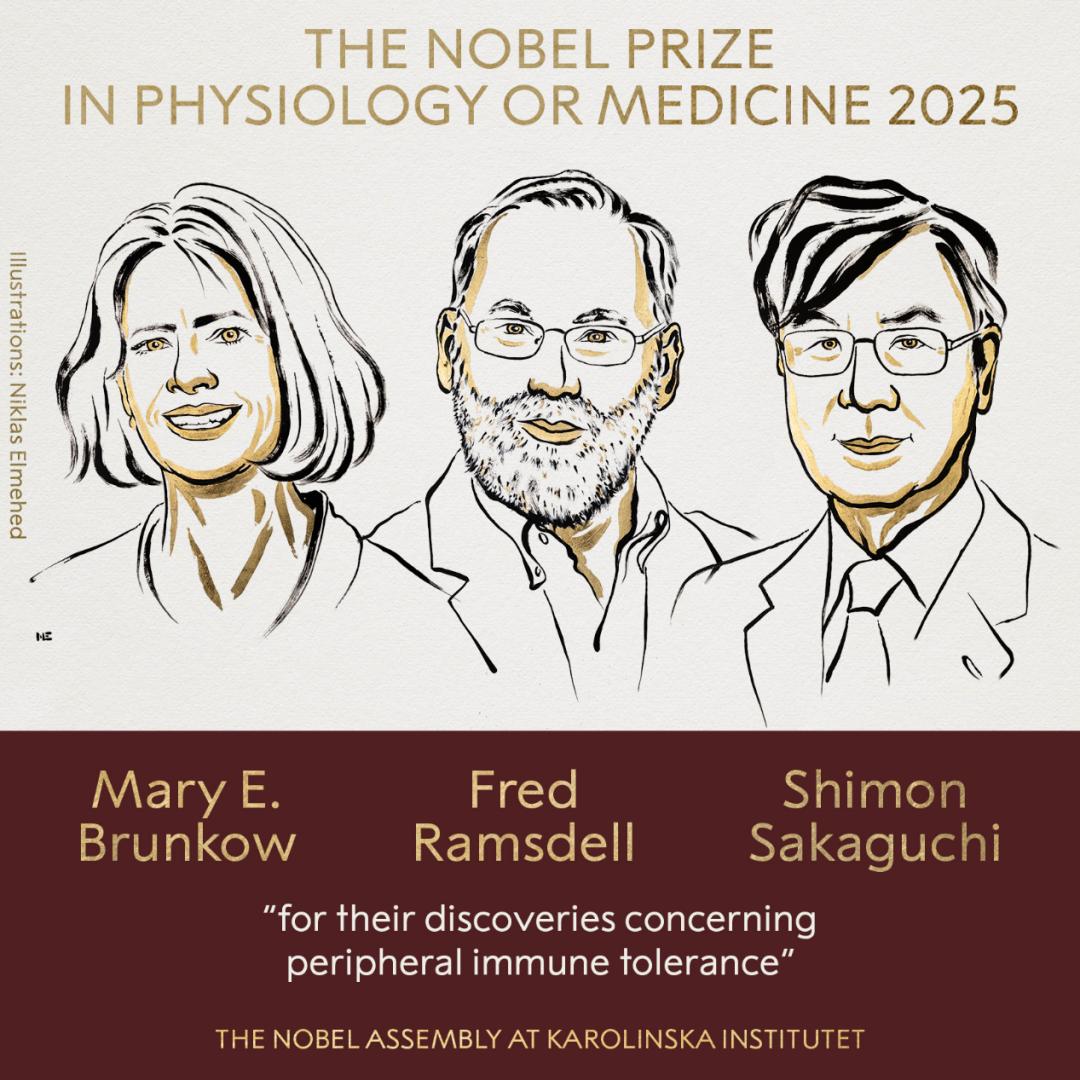
Core Viewpoint - The article discusses the critical role of regulatory T cells in maintaining immune system balance, preventing autoimmune diseases, and their potential implications for medical treatments, as highlighted by the recent Nobel Prize in Physiology or Medicine awarded to three scientists for their discoveries in this field [1][9][16]. Group 1: Immune System Functionality - The immune system distinguishes between "self" and "non-self" cells, with regulatory T cells acting as mediators to suppress excessive immune responses and prevent attacks on the body's own tissues [1][9]. - T cells possess unique receptors that can theoretically identify over 10^15 different antigens, but this broad recognition capability also poses risks of mistakenly targeting self-cells [7][9]. Group 2: Research Breakthroughs - The central tolerance mechanism eliminates T cells that recognize self-proteins during their maturation in the thymus, but some self-reactive T cells can escape this process, necessitating additional regulatory mechanisms [9][15]. - The identification of regulatory T cells by the Nobel laureates has opened new avenues for research and potential therapies for autoimmune diseases and cancer treatments [9][16]. Group 3: Medical Implications - Potential therapies based on regulatory T cell mechanisms are currently in clinical trials, aiming to enhance immune responses against tumors and improve treatments for autoimmune diseases [16]. - Strategies include using interleukin-2 to promote regulatory T cell proliferation and engineering therapies to extract and expand these cells for targeted immune regulation [16].

他们找到调控人体免疫系统的“秘密武器”!解读2025年诺贝尔生理学或医学奖
Huan Qiu Wang Zi Xun· 2025-10-06 12:50
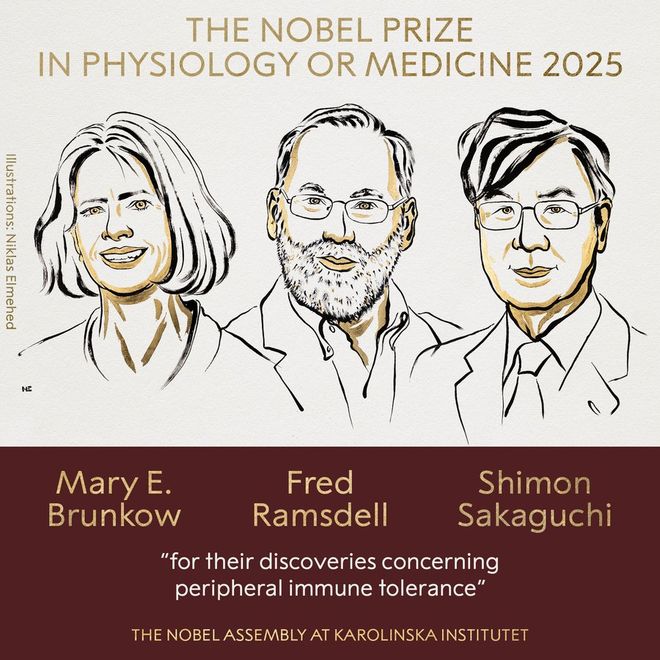
Core Insights - The article discusses the groundbreaking research on "peripheral immune tolerance" by Mary E. Brunkow, Fred Ramsdell, and Shimon Sakaguchi, which has led to their joint award of the 2025 Nobel Prize in Physiology or Medicine [1][3][10] - Their findings reveal how the immune system avoids attacking its own tissues, highlighting the role of regulatory T cells in maintaining immune balance and preventing autoimmune diseases [3][9] Group 1: Research Breakthroughs - The research challenges the previous consensus that immune tolerance primarily relies on "central tolerance" in the thymus, introducing the concept of regulatory T cells as a crucial component in peripheral immune tolerance [5][7] - Brunkow and Ramsdell identified a mutation in the Foxp3 gene in a mouse model that leads to severe autoimmune diseases, establishing a link between this gene and the function of regulatory T cells [5][7] - Sakaguchi later connected these findings, demonstrating that Foxp3 is essential for the development and function of regulatory T cells, which are vital for preventing systemic autoimmune responses [7][9] Group 2: Clinical Implications - The research has significant implications for the treatment of autoimmune diseases and cancer, with therapies based on regulatory T cells being actively explored for conditions like type 1 diabetes and rheumatoid arthritis [9][10] - The work of these scientists has paved the way for advancements in organ transplantation, potentially leading to more successful procedures by understanding immune tolerance mechanisms [9][10]