
丰富人才资源优势

Search documents
开创中国式现代化建设新局面
Xin Lang Cai Jing· 2026-01-04 19:01
Group 1 - The core viewpoint emphasizes that China's economic development advantages will become more prominent during the "14th Five-Year Plan" period, aiding in overcoming challenges and seizing opportunities [1] - The "14th Five-Year Plan" period is crucial for achieving the goal of building a modern socialist country by 2035, despite facing complex and uncertain external and internal challenges [1][2] - The overall trend of China's economic situation remains positive, and leveraging various advantages will help overcome difficulties and achieve the goals set for the "14th Five-Year Plan" [1][2] Group 2 - The external environment presents significant challenges, including uncertainties in international trade and potential disruptions from developed countries' policies on high-end technologies [2] - However, the current external uncertainties also create new opportunities, particularly in the context of a new wave of technological revolution and industrial transformation [2] Group 3 - Internally, the "14th Five-Year Plan" period must address issues of unbalanced and insufficient development, which have persisted since the reform and opening-up [3] - Key internal challenges include insufficient effective demand, difficulties in transitioning from old to new growth drivers, and pressures on employment and income growth [3] Group 4 - China's advantages during the "14th Five-Year Plan" include the socialist system's strengths, a large-scale market, a complete industrial system, and abundant talent resources [5][6][7] - The socialist system allows for concentrated efforts on major issues and effective resource allocation, while the large market supports the expansion of emerging industries [5][6] - A complete industrial system enhances resilience against external shocks and supports the development of new industries, while a rich talent pool provides necessary support for high-quality development [6][7] Group 5 - The need for comprehensive reforms to enhance economic dynamism and activate potential is emphasized, focusing on creating a high-level socialist market economy [7] - Establishing a unified national market and improving mechanisms for high-quality economic development are critical for modernizing the industrial system [7][8] Group 6 - Building a supportive innovation system is essential for enhancing the overall effectiveness of the national innovation framework, including reforms in education and technology [8] - The focus is on aligning talent development with industry needs and improving the efficiency of technology transfer and innovation [8]
用好优势 巩固拓展经济稳中向好势头
Yang Guang Wang· 2025-12-20 03:25
Core Viewpoint - The upcoming year 2026 marks the beginning of the "15th Five-Year Plan," with a focus on maintaining economic stability and growth amidst challenges [1] Economic Performance - During the "14th Five-Year Plan" period, China's contribution to global economic growth remained stable at around 30%, despite significant external pressures [4] - China's total economic output has crossed 110 trillion, 120 trillion, and 130 trillion yuan, with an expected reach of approximately 140 trillion yuan this year [5] Challenges and Opportunities - The current economic landscape presents challenges such as deepening external environmental changes, prominent domestic supply-demand imbalances, and risks in key sectors [5] - To sustain and strengthen the momentum of stable economic growth, it is essential to confront challenges head-on and leverage existing advantages [5] Strategic Advantages - The "15th Five-Year Plan" period will highlight four key advantages: the superiority of the socialist system, the vast market scale, a complete industrial system, and abundant talent resources [5] - Emphasizing these advantages is crucial for maintaining strategic determination and transforming potential into actual strength [5] Leadership and Development - Strengthening the comprehensive leadership of the Party is fundamental to advancing modernization in China [6] - The strategy focuses on expanding domestic demand, enhancing the adaptability of consumer goods supply and demand, and promoting a unified national market [6] - Emphasis on technological innovation is vital for industrial upgrades, with a focus on building a modern industrial system centered around advanced manufacturing [6]

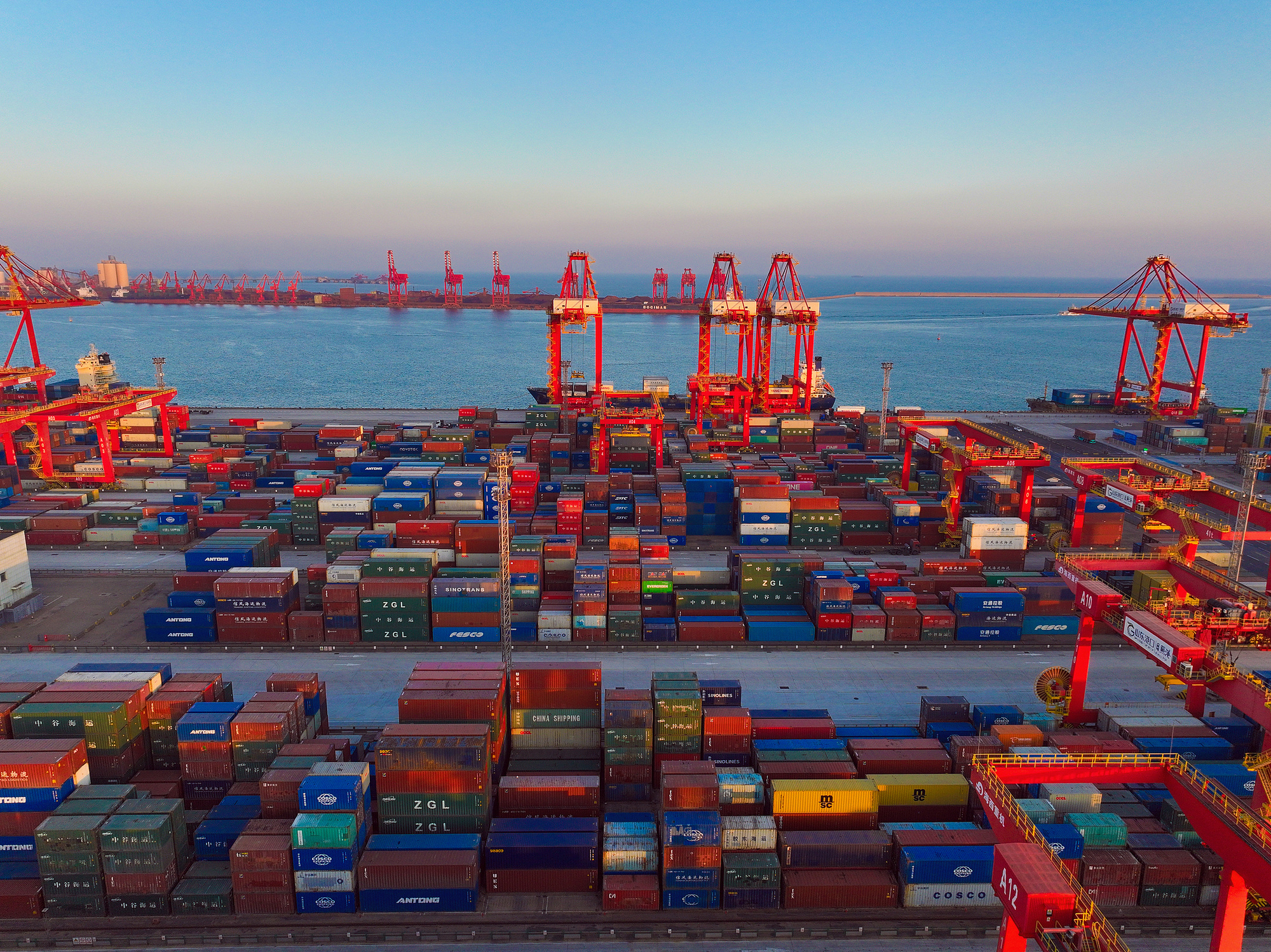
人民日报评论员:用好优势,不断巩固拓展经济稳中向好势头
Xin Hua She· 2025-12-12 15:00
Core Viewpoint - The article emphasizes the importance of leveraging advantages to continuously consolidate and expand the stable and positive momentum of China's economy, as highlighted in the Central Economic Work Conference [2]. Economic Performance - China's economy is projected to reach approximately 140 trillion yuan, with international organizations raising their growth forecasts for 2025 [2]. - The contribution rate of China's economy to global growth has remained stable at around 30% over the past five years, despite external challenges [3]. Industrial Strength - China has established the world's largest and most comprehensive industrial system, which is crucial for sustainable development [4]. - The manufacturing value added is expected to account for nearly 30% of the global total by 2024, maintaining the largest scale in the world for 15 consecutive years [4]. Market Potential - The retail sales of consumer goods are projected to increase from 39.1 trillion yuan in 2020 to 48.3 trillion yuan in 2024, with an average annual growth rate of 5.5% [5]. - China's domestic market, supported by over 1.4 billion people and the largest middle-income group globally, is rapidly becoming the largest consumer market [5]. Strategic Focus - The focus for the upcoming year includes utilizing the advantages of the socialist system, large-scale market, complete industrial system, and rich talent resources to ensure high-quality economic development [3][6]. - The strategy emphasizes expanding domestic demand and enhancing the adaptability of supply and demand in the consumer market [5].
话 优 势
Ren Min Ri Bao· 2025-12-06 21:57
Group 1 - The core viewpoint emphasizes the unique advantages of China's economic system, including the socialist system, large market size, complete industrial system, and rich talent resources, which are crucial for economic work [1][3][10] - The "Four Major Advantages" are highlighted as essential for maintaining strategic determination and transforming potential into strength, particularly through significant infrastructure projects like the Hohhot-Wuhan high-speed railway [2][3] - The importance of a modern industrial system as the material and technical foundation for a modernized nation is underscored, with a focus on solidifying the real economy [7][10] Group 2 - China's market is described as the largest in the world, with online retail sales leading globally for 12 consecutive years and a significant consumer market driven by over 1.4 billion people [3][4] - The potential of the Chinese market is further emphasized, with a stable per capita GDP above $13,000, indicating a critical period for consumption expansion and upgrade [5] - The integration of innovative consumption trends, such as "AI + consumption" and "IP + consumption," is noted as a new growth point for the market [5][6] Group 3 - The establishment of a talent recognition alliance between Zhuhai and Macau aims to facilitate talent mobility and enhance the region's competitiveness [9][10] - The significant number of highly educated individuals and skilled workers in China positions the country as a major talent resource hub, essential for driving modernization [10] - The emphasis on creating a favorable environment for talent development and innovation is crucial for transforming talent advantages into developmental strengths [10][11]
发挥四大独特优势推进中国式现代化
Jing Ji Ri Bao· 2025-11-25 00:42
Core Viewpoint - The article emphasizes the unique advantages of China, including institutional, market, industrial, and talent resources, as essential for advancing Chinese-style modernization and addressing challenges during the "14th Five-Year Plan" period [1][4]. Institutional Advantage - The institutional advantage is highlighted as the fundamental guarantee for long-term development, with the leadership of the Communist Party of China being a key factor in ensuring strategic continuity and policy stability [2][4]. - The ability to mobilize resources effectively and avoid policy fluctuations seen in some Western countries is a significant benefit of the Chinese system [2]. Market Advantage - China's vast domestic market, with over 1.4 billion people and more than 400 million middle-income individuals, is seen as a strategic asset that can continuously release demand potential [2][4]. - The large consumer market provides ample opportunities for new products and technologies, facilitating innovation and economic growth [2]. Industrial Advantage - China possesses the world's most complete and largest industrial system, with manufacturing value added accounting for nearly 30% of the global total [3]. - This comprehensive industrial base supports economic security and reduces external dependencies, especially in the context of global supply chain restructuring [3]. Talent Advantage - The article underscores the importance of talent as a primary resource for innovation, with over 200 million skilled workers contributing to industrial transformation [3][4]. - The shift from a demographic dividend to a talent dividend is noted, with an expected increase in R&D personnel and educational attainment among the labor force [3]. Future Development Strategies - The article outlines strategies for leveraging these advantages, including enhancing governance effectiveness through institutional reforms, promoting economic circulation via market integration, and fostering industrial innovation through technological advancements [5][6][7]. - Emphasis is placed on creating a favorable environment for talent development and innovation to drive future growth [7].