主动基金与ETF搭配

Search documents
费率大战打响!主动基金赚2倍,ETF成资金避风港,普通人选对躺赢
Sou Hu Cai Jing· 2026-01-15 12:55
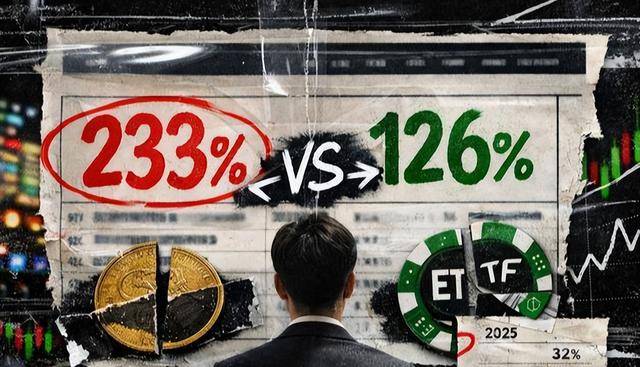
Core Insights - The year 2025 has been a remarkable year for the fund market, with active funds achieving an annual return of 233%, setting a new record for public funds, while ETFs saw their scale surge by over 2 trillion, surpassing Japan to become the leading ETF market in Asia [1][2] Group 1: Active Funds Performance - Active equity funds averaged a return of 32% in 2025, with 75 funds doubling their value, and the top performer, Yongying Technology Smart Selection, skyrocketing by 233% [2] - The top twenty active funds are concentrated in popular technology sectors such as AI, computing power, and semiconductors, indicating a strong trend towards tech-driven investments [2] Group 2: ETF Market Growth - The ETF market experienced significant growth, with the scale increasing from 3.73 trillion to 6.02 trillion, a rise of 61% in 2025, driven by both retail and institutional investments [7] - Notable ETFs in the communication sector, such as the Guotai CSI Communication Equipment ETF, achieved returns of 126%, while several others in AI and mining also saw substantial gains [5] Group 3: Industry Trends and Challenges - Despite the impressive returns of active funds, their market share declined by over ten percentage points, as many investors opted to take profits and shift their investments towards ETFs [7] - The active fund industry faced significant turnover, with 434 high-level personnel changes and over 300 fund managers leaving their positions, indicating a shift towards younger managers with a focus on technology [9] Group 4: Long-term Performance and Cost Considerations - Data from招商证券 shows that only 51 active equity funds outperformed the CSI 300 index from 2019 to 2024, highlighting the difficulty of consistently beating the market [11] - New regulations set to take effect in 2026 will reduce overall fund sales costs by 34%, potentially saving investors 30 billion annually, but active funds still carry management fees around 1.2% to 1.5% [13] Group 5: Investment Strategy Recommendations - A mixed investment strategy combining both active and passive funds is recommended, with 50% allocated to broad market ETFs, 20% to sector-specific ETFs, and 30% to a limited number of active funds [15][17] - Investors are advised to select active funds that have demonstrated resilience through market cycles and align with their understanding of specific sectors to mitigate risks [17] Conclusion - The competition between active funds and ETFs in 2025 illustrates that both can coexist as complementary investment strategies, with a focus on long-term stability and cost management being crucial for investors [19]