
乡村文化产业

Search documents
“村”意盎然
Jing Ji Ri Bao· 2026-01-15 21:32
Core Insights - Guizhou's "Village Dance" event, part of the "village" IP family, showcases traditional dances and highlights the region's rich cultural heritage and vibrant spirit [1] Group 1: Cultural and Economic Development - Guizhou province has leveraged its abundant ethnic cultural resources to launch various "village" cultural and sports activities, creating new advantages for rural cultural industry development [1] - These initiatives not only enrich the spiritual and cultural lives of the community but also inject intrinsic motivation for rural revitalization, becoming a significant driver for local economic growth [1] Group 2: Specific Initiatives and Impact - Rongjiang County has utilized the "Village Super" event to create a multi-faceted consumption scene combining event viewing, specialty product purchasing, and intangible cultural heritage experiences, leading to rapid growth of agricultural leading enterprises and cooperatives [1] - Taijiang County has capitalized on the "Village BA" brand effect to promote deep integration of agriculture with cultural industries, rural tourism, leisure sports, ecological health, and rural e-commerce, resulting in the successful sale of ethnic specialty products like Miao embroidery and silver jewelry [1]
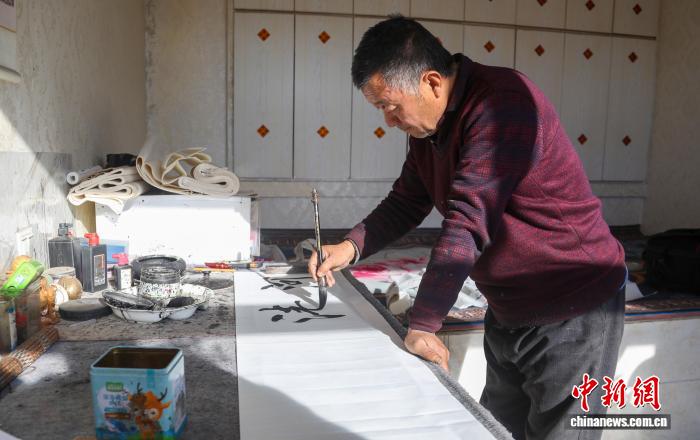
兴安岭上的“文化村”:从始龀至古稀,一字一画一世界
Zhong Guo Xin Wen Wang· 2025-11-26 11:14
Core Insights - The article highlights the cultural revival and artistic endeavors in Liushu Chuan Village, Inner Mongolia, showcasing how local residents engage in various forms of art, including calligraphy and root carving, contributing to both cultural heritage and tourism [1][8]. Group 1: Cultural Heritage - Liushu Chuan Village has a rich cultural history of over a century, with the only village-level calligraphy association in the region [1]. - The village's residents, from children to the elderly, actively participate in artistic activities, demonstrating a community-wide engagement in cultural practices [1]. Group 2: Individual Artists - 63-year-old Qu Chengchun has dedicated his life to calligraphy, influenced by family traditions and has shared his work on social media, gaining over 500,000 likes and nearly 10,000 followers [3]. - 55-year-old Dan Wengang has been involved in root carving for 30 years, creating various artistic pieces from tree roots, and is also a member of local poetry and calligraphy associations [5]. - 34-year-old Dan Kunlai, son of Dan Wengang, specializes in stone painting and has established a studio to sell his artwork and teach children, reflecting the continuation of artistic traditions in the family [7]. Group 3: Community Initiatives - The village has established cultural institutions such as a cultural center, village history museum, and nostalgia museum, which have significantly boosted local tourism, attracting 50,000 visitors during the National Day holiday [7]. - Village Party Secretary Wu Zhanjun emphasizes the importance of cultural development for the community's future, aiming to transform cultural practices into a sustainable industry for the villagers [8].

充分释放“乡村文化嘉年华”魅力
Jing Ji Ri Bao· 2025-07-17 22:02
Core Viewpoint - The rural cultural industry in China is rapidly developing, serving as a crucial link between economy and culture, and playing a significant role in rural economic growth and structural adjustment [1][2]. Group 1: Market Expansion and Economic Impact - The rural cultural tourism market is expanding, with innovative development models. Events like the "Rural Cultural Carnival" are attracting tourists and boosting local economies, leading to improved living conditions for residents [1]. - In the first quarter of this year, rural tourism received 707 million visitors, a year-on-year increase of 8.9%, generating total revenue of 412 billion yuan, up 5.6% [1]. Group 2: Cultural Innovation and Technology Integration - Regions are leveraging cultural innovation and digital technology to develop diverse rural cultural industry models, such as creating culturally valuable products from local history and mythology, and using VR and live streaming to enhance traditional culture [2]. - Over 100,000 intangible cultural heritage (ICH) projects have been recognized, with 73% located in traditional rural areas, promoting the active transmission of ICH through modern design and educational programs [2]. Group 3: Policy Support and Infrastructure Development - Recent policy documents have been issued to support rural cultural and tourism leaders, providing guidelines for project funding, education, and innovation to bolster the rural cultural industry [3]. - There are challenges such as weak infrastructure and a lack of cultural professionals that need to be addressed to facilitate the growth of the rural cultural industry [3]. Group 4: Collaborative Development Models - Encouraging collaboration among various stakeholders is essential to avoid resource wastage and promote sustainable development. Models like "Culture + Technology" and "Culture + E-commerce" are suggested for cross-sector cooperation [4]. - Building a strong talent pool is critical for the rural cultural industry, with a focus on integrating resources and enhancing the capabilities of local leaders in culture and tourism [4].