
互联网+医养结合

Search documents
医养结合温暖“夕阳红”
Ren Min Ri Bao Hai Wai Ban· 2026-01-12 22:49
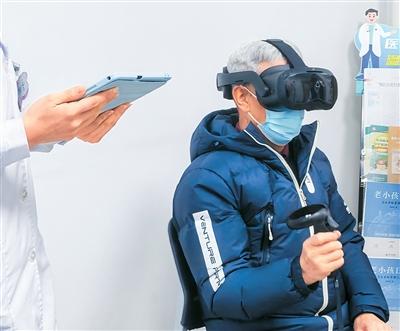
Core Insights - Beijing's elderly population aged 60 and above is projected to reach 5.14 million by the end of 2024, accounting for 23.5% of the total population, marking a significant milestone as it surpasses 5 million for the first time [1][12] - The city has established a comprehensive elderly health service system during the 14th Five-Year Plan period, enhancing the sense of access and happiness for elderly patients [1][12] Group 1: Health Management System - Beijing has designated the Beijing Geriatric Hospital as the city-level center for elderly health and integrated medical care, with each district selecting a tertiary hospital as a district-level guidance center [2] - There are 1,993 community health service centers operating in the city, which are expected to provide 52.02 million elderly consultations in 2024, representing 56% of the total consultations in community health service institutions [2][4] - The elderly population has a high prevalence of chronic diseases, necessitating long-term care and regular follow-ups, which are facilitated by the community health service centers [2][4] Group 2: Integrated Medical and Elderly Care - Beijing has developed a multi-faceted model of integrated medical and elderly care, including various cooperation models such as "medical care for the elderly" and "elderly care for medical services" [6][15] - The city has established 203 integrated medical and elderly care institutions, achieving full coverage of medical services in elderly care facilities through over 1,300 signed agreements [6][15] - The Fengtai District has implemented a comprehensive service system focusing on different elderly health stages, providing home-based and signed services for the elderly with high needs [6][15] Group 3: Community-Based Initiatives - The Tongzhou District has introduced a dual medical and elderly care joint system, integrating resources from community health service centers and elderly care institutions to provide comprehensive services [7] - The district has also implemented a "five-bed linkage" service model to facilitate seamless transitions between various types of care beds, ensuring zero barriers in service delivery [7] - Community health advisors are selected to coordinate care for elderly individuals, particularly those living alone or with disabilities, enhancing accessibility to necessary medical services [7][16] Group 4: Innovative Health Solutions - The memory clinic at the Anzhen Community Health Service Center focuses on early screening and diagnosis of dementia, utilizing methods such as medication and electronic training to prevent and delay disease progression [8][10] - Virtual reality (VR) training is employed to improve cognitive functions in elderly patients, with significant progress reported in their abilities to complete tasks and engage in memory exercises [9][10] - The clinic has established a comprehensive management model that includes screening, diagnosis, rehabilitation, and follow-up care for elderly patients with cognitive impairments [10]

京津冀推动医养结合联盟建设 多元化医养结合模式勾勒幸福“夕阳红”
Yang Shi Wang· 2025-12-27 10:38
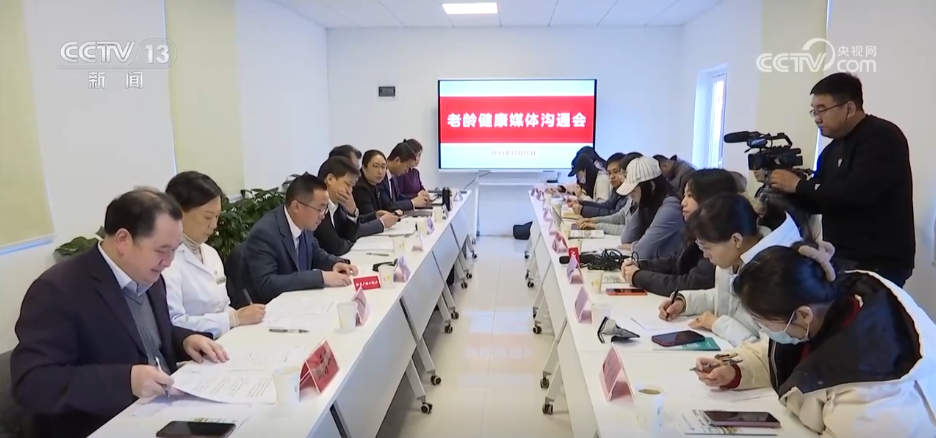
Core Viewpoint - The establishment of the Beijing-Tianjin-Hebei (Jing-Jin-Ji) Medical and Elderly Care Integration Alliance aims to enhance the quality of medical and elderly care services in the region, with a focus on creating various integrated service models and promoting collaboration among institutions [1][3]. Group 1: Alliance Formation and Collaboration - A total of 177 medical and elderly care institutions have signed cooperation agreements or intentions since the formation of the Jing-Jin-Ji Medical and Elderly Care Integration Alliance [1]. - The alliance has developed multiple integrated service models, including "medical care provided by elderly care institutions," "elderly care provided by medical institutions," and extending medical and elderly care services to families [3][5]. Group 2: Demographics and Market Potential - The elderly population aged 60 and above in the Jing-Jin-Ji region has reached 24.79 million, accounting for 22.65% of the total population, indicating a moderate aging stage [3]. - The regional health departments are advocating for high-quality development of the medical and elderly care industry, emphasizing the need for integrated services to cater to the growing elderly population [3]. Group 3: Training and Professional Development - The Peking Union Medical College Hospital's Geriatrics Department has trained over 440 specialized doctors, including those from Beijing and Hebei, as part of a national talent cultivation project [7]. - Future initiatives will focus on increasing participation from more medical and elderly care institutions in the construction of integrated care units, aiming for regional recognition and seamless transitions for elderly patients [7].
京津冀医养结合联盟成立 177家医疗、医养结合机构签署合作协议、合作意向
Jing Ji Guan Cha Wang· 2025-12-26 07:37
Core Viewpoint - The integration of medical and elderly care services in Beijing has reached a significant milestone, with 203 institutions established and over 1,300 medical care agreements signed, ensuring comprehensive medical service coverage for elderly care facilities [1] Group 1: Development of Medical and Elderly Care Integration - Beijing has developed various mature models for integrating medical and elderly care, including "medical care for the elderly" and "elderly care for medical services" [1] - The city is actively exploring the "Internet + medical and elderly care integration" service model to enhance service delivery [1] Group 2: Collaborative Efforts in the Beijing-Tianjin-Hebei Region - The Beijing-Tianjin-Hebei medical and elderly care integration alliance has been established, with 97 medical and integrated care institutions signing cooperation agreements [1] - 80 institutions have expressed intentions to form cooperative agreements within the medical and elderly care integration framework [1]
医养结合深入推进:如何让3亿多老人“养老”更“享老”
2 1 Shi Ji Jing Ji Bao Dao· 2025-07-24 11:40
Core Viewpoint - The National Health Commission has issued the "Work Plan for Demonstration Projects of Medical and Nursing Integration (2025 Edition)" to promote the integration of medical and nursing services, addressing the needs of the aging population in China [1][2]. Group 1: Overview of the Work Plan - The integration of medical and nursing services combines healthcare and elderly care, providing essential medical services to elderly individuals in various living arrangements [1]. - By the end of 2024, the elderly population aged 60 and above in China is expected to exceed 310 million, accounting for 22% of the total population, highlighting the urgency of this initiative [1]. - The new work plan has adjusted its creation goals, scope, and standards to better align with the health and elderly care needs of the aging population [1][2]. Group 2: Changes in the Work Plan - The new work plan emphasizes "better aligning with the health and elderly care needs" of seniors, a shift from the previous focus on "better meeting" these needs, indicating a more passive service provision approach [2]. - The creation scope now includes national demonstration counties (cities, districts) and institutions, with evaluations every two years, aiming to complete the creation work by 2030 [3]. - The standards for demonstration institutions have been raised, requiring a minimum occupancy rate of 65% and a significant proportion of residents to be elderly individuals with disabilities or dementia [4][5]. Group 3: Implementation and Challenges - The integration of medical and nursing services is still in the exploratory phase, with various models being tested, including partnerships between healthcare and elderly care institutions [5][6]. - There is a need to break down information barriers between departments to ensure accurate data sharing about the elderly population, which is crucial for effective service delivery [7]. - The "Internet + Medical and Nursing Integration" approach is seen as a future direction to enhance service coverage and efficiency, particularly for home and community-based elderly care [7].