
全周期健康管理

Search documents
盈康生命董事兼总经理马安捷:让AI成为肿瘤管理的“第二医生”
Zheng Quan Ri Bao Zhi Sheng· 2026-02-26 16:08
Core Viewpoint - The company is transitioning from a traditional disease treatment model to a comprehensive health management approach, focusing on continuous care for cancer patients throughout their treatment journey [2][6]. Group 1: Strategic Upgrade - The strategic upgrade is driven by the combined factors of demand, capability, and industry trends, emphasizing the need for a continuous service chain from pre-diagnosis to post-treatment [2]. - The company aims to create a "personal AI doctor" for each cancer patient, utilizing an intelligent health management system to provide ongoing support and risk assessment [2][3]. Group 2: Product Functionality - The cancer health management intelligent system is designed with five capabilities: precise early screening, diagnostic intelligence, multidisciplinary treatment (MDT) support, home health management, and ecological linkage to external resources [3]. - The company emphasizes the integration of online and offline services to ensure continuous patient management rather than just providing online consultations [3][4]. Group 3: AI and Data Management - The company is developing a three-layer architecture for its AI system, which includes computational power, data governance, and interactive service engines to support continuous improvement and integration of external models [4]. - The focus is on creating a collaborative environment where AI assists but does not replace the physician's role in clinical decision-making, ensuring accountability and traceability in patient care [7][8]. Group 4: Ecosystem Collaboration - The company prioritizes ecosystem co-creation, collaborating with partners to integrate specialized capabilities in real medical scenarios rather than solely focusing on large model development [5]. - The relationship with Ant Health is clarified as non-competitive, with each entity focusing on different aspects of health management [5]. Group 5: Implementation and Challenges - The operational mechanism of the intelligent system is based on personalized health records and collaborative care between online and offline healthcare providers [6]. - The company aims to address key issues such as post-treatment management, emergency responses, and communication efficiency through proactive monitoring and risk assessment [6][8]. Group 6: Future Outlook - The company envisions packaging its platform capabilities and data governance models into replicable regional solutions to enhance access to quality cancer care [9]. - The ultimate goal is to provide patients with continuous and reassuring care, making technology a compassionate partner in health management [9].

昌联互联网医院官宣成立 重塑全周期数智健康管理新生态
Sou Hu Wang· 2026-02-25 09:24
Core Insights - The establishment of Changlian Internet Hospital marks a significant milestone in the strategic layout of Changlian Health, responding to the national strategy of integrating quality medical resources with digital technology to create a new ecosystem of high-quality health services [1][3][8] Group 1: Industry Trends - The healthcare industry is experiencing a structural transformation from standardized to refined services, driven by the increasing demand for personalized, precise, and high-quality health services [1] - The "14th Five-Year Plan" emphasizes the need for optimizing the functional positioning and layout of medical institutions, promoting the expansion and balanced distribution of quality medical resources [3] Group 2: Company Strategy - Changlian Internet Hospital operates under a model that combines online services with offline quality medical institutions, ensuring compliance with medical standards while optimizing resource allocation through digital means [3][4] - The hospital has established a "smart + full-cycle health management platform," offering advanced services such as genetic testing, tumor screening, and personalized medical plans [4][5] Group 3: Technological Integration - The integration of AI in healthcare is accelerating the shift towards precision services, with Changlian Internet Hospital utilizing AI for pre-consultation, diagnosis, and post-treatment follow-ups [5][6] - The hospital employs a natural language processing-based intelligent pre-consultation system to enhance user experience and provide proactive health management suggestions [5][6] Group 4: Future Development - Changlian Internet Hospital aims to create a seamless health service loop from prevention to recovery, continuously evolving its service offerings and technological capabilities [7] - The hospital is committed to building a collaborative ecosystem in the health industry, partnering with leading pharmaceutical companies and insurance institutions to innovate payment systems and develop high-end commercial health insurance products [7][8]


安旭生物2025年业绩预减,募投项目延期至2027年
Jing Ji Guan Cha Wang· 2026-02-12 04:06
Core Viewpoint - Anxu Bio (688075) has disclosed its 2025 performance forecast, expecting a significant decline in net profit and a delay in its fundraising project until 2027 [1] Financial Performance - The company anticipates a net profit attributable to shareholders of 71 million to 85 million yuan, representing a year-on-year decrease of 55.80% to 63.08% [2] - The expected non-recurring net profit is projected to be between 13 million and 15.6 million yuan, reflecting a year-on-year decline of 58.84% to 65.70% [2] - The performance decline is primarily attributed to increased tariffs in the U.S. leading to reduced orders, foreign exchange losses due to currency fluctuations, decreased interest income, and asset depreciation [2] Project Progress - The company announced on January 30, 2026, that the completion date for its "in vitro diagnostic reagents and diagnostic instruments R&D and production project" has been postponed from January 2026 to January 2027 [3] - The delay is attributed to the impact of global respiratory infectious diseases on renovation progress and delays in equipment investment [3] Company Status - Shareholder Ma Huaxiang reduced his stake in the company by selling 804,500 shares between January 6 and January 21, 2026, decreasing his holding from 11.62% to 10.99%, which has reached the 1% threshold for equity change [4] Business and Technical Development - The company is actively transitioning from a single product focus to a comprehensive health management approach, including the expansion of pet testing products and chronic disease management apps [5] - The company is deepening its overseas market presence, with multiple international certifications expected in 2025, although related investments may lead to increased short-term expenses [5]

家庭医生集中签约 推动公卫服务提质增效
Xin Lang Cai Jing· 2026-02-03 08:28
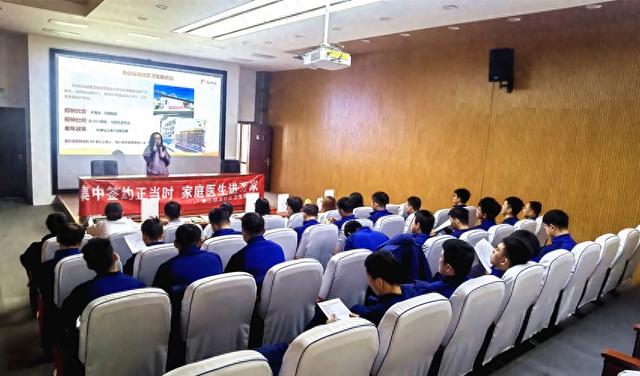
Core Viewpoint - The article highlights the initiative of Shoushan Fuhai Community Health Service Station to extend public health services to workplaces, specifically targeting firefighters, thereby transforming the service model from "individual passive signing" to "group proactive management" [1][10]. Group 1: Service Implementation - The activity was led by station head Zhang Yan, focusing on the theme "Concentrated Signing is Timely, Family Doctors Enter Thousands of Homes," addressing the unique challenges faced by firefighters, such as high training intensity and limited medical consultation time [3]. - The service team integrates various offerings, including policy promotion, health record establishment, traditional Chinese medicine education, physical condition assessment, massage therapy, and ultrasonic drug penetration, to break the limitations of service time and space [5]. - This initiative enhances the efficiency and coverage of signing while increasing the specificity, effectiveness, and humanistic care of the services provided [6]. Group 2: Health Management Framework - The service deeply integrates the characteristics of traditional Chinese medicine, aiming to construct a comprehensive health management framework that spans "prevention—intervention—rehabilitation" [8]. - Zhang Yan emphasizes a multi-dimensional approach to address the high-stress, high-intensity, and irregular schedules of firefighters, focusing on issues like musculoskeletal injuries, sleep, emotions, and immunity [8]. Group 3: Future Plans - In the future, Shoushan Fuhai Community Health Service Station plans to continue expanding the connotation and coverage of family doctor signing services, aiming to benefit more groups and contribute to building a robust public health network [10].
H@H(Hospital At Home):打破物理围墙,重塑全周期健康旅程
Ge Long Hui· 2026-01-30 00:29
Core Insights - The traditional healthcare system creates a "service gap" after patient discharge, particularly in oncology, where post-operative recovery and long-term support are often neglected [1] - As cancer is redefined as a manageable chronic disease, the industry is questioning whether healthcare services should remain confined within physical hospital walls [1] - Baize Medical (02609.HK) is implementing the H@H (Hospital At Home) model as a key strategy to extend healthcare services from "hospital-centric" to "continuous management" [1] Group 1: H@H Model - H@H is not merely an extension of traditional home care but represents a systematic upgrade in healthcare service models [3] - Unlike conventional home services focused on basic care, H@H enhances the "management, connection, and companionship" aspects of Baize's comprehensive service system [3] - The model shifts the responsibility of healthcare from just the hospitalization period to a more extended and continuous management of patient health [3] Group 2: Technological Infrastructure - The success of "medical at home" relies heavily on systematic, standardized, data-driven, and intelligent infrastructure [5] - Baize Medical's core advantage lies in its AI-ready digital infrastructure, which integrates real-world healthcare service needs [5] - The four-layer technology architecture allows for real-time data standardization and utilization, enabling proactive interventions in patient care [5] Group 3: Industry Shift - The emergence of H@H reflects a shift in the value orientation of oncology services, focusing on long-term quality of life and patient experience rather than just single treatment outcomes [7] - This transition is driven by changes in disease characteristics, demographic shifts, and evolving patient needs [7] - H@H signifies a profound paradigm shift in oncology care, where the boundaries of healthcare are redefined around the patient rather than physical structures [7]
从“治病”到“管病”:佰泽医疗(2609.HK)的全周期战略跃迁与增长新范式
Ge Long Hui· 2026-01-26 00:02
Core Viewpoint - Baize Medical has officially launched a new strategy that transforms its role from a "disease treatment provider" to a "full-cycle health manager," focusing on a systematic and replicable medical practice across eight key stages of cancer care, leveraging an AI-ready continuous medical service platform [1] Group 1: Redefining Service Boundaries - Baize Medical is redefining the scope of cancer care, expanding its services from merely treating patients to providing comprehensive health management for all individuals seeking health [2] - The service continuum now includes preventive interventions for healthy populations and long-term follow-up for recovering patients, creating a health protection ecosystem that respects the essence of life [2] Group 2: Constructing a Measurable Health Journey - The "full-cycle management" is embodied in eight service stages: prevention, screening, diagnosis, treatment, rehabilitation, management, connection, and companionship, forming a complete service loop [3] - The innovative stages of "management," "connection," and "companionship" are integrated into the standardized service system, marking a significant breakthrough in service elevation [3] Group 3: Implementation Mechanisms - To ensure the execution of its ambitious blueprint, Baize Medical focuses on five key capabilities: organizational restructuring, internal control compliance, performance incentives, digital infrastructure, and cultural embedding, aiming to enhance operational efficiency and service quality by 2026 [5] - The company has established a dual-driven mechanism of "intelligent information systems" and "standardized management systems" to overcome challenges in scaling operations within the private healthcare sector [5] Group 4: Advancing Healthcare Delivery - Baize Medical's H@H (Hospital At Home) model extends medical capabilities beyond physical boundaries, ensuring that hospital-level professional care is delivered at home through deep integration of standards and intelligence [7] - The implementation of H@H relies on a medical-grade data governance system that ensures data integrity and privacy, supporting high-risk remote medical decisions [7] Group 5: Future Outlook - With a network of eight physical hospitals across five provinces and a proven standardized system, Baize Medical is poised to set a new high-quality benchmark for the transformation of private cancer care in China [8] - The future of healthcare is envisioned as an ecosystem that nurtures hope, blending technological rationality with human warmth to safeguard the dignity and longevity of every life [8]
医养结合温暖“夕阳红”
Ren Min Ri Bao Hai Wai Ban· 2026-01-12 22:49
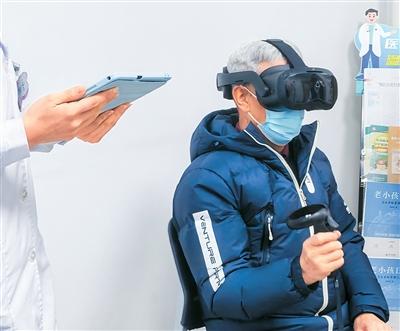
Core Insights - Beijing's elderly population aged 60 and above is projected to reach 5.14 million by the end of 2024, accounting for 23.5% of the total population, marking a significant milestone as it surpasses 5 million for the first time [1][12] - The city has established a comprehensive elderly health service system during the 14th Five-Year Plan period, enhancing the sense of access and happiness for elderly patients [1][12] Group 1: Health Management System - Beijing has designated the Beijing Geriatric Hospital as the city-level center for elderly health and integrated medical care, with each district selecting a tertiary hospital as a district-level guidance center [2] - There are 1,993 community health service centers operating in the city, which are expected to provide 52.02 million elderly consultations in 2024, representing 56% of the total consultations in community health service institutions [2][4] - The elderly population has a high prevalence of chronic diseases, necessitating long-term care and regular follow-ups, which are facilitated by the community health service centers [2][4] Group 2: Integrated Medical and Elderly Care - Beijing has developed a multi-faceted model of integrated medical and elderly care, including various cooperation models such as "medical care for the elderly" and "elderly care for medical services" [6][15] - The city has established 203 integrated medical and elderly care institutions, achieving full coverage of medical services in elderly care facilities through over 1,300 signed agreements [6][15] - The Fengtai District has implemented a comprehensive service system focusing on different elderly health stages, providing home-based and signed services for the elderly with high needs [6][15] Group 3: Community-Based Initiatives - The Tongzhou District has introduced a dual medical and elderly care joint system, integrating resources from community health service centers and elderly care institutions to provide comprehensive services [7] - The district has also implemented a "five-bed linkage" service model to facilitate seamless transitions between various types of care beds, ensuring zero barriers in service delivery [7] - Community health advisors are selected to coordinate care for elderly individuals, particularly those living alone or with disabilities, enhancing accessibility to necessary medical services [7][16] Group 4: Innovative Health Solutions - The memory clinic at the Anzhen Community Health Service Center focuses on early screening and diagnosis of dementia, utilizing methods such as medication and electronic training to prevent and delay disease progression [8][10] - Virtual reality (VR) training is employed to improve cognitive functions in elderly patients, with significant progress reported in their abilities to complete tasks and engage in memory exercises [9][10] - The clinic has established a comprehensive management model that includes screening, diagnosis, rehabilitation, and follow-up care for elderly patients with cognitive impairments [10]
以AI重塑品类 以服务定义价值,京东健康发布2026年医疗器械战略全景
Jin Rong Jie Zi Xun· 2026-01-09 02:31
Core Insights - JD Health is set to enhance its medical device sector by leveraging supply chain, AI, and medical services as core drivers, aiming to become a significant growth engine for global medical device brands by 2026 [1][5] - The company plans to invest over 100 million in marketing resources for the launch of new products in collaboration with top global brands, focusing on high-quality development in the medical device industry [1][5] Group 1: Market Growth and Strategy - The medical device market in China is experiencing rapid growth, projected to reach 500 billion from the current 300 billion, driven by aging population, health awareness, and consumption upgrades [3] - JD Health aims to deepen partnerships with global medical device brands and enhance supply chain capabilities through initiatives like JDH+N alliance, targeting a 100% growth in trending categories by 2025 [3][6] Group 2: Product Innovation and Awards - In 2025, JD Health launched nearly 500 new products, setting industry records, with a focus on innovative product development as a key driver for high-quality growth [3][5] - The company established a rigorous evaluation system for product awards, recognizing nearly 100 brands for their quality and reputation at the annual conference [5] Group 3: AI and Service Integration - JD Health is utilizing its self-developed AI model "Jingyi Qianxun" to transform product categories and define value through service, moving towards comprehensive health management solutions [6][7] - The company has developed a smart blood glucose management system in collaboration with brands, integrating monitoring, analysis, intervention, and tracking for chronic disease management [9] Group 4: Comprehensive Health Management - JD Health is enhancing its online and offline service integration, providing a full-cycle health management experience that includes disease prevention, smart monitoring, chronic disease management, and post-hospital rehabilitation [9] - The company aims to eliminate homogenization in the medical device industry through product innovation and AI technology upgrades, making professional healthcare services more accessible [9]


从“用药愁”到“药无忧” 医保与商保联手破解慢特病保障困局
Jin Rong Shi Bao· 2025-12-31 01:54
Core Insights - The article highlights the significant improvements in the management and reimbursement of chronic diseases in Baoji City, Shaanxi Province, addressing the economic burden on patients and enhancing healthcare accessibility [1][2][3]. Group 1: Patient Experience and Benefits - Baoji City has implemented a chronic disease reimbursement policy that has been in place for 14 years, evolving from offline to online services, significantly reducing the financial burden on patients [1][3]. - Patients like Ma Laifen and Kong Xianyong have reported substantial reductions in their medication costs due to the reimbursement policy, with Kong's out-of-pocket expenses dropping to just a few dozen yuan per month [2][3]. - The policy has improved the quality of life for patients, allowing them to manage their health better and reducing the need for frequent hospital visits [2][3]. Group 2: Government and Insurance Collaboration - The collaboration between the government and insurance companies, such as Renbao Health, has been crucial in developing a comprehensive service model for chronic disease management [3][4]. - The initiative aims to alleviate the pressure on healthcare staff and streamline the reimbursement process for patients, addressing the challenges of manpower shortages in healthcare administration [4][5]. Group 3: Regulatory and Technological Innovations - Baoji City has introduced a "1366" smart regulatory model to enhance the oversight of retail pharmacies, ensuring the safety of healthcare funds and compliance with regulations [6][7]. - The system includes multiple intelligent checkpoints to prevent misuse of chronic disease reimbursement funds, thereby improving the integrity of the healthcare system [7][8]. Group 4: Healthcare Management and Accessibility - The healthcare management system in Baoji has evolved to provide comprehensive services, including home visits and health monitoring for chronic disease patients, enhancing patient engagement and care [10][11]. - The integration of technology in health management has streamlined processes, allowing for quicker approvals and better patient data management [11][12]. Group 5: Future Challenges and Sustainability - As the number of insured patients continues to grow, the policy faces challenges related to service optimization and sustainable development [13][14]. - The company is exploring sustainable service paths through collaboration with various sectors while ensuring the quality of care remains high [15].
中国癌症五年生存率稳步提升,多学科协作成破局关键
Di Yi Cai Jing· 2025-12-23 12:30
Core Insights - Despite advancements in cancer prevention and treatment in China, significant challenges remain in clinical practice, particularly in achieving the "last mile" of diagnosis and management [1] - The five-year survival rate for cancer patients in China has improved from 40.5% in 2015 to 43.7% in 2022, but still falls short of the targets set by the State Council [1] Group 1: Urban-Rural Disparities - There is a significant disparity in the five-year survival rates between urban and rural areas, with urban areas at approximately 47.7% and rural areas at about 32.2% for patients diagnosed between 2016 and 2020 [2] - The differences in survival rates are attributed to uneven resource distribution, insufficient early screening in rural areas, and a higher proportion of late-stage diagnoses [2] - The government has initiated measures to improve early detection and diagnosis in rural areas, including funding for screening programs and training for healthcare providers [2] Group 2: Training and Education - There is a lack of a comprehensive training system for surgical doctors in China, particularly in comparison to developed countries [3] - Establishing a complete training and assessment system at national or regional levels is deemed crucial for the promotion of new surgical techniques [3] Group 3: Multidisciplinary Team (MDT) Challenges - The traditional cancer treatment model often leads to fragmented care, while the MDT approach integrates various specialists to create comprehensive treatment plans [4] - Research indicates that patients receiving MDT-developed treatment plans have a 33% higher five-year survival rate compared to traditional methods, with an 83% patient satisfaction rate [4] - However, the implementation of MDT faces challenges such as varying hospital conditions, low collaboration efficiency among departments, and a lack of effective incentive mechanisms [5][6] Group 4: Continuous Care and Management - There is a prevalent issue of broken care chains in cancer treatment, with many hospitals focusing primarily on diagnosis and treatment while neglecting rehabilitation and long-term follow-up [6] - A model integrating various specialties into a dedicated center for breast diseases has been proposed to address these gaps in care [6] - Strengthening MDT standardization, improving resource allocation, and enhancing performance evaluation and incentive mechanisms are essential for narrowing treatment disparities and improving cancer care outcomes [6]