交通强国首都样板

Search documents
北京轨道交通运营总里程全国第一
Bei Jing Shang Bao· 2025-11-20 16:30
Core Insights - Beijing has made significant progress in its transportation infrastructure during the "14th Five-Year Plan" period, with the opening of 19 new subway lines totaling 180 kilometers, contributing to a total rail network of 1,244 kilometers, the largest in the country [1][5][6] - The city aims to enhance its transportation system by focusing on integration, optimization, and efficiency, with a vision for a comprehensive transportation network that supports urban development and improves service quality [1][3][8] Transportation Network Development - The "1-hour commuting circle" around Beijing has taken shape, with major rail lines such as the Beijing-Harbin High-Speed Railway and the Beijing-Xiong'an Intercity Railway completed, facilitating rapid transit between key cities in the Beijing-Tianjin-Hebei region [3][4] - The city has established a robust hub network with eight major train stations and two airports, enhancing connectivity and passenger experience through optimized security checks and seamless transfers [3][4] Urban Traffic Management - The urban road network has been expanded, adding 140 kilometers of roads over five years, with a total of 6,296 kilometers now in place, supporting urban construction and industrial development [7] - The city has implemented a comprehensive traffic governance strategy, focusing on alleviating congestion and improving the travel environment in key areas, including schools, hospitals, and commercial centers [9][10] Technological Integration - Beijing is leveraging technology to enhance traffic management, including the establishment of a high-level autonomous driving demonstration zone and the implementation of smart traffic signal systems to improve traffic flow [10] - The city has introduced innovative services such as carbon reduction incentives for green travel, serving over 600,000 users daily and achieving significant carbon emission reductions [10]

“十四五”轨道交通运营总里程全国第一 北京加速打造交通强国首都样板
Bei Jing Shang Bao· 2025-11-20 13:39
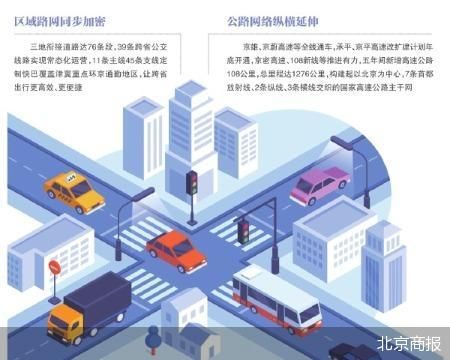
Core Insights - Beijing has made significant progress in transportation infrastructure during the "14th Five-Year Plan" period, with the opening of 19 new subway lines totaling 180 kilometers, contributing to a total rail network of 1,244 kilometers, the largest in the country [1][5] - The city aims to enhance its transportation system by focusing on integration, optimization, and efficiency, leveraging smart technology to create a model for a strong transportation capital [1][5] Transportation Network Development - The "Beijing-Tianjin-Hebei" region has achieved a "1 to 1.5-hour traffic circle," with major rail projects like the Beijing-Harbin High-Speed Railway and Beijing-Xiong'an Intercity Railway completed [3] - The highway network has expanded by 108 kilometers over five years, reaching a total of 1,276 kilometers, with a comprehensive national highway network centered around Beijing [3][6] Urban Sub-center Transportation - The transportation capacity of the urban sub-center has been enhanced with the extension of suburban rail lines and the construction of new roads, forming a "three fast two main" road system [4][5] Public Transport Integration - The integration of subway and bus services has improved, with 90% of subway stations within 50 meters of bus stops, and the introduction of 352 specialized bus lines catering to diverse travel needs [5][6] Slow Traffic System Improvement - The development of slow traffic corridors and the renovation of pedestrian spaces have been prioritized, with 22 slow traffic corridors established and non-motorized vehicle order management implemented [6][7] Comprehensive Traffic Governance - A comprehensive governance model has been established, focusing on traffic congestion and optimizing connections around key areas such as schools, hospitals, and commercial centers [7][8] Smart Technology in Transportation - The implementation of smart technologies, including autonomous driving regulations and smart traffic signal systems, has been a key focus, enhancing traffic efficiency and safety [9][10]