交通电气化

Search documents
电力设备与新能源行业研究:能源自主不再只是“叙事”,储能锂电高景气明确,风电肩负重任
SINOLINK SECURITIES· 2026-03-29 12:24
Investment Rating - The report maintains a positive investment outlook on the wind power, energy storage, lithium battery, and photovoltaic sectors, highlighting their potential for long-term growth due to increasing global demand and supportive government policies [2][6][12]. Core Insights - The report emphasizes that the current historical low costs of wind and solar storage will accelerate global energy independence, particularly in response to geopolitical tensions, leading to increased government incentives and orders for related technologies [2][6]. - Major European countries are implementing specific policies to enhance energy independence, which will drive demand for wind power, energy storage, and electric transportation [6][7]. - The report identifies key investment opportunities in wind power, energy storage, lithium batteries, and photovoltaic products, particularly in the context of rising global demand and technological advancements [2][12]. Summary by Relevant Sections Wind Power - The report highlights the strong performance of Goldwind Technology, which reported a revenue of 73 billion yuan for 2025, a year-on-year increase of 28.8%, and a net profit of 2.77 billion yuan, up 49.1% [8][9]. - The report continues to recommend Goldwind Technology and other companies in the wind power sector, noting improvements in profit margins and international business [8][12]. Energy Storage and Lithium Batteries - The lithium battery sector is experiencing price increases driven by supply and demand dynamics, particularly for lithium carbonate and lithium iron phosphate [3][13]. - The report mentions significant projects in lithium battery materials, including a 25,000-ton lithium carbonate project by Zijin Mining, which has entered trial production [13][14]. Photovoltaics - The report discusses the upcoming IPO of SpaceX and its potential impact on the photovoltaic sector, particularly in space and commercial applications [15][16]. - It highlights the increasing demand for BC+ silver-free photovoltaic products, which are expected to see accelerated shipments and profits in 2026 [15][17]. Hydrogen and Fuel Cells - The report notes that the hydrogen sector is adjusting to subsidy expectations, with local policies anticipated to support growth [18][19]. - It emphasizes the economic viability of green methanol and the increasing global demand for green ammonia, particularly in light of recent contracts signed by major companies [19][20]. Electric Grid - The report indicates a 35% year-on-year increase in power equipment exports in January-February, reflecting strong demand for electrical infrastructure upgrades [22][23]. - It highlights the performance of companies like State Grid and their significant contracts in the electric grid sector, indicating robust growth prospects [24][25].

能源自主不再只是“叙事”,储能锂电高景气明确,风电肩负重任
SINOLINK SECURITIES· 2026-03-29 09:04
Investment Rating - The report maintains a positive investment outlook on the wind power, energy storage, lithium battery, and photovoltaic sectors, highlighting their potential for long-term growth due to increasing global demand and supportive government policies [2][6][12]. Core Insights - The report emphasizes that the current historical low costs of wind and solar storage will accelerate global energy independence, particularly in response to geopolitical tensions, leading to increased government incentives and orders for related technologies [2][6]. - Major European countries are implementing specific policies to enhance energy independence, focusing on wind power, energy storage, and electric transportation [6][7]. - The report identifies key investment opportunities in wind power, energy storage, lithium batteries, and photovoltaic products, suggesting a new long-cycle demand growth for Chinese manufacturers in these sectors [2][6][12]. Summary by Relevant Sections Wind Power - Goldwind Technology reported strong annual results for 2025, with revenue of 73 billion yuan, a year-on-year increase of 28.8%, and a net profit of 2.77 billion yuan, up 49.1% [8][9]. - The report continues to recommend Goldwind and other companies in the wind power sector, despite short-term challenges related to international expansion [10][12]. Energy Storage and Lithium Batteries - The lithium battery supply chain is experiencing price increases driven by strong demand for lithium carbonate and lithium iron phosphate [3][13]. - The report highlights the high demand for energy storage solutions and the acceleration of electric transportation, indicating a robust market outlook for lithium battery materials [2][3][12]. Photovoltaics - The upcoming SpaceX IPO and related projects are expected to boost demand for photovoltaic products, particularly in the space and commercial aerospace sectors [15][16]. - The report notes that high silver prices are benefiting certain photovoltaic technologies, with expectations for increased market share and profitability for BC+ silver-free products [17][18]. Hydrogen and Fuel Cells - The hydrogen sector is poised for growth as local policies are expected to support the industry, with green methanol becoming economically viable due to rising oil prices [18][19]. - The report mentions significant contracts in the green ammonia sector, indicating a shift towards renewable energy sources for fertilizer production [19][20]. Electric Grid - The electric equipment export value increased by 35% year-on-year in January-February, indicating strong demand for power infrastructure upgrades globally [22][24]. - Companies like State Grid and others are expected to benefit from ongoing projects in high-voltage transmission and automation, with significant contract wins reported [23][24][26].
新思考电机递表港交所 为微型精密马达制造商
Zhi Tong Cai Jing· 2026-01-04 03:57
Company Overview - New Thinking Motor, established in 2014, is a leading global manufacturer of micro precision motors, particularly in the imaging motor sector, with a strategic layout of dual production bases in Jiaxing and Hefei, and dual R&D bases in China and Japan [3] - According to Frost & Sullivan, New Thinking Motor ranks sixth globally and third in China in the imaging motor market, holding a 9.1% market share in China as of 2024 [3] - In the optical image stabilization (OIS) imaging motor segment, the company ranks fourth globally and first in China, with a market share of 20.1% [3] Product Focus - The company focuses on two main product categories: imaging products and non-imaging products [4] - Imaging products include voice coil motors, piezoelectric motors, and shape memory alloy motors, primarily used in smartphones, handheld imaging, security monitoring, and machine vision systems for functions like autofocus, optical stabilization, aperture adjustment, and zoom [4] - Non-imaging products include stepper motors and brushless DC motors, deployed in applications such as robotic vacuum cleaners, security monitoring, and automotive electronics, with expansion into emerging fields like humanoid robots and low-altitude economy [4] Financial Performance - For the fiscal year ending December 31, 2023, the company reported revenues of approximately RMB 855.33 million, with projected revenues of RMB 1.56 billion for 2024 and RMB 1.46 billion for the nine months ending September 30, 2025 [6] - The gross profit for the same periods was RMB 71.50 million, RMB 249.35 million, and RMB 234.35 million respectively [8] - The company recorded a net loss of RMB 30.10 million for 2023, with profits of RMB 104.76 million for 2024 and RMB 97.06 million for the nine months ending September 30, 2025 [7] Industry Overview - The global motor market is experiencing significant and sustained growth, driven by three long-term trends: electrification of transportation, upgrades in consumer electronics, and stringent energy efficiency regulations worldwide [9] - The market size is projected to grow from approximately USD 109.8 billion in 2019 to USD 152.3 billion by 2024, with a historical compound annual growth rate (CAGR) of 6.8% [9] - By 2029, the market is expected to reach USD 197 billion, with a forecasted CAGR of 4.6% from 2025 to 2029, driven by the increasing adoption of electric vehicles and the expansion of industrial automation and smart devices [9] China Market Insights - China is a crucial and rapidly growing segment of the global motor market, with the market size expected to increase from approximately USD 35.3 billion in 2019 to USD 50.2 billion by 2024 [10] - By 2029, the market is projected to reach USD 66.4 billion, with a forecasted CAGR of 5.1% from 2025 to 2029, indicating stronger domestic demand driven by electric vehicles and industrial automation [10] - China's share of the global motor market is expected to rise from approximately 32.3% in 2019 to 33.7% by 2029, reinforcing its position as a key manufacturing hub and end market globally [10]

新股消息 | 新思考电机递表港交所 为微型精密马达制造商
智通财经网· 2026-01-04 03:23
Company Overview - New Thinking Motor, established in 2014, is a leading global manufacturer of micro precision motors, particularly in the imaging motor sector, with a strategic layout of dual production bases in Jiaxing and Hefei, and dual R&D bases in China and Japan [3] - According to Frost & Sullivan, New Thinking Motor ranks sixth globally and third in China in the imaging motor market, holding a 9.1% market share in China as of 2024 [3] - In the optical image stabilization (OIS) imaging motor segment, the company ranks fourth globally and first in China, with a market share of 20.1% [3] Product Focus - The company focuses on two main product categories: imaging products and non-imaging products. Imaging products include voice coil motors, piezoelectric motors, and shape memory alloy motors, primarily used in smartphones, handheld imaging, security monitoring, and machine vision systems [4] - Non-imaging products include stepper motors and brushless DC motors, deployed in applications such as robotic vacuum cleaners, security monitoring, and automotive electronics. The company is also expanding into emerging fields like humanoid robots and low-altitude economy [4] Financial Performance - For the fiscal year ending December 31, 2023, the company reported revenues of approximately RMB 855.33 million, with projected revenues of RMB 1.56 billion for 2024 and RMB 1.46 billion for the nine months ending September 30, 2025 [6][5] - The gross profit for the same periods was RMB 71.50 million in 2023, RMB 249.35 million in 2024, and RMB 234.35 million for the nine months ending September 30, 2025 [8][5] - The company recorded a net loss of RMB 30.10 million in 2023, followed by a profit of RMB 104.76 million in 2024 and a profit of RMB 97.06 million for the nine months ending September 30, 2025 [7][5] Industry Overview - The global motor market is experiencing significant and sustained growth, driven by three long-term trends: electrification of transportation, upgrades in consumer electronics, and stringent energy efficiency regulations worldwide [9] - The market size is projected to grow from approximately USD 109.8 billion in 2019 to USD 152.3 billion by 2024, with a historical compound annual growth rate (CAGR) of 6.8%. It is expected to reach USD 197 billion by 2029, with a forecasted CAGR of 4.6% from 2025 to 2029 [9] - China is a crucial and rapidly growing segment of the global motor market, with the market size expected to increase from approximately USD 35.3 billion in 2019 to USD 50.2 billion by 2024, and projected to reach USD 66.4 billion by 2029, with a CAGR of 5.1% from 2025 to 2029 [10]
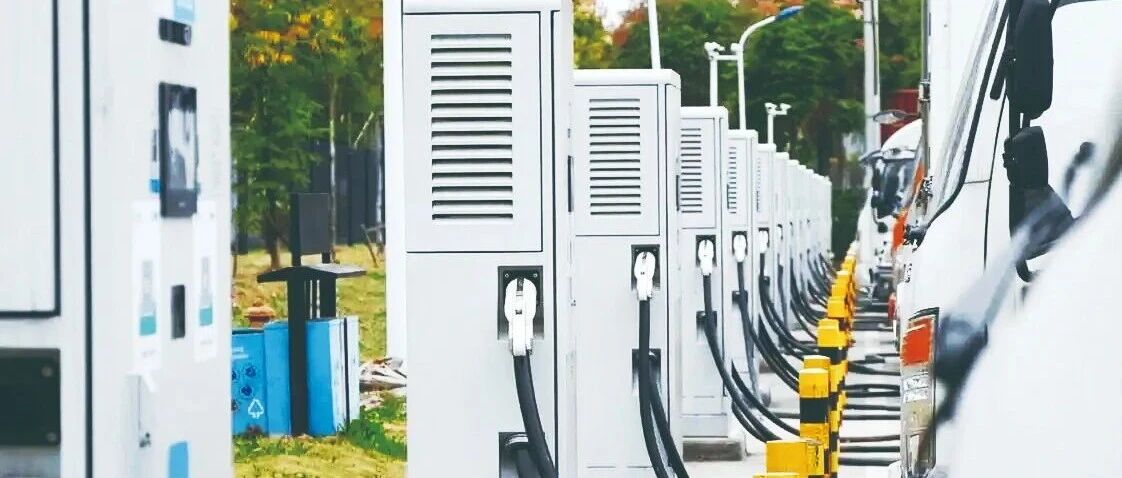
中国持续领跑电动汽车和补能设施发展
中国能源报· 2025-10-14 11:53
Core Insights - The article highlights the continuous growth of electric vehicle (EV) ownership in China, along with impressive development in charging infrastructure, maintaining its leading position in electrified transportation globally [3][5]. Group 1: Global Electric Vehicle Market Trends - According to Roland Berger's report, despite challenging market conditions, global EV usage and charging infrastructure showed steady growth, with overall sales penetration rate increasing from 20% in 2023 to 25% in 2024 [3]. - China's EV sales penetration rate is projected to rise from 36% in 2023 to 49% in 2024, solidifying its leadership in road transportation electrification [5]. - The Asia-Pacific region is dominated by China, contributing over 90% of EV sales, while other mature markets show minimal growth in penetration rates [5]. Group 2: Regional Performance - In North America, the U.S. EV sales penetration rate increased slightly from 10% in 2023 to 11% in 2024, while Canada rose from 9% to 15% [5]. - European performance is mixed, with Germany's penetration rate declining from 26% in 2023 to 22% in 2024 due to shrinking EV sales [6]. - The Middle East and North Africa are still in the early stages of electrification, with countries like Saudi Arabia and Qatar lagging behind [6]. Group 3: Charging Infrastructure Development - The global number of public charging stations grew by 33%, but the ratio of EVs to public charging stations slightly decreased due to faster growth in EV sales compared to infrastructure expansion [7]. - China maintains a high public charging station availability ratio, with 79% of respondents indicating increasing convenience in public charging [8]. - The total number of public charging stations is expected to exceed 5 million by the end of 2024, with over two-thirds of new stations located in China [8]. Group 4: Challenges in Charging Infrastructure - Key pain points for users include long charging times and insufficient infrastructure, with 47% of respondents dissatisfied with charging speed and 45% citing inadequate facilities [11]. - The report emphasizes the importance of home charging facilities, which slightly decreased from 87% in 2023 to 85% in 2024, primarily due to unsuitable living environments for installation [10]. - Public charging remains crucial, especially in areas with limited home charging options, highlighting the need for a user-friendly charging network globally [11].