产业抱团发展

Search documents
产业“抱团” 山东乡村振兴闯出新路
Zhong Guo Xin Wen Wang· 2025-12-12 08:29
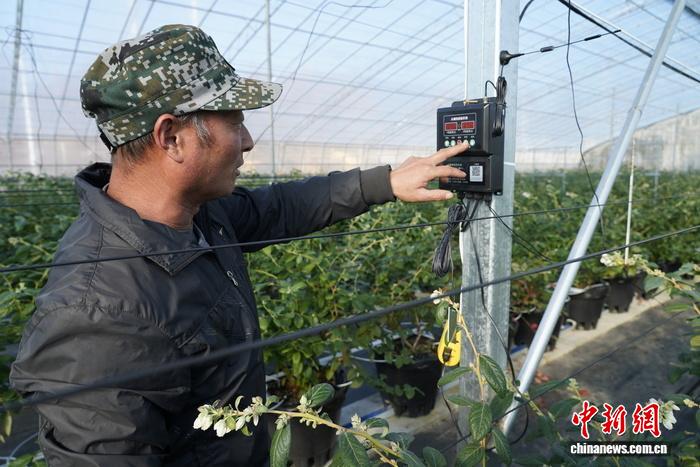
Core Viewpoint - The article highlights the collaborative development of industries in Shandong, showcasing how local governments and communities are working together to promote rural revitalization and economic growth through industry clustering and resource sharing [1][4][7]. Group 1: Industry Clustering - In Yang Caiyuan Village, the local government facilitated the expansion of the clothing industry by providing idle land and repurposing old school buildings for production, leading to increased business opportunities for local enterprises [1]. - The garment processing industry cluster in Tongxing Town has grown significantly, employing local villagers and improving their quality of life [1]. - The establishment of a standardized intelligent cotton clothing industrial park in Houying Town allows small-scale manufacturers to consolidate and scale up their operations, enhancing market access [5]. Group 2: Agricultural Innovation - In Xiwai Stone Village, the implementation of high-standard water and fertilizer integration greenhouses has transformed traditional farming practices, allowing for precise control over crop conditions [3]. - The blueberry industry in the neighboring Bu Kou Village, developed through collaboration among multiple villages, is projected to yield significant revenue, with an expected annual sales of over 400,000 yuan once fully operational [3]. Group 3: Chemical Industry Development - The Jiuye Chemical Park is creating a circular economy by linking neighboring chemical plants, where by-products from one facility serve as raw materials for another, thus optimizing resource utilization [7]. - The establishment of ten industrial chain working groups in Jiuye County aims to enhance the local chemical industry through systematic planning and supportive policies, fostering a collaborative environment among businesses [7].

组织向下扎根 产业拔节生长
Ren Min Ri Bao· 2025-12-08 23:18
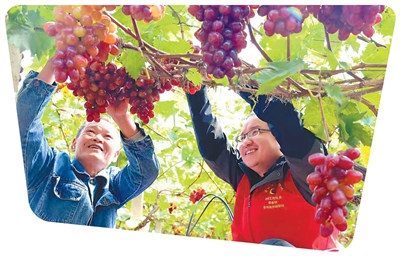
Core Viewpoint - The article highlights the successful transformation of rural economies in Guangxi's Guilin region through effective party organization, agricultural cooperation, and innovative practices, leading to increased income and improved living standards for local farmers [6][10][15]. Group 1: Agricultural Development - The introduction of a cooperative model in the grape industry has significantly improved production and sales, transitioning from a fragmented approach to a more organized and efficient system [9][11]. - The establishment of specialized cooperatives has led to the introduction of quality varieties and standardized management practices, resulting in better grape quality and higher market prices [9][12]. - The county has seen a substantial increase in grape planting area, reaching over 27,000 acres, with an annual production of 47,000 tons, generating approximately 480 million yuan in income for local farmers [13]. Group 2: Economic Empowerment - The integration of party organizations in agricultural development has facilitated the establishment of over 500 farmer leaders, contributing to community engagement and economic growth [13]. - The introduction of e-commerce initiatives has allowed farmers to sell their products directly to consumers, with online sales exceeding 320 million yuan in the first half of the year [15]. - The collaboration between local enterprises and farmers has created job opportunities and improved livelihoods, exemplified by the success of the Milanxiang Food Company in providing employment and training for local residents [14]. Group 3: Infrastructure and Support - The county has implemented a "whistle-blowing" mechanism for businesses, ensuring that local government departments respond promptly to challenges faced by enterprises, thus fostering a supportive business environment [14]. - Investment in infrastructure, such as the establishment of e-commerce service centers, has enhanced market access for local agricultural products [9][15]. - The promotion of integrated agricultural practices, such as rice-fish farming, has diversified income sources for farmers and improved overall agricultural productivity [6][14].