产业链失衡

Search documents
“对等关税”一个月,美国产业链连锁承压
Zhong Guo Xin Wen Wang· 2025-05-08 07:37
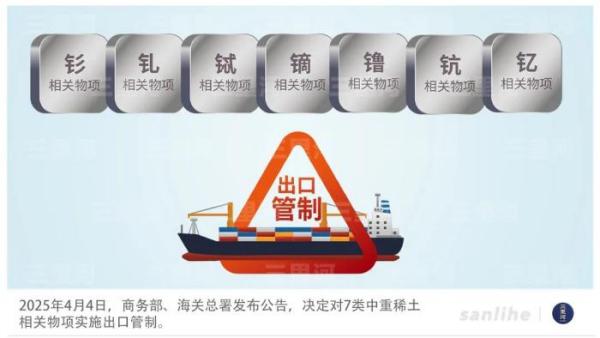
Group 1: Rare Earth Market Dynamics - The international rare earth market has experienced a significant price surge, with dysprosium and terbium prices reaching $850 and $3000 per kilogram respectively, marking a threefold increase and the highest monthly growth since records began in 2015 [1] - The price increase is attributed to China's export controls on seven categories of medium and heavy rare earths, which took effect on April 4, leading to an immediate halt in exports and subsequent price spikes [1][3] Group 2: Impact on Industries - Analysts indicate that the restricted rare earths are difficult to replace through production in other countries, causing immediate impacts on U.S. companies, including Tesla and Ford, which have reported disruptions in their production plans due to the scarcity of key components [4] - The situation highlights China's strategic leverage in the rare earth sector, with U.S. media describing it as a significant blow to American industrial capabilities [4] Group 3: Broader Economic Implications - The export restrictions have broader implications for U.S.-China trade relations, with reports of rising prices for various consumer goods and disruptions in supply chains, as seen with companies like Walmart adjusting their strategies in response to new tariffs [5] - The decline in U.S. imports from China is expected to lead to increased prices for consumers and potential job losses in logistics and retail sectors [5][6] - In contrast, Chinese manufacturers are adapting by expanding their markets to regions like South America and Europe, demonstrating resilience in the face of external challenges [5][6]